

Kirjahaku
Etsi kirjoja tekijän nimen, kirjan nimen tai ISBN:n perusteella.
1000 tulosta hakusanalla Xiong Sun


Cell Mapping Methods
Jian-Qiao Sun; Fu-Rui Xiong; Oliver Schütze; Carlos Hernández
Springer Verlag, Singapore
2018
sidottu
This book presents the latest algorithmic developments in the cell-mapping method for the global analysis of nonlinear dynamic systems, global solutions for multi-objective optimization problems, and global solutions for zeros of complex algebraic equations. It also discusses related engineering and scientific applications, including the nonlinear design of structures for better vibration resistance and reliability; multi-objective, structural-acoustic design for sound abatement; optimal multi-objective design of airfoils for better lift; and optimal multi-objective design of linear and nonlinear controls with or without time delay.The first book on the subject to include extensive Matlab and C++ codes, it presents various implementation algorithms of the cell-mapping method, enabling readers to understand how the method works and its programming aspects. A link to the codes on the Springer website will be provided to the readers.

Cell Mapping Methods
Jian-Qiao Sun; Fu-Rui Xiong; Oliver Schütze; Carlos Hernández
Springer Verlag, Singapore
2018
nidottu
This book presents the latest algorithmic developments in the cell-mapping method for the global analysis of nonlinear dynamic systems, global solutions for multi-objective optimization problems, and global solutions for zeros of complex algebraic equations. It also discusses related engineering and scientific applications, including the nonlinear design of structures for better vibration resistance and reliability; multi-objective, structural-acoustic design for sound abatement; optimal multi-objective design of airfoils for better lift; and optimal multi-objective design of linear and nonlinear controls with or without time delay.The first book on the subject to include extensive Matlab and C++ codes, it presents various implementation algorithms of the cell-mapping method, enabling readers to understand how the method works and its programming aspects. A link to the codes on the Springer website will be provided to the readers.
The Handbook of China's Financial System
Marlene Amstad; Guofeng Sun; Wei Xiong; Darrell Duffie
PRINCETON UNIVERSITY PRESS
2020
sidottu
A comprehensive, in-depth, and authoritative guide to China's financial system The Chinese economy is one of the most important in the world, and its success is driven in large part by its financial system. Though closely scrutinized, this system is poorly understood and vastly different than those in the West. The Handbook of China’s Financial System will serve as a standard reference guide and invaluable resource to the workings of this critical institution.The handbook looks in depth at the central aspects of the system, including banking, bonds, the stock market, asset management, the pension system, and financial technology. Each chapter is written by leading experts in the field, and the contributors represent a unique mix of scholars and policymakers, many with firsthand knowledge of setting and carrying out Chinese financial policy. The first authoritative volume on China’s financial system, this handbook sheds new light on how it developed, how it works, and the prospects and direction of significant reforms to come.Contributors include Franklin Allen, Marlene Amstad, Kaiji Chen, Tuo Deng, Hanming Fang, Jin Feng, Tingting Ge, Kai Guo, Zhiguo He, Yiping Huang, Zhaojun Huang, Ningxin Jiang, Wenxi Jiang, Chang Liu, Jun Ma, Yanliang Mao, Fan Qi, Jun Qian, Chenyu Shan, Guofeng Sun, Xuan Tian, Chu Wang, Cong Wang, Tao Wang, Wei Xiong, Yi Xiong, Tao Zha, Bohui Zhang, Tianyu Zhang, Zhiwei Zhang, Ye Zhao, and Julie Lei Zhu.
People are facing more and more NP-complete or NP-hard problems of a combinatorial nature and of a continuous nature in economic, military and management practice. There are two ways in which one can enhance the efficiency of searching for the solutions of these problems. The first is to improve the speed and memory capacity of hardware. We all have witnessed the computer industry's amazing achievements with hardware and software developments over the last twenty years. On one hand many computers, bought only a few years ago, are being sent to elementary schools for children to learn the ABC's of computing. On the other hand, with economic, scientific and military developments, it seems that the increase of intricacy and the size of newly arising problems have no end. We all realize then that the second way, to design good algorithms, will definitely compensate for the hardware limitations in the case of complicated problems. It is the collective and parallel computation property of artificial neural net works that has activated the enthusiasm of researchers in the field of computer science and applied mathematics. It is hard to say that artificial neural networks are solvers of the above-mentioned dilemma, but at least they throw some new light on the difficulties we face. We not only anticipate that there will be neural computers with intelligence but we also believe that the research results of artificial neural networks might lead to new algorithms on von Neumann's computers.
People are facing more and more NP-complete or NP-hard problems of a combinatorial nature and of a continuous nature in economic, military and management practice. There are two ways in which one can enhance the efficiency of searching for the solutions of these problems. The first is to improve the speed and memory capacity of hardware. We all have witnessed the computer industry's amazing achievements with hardware and software developments over the last twenty years. On one hand many computers, bought only a few years ago, are being sent to elementary schools for children to learn the ABC's of computing. On the other hand, with economic, scientific and military developments, it seems that the increase of intricacy and the size of newly arising problems have no end. We all realize then that the second way, to design good algorithms, will definitely compensate for the hardware limitations in the case of complicated problems. It is the collective and parallel computation property of artificial neural net works that has activated the enthusiasm of researchers in the field of computer science and applied mathematics. It is hard to say that artificial neural networks are solvers of the above-mentioned dilemma, but at least they throw some new light on the difficulties we face. We not only anticipate that there will be neural computers with intelligence but we also believe that the research results of artificial neural networks might lead to new algorithms on von Neumann's computers.

shen jing dian sheng li jian ce dui xian wei jing xia zhui jian pan tu chu zheng liao xiao ping gu de yan jiu
Zhen Xing Sun; Dan Yuan
¿¿¿¿¿¿¿
2016
nidottu

Acoustic Metamaterials
Hong-Xiang Sun; Yong Ge; Shou-Qi Yuan
Springer Nature Switzerland AG
2025
sidottu
This book explores the rapidly evolving field of acoustic metamaterials, focusing on their ability to manipulate sound waves through asymmetric transmission, acoustic focusing, and acoustic asymmetric focusing. It introduces innovative research methods and achievements, such as the use of underwater plate-like metamaterials, airborne metamaterials, and phase-controlled metamaterials to achieve precise control over sound propagation in 2D and 3D spaces. Readers will be particularly interested in the novel applications of these materials in medical ultrasound, underwater detection, acoustic communication, and noise reduction, as well as the development of advanced devices like broadband AF lenses and thermoacoustic phase-controlled metamaterials. The book is enriched with detailed illustrations, tables, and clear theoretical explanations, making complex concepts accessible. It provides valuable insights into the design and modulation of high-performance acoustic devices, offering both foundational knowledge and advanced techniques for practical applications. This work is particularly beneficial for researchers, engineers, and graduate students in acoustics, materials science, and related fields, as it bridges the gap between theoretical research and real-world applications.
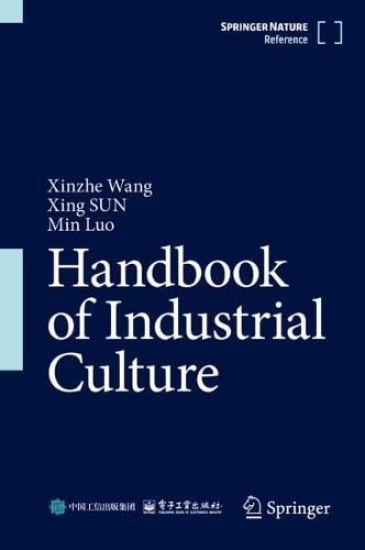
Handbook of Industrial Culture
Xinzhe Wang; Xing SUN; Min Luo
SPRINGER VERLAG, SINGAPORE
2026
sidottu


yan tu jie gou kuai po sun ji li yu er yuan jie zhi mo xing yan jiu
En Long Liu
¿¿¿¿¿¿¿
2016
nidottu

jin shu ji fen mo ye jin mo ca cai liao yan zhi ji qi gao wen pi lao mo sun he chong ji xing neng yan jiu
Jian Xiu Liu
¿¿¿¿¿¿¿
2016
nidottu
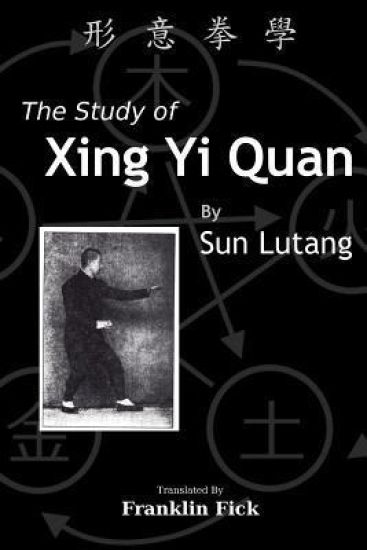
The Study of Xing Yi Quan: Xing Yi Quan Xue
Lutang Sun
Createspace Independent Publishing Platform
2014
nidottu
Xing Yi Quan Xue (The Study of Xing Yi Quan) was written by Sun Lutang in 1915. This book gives clear instructions not only in the basics of Xing Yi Quan and the important principles for beginners, but also clearly teaches and illustrates the major forms of the style including the Five Elements, Wu Xing Lian Huan Quan, the 12 Animals, Za Shi Chui, as well as the paired practice routines of the Five Elements and An Shen Pao. Sun Lutang mastered all three internal styles of Chinese Boxing: Taiji Quan, Bagua Quan, and Xing Yi Quan. His teachers included: Guo Yunshen (Xing Yi Quan), Cheng Tinghua (Bagua Quan), and Hao Weichen (Taiji Quan). Later in life he founded his own style of Taiji: Sun style Taiji Quan.

she qu man xing jing shen bing huan zi wo jian kang guan li tuan ti cheng xiao fen xi
de Li Sun
¿¿¿¿¿¿¿
2017
nidottu

ji yu pan bie shi mo xing de sheng wu yi xue wen ben wa jue xiang guan wen ti yan jiu
Cheng Jie Sun
¿¿¿¿¿¿¿
2017
nidottu



fei shi fen zi shai dui jia quan qi ti xi fu xing neng de yan jiu
Jian Ping Sun
¿¿¿¿¿¿¿
2017
nidottu