Kirjojen hintavertailu. Mukana 12 390 323 kirjaa ja 12 kauppaa.

Kirjahaku

Etsi kirjoja tekijän nimen, kirjan nimen tai ISBN:n perusteella.

1000 tulosta hakusanalla Xu Jay; He Li

Emperors' Treasures

Emperors' Treasures

Xu Jay; He Li

Asian Art Museum of San Francisco
2017
nidottu
**Winner of 2017 Choice Outstanding Academic Title Award** Emperors' Treasures examines each ruler's distinct contribution to the arts and how each developed his or her aesthetic and connoisseurship.This Chinese art book book features artworks from the renowned National Palace Museum, Taipei. It encompasses paintings, calligraphy, bronzes, ceramics, lacquer ware, jades, and textiles exemplifying the finest craftsmanship and imperial taste. Emperors' Treasures explores the identities of eight Chinese rulers-seven emperors and one empress-who reigned from the early 12th through early 20th centuries. They are portrayed in a story line that highlights artworks of their eras, from the dignified Song to the coarse yet subtle Yuan, and from the brilliant Ming until the final, dazzling Qing period.
The Bold Brush of Au Ho-nien

The Bold Brush of Au Ho-nien

Li He; Jay Xu

Asian Art Museum of San Francisco
2019
nidottu
The Bold Brush of Au Ho-nien features twenty-four paintings by Au Ho-nien (b. 1935), one of today's most celebrated Chinese artists. Known for his ink wash painting, Au Ho-nien is a prominent figure in the Lingnan school, an artistic movement that emerged in southern China at the turn of the twentieth century. Au's work exemplifies the school's ethos of drawing on both Chinese and Western techniques to revolutionize traditional Chinese painting. Both the Asian Art Museum's exhibition and its accompanying catalogue will be organized in three sections by theme: figures, landscapes, and animals. The paintings, hanging scrolls dating from the 1960s to the present, are from the artist's own collection. Au Ho-nien was born in Maoming County, Guangdong; he lived in Hong Kong from 1950 until 1970, when he moved to Taiwan. Now in his mid-eighties, he has had a distinguished teaching career and his work has been presented in more than sixty solo exhibitions around the world.
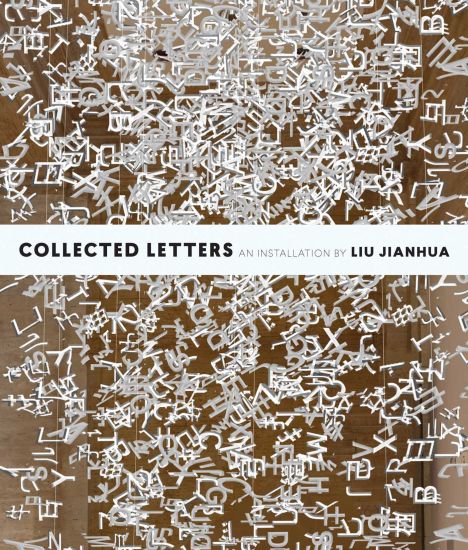
Collected Letters

Collected Letters

Jay Xu; Linda Shen Lei; Tiffany Beres

Asian Art Museum of San Francisco
2016
nidottu
As a 50th anniversary gift to the museum, the Society for Asian Art has commissioned a major work by Liu Jianhua, one of China's best-known contemporary installation artists. The work comprises approximately 2,500 pieces of white porcelain formed into letters of the English alphabet and components of Chinese characters, suspended from the ceiling of the second-floor loggia. The artist provides only the building blocks of words, leaving it to viewers to create meaning. The artwork's location is especially apropos: the space offers an opportunity for dialogue with the original engraved literary quotations on the loggia's walls, dating to the building's previous incarnation as San Francisco's Main Library.
Tomb Treasures

Tomb Treasures

Jay Xu

Asian Art Museum of San Francisco
2017
sidottu
This stunning Chinese art book presents almost a hundred recently unearthed objects that offer a glimpse into the extraordinary wealth and artistic accomplishments of elite society during the Western Han Dynasty (206 BCE - 9 CE). These exquisite treasures are from newly discovered sites in the Jiangsu region of China and are made of gold, silver, jade, bronze, pottery, lacquer, and other refined materials. Masterworks include a full-length jade suit sewn with gold threads, an oversized coffin shrouded in jade, and a complete set of functional bronze bells. The book's texts explore a number of ideas about the lives and deaths of Western Han royalty.
Asian Art Museum of San Francisco: Collection Highlights

Asian Art Museum of San Francisco: Collection Highlights

Jay Xu

Asian Art Museum of San Francisco
2018
nidottu
Every year, thousands of visitors flock to the Asian Art Museum of San Francisco, the largest museum devoted exclusively to the arts of Asia in the United States. Featuring more than 18,000 artworks, the museum's world-class collection highlights the unique material, aesthetic, and intellectual achievements of Asian art and culture. This book presents two hundred and thirty exemplary works spanning both ancient and modern times. Among its many treasures, readers will find a Japanese clay jar from 3000-2000 BCE, a Chinese bronze Buddha dating to 338, a seventeenth-century Indian painting from the Shahnama (Book of Kings), a mid-twentieth-century Korean wrapping cloth, and a new Thai work made from textile, window mesh, safety pins, and amulets. A collaboration between museum curators, artists, educators, and collectors, the book also takes an in-depth look at fourteen masterpieces selected for their beauty, rarity, and historical importance. Stunning full-color photographs and new texts-including a foreword by museum director Ja Xu-offer fresh perspectives on both ancient and contemporary objects. A handsome addition to any art history collection, this volume is an essential resource for museum visitors as well as anyone interested in Asian art.
Zheng Chongbin, I Look for the Sky

Zheng Chongbin, I Look for the Sky

Abby Chen; Maya Kovsakaya; Jay Xu

Asian Art Museum of San Francisco
2020
nidottu
Zheng Chongbin sculpts light and space to shift our perspective of the sky and our place in the ever-changing world.Zheng Chongbin: I Look for the Sky documents a solo exhibition of new works by Bay Area-based, Chinese contemporary ink artist Zheng Chongbin. The exhibition consists of a newly-commissioned, large-scale ceiling installation in AAM's Bogart Court and a light tunnel/environment surrounded by an installation of paintings in AAM's Osher Gallery, opening in June 2020. The publication historicizes this prominent, mid-career artist through two scholarly essays and an artist statement related to the new works in the exhibition.The Asian Art Museum-Chong-Moon Lee Center for Asian Art and Culture is a public institution whose mission is to lead a diverse global audience in discovering the unique material, aesthetic, and intellectual achievements of Asian art and culture.
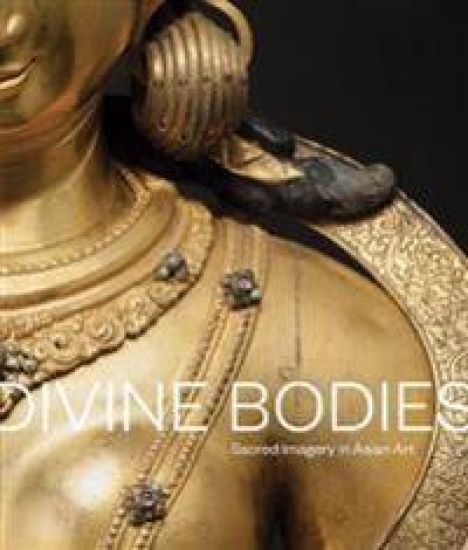
Divine Bodies

Divine Bodies

Qamar Adamjee; Jeffrey Durham; Karin G. Oen; Jay Xu

Asian Art Museum of San Francisco
2018
nidottu
What happens when the divine is given a body? Have gods created humans in their image, or is it the other way around? How do people express their values through the forms with which they present their bodies?Divine Bodies is a thought-provoking Asian art history book that explores intriguing questions like these raised by the sacred art traditions of Asia. Approximately 45 artworks from the Asian Art Museum's renowned collection show how artists have envisioned the divine, imbuing it with forms that are meant to reflect supernatural qualities. Additionally, 20 contemporary photographs suggest how some artists today deal with questions about the body and its manifold expressions. The book explores how ideal beauty is interpreted in different Asian cultures, how that beauty can be transformed by altering the forms of the body, how deities maintain their identity despite changes to their form, and how divine beings are represented after their death. By viewing these deity-images, readers-whether religious or not-can perceive the messages that artists wish to convey. But Divine Bodies invites readers to do more than just recognize and relate to the meanings inscribed on divine bodies: it also shows how divine imagery shapes and reflects the daily experiences of ordinary people. The novel topic of this book, its diverse and extraordinary artworks, and the unique perspectives of its authors make Divine Bodies a fine art book that will be talked about and thought about for years to come.
Visual Quality Assessment by Machine Learning

Visual Quality Assessment by Machine Learning

Long Xu; Weisi Lin; C.-C. Jay Kuo

Springer Verlag, Singapore
2015
nidottu
The book encompasses the state-of-the-art visual quality assessment (VQA) and learning based visual quality assessment (LB-VQA) by providing a comprehensive overview of the existing relevant methods. It delivers the readers the basic knowledge, systematic overview and new development of VQA. It also encompasses the preliminary knowledge of Machine Learning (ML) to VQA tasks and newly developed ML techniques for the purpose. Hence, firstly, it is particularly helpful to the beginner-readers (including research students) to enter into VQA field in general and LB-VQA one in particular. Secondly, new development in VQA and LB-VQA particularly are detailed in this book, which will give peer researchers and engineers new insights in VQA.
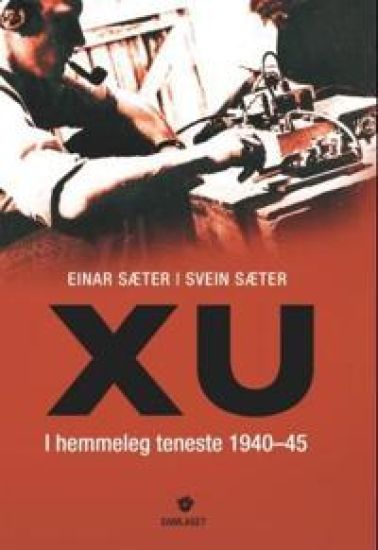
XU

XU

Svein Sæter

Samlaget
2008
pokkari
Boka fortel historia om XU, den hemmelige etterretningsorganisasjonen i det okkuperte Norge. XU var knytt til Forsvarets Overkommando i London, men var leia av sivile kvinner og menn. Organisasjonen hadde omlag 1500 agentar i Norge, og fleire norske agentar i Tyskland. XU kartla alle tyske festningsverk, anlegg og kommunikasjonar. XU er ukent for nordmenn flest, delvis på grunn av den strenge teieplikta som vart oppheva først i 1988. Har oversikt over kjelder, litteraturliste og namneregister.
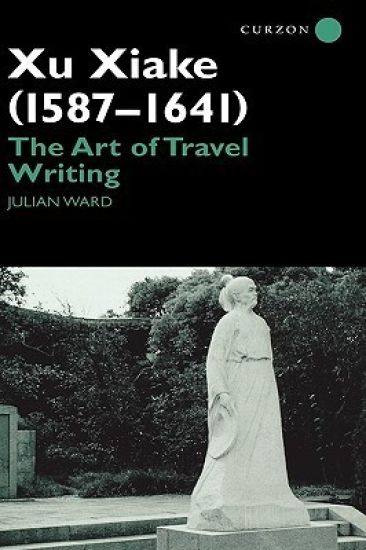
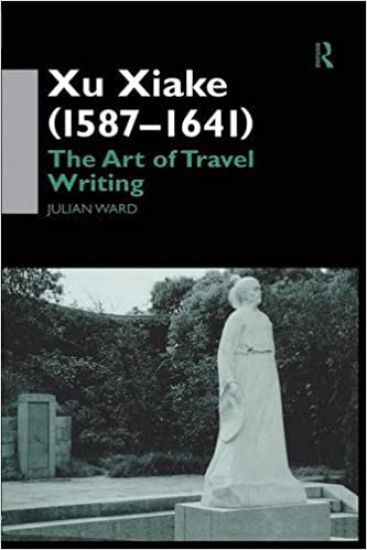
Xu Xiake (1586-1641)

Xu Xiake (1586-1641)

Julian Ward

RoutledgeCurzon
2000
sidottu
In this, the first full-length study in English of China's best-known travel writer, new light is shed on the importance of the diaries of Xu Xiake (1587-1687) a compulsive traveller who spent a lifetime visiting and writing about China's 'beauty spots'. The general view of his work, that he brought a sober, analytical approach to a genre previously the domain of the dillentante and that his writing was 'utilitarian' and lacking in literary merit is cast aside, revealing Xu to be a figure of his age, his concerns perfectly in tune with the exuberant tastes of other late Ming literati. Essential background is provided with a survey of the history of Chinese travel writing in general with particular emphasis given to the late-Ming period and a resume of Xu Xiake's life. The core of the work examines the wealth of new information to be found in a longer version of Xu's account of his great journey to southwest China, rediscovered in the 1970s. Detailed study of Xu's use of language serves to underline the breadth of achievement of a man who utilised traditional and contemporary Chinese poetic language in order to express an emotional response to the landscape through which he passed. This is reinforced by a complete annotated translation of a deeply personal essay, written towards the end of Xu's life. The book covers a broad spectrum of voguish sinological subjects relating to late Ming China ranging from the huge growth in all forms of geographical writing to the anthropological analysis of the non-Han peoples of southwest China. This book will interest both seasoned sinologists and anyone who has spent time travelling in China or is interested in the art of travel writing.
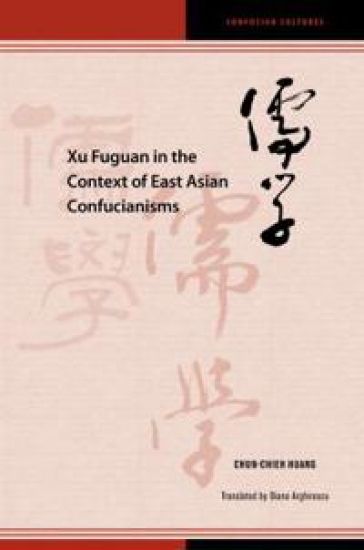
Xu Fuguan in the Context of East Asian Confucianisms

Xu Fuguan in the Context of East Asian Confucianisms

Chun-chieh Huang

University of Hawai'i Press
2019
sidottu
Among twentieth-century Confucians, Xu Fuguan (1904–1982) remains preeminent. This volume, written by Chun-chieh Huang, an authority on Xu’s life and thought, offers English-speaking readers for the first time an exhaustive analysis of the philosopher’s original ideas and research. A distinguished member of the group of Contemporary New Confucians, Xu made a significant contribution to the revival of Chinese culture and society, and the present book outlines the specific features of his legacy in comparison with the views of some of his influential Chinese and Japanese contemporaries.The topics covered illustrate an overarching idea, namely, the innovative way in which Xu Fuguan answers a major question concerning Chinese culture, one posed by Chinese intellectuals since the May Fourth Movement: how best to approach the modernization of China. Xu’s work is based on the assumption that Confucian thought and ethics—the core of Chinese tradition—can be modernized because “there is nothing in it which is not compatible with the idea of human dignity or rights in modern society.” Xu addresses the question of China’s modernization by offering arguments in favor of building a connection between Confucianism and democracy, mainly its political dimension. Huang places his subject in the vast context of twentieth-century Chinese Confucian studies and the history of East Asian thought. He compares Xu Fuguan with his most influential opponents Hu Shi (1891–1962) and Fu Sinian (1896–1950) as well as fellow Confucians Tang Junyi (1909–1978) and Mou Zongsan (1909–1995). Huang draws further comparisons between Xu’s thought and that of Japanese Enlightenment philosopher Fukuzawa Yukichi (1835–1901) and the father of contemporary Japanese capitalism, Shibusawa Eiichi (1840–1931). These contrasts highlight the “Chineseness” of Xu’s theories and the marks left by traditional Chinese thought and culture on his writing and life in the countryside, where he spent much of his youth.
Xu Beihong

Xu Beihong

Denver Art Museum
2011
sidottu
Xu Beihong: Pioneer of Modern Chinese Painting accompanies the first comprehensive exhibition of artwork by Xu Beihong hown outside Asia. It highlights a selection of 61 Chinese ink paintings, oil paintings, drawings, and pastels from the Xu Beihong Memorial Museum in Beijing.Xu Beihong (1895-1953) was among the first Chinese artists to study Western-style painting in Europe, and he is often called the "Father of Modern Chinese Painting." His images, particularly of horses, are familiar throughout China, as are his monumental history paintings Tian Heng and His Five Hundred Warriors and The Foolish Man Who Removed the Mountains. Photographs of Xu Beihong illustrate his life as an artist, educator, and family man.
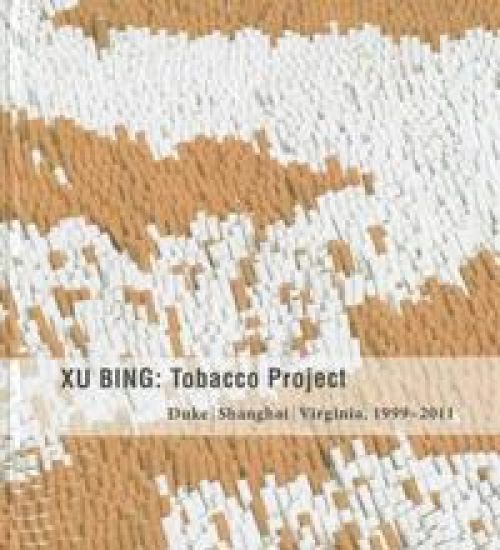
Xu Bing

Xu Bing

Virginia Museum of Fine Arts,U.S.
2011
nidottu
Born in Chongqing, China, in 1955, Xu Bing is considered one ofthe most important artists of his generation. Between 1977 and 1987, he studied andtaught at the Central Academy of Fine Arts, Beijing. He moved to the United Statesin 1990 and in 1999 received a MacArthur Fellowship, the celebrated "geniusgrant," in recognition of his "capacity to contribute importantly tosociety, particularly in printmaking and calligraphy." In 2008 Xu Bing was appointedvice president of the Central Academy of Fine Arts, and he now lives mostly inBeijing. Many of Xu Bing's print and calligraphic works haveappeared on an unlikely but surprisingly receptive medium--the tobacco leaf. Acomprehensive overview of Xu Bing's tobacco projects, this volume includesreproductions of all the tobacco works, as well as several essays. Curator JohnRavenal discusses the new Virginia work, its relation to the other tobacco pieces, and its place in the context of global contemporary art. Guest authors Wu Hung, Lydia Liu and Edward Melillo address Xu Bing's work in the context of contemporaryChinese art and the history and culture of tobacco inVirginia. Distributed for theVirginia Museum of Fine Arts
Xu Xiake (1586-1641)

Xu Xiake (1586-1641)

Julian Ward

Routledge
2015
nidottu
In this, the first full-length study in English of China's best-known travel writer, new light is shed on the importance of the diaries of Xu Xiake (1587-1687) a compulsive traveller who spent a lifetime visiting and writing about China's 'beauty spots'. The general view of his work, that he brought a sober, analytical approach to a genre previously the domain of the dillentante and that his writing was 'utilitarian' and lacking in literary merit is cast aside, revealing Xu to be a figure of his age, his concerns perfectly in tune with the exuberant tastes of other late Ming literati. Essential background is provided with a survey of the history of Chinese travel writing in general with particular emphasis given to the late-Ming period and a resume of Xu Xiake's life. The core of the work examines the wealth of new information to be found in a longer version of Xu's account of his great journey to southwest China, rediscovered in the 1970s. Detailed study of Xu's use of language serves to underline the breadth of achievement of a man who utilised traditional and contemporary Chinese poetic language in order to express an emotional response to the landscape through which he passed. This is reinforced by a complete annotated translation of a deeply personal essay, written towards the end of Xu's life. The book covers a broad spectrum of voguish sinological subjects relating to late Ming China ranging from the huge growth in all forms of geographical writing to the anthropological analysis of the non-Han peoples of southwest China. This book will interest both seasoned sinologists and anyone who has spent time travelling in China or is interested in the art of travel writing.
Xu's Family Cookbook

Xu's Family Cookbook

Louisa Xu

Partridge Publishing Singapore
2021
pokkari
The book is about cuisines that Xu's Family cook from one generation to another generation. The cuisines include eastern flavor and western flavor. Many of them belong to Chinese cuisines due to most family members are from China. With the time passing by, family members immigrate to different countries. Their diet has changed quite a bit. They no longer have these cuisines. The author conclude many cuisines from her hometown and mix with her living experience in US. Then this book is ready
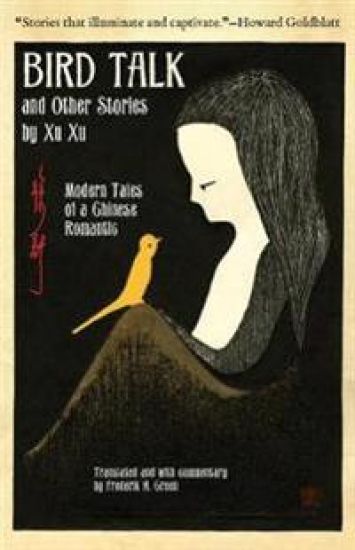
Bird Talk and Other Stories by Xu Xu
Introducing the works of a major Chinese writer—liberal, cosmopolitan, and lyrically exotic—once banned but now embraced, and newly "discovered" in the West. Xu Xu ?? (1908-1980) was one of the most widely read Chinese authors of the 1930s to 1960s. His popular urban gothic tales, his exotic spy fiction, and his quasi-existentialist love stories full of nostalgia and melancholy offer today’s readers an unusual glimpse into China’s turbulent twentieth century. These translations--spanning a period of some thirty years, from 1937 until 1965--bring to life some of Xu Xu’s most representative short fictions from prewar Shanghai and postwar Hong Kong and Taiwan.The Afterword illustrates that Xu Xu’s idealistic tendencies in defiance of the politicization of art exemplify his affinity with European romanticism and link his work to a global literary modernity.
Bird Talk and Other Stories by Xu Xu
Introducing the works of a major Chinese writer—liberal, cosmopolitan, and lyrically exotic—once banned but now embraced, and newly "discovered" in the West.Xu Xu ?? (1908-1980) was one of the most widely read Chinese authors of the 1930s to 1960s. His popular urban gothic tales, his exotic spy fiction, and his quasi-existentialist love stories full of nostalgia and melancholy offer today’s readers an unusual glimpse into China’s turbulent twentieth century.These translations--spanning a period of some thirty years, from 1937 until 1965--bring to life some of Xu Xu’s most representative short fictions from prewar Shanghai and postwar Hong Kong and Taiwan.The Afterword illustrates that Xu Xu’s idealistic tendencies in defiance of the politicization of art exemplify his affinity with European romanticism and link his work to a global literary modernity.
Xu Dong Vat - Tan truyen

Xu Dong Vat - Tan truyen

Tich Bien Cung

Nhan Anh Publisher
2018
pokkari
MỤC LỤC LỜI V O TRUYỆN - ặng Thơ Thơ 11 Truyện M i của gi m a 15 Một phần kh hậu Ba tiểu truyện] 21 Nghiệp chưa hề an nghỉ Ba tiểu truyện] 45 Xứ động vật mưa hồng S u tiểu truyện] 71 Xứ động vật v o ng i T m tiểu truyện] 129 Xứ động vật m u huyết dụ Ba tiểu truyện] 179 Phụ lục I Tiểu sử - T c phẩm 213 Lời Thưa của T c giả 217 Phụ lục II Nhận định: - L ợi 241 - Trần Tuấn Kiệt 253 - inh Từ B ch Th y 255 - L Hữu 260 - Trần Tiến Dũng 268
Xu Bing

Xu Bing

Xu Bing

ACC Art Books
2020
sidottu
"The written word is the most basic element of human culture. To touch the written word is to touch the essence of culture." - Xu Bing Book from the Sky certainly seemed to have fallen from the heavens: the text of this installation piece was written in a new language that resembled traditional Chinese. No matter who scours Xu Bing's book for 'meaning', they will only discover a semblance of it: mutated characters that resist interpretation. Carving out approximately four thousand wood blocks by hand, Xu Bing spent four years, from 1987 to 1991, making (in his own words) "something that said nothing". After creating a book no one could read, it only made sense for Xu Bing to develop his next project: a book that transcended barriers of language: Book from the Ground. Composed entirely of pictographs, Book from the Ground is a groundbreaking study into the concept of universal communication. Whether his goal is total comprehension or confusion, Xu Bing's masterful exploration of language challenges the way we think about the written word.