Kirjojen hintavertailu. Mukana 11 244 527 kirjaa ja 12 kauppaa.

Kirjahaku

Etsi kirjoja tekijän nimen, kirjan nimen tai ISBN:n perusteella.

1000 tulosta hakusanalla Yan Pei Fu

Combinatorial Functional Equations
This two-volume set presents combinatorial functional equations using an algebraic approach, and illustrates their applications in combinatorial maps, graphs, networks, etc. The first volume mainly presents basic concepts and the theoretical background. Differential (ordinary and partial) equations and relevant topics are discussed in detail.
Combinatorial Functional Equations
This two-volume set presents combinatorial functional equations using an algebraic approach, and illustrates their applications in combinatorial maps, graphs, networks, etc. The second volume mainly presents several kinds of meson functional equations which are divided into three types: outer, inner and surface. It is suited for a wide readership, including pure and applied mathematicians, and also computer scientists.
Yan Pei-Ming: Tigres & Vautours

Yan Pei-Ming: Tigres & Vautours

Henri Loyrette

ACTES SUD
2022
sidottu
A dual presentation of history paintings at two august French venuesPopes, politicians, actors and historical figures populate the canvases of Chinese painter Yan Pei-Ming (born 1960), in an ongoing dialogue with art and cultural history. This volume documents his recent exhibition at the Grande Chapelle Avignon and the Lambert Collection.
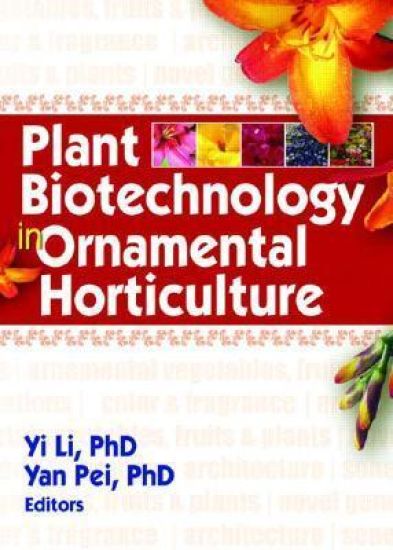
Plant Biotechnology in Ornamental Horticulture

Plant Biotechnology in Ornamental Horticulture

Yi Li; Yan Pei

Food Products Press,U.S.
2007
sidottu
Find out how biotechnology can produce more nutritious fruits and vegetables, more colorful flowers, and grass that needs less waterand mowing!Plant Biotechnology in Ornamental Horticulture presents an in-depth overview of the key scientific and technical advances, issues, and challenges in one of the fastest growing segments of the agriculture industry. This comprehensive book covers 19 different topics related to the use of transgenic plant technology to improve ornamental plants, ranging from metabolic engineering of flower color and scent to improving cold, drought, and disease tolerance in horticultural and ornamental crops to the economics of horticultural biotechnology. Horticulture provides color and flavor to the foods we eat and variety to the products we use, and helps us sustain a healthy environment. Plant Biotechnology in Ornamental Horticulture examines the importance of biotechnology in cultivating garden crops-including fruits, vegetables, flowers, and ornamentals such as plants used for landscaping-by reducing pesticide use, reducing soil erosion, and developing plants with improved nutrition. Leading educators and horticultural professionals address important current and future topics, including micropropagation and regeneration, the use of molecular techniques for genetic improvement, molecular-assisted breeding, abiotic stress, the development of disease resistance, protection from insects, herbicide tolerance, controlled flowering, modifying color and fragrance, plant architecture, and senescence. Plant Biotechnology in Ornamental Horticulture examines:* ornamental plant transformation* molecular phylogeny* drought response and drought tolerance engineering* transgenic approaches to viral, bacterial, and fungal disease resistance* vegetable propagation by cuttings* the promotion of flowering* molecular aspects of leaf morphogenesis* transgenic manipulation* controlling invasive plants * plant hormones, including ethylene, gibberellins (GAs), auxin, cytokinin, and abscisic acid (ABA)* and much morePlant Biotechnology in Ornamental Horticulture is essential reading for plant breeders, physiologists, agronomists, molecular biologists, cropping system specialists, as well as for educators and students involved in horticulture.
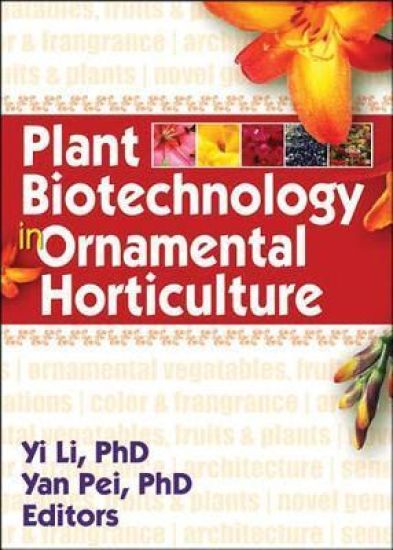
Plant Biotechnology in Ornamental Horticulture

Plant Biotechnology in Ornamental Horticulture

Yi Li; Yan Pei

Food Products Press,U.S.
2007
nidottu
Find out how biotechnology can produce more nutritious fruits and vegetables, more colorful flowers, and grass that needs less waterand mowing!Plant Biotechnology in Ornamental Horticulture presents an in-depth overview of the key scientific and technical advances, issues, and challenges in one of the fastest growing segments of the agriculture industry. This comprehensive book covers 19 different topics related to the use of transgenic plant technology to improve ornamental plants, ranging from metabolic engineering of flower color and scent to improving cold, drought, and disease tolerance in horticultural and ornamental crops to the economics of horticultural biotechnology. Horticulture provides color and flavor to the foods we eat and variety to the products we use, and helps us sustain a healthy environment. Plant Biotechnology in Ornamental Horticulture examines the importance of biotechnology in cultivating garden crops-including fruits, vegetables, flowers, and ornamentals such as plants used for landscaping-by reducing pesticide use, reducing soil erosion, and developing plants with improved nutrition. Leading educators and horticultural professionals address important current and future topics, including micropropagation and regeneration, the use of molecular techniques for genetic improvement, molecular-assisted breeding, abiotic stress, the development of disease resistance, protection from insects, herbicide tolerance, controlled flowering, modifying color and fragrance, plant architecture, and senescence. Plant Biotechnology in Ornamental Horticulture examines:* ornamental plant transformation* molecular phylogeny* drought response and drought tolerance engineering* transgenic approaches to viral, bacterial, and fungal disease resistance* vegetable propagation by cuttings* the promotion of flowering* molecular aspects of leaf morphogenesis* transgenic manipulation* controlling invasive plants * plant hormones, including ethylene, gibberellins (GAs), auxin, cytokinin, and abscisic acid (ABA)* and much morePlant Biotechnology in Ornamental Horticulture is essential reading for plant breeders, physiologists, agronomists, molecular biologists, cropping system specialists, as well as for educators and students involved in horticulture.