Kirjojen hintavertailu. Mukana 11 627 483 kirjaa ja 12 kauppaa.

Kirjahaku

Etsi kirjoja tekijän nimen, kirjan nimen tai ISBN:n perusteella.

18 tulosta hakusanalla Yasutaka Kojima

Paprika

Paprika

Yasutaka Tsutsui

VINTAGE
2013
nidottu
Widely acknowledged as Yasutaka Tsutsui's masterpiece, Paprika unites his surreal, quirky imagination with a mind-bending narrative about a psychiatric institute that has developed the technology to invade people's dreams. When prototype models of a dream-invading device go missing at the Institute for Psychiatric Research, it transpires that someone is using them to drive people insane. Threatened both personally and professionally, brilliant psychotherapist Atsuko Chiba has to journey into the world of fantasy to fight her mysterious opponents. As she delves ever deeper into the imagination, the borderline between dream and reality becomes increasingly blurred, and nightmares begin to leak into the everyday realm. The scene is set for a final showdown between the dream detective and her enemies, with the subconscious as their battleground, and the future of the waking world at stake.
Linear Differential Equations in the Complex Domain

Linear Differential Equations in the Complex Domain

Yasutaka Sibuya

Amer Mathematical Society
2008
pokkari
Research in differential equations is usually oriented toward explicit results and motivated by applications. Many clever methods have been discovered in this way, but, when problems of more fundamental difficulty arise, researchers must find something intrinsic in the mathematics itself in order to make progress. As research in topology, algebraic geometry, and functions of several complex variables have advanced, many methods useful in such fields were introduced into the study of differential equations.
Multi-View Stereo

Multi-View Stereo

Yasutaka Furukawa; Carlos Hernández

now publishers Inc
2015
nidottu
Presents a hands-on view of the field of multi-view stereo with a focus on practical algorithms. Multi-view stereo algorithms are able to construct highly detailed 3D models from images alone. They take a possibly very large set of images and construct a 3D plausible geometry that explains the images under some reasonable assumptions, the most important being scene rigidity.Multi-View Stereo: A Tutorial frames the multiview stereo problem as an image/geometry consistency optimization problem. It describes in detail its main two ingredients: robust implementations of photometric consistency measures, and efficient optimization algorithms. It then presents how these main ingredients are used by some of the most successful algorithms, applied into real applications, and deployed as products in the industry.Finally, it describes more advanced approaches exploiting domain-specific knowledge such as structural priors, and gives an overview of the remaining challenges and future research directions.
Das Luegenproblem Bei Kant

Das Luegenproblem Bei Kant

Yasutaka Akimoto

Peter Lang AG
2016
nidottu
Dieses Buch pruft die allgemeine Forschungsmeinung, dass Kant ein Vertreter des absoluten Lugenverbots sei. Dabei verteidigt der Koenigsberger Philosoph aber ebenso den Standpunkt, dass die Moralitat einer Handlung von der Maxime des Willens abhangt. Wenn Kant nun gleichzeitig behaupten wurde, dass bestimmte Handlungen in jedem Fall verboten sind, wurde er sich widersprechen. Indem das Buch die begriffliche Unterscheidung von "Lugen" als pflichtwidrige Falschaussagen und "Unwahrheiten" als nicht pflichtwidrige Falschaussagen trifft, bietet es fur dieses Paradox der Kant-Forschung als erste Monografie zum Lugenproblem einen Loesungsansatz. So wird man mit Kant sogar sagen koennen: "Manchmal musst du die Unwahrheit sagen."
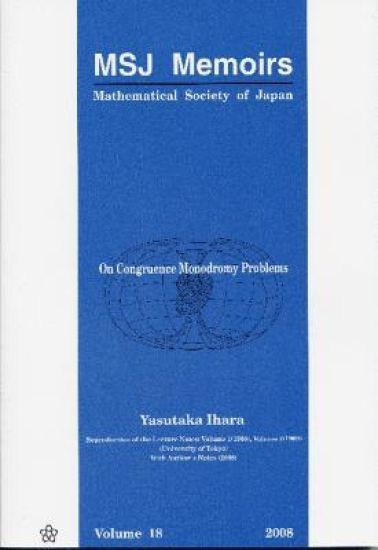
On Congruence Monodromy Problems

On Congruence Monodromy Problems

Yasutaka Ihara

Mathematical Society of Japan
2009
nidottu
It is now well-known that the group SL2(Z[1/p]) and the system of modular curves over Fp2 are “closely related”, and that the latter provided first “examples” of curves over finite fields having many rational points. However, the “three basic relationships”, which really justify the former to be called the arithmetic fundamental group of the latter, still do not seem to be so commonly known.This book consists of two parts; a reproduction of the author's unpublished Lecture Notes (1968,69), and Author's Notes (2008). The former starts with explicit three main conjectural relationships for more general cases and gives various approaches towards their proofs. Though remained formally unpublished, these Lecture Notes had been widely circulated and have stimulated researches in various directions. The main conjectures themselves have also been proved since then. The Author's Notes (2008) gives detailed explanations of these developments, together with open problems.Published by Mathematical Society of Japan and distributed by World Scientific Publishing Co. for all markets
Asymptotic Statistics in Insurance Risk Theory

Asymptotic Statistics in Insurance Risk Theory

Yasutaka Shimizu

SPRINGER VERLAG, SINGAPORE
2022
nidottu
This book begins with the fundamental large sample theory, estimating ruin probability, and ends by dealing with the latest issues of estimating the Gerber–Shiu function. This book is the first to introduce the recent development of statistical methodologies in risk theory (ruin theory) as well as their mathematical validities. Asymptotic theory of parametric and nonparametric inference for the ruin-related quantities is discussed under the setting of not only classical compound Poisson risk processes (Cramér–Lundberg model) but also more general Lévy insurance risk processes. The recent development of risk theory can deal with many kinds of ruin-related quantities: the probability of ruin as well as Gerber–Shiu’s discounted penalty function, both of which are useful in insurance risk management and in financial credit risk analysis. In those areas, the common stochastic models are used in the context of the structural approach of companies’ default. So far, the probabilistic point of view has been the main concern for academic researchers. However, this book emphasizes the statistical point of view because identifying the risk model is always necessary and is crucial in the final step of practical risk management.
Basic Theory of Ordinary Differential Equations

Basic Theory of Ordinary Differential Equations

Po-Fang Hsieh; Yasutaka Sibuya

Springer-Verlag New York Inc.
1999
sidottu
The authors' aim is to provide the reader with the very basic knowledge necessary to begin research on differential equations with professional ability. The selection of topics should provide the reader with methods and results that are applicable in a variety of different fields. The text is suitable for a one-year graduate course, as well as a reference book for research mathematicians. The book is divided into four parts. The first covers fundamental existence, uniqueness, smoothness with respect to data, and nonuniqueness. The second part describes the basic results concerning linear differential equations, the third deals with nonlinear equations. In the last part the authors write about the basic results concerning power series solutions. Each chapter begins with a brief discussion of its contents and history. The book has 114 illustrations and 206 exercises. Hints and comments for many problems are given.
Basic Theory of Ordinary Differential Equations

Basic Theory of Ordinary Differential Equations

Po-Fang Hsieh; Yasutaka Sibuya

Springer-Verlag New York Inc.
2012
nidottu
The authors' aim is to provide the reader with the very basic knowledge necessary to begin research on differential equations with professional ability. The selection of topics should provide the reader with methods and results that are applicable in a variety of different fields. The text is suitable for a one-year graduate course, as well as a reference book for research mathematicians. The book is divided into four parts. The first covers fundamental existence, uniqueness, smoothness with respect to data, and nonuniqueness. The second part describes the basic results concerning linear differential equations, the third deals with nonlinear equations. In the last part the authors write about the basic results concerning power series solutions. Each chapter begins with a brief discussion of its contents and history. The book has 114 illustrations and 206 exercises. Hints and comments for many problems are given.
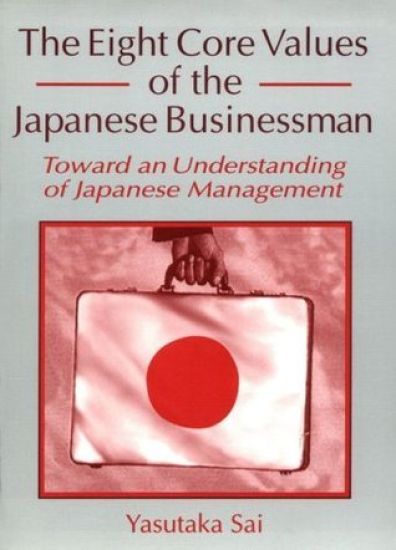
The Eight Core Values of the Japanese Businessman

The Eight Core Values of the Japanese Businessman

Erdener Kaynak; Yasutaka Sai

Routledge Member of the Taylor and Francis Group
1995
sidottu
The values and behaviors of the Japanese businessman--and of the Japanese in general--are quite diverse and keep changing, making it difficult for anyone (including the Japanese themselves) to truly understand why they act the way they do. The Eight Core Values of the Japanese Businessman saves readers time and effort when pursuing business opportunities in Japan because it identifies the core values of the Japanese businessman, ranging from the obvious and public, “Diligence,” to the more private, “Silence as Eloquence” and “Perception of Time.” After identifying these eight core values, Yasutaka Sai explores the history and modern interpretation of each. Based on over 300 Japanese language sources--otherwise unavailable to those who do not read Japanese--The Eight Core Values of the Japanese Businessman reveals the diversity and dynamism of Japanese values and behaviors. This information empowers businesspeople and international business educators to develop solid business relationships with the Japanese. With many years of experience, the author focuses on specific values that are most common among Japanese in the business world. These are not exclusive, but the most prevalent or widely shared values that Western businesspeople are likely to encounter:Japanese diligence, work ethic, and “Gambarism” or persistence group orientation: sense of belonging and participation, spirit of harmony, interpersonal relations aesthetics and perfectionism curiosity and emphasis on innovation respect for form and “Hana Yori Dango” or practicality a mind for competition and outlook on rewards the value of silence as eloquence perception of timeAs there is no single uniformly accepted source for the values of today's Japanese citizen or business person, Sai's exploration opens a vital window into understanding many Japanese values and behaviors. The Eight Core Values of the Japanese Businessman is vital reading for those with international business concerns--business and management educators, businesspeople interested in how Japanese managers manage and employees work, and practicing managers interested in cross-cultural management issues. It allows readers to develop good relationships with the Japanese based on a realistic understanding of how they think and act, both individually and as members of business organizations.
The Eight Core Values of the Japanese Businessman

The Eight Core Values of the Japanese Businessman

Erdener Kaynak; Yasutaka Sai

Routledge Member of the Taylor and Francis Group
1996
nidottu
The values and behaviors of the Japanese businessman--and of the Japanese in general--are quite diverse and keep changing, making it difficult for anyone (including the Japanese themselves) to truly understand why they act the way they do. The Eight Core Values of the Japanese Businessman saves readers time and effort when pursuing business opportunities in Japan because it identifies the core values of the Japanese businessman, ranging from the obvious and public, “Diligence,” to the more private, “Silence as Eloquence” and “Perception of Time.” After identifying these eight core values, Yasutaka Sai explores the history and modern interpretation of each. Based on over 300 Japanese language sources--otherwise unavailable to those who do not read Japanese--The Eight Core Values of the Japanese Businessman reveals the diversity and dynamism of Japanese values and behaviors. This information empowers businesspeople and international business educators to develop solid business relationships with the Japanese. With many years of experience, the author focuses on specific values that are most common among Japanese in the business world. These are not exclusive, but the most prevalent or widely shared values that Western businesspeople are likely to encounter:Japanese diligence, work ethic, and “Gambarism” or persistence group orientation: sense of belonging and participation, spirit of harmony, interpersonal relations aesthetics and perfectionism curiosity and emphasis on innovation respect for form and “Hana Yori Dango” or practicality a mind for competition and outlook on rewards the value of silence as eloquence perception of timeAs there is no single uniformly accepted source for the values of today's Japanese citizen or business person, Sai's exploration opens a vital window into understanding many Japanese values and behaviors. The Eight Core Values of the Japanese Businessman is vital reading for those with international business concerns--business and management educators, businesspeople interested in how Japanese managers manage and employees work, and practicing managers interested in cross-cultural management issues. It allows readers to develop good relationships with the Japanese based on a realistic understanding of how they think and act, both individually and as members of business organizations.
Autumn Colors of Kyoto: A Seasonal Portfolio

Autumn Colors of Kyoto: A Seasonal Portfolio

Hidehiko Mizuno; Kayu Mizuno; Yasutaka Ogawa

Kodansha America, Inc
2014
nidottu
Why are the autumn colours of Kyoto described as the most beautiful in Japan? The secret of Kyoto's autumn beauty lies in a perfect harmony of the natural and the man-made, the culmination of centuries of history. This book introduces 49 Kyoto locations - predominantly temples and shrines - ideal for viewing the season's fiery displays. Why are the autumn colours of Kyoto described as the most beautiful in Japan? The delicate, almost translucent autumn hues, which derive from the city's unique plant life and climate, are undoubtedly lovely to behold.
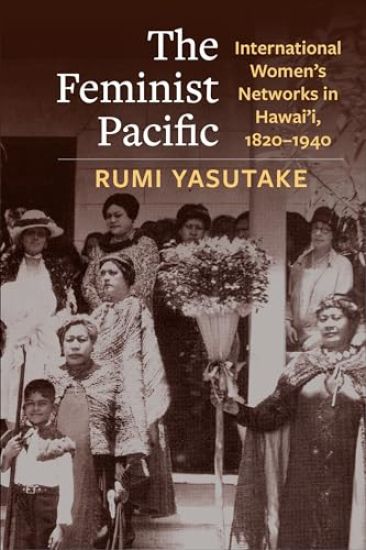
The Feminist Pacific

The Feminist Pacific

Rumi Yasutake

Columbia University Press
2024
sidottu
As competing American, European, and later Japanese imperial and colonial ambitions spread across the ocean in the nineteenth century, Honolulu emerged as a transnational hub for the exchange of ideas. Rumi Yasutake reveals the pivotal role of women’s organizing in this era of rapid globalization, tracing how diverse movements intersected and converged in Hawai‘i—with worldwide consequences.The Feminist Pacific examines transnational networks in Hawai‘i beginning in 1820, with the arrival of American missionary wives, and through the rise of women’s internationalism in the interwar years. It follows an array of suffragists, missionaries, maternalists, and antiwar activists in their international campaigns for peace and social justice that culminated in the formation of the Pan-Pacific Women’s Association (PPWA) and subsequent conferences. Yasutake explores how these movements radiated from Honolulu and branched out to the United States, Japan, and China. She illuminates their contradictions, showing how women’s striving for collective power went at once in the face of and hand in hand with globalization, settler colonialism, and imperialism. Yasutake underscores how the PPWA and the movements that formed it wrestled with the dichotomies of their world: home and public, domestic and foreign, native and settler, white and nonwhite, feminist and antifeminist. Bridging nineteenth-century Protestant churchwomen’s evangelism with twentieth-century feminist internationalism, this book recasts women’s global organizing from the perspective of the Pacific.
The Feminist Pacific

The Feminist Pacific

Rumi Yasutake

Columbia University Press
2024
pokkari
As competing American, European, and later Japanese imperial and colonial ambitions spread across the ocean in the nineteenth century, Honolulu emerged as a transnational hub for the exchange of ideas. Rumi Yasutake reveals the pivotal role of women’s organizing in this era of rapid globalization, tracing how diverse movements intersected and converged in Hawai‘i—with worldwide consequences.The Feminist Pacific examines transnational networks in Hawai‘i beginning in 1820, with the arrival of American missionary wives, and through the rise of women’s internationalism in the interwar years. It follows an array of suffragists, missionaries, maternalists, and antiwar activists in their international campaigns for peace and social justice that culminated in the formation of the Pan-Pacific Women’s Association (PPWA) and subsequent conferences. Yasutake explores how these movements radiated from Honolulu and branched out to the United States, Japan, and China. She illuminates their contradictions, showing how women’s striving for collective power went at once in the face of and hand in hand with globalization, settler colonialism, and imperialism. Yasutake underscores how the PPWA and the movements that formed it wrestled with the dichotomies of their world: home and public, domestic and foreign, native and settler, white and nonwhite, feminist and antifeminist. Bridging nineteenth-century Protestant churchwomen’s evangelism with twentieth-century feminist internationalism, this book recasts women’s global organizing from the perspective of the Pacific.
Transnational Women's Activism

Transnational Women's Activism

Rumi Yasutake

New York University Press
2004
sidottu
Following landmark trade agreements between Japan and the United States in the 1850s, Tokyo began importing a unique American commodity: Western social activism. As Japan sought to secure its future as a commercial power and American women pursued avenues of political expression, Protestant church-women and, later, members of the Women's Christian Temperance Union (WCTU) traveled to the Asian coast to promote Christian teachings and women's social activism. Rumi Yasutake reveals in Transnational Women's Activism that the resulting American, Japanese, and first generation Japanese-American women's movements came to affect more than alcohol or even religion. While the WCTU employed the language of evangelism and Victorian family values, its members were tactfully expedient in accommodating their traditional causes to suffrage and other feminist goals, in addition to the various political currents flowing through Japan and the United States at the turn of the nineteenth century. Exploring such issues as gender struggles in the American Protestant church and bourgeois Japanese women's attitudes towards the "pleasure class" of geishas and prostitutes, Yasutake illuminates the motivations and experiences of American missionaries, U.S. WCTU workers, and their Japanese protégés. The diverse machinations of WCTU activism offer a compelling lesson in the complexities of cultural imperialism.
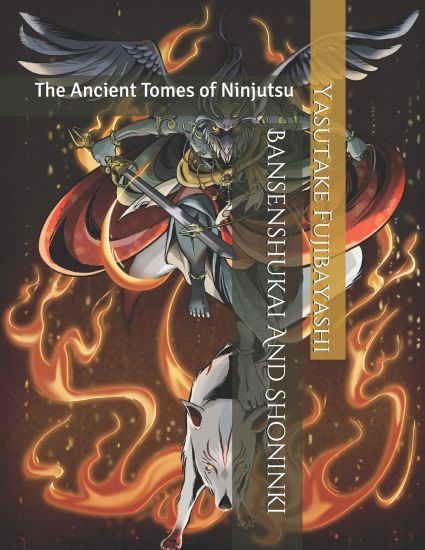
Bansenshukai And Shoninki: The Ancient Tomes of Ninjutsu

Bansenshukai And Shoninki: The Ancient Tomes of Ninjutsu

Masatake Natori; Yasutake Fujibayashi

Createspace Independent Publishing Platform
2020
nidottu
Two of the most important historical texts on ninjutsu were the Bansenshukai and Shoninki. This is a translation and commentary on them.Included in the subjects are stealth, disguises, assassination, poisons, traps, tools, tactics and others.This translation into English is the first to be directly translated into English by a native speaker who can read old Japanese and who has a background and training in the subject matter.Also included in the work are chapters explaining the background of the subjects, such as religion and the status of the ninja as well as a translation of the 100 poems of Ise Saburo Yoshimori.This work should be on the shelf of every person interested in the art of the ninja as it was practiced in Japan.