
Kirjahaku
Etsi kirjoja tekijän nimen, kirjan nimen tai ISBN:n perusteella.
1000 tulosta hakusanalla Ye Yibin
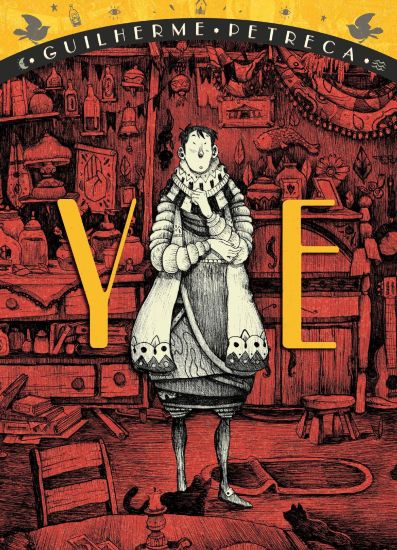
Ye is a curious young man, named after the only sound he knows how to make. His voice must have been stolen by the Colorless King, the source of all the world's sorrows-terrifying, unrelenting, all-taking and never-giving. Now, Ye has no choice but the embark on a long voyage over land and sea, past grizzled pirates, a drunken clown, and more, to find the famous witch who can help him defeat the Colorless King. What he discovers may be a lesson for us all. Advance solicited for January release! Young cartoonist Guilherme Petreca won Brazil's prestigious HQ Mix Award for Best Artist due to the unforgettable imagery on every page of Ye, his first full-length graphic novel. In the tradition of The Little Prince, The Neverending Story, and A Wrinkle in Time, this graphic fable will leave young and old readers awestruck and eager to relive the journey.
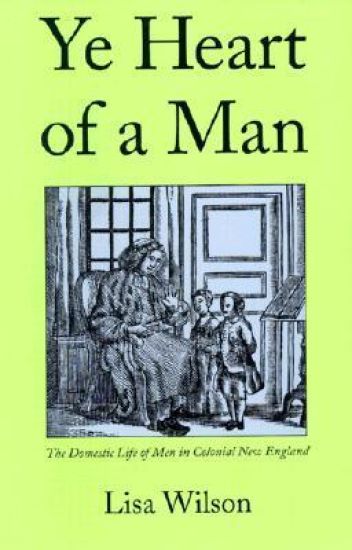
This fascinating book is the first to investigate the everyday lives of men in prerevolutionary America. It looks at men and women in colonial Massachusetts and Connecticut, comparing their experiences in order to understand the domestic environment in which they spent most of their time. Lisa Wilson tells wonderful stories of colonial New England men, addressing the challenges of youth, the responsibilities of adulthood, and the trials of aging. She finds that ideas about patriarchy or nineteenth-century notions of separate spheres for men and women fail to explain the world that these early New England men describe. Patriarchal power, although certainly real enough, was tempered by notions of obligation, duty, and affection. These men created their identities in a multigendered, domestic world. A man was defined by his usefulness in this domestic context; as part of an interdependent family, his goal was service to family and community, not the self-reliant independence of the next century’s “self-made” man.


Tis thy original-scripted playage and quilt by thee in thine gifted literary style of William Shakespeare to where yonder readers whilst travel back to thee time of France's King Francis thy First's royal court and experience such comedic entertainment on thy pages which hast never been transcribed before...
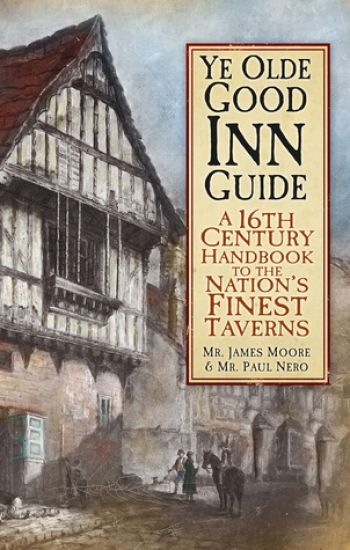
Art thou in need of hearty ale and a bed safe from brigands as you ply the highways and byways of Britain? Then Ye Olde Good Inn Guide is for you – the essential handbook for the Tudor traveller. Packed with the finest hostelries to grace the 16th century and written with all the flavour of the language of the day, this witty and meticulously researched tome covers every county in the land and directs you to all the celebrated and charming pubs, many of which still exist today. With all the information you need, from the quality of the beer and accommodation, the merriment on offer and even the local etiquette of the day, Ye Olde Good Inn Guide is an invaluable aid to both the pub historian and the drinker who yearn for the lost age of the trusty tavern.
Ye Kingdome of Accawmacke or the Eastern Shore of Virginia in the 17th Century
Wise
Clearfield
2009
pokkari
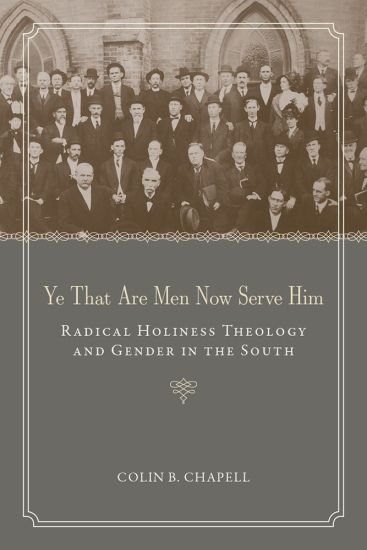
Modernity remade much of the world in the late nineteenth and early twentieth centuries and was nowhere more transformational than in the American South. In the wake of the Civil War, the region not only formed new legal, financial, and social structures, but citizens of the South also faced disorienting uncertainty about personal identity and even gender itself. Ye That Are Men Now Serve Him traces the changes in southern gender roles during the New South period of 1877–1915 and demonstrates that religion is the key to perceiving how constructions of gender changed.The Civil War cleaved southerners from the culture they had developed organically during antebellum decades, raising questions that went to the very heart of selfhood: What does it mean to be a man? How does a good woman behave? Unmoored from traditional anchors of gender, family, and race, southerners sought guidance from familiar sources: scripture and their churches. In Ye That Are Men Now Serve Him, Colin Chapell traces how concepts of gender evolved within the majority Baptist and Methodist denominations as compared to the more fluid and innovative Holiness movement.Grounded in expansive research into the archives of the Southern Baptist Convention; Methodist Episcopal Church, South; and the Holiness movement, Chapell’s writing is also enlivened by a rich trove of primary sources: diaries, sermons, personal correspondence, published works, and unpublished memoirs. Chapell artfully contrasts the majority Baptist and Methodist view of gender with the relatively radical approaches of the emerging Holiness movement, thereby bringing into focus how subtle differences in belief gave rise to significantly different ideas of gender roles.Scholars have explored class, race, and politics as factors that contributed to contemporary southern identity, and Chapell restores theology to its intuitive place at the center of southern identity. Probing and illuminating, Ye That Are Men Now Serve Him offers much of interest to scholars and readers of the South, southern history, and religion.
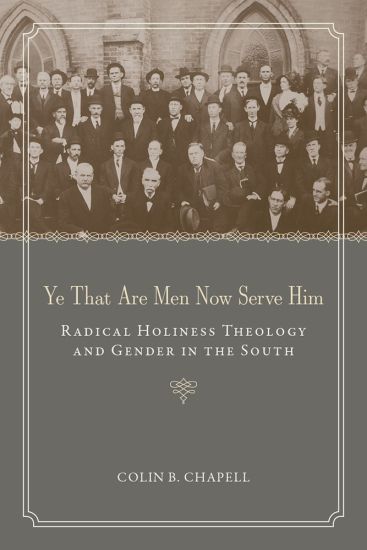
Ye That Are Men Now Serve Him examines how religious belief reshaped concepts of gender during the New South period that took place from 1877 to 1915 in ways that continue to manifest today. Modernity remade much of the world in the late nineteenth and early twentieth centuries and was nowhere more transformational than in the American South. In the wake of the Civil War, the region not only formed new legal, financial, and social structures, but citizens of the South also faced disorienting uncertainty about personal identity and even gender itself. Ye That Are Men Now Serve Him traces the changes in southern gender roles during the New South period of 1877–1915 and demonstrates that religion is the key to perceiving how constructions of gender changed. The Civil War cleaved southerners from the culture they had developed organically during antebellum decades, raising questions that went to the very heart of selfhood: What does it mean to be a man? How does a good woman behave? Unmoored from traditional anchors of gender, family, and race, southerners sought guidance from familiar sources: scripture and their churches. In Ye That Are Men Now Serve Him, Colin Chapell traces how concepts of gender evolved within the majority Baptist and Methodist denominations as compared to the more fluid and innovative Holiness movement. Grounded in expansive research into the archives of the Southern Baptist Convention; Methodist Episcopal Church, South; and the Holiness movement, Chapell’s writing is also enlivened by a rich trove of primary sources: diaries, sermons, personal correspondence, published works, and unpublished memoirs. Chapell artfully contrasts the majority Baptist and Methodist view of gender with the relatively radical approaches of the emerging Holiness movement, thereby bringing into focus how subtle differences in belief gave rise to significantly different ideas of gender roles. Scholars have explored class, race, and politics as factors that contributed to contemporary southern identity, and Chapell restores theology to its intuitive place at the center of southern identity. Probing and illuminating, Ye That Are Men Now Serve Him offers much of interest to scholars and readers of the South, southern history, and religion.

Ye Shall Receive Power: A Daily Devotional
Ellen Gould Harmon White
Review Herald Publishing
2012
sidottu
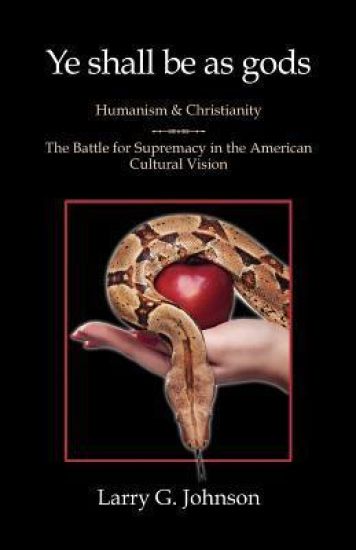
Ye shall be as gods - Humanism and Christianity - The Battle for Supremacy in the American Cultural Vision
Larry G Johnson
Anvil House Publishers LLC
2011
pokkari

Ye Olde Book Shoppe and a bonus story too No author writes Christmas stories better than Paul John Hausleben does A reader's favorite story of the master storyteller, Mr. Paul John Hausleben returns to print in a new version Ye Olde Book Shoppe is an enchanting romantic novelette set within a Christmas setting. Set in the old neighborhood of Harry and Paul adventures, this story will touch and warm your heart, and fill you with Christmas spirit, while it transports you once more to simpler times.Mr. Chadwick Ripplewood Junior is a lonely bookshop owner who desperately clings to his family's business of an old-fashioned bookstore on a busy street in an old city in northern New Jersey. Struggling to get by with meager book sales and vast changes in the old city's environment, Chadwick holds his love of his precious books close to his heart and soul. When Chadwick meets the woman of his dreams and falls deeply in love, his life seems to be finally taking a turn for the better. Better, until despair hits when a wealthy business owner threatens to destroy Chadwick's livelihood, and the love of his life suddenly and rather mysteriously leaves him. Will Chadwick finally prevail and win love and happiness? Or will the evil business owner succeed in his quest for more wealth at the expense of Chadwick's hopes and dreams?This is one of Mr. Hausleben's finest moments, as he tells us this memorable story of romance and simple human emotions set within holiday enchantment.Bonus Story The Last Roll on Old Number Ninety-Five is the classic Christmas train story that tells the touching and emotional story of the Head Conductor of a passenger train on his final train ride before he retires after forty-six years of riding the rails. It just so happens that the last ride is on a snowy Christmas Eve where a few special passengers, some glorious fate, and a touch of holiday magic returns the conductor to a life and a spirit that he thought long since lost forever.These are the two very special stories that you have been searching for to read for the most wonderful time of the year. Grab or download your copy today and enjoy the holiday storytelling magic of Mr. Paul John Hausleben.