
Kirjahaku
Etsi kirjoja tekijän nimen, kirjan nimen tai ISBN:n perusteella.
130 tulosta hakusanalla Yoel Pagan

Commentaries on the Book of YoEl.: A Netzarim Teacher's Insights on the Prophet Joel
Michael a. Trinkman D. Th
Createspace Independent Publishing Platform
2017
nidottu

According to historical teaching, a Jewish man should give thanks each day for ''not having been made a gentile, a woman, nor a slave.'' Yoel Kahn's innovative study of a controversial Jewish liturgical passage traces the history of this prayer from its extra-Jewish origins across two thousand years of history, demonstrating how different generations and communities understood the significance of these words in light of their own circumstances. Marking the boundary between ''us'' and ''them,'' marginalized and persecuted groups affirmed their own identity and sense of purpose. After the medieval Church seized and burned books it considered offensive, new, coded formulations emerged as forms of spiritual resistance. Owners voluntarily carefully expurgated their books to save them from being destroyed, creating new language and meanings while seeking to preserve the structure and message of the received tradition. Renaissance Jewish women ignored rabbis' objections and assertively declared their gratitude at being ''made a woman and not a man.'' Illustrations from medieval and renaissance Hebrew manuscripts demonstrate creative literary responses to censorship and show that official texts and interpretations do not fully represent the historical record. As Jewish emancipation began in the 19th century, modernizing Jews again had to balance fealty to historical practice with their own and others' understanding of their place in the world. Seeking to be recognized as modern and European, early modern Jews rewrote the liturgy to fit modern sensibilities and identified themselves with the Christian West against the historical pagan and the uncivilized infidel. In recent decades, a reassertion of ethnic and cultural identity has again raised questions of how the Jewish religious community should define itself. Through the lens of a liturgical text in continuous use for over two thousand years, Kahn offers new insights into an evolving religious identity and recurring questions of how to honor both historical teaching and contemporary sensibility.
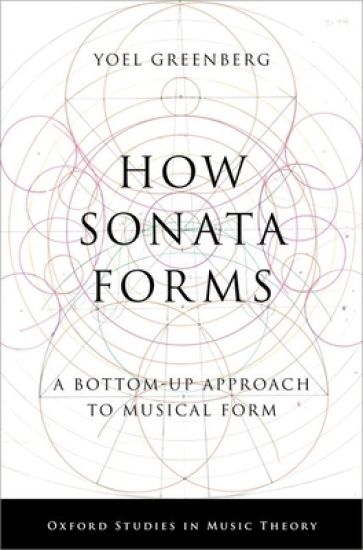
Traditional approaches to musical form have always adopted a top-down perspective whereby a work's form organizes and unifies the individual parts of the work through an overarching logic. How Sonata Forms turns this view on its head, proposing instead that it was the parts that conditioned and enabled the whole. Relying on a corpus of over a thousand works, author Yoel Greenberg illustrates how the elements of sonata form arose independently of one another, with an overarching idea of form only emerging at the tail end of its formative period during the eighteenth century. Appreciation of the bottom-up nature of sonata form's evolution reveals it not as a stable package of features that all serve a common aesthetic or formal goal, but rather as an unstable collection of disparate and sometimes even contradictory common practices. The resolution of these contradictions presents a challenge to composers, rendering form a creative catalyst in itself, rather than as a compositional convenience. More generally, the deeply diachronic perspective of How Sonata Forms offers an alternative to the traditional synchronic outlook that pervades music theory in general and the study of form in particular. Rather than focus on definitions and taxonomies, How Sonata Forms proposes a focus on the motion of the system of form as a whole, suggesting that it is often more productive to appreciate the dynamics of a system than it is to rigorously define its parts.
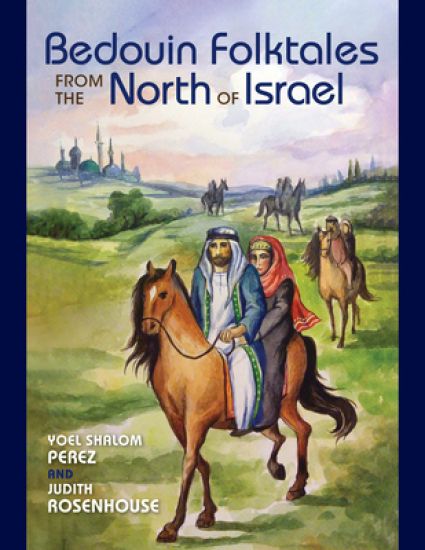
Bedouin Folktales from the North of Israel
Yoel Shalom Perez; Judith Rosenhouse
INDIANA UNIVERSITY PRESS
2022
sidottu
Galilee has been a crossroads of cultures, religions, and languages for centuries, as illustrated in these fascinating Bedouin folktales, which offer excellent examples of the Arabic narrative tradition of the Middle East. Bedouin Folktales from the North of Israel collects nearly 60 traditional folktales, told mostly by women, that have been carefully translated in the same colloquial style in which they were told. These stories are grouped into themes of love and devotion, ghouls and demons, and animal stories. The work also includes phonetic transcription and linguistic annotation. Accompanying each folktale is a comprehensive ethnographic, folkloristic, and linguistic commentary, placing the tales in context with details on Galilee Bedouin dialects and the tribes themselves. A rich, multifaceted collection, Bedouin Folktales from the North of Israel is an invaluable resource for linguists, folklorists, anthropologists, and any reader interested in a tradition of storytelling handed down through the centuries.
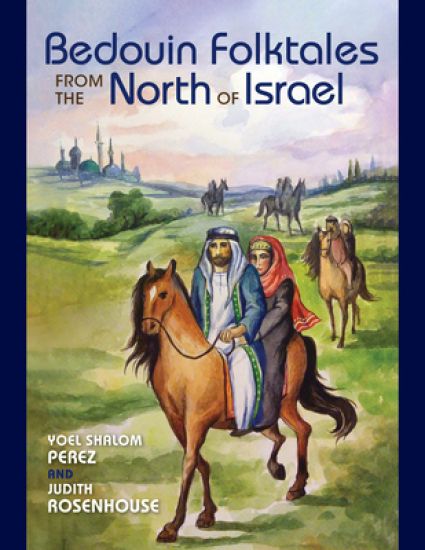
Bedouin Folktales from the North of Israel
Yoel Shalom Perez; Judith Rosenhouse
INDIANA UNIVERSITY PRESS
2022
pokkari
Galilee has been a crossroads of cultures, religions, and languages for centuries, as illustrated in these fascinating Bedouin folktales, which offer excellent examples of the Arabic narrative tradition of the Middle East. Bedouin Folktales from the North of Israel collects nearly 60 traditional folktales, told mostly by women, that have been carefully translated in the same colloquial style in which they were told. These stories are grouped into themes of love and devotion, ghouls and demons, and animal stories. The work also includes phonetic transcription and linguistic annotation. Accompanying each folktale is a comprehensive ethnographic, folkloristic, and linguistic commentary, placing the tales in context with details on Galilee Bedouin dialects and the tribes themselves. A rich, multifaceted collection, Bedouin Folktales from the North of Israel is an invaluable resource for linguists, folklorists, anthropologists, and any reader interested in a tradition of storytelling handed down through the centuries.
In order to understand contemporary Jewish identity in the twenty-first century, one needs to look beyond the Synagogue, the holy days and Jewish customs and law to explore such modern phenomena as mass media and their impact upon Jewish existence. This book delves into the complex relationship between Judaism and the mass media to provide a comprehensive examination of modern Jewish identity in the information age. Covering Israel as well as the Diaspora populations of the US and UK, the author looks at journalism, broadcasting, advertising and the internet to give a wide-ranging analysis of how the Jewish religion and Jewish people have been influenced by the media age. He tackles questions such as: What is the impact of Judaism on mass media? How is the religion covered in the secular Israeli media? Does the coverage strengthen religious identity? What impact does the media have upon secular-religious tensions? Chapters explore how the impact of Judaism is to be found particularly in the religious media in Israel – haredi and modern Orthodox – and looks at the evolution of new patterns of religious advertising, the growth and impact of the internet on Jewish identity, and the very legitimacy of certain media in the eyes of religious leaders. Also examined are such themes as the marketing of rabbis, the `Holyland’ dimension in foreign media reporting from Israel, and the media’s role in the Jewish Diaspora. An important addition to the existing literature on the nature of Jewish identity in the modern world, this book will be of great interest to scholars of media studies, media and religion, sociology, Jewish studies, religion and politics, as well as to the broader Jewish and Israeli communities.
Published in 1986, Media Diplomacy is a valuable contribution to the field of Military & Strategic Studies.
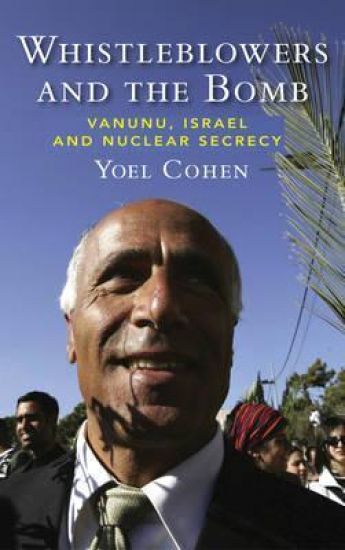
Mordechai Vanunu was a technician working at a nuclear arms research project who revealed to the world in 1986 that Israel was secretly producing nuclear armaments. After the disclosure of the affair by the Sunday Times, Vanunu was kidnapped by Mossad, tried behind closed doors and imprisoned for 18 years for treason. He was finally released in 2004. This authoritative account of the Vanunu affair uses first-hand material from the trial, and draws on an interview that the author has had with Vanunu since his release. The evidence presents a vivid account of the problems of nuclear secrecy in a democracy. It also provides a rare glimpse into official attitudes to nuclear secrecy in Israel. This is a new edition of a book that was hailed as an authoritative account of the Vanunu affair on its original release. It is now thoroughly revised and updated, to offer a timely reassessment of a world-famous whistleblower and the questions he has brought to light.
Katschen and the Book of Joseph
Yoel Hoffmann; David Kriss; Edward a. Levenston
NEW DIRECTIONS PUBLISHING CORPORATION
1998
sidottu
Katschen & The Book of Joseph makes an amazing American debut for Israeli writer Yoel Hoffmann. Intensely moving, the two novellas display the entirely original poetry and hypnotic verve of Hoffmann's atomized language, which Rosmarie Waldrop has called "utterly enchanting--it is like nothing else." "The Book of Joseph" tells the tragic story of a widowed Jewish tailor and his son in 1930s Berlin. "Katschen" gives an astounding child's-eye view of a boy orphaned in Palestine. "When Yoel Hoffmann's books first appeared in the late 1980s," Professor Nili Gold has commented, "they seemed to have tunneled their way into Israel from afar....Technically of the same generation (the 'Generation of the State') as canonical realist writers like A.B. Yehoshua and Amos Oz, he didn't begin to publish fiction until his late forties, and in many ways he represents a generation of one, at the edge of the Israeli avant-garde."

In kaleidoscopic fragments, Hoffmann refracts Jewish popular lore and folk wisdom through a postmodernist prism, brightening his prose with snatches of verse, songs, diary excerpts, letters, ominous dreams, lush erotic passages and Yiddish sayings. "The Book of Joseph" tells the tragic story of a widowed Jewish tailor and his son in 1930s Berlin. "Katschen" gives an astounding child's-eye view of a boy orphaned in the new state of Israel. The novellas radiate the original poetry of Hoffmann's atomized hypnotic language, which Rosmarie Waldrop has called "utterly enchanting—it's like nothing else."

Yoel Hoffmann's novel The Christ of Fish, revolving around its heroine Aunt Magda, offers a heart-stopping view into the soul of things. Hoffmann makes a beautiful, epiphanic mosaic out of 233 pieces of Aunt Magda's life in Tel Aviv. Originally from Vienna, still speaking German after decades in Israel, and a widow, Aunt Magda has "divided her life into two periods: 'When my husband was alive' and 'now.'" "Now," ever elusive and ever inclusive in Hoffmann's work, contains her childhood, her marriage, her nephew, her best friend Frau Stier, Wildegans' poetry, apple strudel, two stolen handbags, Bing Crosby, a favorite cafe, and a gentleman admirer. Spontaneous and dreamlike, Hoffmann's images of reality shift in currents of "realness,"creating moments of absolute clarity -- life, seized as it is and of itself-- from the "cotton reels of memory." One reel concerns the title fish: "At the beginning of the fifties (Food was scarce in those days. Once a month, in exchange for government stamps, we ate a yellow chicken.) on Passover Eve, Aunt Magda's friend Berthe came to visit her and brought her from the Jordan Valley a large carp in a metal bucket....Aunt Magda filled the bath with water and put the carp in it. Two whole days the carp swam up and down the length of the bath. On the third day, Aunt Magda declared that the carp 'thinks just like we do, ' and sent Uncle Herbert (an expert in Sanskrit) 'to put the fish back in the sea.'"

The Heart Is Katmandu
Yoel Hoffmann; Peter (TRN) Cole
New Directions Publishing Corporation
2001
sidottu
An entirely new direction in the work of "Israel's celebrated avant-garde genius" (Forward): Yoel Hoffmann now turns to the subject of love. HoffmannIsrael's most highly acclaimed avant-garde novelist (a "genius" in the words of Kirkus Reviews)has in his new novel launched off into fresh territories. His hero, whose wife has left him, floats aimlessly about Haifa. One day he meets Batya, and a raw, awkward love is born. The Heart Is Katmandu is a book in which shyness and stumbling tenderness emerge triumphant: a tale of paradise gained. Published to enormous acclaim in Israel this year ("In this book Yoel Hoffmann flies more beautifully than any other Israeli author I know," Ma'arive Magazine), The Heart Is Katmandu takes a very surprising leap away from the wrenching sadness of the Holocaust which informed the agonizing beauty of Bernhard as well as of Katschen & The Book of Joseph. No one writes like Yoel Hoffmann, and the special delight of The Heart Is Katmandu (stunningly translated by Peter Cole) lies in his majestic shift of registers from tragedy to real happiness, and within this new register his unchanging lyrical intensity and unfathomable originality.Author Biography: Yoel Hoffmann is Professor of Eastern Philosophy at the University of Haifa, and has had a lifelong scholarly engagement with Hebrew literature, Western philosophy, and Japanese Buddhism. Critically acclaimed in Israel, as well as in Germany and France, he has published several fiction books, including Bernhardt, Katschen & The Book of Joseph, and The Christ of Fish, available from New Directions.
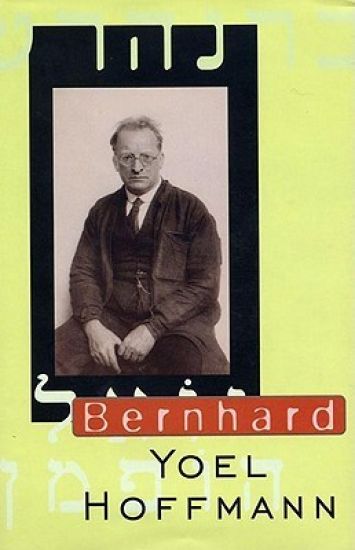
Devastated by the loss of his wife, Bernhard disconsolately walks the streets of Jerusalem, considering Gandhi, analysis, the beauty of his wife Paula's neck, his Arab neighbors, Kokoschka, the Messiah, and the inner life of his friend Gustav the plumber. As his hero tries to come to terms with his grief and the disasters of WWII, Hoffmann shows the slow remaking of an inner world.
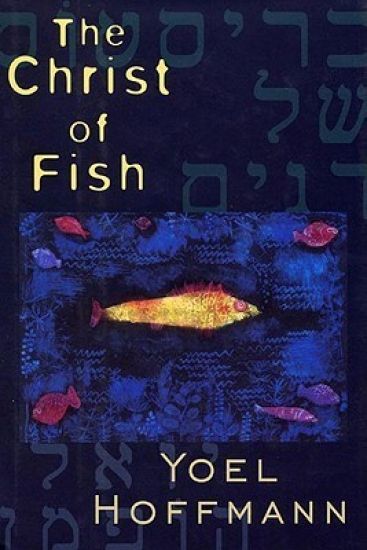
The Christ of Fish is a gorgeous novel conjured out of a mosaic of 233 pieces of Aunt Magda's life in Tel Aviv. Originally from Vienna, Hoffmann's heroine is a widow who still speaks German after decades in Israel: we see many views of Aunt Magdaher childhood, her marriage, her nephew, her best friend Frau Stier, Wildegans' poetry, apple strudel, visions and dreams, two stolen handbags, a favorite cafe, and a gentleman admirer.
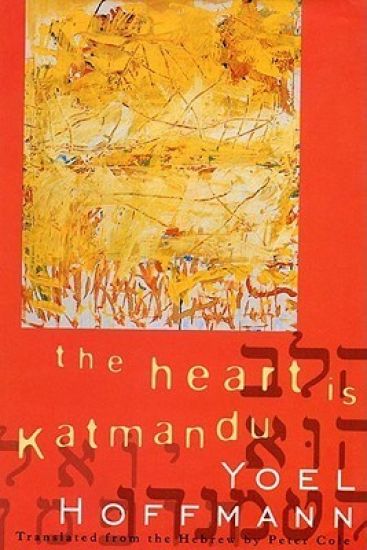
Set in today's Haifa and presented in 237 dream-like small chapters, it is a book in which shyness and stumbling tenderness emerge triumphant. Poet Peter Cole has made a beautiful translation, capturing Hoffmann's intense and unfathomably original style. A starred Kirkus Review acclaimed the novel "Beautiful, humane, priceless."
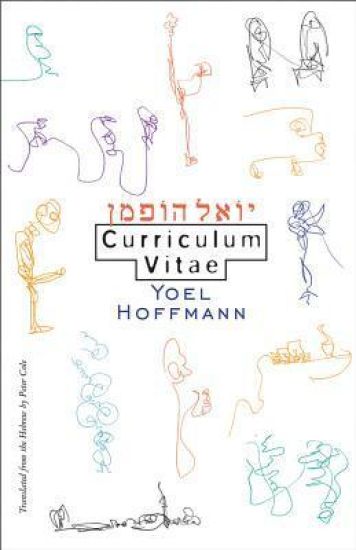
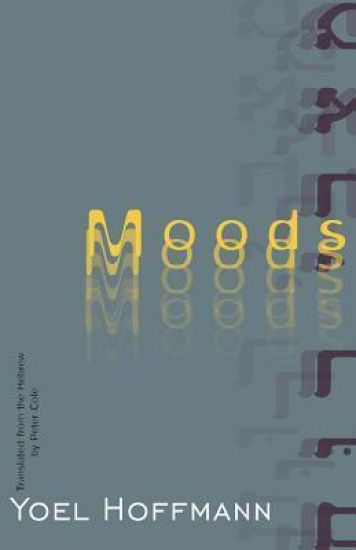
Part novel and part memoir, Yoel Hoffmann’s Moods is flooded with feelings, evoked by his family, losses, loves, the soul’s hidden powers, old phone books, and life in the Galilee—with its every scent, breeze, notable dog, and odd neighbor. Carrying these shards is a general tenderness, accentuated by a new dimension brought along by “that great big pill of Prozac.” Beautifully translated by Peter Cole, Moods is fiction for lovers of poetry and poetry for lovers of fiction—a small marvel of a book, and with its pockets of joy, a curiously cheerful book by an author who once compared himself to “a praying mantis inclined to melancholy.”

Liberalismo, Crisis E Independencia En Cuba 1880-1904
Yoel Nunez-Cordovi
Editorial Letra Viva
2013
nidottu
La confluencia del ciclo de liberaci n cubano en la segunda mitad del siglo XIX, con la irrupci n del fen meno imperialista a escala mundial, en particular, el estadounidense, es el presupuesto fundamental en que se basa este ensayo, interesado en reconstruir los debates intelectuales acerca de los destinos pol ticos de la isla de Cuba. Las tendencias de pensamiento convergentes en los an lisis de las relaciones pol ticas y econ micas con los Estados Unidos, las enconadas pol micas raciales desde los discursos de ciencia, as como las contradicciones por la necesidad de crear un estado nacional, vienen a ser el andamiaje de an lisis de esta estructura hist rica compleja de final y comienzo de los siglos XIX y XX que el autor ha decidido, con sus enfoques particulares, reconstruir.

Focused on the triangular relationship between rabbis, journalists and the public, this book analyses each group’s role in influencing the agenda around religion in Israel.The book draws upon the author's original research, comprising an analysis of the coverage of religion on four Israeli news websites, a series of surveys of rabbis, journalists, and the public, as well as a large number of interviews conducted with a range of stakeholders: community rabbis, teacher rabbis, and religious court judges; reporters, editors, and spokespersons; and the Israeli Jewish public. Key questions include:What are rabbis’ philosophical views of the media?How does the media define news about Judaism?What aspect of news about religion and spirituality interest the public?How do spokespersons and rabbis influence the news agenda?How is the triangular relationship between rabbis, journalists and the public being altered by the digital age?Despite a lack of understanding about mass media behaviour among many rabbis, and, concurrently, a lack of knowledge about religion among many journalists, it is argued that there is shared interest between the two groups, both in support of mass-media values like the right to know and freedom of expression. It is further argued that the public's attitude to news about religion is significant in determining what journalists should publish.The book will be of interest to those studying mass communications, the media, Judaism and Israeli society, as well as researchers of media and religion.