Kirjojen hintavertailu. Mukana 11 244 527 kirjaa ja 12 kauppaa.

Kirjahaku

Etsi kirjoja tekijän nimen, kirjan nimen tai ISBN:n perusteella.

520 tulosta hakusanalla Yoko Tawada

Yoko Tawada

Yoko Tawada

Lexington Books
2007
sidottu
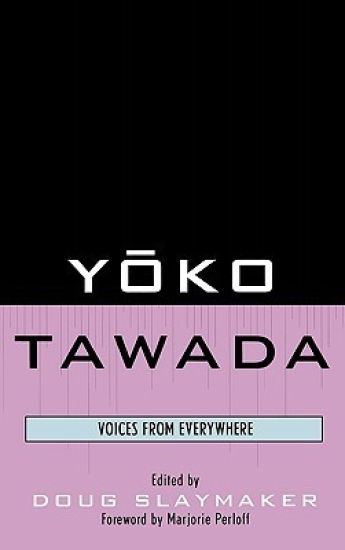
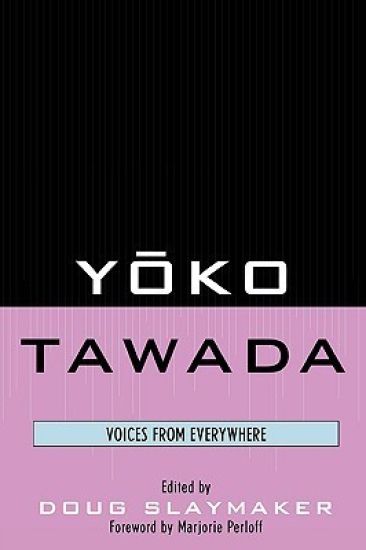
Yöko Tawada: Voices from Everywhere is the first volume of criticism dedicated to the work of Yöko Tawada, one of the most highly acclaimed writers of her generation. Douglas Slaymaker has collected a range of essays including many that were featured at the 2006 MLA Conference, where a presidential panel featuring Yöko Tawada was organized by MLA President Marjorie Perloff, who has contributed a preface to this volume. The essays explore the plurality of voices and cultures in Tawada's work and push on to explicate the poetics and intellectual underpinnings of her writing. Analyses of her fiction are paired with examinations of its philosophic and aesthetic foundations. The essayists represent a wide range of scholars and translators who are intimate with Tawada's work in German, Japanese, and/or English. Many of the essays begin as close readings of the German and Japanese texts.Yöko Tawada: Voices from Everywhere is an essential collection for anyone with an interest in this important young writer.
Yoko Tawada

Yoko Tawada

Lexington Books
2007
nidottu
Ysko Tawada: Voices from Everywhere is the first volume of criticism dedicated to the work of Ysko Tawada, one of the most highly acclaimed writers of her generation. Douglas Slaymaker has collected a range of essays including many that were featured at the 2006 MLA Conference, where a presidential panel featuring Ysko Tawada was organized by MLA President Marjorie Perloff, who has contributed a preface to this volume. The essays explore the plurality of voices and cultures in Tawada's work and push on to explicate the poetics and intellectual underpinnings of her writing. Analyses of her fiction are paired with examinations of its philosophic and aesthetic foundations. The essayists represent a wide range of scholars and translators who are intimate with Tawada's work in German, Japanese, and/or English. Many of the essays begin as close readings of the German and Japanese texts.Ysko Tawada: Voices from Everywhere is an essential collection for anyone with an interest in this important young writer.
Yoko Tawada's Portrait of a Tongue

Yoko Tawada's Portrait of a Tongue

Yoko Tawada

University of Ottawa Press
2013
pokkari
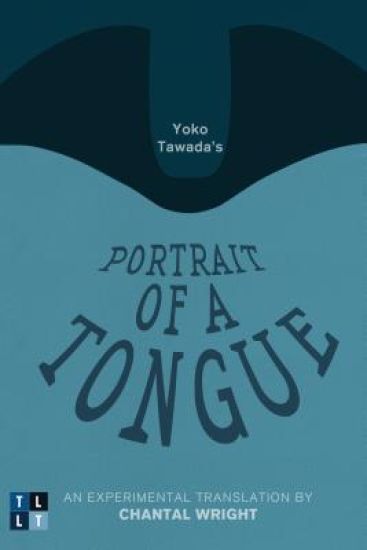
Yoko Tawada's Portrait of a Tongue: An Experimental Translation by Chantal Wright is a hybrid text, innovatively combining literary criticism, experimental translation, and scholarly commentary. This work centres on a German-language prose text by Yoko Tawada entitled 'Portrait of a Tongue' ['Portrat einer Zunge', 2002]. Yoko Tawada is a native speaker of Japanese who learned German as an adult. Portrait of a Tongue is a portrait of a German woman-referred to only as P-who has lived in the United States for many years and whose German has become inflected by English. The text is the first-person narrator's declaration of love for P and for her language, a 'thinking-out-loud' about language(s), and a self-reflexive commentary. Chantal Wright offers a critical response and a new approach to the translation process by interweaving Tawada's text and the translator's dialogue, creating a side-by-side reading experience that encourages the reader to move seamlessly between the two parts. Chantal Wright's technique models what happens when translators read and responds to calls within Translation Studies for translators to claim visibility, to practice "thick translation", and to develop their own creative voices. This experimental translation addresses a readership within the academic disciplines of Translation Studies, Germanic Studies, and related fields.
Die Grenzen Und Ihre  berschreitungen in Den Werken Yoko Tawadas
Studienarbeit aus dem Jahr 2008 im Fachbereich Orientalistik / Sinologie - Japanologie, Note: 2,3, Universit t Erfurt, Sprache: Deutsch, Abstract: F r viele Menschen ist die berschreitung einer Grenze, sei es eine l ndliche, sprachliche oder kulturelle, immer mit Problemen und berwindung verbunden. F r die Autorin Yoko Tawada, die japanischer Herkunft ist, scheinen diese Probleme etwas allt gliches geworden zu sein, seit sie in Deutschland lebt. In ihren Werken besch ftigt sie sich fast ausschlie lich mit dem Leben in einem fremden Land, mit einer fremden Sprache und einer fremden Kultur. Welche Probleme treten dabei auf und welche L sungen findet sie daf r? Kann es berhaupt zu berg ngen in japanischer und deutscher Sprache und Kultur kommen und wie werden diese gemacht? Diese und andere Fragen sollen in dieser Arbeit untersucht werden. Dazu soll zun chst in Punkt 2, der bergang von Zeichen- in Schriftsysteme, die sogenannte Transkription behandelt werden. Erst einmal werden dazu die japanischen Schrift- bzw. Sprachsysteme vorgestellt und n her erl utert. Danach soll nach berg ngen von diesen komplexen Systemen in das deutsche Sprachsystem in Tawadas Werken gesucht werden. Au er diesen System berg ngen werden nachfolgend auch noch andere Zeichen, die experimentell bersetzt werden k nnen, mit in Betracht gezogen. Im nachfolgenden, inhaltlichen Punkt 3, soll die zweite "Grenz berschreitung" ausgearbeitet werden: der bergang von einer Sprache in eine andere, die bersetzung. Zuerst soll hier die Unm glichkeit einer perfekten bersetzung anhand von Beispielen in Yoko Tawadas Werken dargestellt werden. Um die Beweise zu st tzen, sollen danach noch eigene Meinungen und u erungen der Autorin, zur Untersuchung herangezogen werden. Der vierte Punkt soll dann eine berschreitung zeigen, in welche die ersten beiden auch mit hinein z hlen, den bergang von einer Kultur in eine andere: die Interkulturalit t. Hier soll
Exophony

Exophony

Yoko Tawada

John Murray Press
2025
pokkari
'Tawada's strange, exquisite book toys with ideas of language, identity and what it means to own someone else's story or one's own' The New Yorker on Tawada's Memoirs of a Polar BearAre you formed by your mother tongue?How might the world unfold if you stepped outside of its rhythms?In this playful and daring interrogation of language, the globally acclaimed Yoko Tawada reveals the poetics, politics and potential of existing outside one's mother tongue. From Senegalese writers discarding colonial-enforced French to the increasing use of loan words in her native Japanese, Tawada deconstructs the ways in which the world shapes and is shaped by languages: their hidden systems of power, their sweeping histories and, ultimately, the people who claim, reject, adapt or romanticise them.Exophony is an invitation to revel in the possibilities that emerge when we dare to seek beyond the familiar - and a sharp, incisive series of essays in which Tawada's erudite wit and multidimensional curiosity sing.
Spontaneous Acts

Spontaneous Acts

Yoko Tawada

John Murray Press
2024
pokkari
The highly anticipated new novel from award-winning, critically acclaimed novelist Yoko Tawada.Patrik is a literary researcher living in Berlin, a city just coming back to life after lockdown. Though his beloved opera houses are open again, Patrik cannot leave the house and hardly manages to get out of bed.He is supposed to give a paper at a conference in Paris, on the poetry collection Threadsuns by Paul Celan, but he can't get past the first question on the registration form: 'What is your nationality?'As Patrik attempts to find a connection in a world that constantly overwhelms him, he meets a mysterious stranger. The man's name is Leo-Eric Fu, and somehow he already knows Patrik . . .Yoko Tawada's mesmerizing new novel unfolds like a lucid dream in which the solace of friendship, reading, conversation, music - of seeing and being seen - is examined and celebrated.Spontaneous Acts reaches out to all of us who find meaning and even obsession in the words of those before us.Previous praise for Tawada:'Every Yoko Tawada novel pulls the ground out from under us, but gives us new senses in return.' Madeleine Thien, author of Do Not Say We Have Nothing'Something about the way Tawada writes . . . allows the reader to take the most surreal and fantastical elements of the work completely seriously.' Lucy Scholes'Tawada writes beautifully about unbearable things.' Sara Baume, author of Spill Simmer Falter Wither
Spontaneous Acts

Spontaneous Acts

Yoko Tawada

DIALOGUE
2025
nidottu
The highly anticipated new novel from award-winning, critically acclaimed novelist Yoko Tawada.Patrik is a literary researcher living in Berlin, a city just coming back to life after lockdown. Though his beloved opera houses are open again, Patrik cannot leave the house and hardly manages to get out of bed.He is supposed to give a paper at a conference in Paris, on the poetry collection Threadsuns by Paul Celan, but he can't get past the first question on the registration form: 'What is your nationality?'As Patrik attempts to find a connection in a world that constantly overwhelms him, he meets a mysterious stranger. The man's name is Leo-Eric Fu, and somehow he already knows Patrik . . .Yoko Tawada's mesmerizing new novel unfolds like a lucid dream in which the solace of friendship, reading, conversation, music - of seeing and being seen - is examined and celebrated.Spontaneous Acts reaches out to all of us who find meaning and even obsession in the words of those before us.Previous praise for Tawada:'Every Yoko Tawada novel pulls the ground out from under us, but gives us new senses in return.' Madeleine Thien, author of Do Not Say We Have Nothing'Something about the way Tawada writes . . . allows the reader to take the most surreal and fantastical elements of the work completely seriously.' Lucy Scholes'Tawada writes beautifully about unbearable things.' Sara Baume, author of Spill Simmer Falter Wither
Facing the Bridge

Facing the Bridge

Yoko Tawada

New Directions Publishing Corporation
2007
nidottu
Amo, an African kidnapped to Europe as a boy, and Tamao, a Japanese exchange student in Germany, live in different countries but are being followed by the same shadow...Kazuko, a young professional tourist, is lured to Vietnam by a mysterious postcard...On the Canary Islands, a nameless translator battles a banana grove and a series of Saint Georges... These three new tales by master storyteller Yoko Tawada cross cultures and histories with a sensuous playfulness as sweet as a box of candied hearts—even Michael Jackson makes an appearance. In Facing the Bridge, Tawada's second collection of stories with New Directions, obsession becomes delight as the reader is whisked into a world where identities flicker and shift in a never-ending balance.
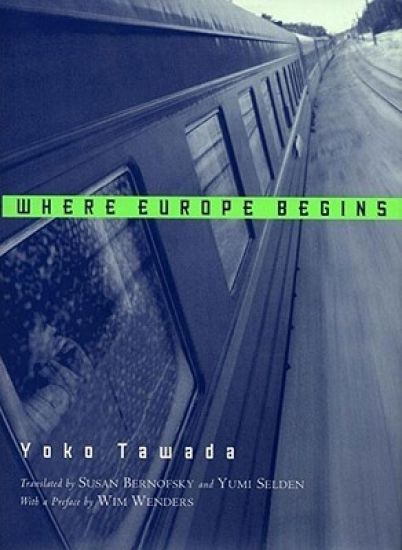
Where Europe Begins

Where Europe Begins

Yoko Tawada

New Directions Publishing Corporation
2007
nidottu
Chosen as a 2005 Times Literary Supplement Book of the Year, Where Europe Begins has been described by the Russian literary phenomenon Victor Pelevin as "a spectacular journey through a world of colliding languages and multiplying cities." In these stories' disparate settings—Japan, Siberia, Russia, and Germany—the reader becomes as much a foreigner as the author, or the figures that fill this book: the ghost of a burned woman, a traveler on the Trans-Siberian railroad, a mechanical doll, a tongue, a monk who leaps into his own reflection. Through the timeless art of storytelling, Yoko Tawada discloses the virtues of bewilderment, estrangement, and Hilaritas: the goddess of rejoicing.
The Naked Eye

The Naked Eye

Yoko Tawada

New Directions Publishing Corporation
2009
nidottu
A precocious Vietnamese high school student — known as the pupil with “the iron blouse”—in Ho Chi Minh City is invited to an International Youth Conference in East Berlin. But, in East Berlin, as she is preparing to present her paper in Russian on “Vietnam as a Victim of American Imperialism,” she is abruptly kidnapped and taken to a small town in West Germany. After a strange spell of domestic-sexual boredom with her lover-abductor—and though “the Berlin Wall was said to be more difficult to break through than the Great Wall of China” — she escapes on a train to Moscow . . . but mistakenly arrives in Paris. Alone, broke, and in a completely foreign land, Anh (her false name) loses herself in the films of Catherine Deneuve as her real adventures begin. Dreamy, meditative, and filled with the gritty everyday perils of a person living somewhere without papers (at one point Anh is subjected to some vampire-like skin experiments), The Naked Eye is a novel that is as surprising as it is delightful—each of the thirteen chapters titled after and framed by one of Deneuve’s films. “As far as I was concerned,” the narrator says while watching Deneuve on the screen, “the only woman in the world was you, and so I did not exist.” By the time 1989 comes along and the Iron Curtain falls, story and viewer have morphed into the dislocating beauty of both dancer and dance.
The Bridegroom Was a Dog

The Bridegroom Was a Dog

Yoko Tawada

New Directions Publishing Corporation
2013
nidottu
The Bridegroom Was a Dog is perhaps the Japanese-German writer Yoko Tawada’s most famous story. Its initial publication in 1998 garnered admiration from The New Yorker, who praised it as, “fast-moving, mysteriously compelling tale that has the dream quality of Kafka.” The Bridegroom Was a Dog begins with a schoolteacher telling a fable to her students. In the fable, a princess promises her hand in marriage to a dog that has licked her bottom clean. The story takes an even stranger twist when that very dog appears to the schoolteacher in real life as a dog-like man. They develop a very sexual, romantic courtship with many allegorical overtones — much to the chagrin of her friends.
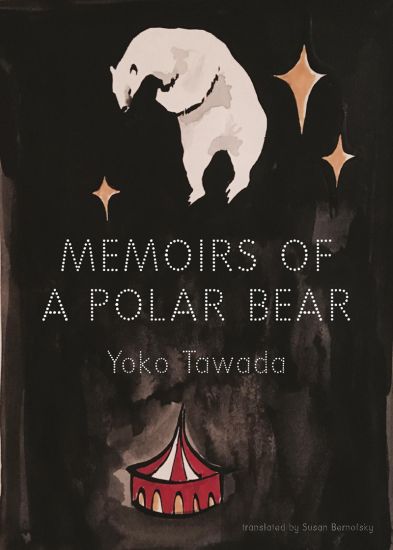
Memoirs of a Polar Bear

Memoirs of a Polar Bear

Yoko Tawada

NEW DIRECTIONS PUBLISHING CORPORATION
2016
nidottu
The Memoirs of a Polar Bear has in spades what Rivka Galchen hailed in the New Yorker as "Yoko Tawada's magnificent strangeness"--Tawada is an author like no other. Three generations (grandmother, mother, son) of polar bears are famous as both circus performers and writers in East Germany: they are polar bears who move in human society, stars of the ring and of the literary world. In chapter one, the grandmother matriarch in the Soviet Union accidentally writes a bestselling autobiography. In chapter two, Tosca, her daughter (born in Canada, where her mother had emigrated) moves to the DDR and takes a job in the circus. Her son--the last of their line--is Knut, born in chapter three in a Leipzig zoo but raised by a human keeper in relatively happy circumstances in the Berlin zoo, until his keeper, Matthias, is taken away...Happy or sad, each bear writes a story, enjoying both celebrity and "the intimacy of being alone with my pen."
The Emissary

The Emissary

Yoko Tawada

New Directions Publishing Corporation
2018
nidottu
Japan, after suffering from a massive irreparable disaster, cuts itself off from the world. Children are so weak they can barely stand or walk: the only people with any get-go are the elderly. Mumei lives with his grandfather Yoshiro, who worries about him constantly. They carry on a day-to-day routine in what could be viewed as a post-Fukushima time, with all the children born ancient--frail and gray-haired, yet incredibly compassionate and wise. Mumei may be enfeebled and feverish, but he is a beacon of hope, full of wit and free of self-pity and pessimism. Yoshiro concentrates on nourishing Mumei, a strangely wonderful boy who offers "the beauty of the time that is yet to come."A delightful, irrepressibly funny book, The Emissary is filled with light. Yoko Tawada, deftly turning inside-out "the curse," defies gravity and creates a playful joyous novel out of a dystopian one, with a legerdemain uniquely her own.
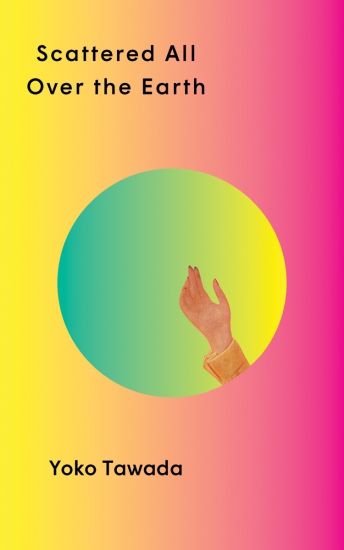
Scattered All Over the Earth

Scattered All Over the Earth

Yoko Tawada

NEW DIRECTIONS PUBLISHING CORPORATION
2022
nidottu
Welcome to the not-too-distant future: Japan, having vanished from the face of the earth, is now remembered as "the land of sushi." Hiruko, its former citizen and a climate refugee herself, has a job teaching immigrant children in Denmark with her invented language Panska (Pan-Scandinavian): "homemade language. no country to stay in. three countries I experienced. insufficient space in brain. so made new language. homemade language." As she searches for anyone who can still speak her mother tongue, Hiruko soon makes new friends. Her troupe travels to France, encountering an umami cooking competition; a dead whale; an ultra-nationalist named Breivik; unrequited love; Kakuzo robots; red herrings; uranium; an Andalusian matador. Episodic and mesmerizing scenes flash vividly along, and soon they're all next off to Stockholm.With its intrepid band of companions, Scattered All Over the Earth (the first novel of a trilogy) may bring to mind Alice's Adventures in Wonderland or a surreal Wind in the Willows, but really is just another sui generis Yoko Tawada masterwork.
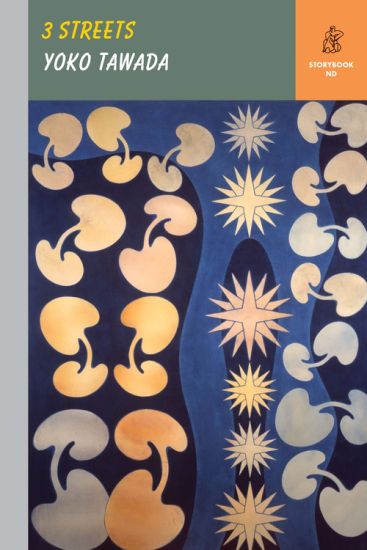
Three Streets

Three Streets

Yoko Tawada

New Directions Publishing Corporation
2022
sidottu
The always astonishing Yoko Tawada here takes a walk on the supernatural side of the street. In "Kollwitzstrasse," as the narrator muses on former East Berlin's new bourgeois health food stores, so popular with wealthy young people, a ghost boy begs her to buy him the old-fashioned sweets he craves. She worries that sugar's still sugar—but why lecture him, since he's already dead? Then white feathers fall from her head and she seems to be turning into a crane . . . Pure white kittens and a great Russian poet haunt "Majakowskiring": the narrator who reveres Mayakovsky's work is delighted to meet his ghost. And finally, in "Pushkin Allee," a huge Soviet-era memorial of soldiers comes to life—and, "for a scene of carnage everything was awfully well-ordered." Each of these stories opens up into new dimensions the work of this magisterial writer.
Paul Celan and the Trans-Tibetan Angel

Paul Celan and the Trans-Tibetan Angel

Yoko Tawada

NEW DIRECTIONS PUBLISHING CORPORATION
2024
nidottu
Patrik, who sometimes calls himself "the patient," is a literary researcher living in present-day Berlin. The city is just coming back to life after lockdown, and his beloved opera houses are open again, but Patrik cannot leave the house and hardly manages to get out of bed. When he shaves his head, his girlfriend scolds him, "What have you done to your head? I don't want to be with a prisoner from a concentration camp " He is supposed to give a paper at a conference in Paris, on the poetry collection Threadsuns by Paul Celan, but he can't manage to get past the first question on the registration form: "What is your nationality?" Then at a caf (or in the memory of being at a caf ?), he meets a mysterious stranger. The man's name is Leo-Eric Fu, and somehow he already knows Patrik...In the spirit of imaginative homage like Roberto Bola o's Monsieur Pain, Antonio Tabucchi's Requiem, and Thomas Bernhard's Wittgenstein's Nephew, Yoko Tawada's mesmerizing new novel unfolds like a lucid dream in which friendship, conversation, reading, poetry, and music are the connecting threads that bind us together.
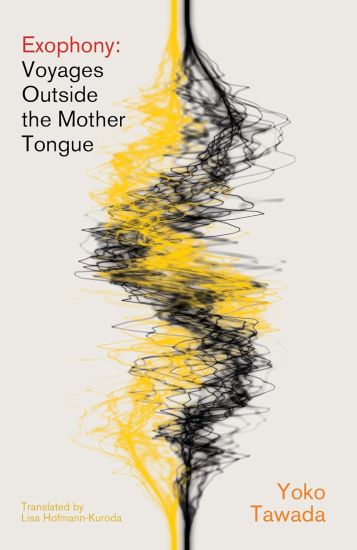
Exophony: Voyages Outside the Mother Tongue

Exophony: Voyages Outside the Mother Tongue

Yoko Tawada

NEW DIRECTIONS PUBLISHING CORPORATION
2025
nidottu
I am trying to learn, with my tongue, sounds that are unfamiliar to me. A foreign-sounding word learned out of curiosity is not "imitation" per se. All of these things I learn leave traces that slowly grow to coexist with my accent. And that balancing act goes on changing indefinitely. How perfect that Yoko Tawada's first essay in English dives deep into her lifelong fascination with the possibilities opened up by cross-hybridizing languages. Tawada famously writes in both Japanese and German, but her interest in language reaches beyond any mere dichotomy. The term "exophonic," which she first heard in Senegal, has a special allure for the author: "I was already familiar with similar terms, 'immigrant literature, ' or 'creole literature, ' but 'exophonic' had a much broader meaning, referring to the general experience of existing outside of one's mother tongue." Tawada revels in explorations of cross-cultural and intra-language possibilities (and along the way deals several nice sharp raps to the primacy of English). The accent here, as in her fiction, is the art of drawing closer to the world through defamiliarization. Never entertaining a received thought, Tawada seeks the still-to-be-discovered truths, as well as what might possibly be invented entirely whole cloth. Exophony opens a new vista into Yoko Tawada's world, and delivers more of her signature erudite wit--at once cross-grained and generous, laser-focused and multidimensional, slyly ironic and warmly companionable.