

Kirjahaku
Etsi kirjoja tekijän nimen, kirjan nimen tai ISBN:n perusteella.
1000 tulosta hakusanalla mile Zola
Fruitfulness (1899) is a novel by French author Émile Zola. Published as the first installment of his Les Quatre Évangiles, a series of four novels inspired by the New Testament gospels and aimed at investigating prominent social issues, Fruitfulness was written while Zola was living in exile in England following his advocacy on behalf of Alfred Dreyfus, a French Jew falsely convicted of spying. An inspired secularist and socialist, Zola foresaw his final literary project as an essential step forward in human consciousness and societal evolution, a vision tragically cut short by his death only several years later. In nineteenth-century France, following the collapse of the Second Empire, widespread economic instability has led to a dangerously low birthrate. Forced to make impossible decisions for the lives of their families, people have given up raising more than one or two children, leading to a strain on the workforce and creating a society without the joys of youth. Against all odds, and despite the harsh judgment of their peers, Mathieu and Marianne Froment attempt to raise a family of twelve children. Grounded in love and solidarity, the Froment family becomes a symbol of perseverance and a model for their beleaguered community. With a beautifully designed cover and professionally typeset manuscript, this edition of Émile Zola’s Fruitfulness is a classic work of French literature reimagined for modern readers.
The Fortune of the Rougons (1871) is a novel by French author Émile Zola. The first of twenty volumes of Zola’s monumental Les Rougon-Macquart series is an epic story of family, politics, class, and history that traces the disparate paths of several French citizens raised by the same mother. Spanning the entirety of the French Second Empire, Zola provides a sweeping portrait of change that refuses to shy away from controversy and truth as it gets to the heart of heredity and human nature. Adelaide Fouque is a woman of Plassans, a town in southern France. Alongside her son Pierre Rougon, whose deceased father was her husband, Adelaide raises the Macquart siblings, her children from a brief, passionate affair. Despite their shared upbringing, the three children take vastly diverging paths in life. Pierre, desperate to prove his legitimacy, becomes an ambitious middle-class man whose deepest desire is to win favor with the aristocracy and to climb even further from his humble roots. Meanwhile, his half siblings struggle to make a living for themselves and their working-class families. As Pierre’s ambitions lead him to not only disinherit the Macquarts, but to position himself as a supporter of Napoleon III in his attempt to overthrow the French government. At the same time, Silvère Mouret, Adelaide’s grandson, and his lover Miette Chantegreil find themselves on the side of the republicans who attempt to resist Napoleon’s coup. The Fortune of the Rougons is a story of family and fate, a thrilling and detailed novel that sets up a world rich enough for its author to explore in nineteen subsequent volumes. With a beautifully designed cover and professionally typeset manuscript, this edition of Émile Zola’s The Fortune of the Rougons is a classic work of French literature reimagined for modern readers.

The Rush for the Spoil (1872) is a novel by French author Émile Zola. The second of twenty volumes of Zola’s monumental Les Rougon-Macquart series is an epic story of family, politics, class, and history that traces the disparate paths of several French citizens raised by the same mother. Spanning the entirety of the French Second Empire, Zola provides a sweeping portrait of change that refuses to shy away from controversy and truth as it gets to the heart of heredity and human nature. Aristide Saccard is the son of Pierre Rougon, a man born into poverty who rose through vanity and shear opportunism to a position of power in the France of Napoleon III. After a rakish youth, Aristide promises his brother Eugene, a prominent politician, that he will make his way in the world under a different surname. Destined for failure, he manages to gain funding for a scheme involving the purchase of homes destined for demolition. Collecting government compensation for each property, Aristide turns a handsome profit and eventually becomes one of the richest men in Paris. When his wife becomes terminally ill, he decides to sacrifice the last of his morality by marrying a wealthy pregnant woman, whose father has promised an immense dowry. As the years go by, his fragmented family suffers under the weight of their father’s impropriety, illuminating the hypocrisy and obscenity of wealth in nineteenth century France. The Rush for the Spoil is a story of family and fate, a thrilling and detailed novel that continues a series rich enough for its author to explore in twenty total volumes. With a beautifully designed cover and professionally typeset manuscript, this edition of Émile Zola’s The Rush for the Spoil is a classic work of French literature reimagined for modern readers.

The Fat and the Thin (1873) is a novel by French author Émile Zola. The third of twenty volumes of Zola’s monumental Les Rougon-Macquart series is an epic story of family, politics, class, and history that traces the disparate paths of several French citizens raised by the same mother. Spanning the entirety of the French Second Empire, Zola provides a sweeping portrait of change that refuses to shy away from controversy and truth as it gets to the heart of heredity and human nature. Arrested in the crackdowns that followed the French coup of 1851, Florent, an innocent man, manages to escape prison and return to Paris. Desperate to avoid capture, he finds a place to stay with his half-brother Quenu and his wife Lisa, a member of the Macquart family. With his brother’s help, Florent finds work as a fish inspector at Les Halles, an enormous central market. Redesigned in the aftermath of the coup, the market has become a symbol of wealth and power for the French Second Empire, and is an important hub for the nation’s growing economy. Apolitical in nature—he was sent to prison based on false information—Florent becomes interested in socialism through his experience as a laborer and with the encouragement of radical acquaintances, and soon becomes swept up in a plot to overthrow the government of Napoleon III. The Fat and the Thin is a story of family and fate, a thrilling and detailed novel that continues a series rich enough for its author to explore in twenty total volumes. With a beautifully designed cover and professionally typeset manuscript, this edition of Émile Zola’s The Fat and the Thin is a classic work of French literature reimagined for modern readers.
The Sin of Father Mouret (1875) is a novel by French author Émile Zola. The fifth of twenty volumes of Zola’s monumental Les Rougon-Macquart series is an epic story of family, politics, class, and history that traces the disparate paths of several French citizens raised by the same mother. Spanning the entirety of the French Second Empire, Zola provides a sweeping portrait of change that refuses to shy away from controversy and truth as it gets to the heart of heredity and human nature. Serge Mouret is a pious, if not overzealous young man. For his first assignment after taking his religious orders, he is appointed parish priest of the impoverished village of Artauds. Unable to attract villagers to his sermons, he pontificates to an empty, dilapidated church, determined to explore and expose the innermost spaces of his soul. Unconcerned with worldly affairs, he grows increasingly neurotic, eventually suffering a debilitating breakdown. Unable to care for himself, Father Mouret is taken into the care of Doctor Pascal Rougon, a distant relative. At his suggestion, Mouret is sent to Le Paradou, a rundown estate, where he is to live out his life in peace and near-solitude. There, he befriends Albine, a young girl who seems to have grown up alone at Le Paradou, and who dotes on her ailing housemate. As time goes by, he begins to fall in love with her, and their friendship develops into an innocent, blissful romance. The Sin of Father Mouret is a story of family and fate, a thrilling and detailed novel that continues a series rich enough for its author to explore in twenty total volumes. With a beautifully designed cover and professionally typeset manuscript, this edition of Émile Zola’s The Sin of Father Mouret is a classic work of French literature reimagined for modern readers.

A Page of Love (1878) is a novel by French author Émile Zola. The eighth of twenty volumes of Zola’s monumental Les Rougon-Macquart series is an epic story of family, politics, class, and history that traces the disparate paths of several French citizens raised by the same mother. Spanning the entirety of the French Second Empire, Zola provides a sweeping portrait of change that refuses to shy away from controversy and truth as it gets to the heart of heredity and human nature. Hélène Grandjean, a member of the Mouret family, finds herself desperate and alone when her husband Charles dies from a sudden illness. Left as the sole guardian of her young daughter Jeanne, she does her best to provide while overcoming the boundaries of life in a strange new town. Having moved from Marseilles to the suburbs of Paris only days before Charles’ death, Hélène longs for friendship and community. When Jeanne suffers a violent seizure, she receives assistance from her neighbor, Dr. Deberle. Soon, Hélène befriends Deberle and his wife Juliette, who introduce her to their family and small circle of acquaintances. Although she remains wary of romance, Hélène soon finds herself falling in love with a kind and gentle man, a figure capable of caring for her and her young daughter—a man who is already married. A Page of Love is a story of family and fate, a thrilling and detailed novel that continues a series rich enough for its author to explore in twenty total volumes. With a beautifully designed cover and professionally typeset manuscript, this edition of Émile Zola’s A Page of Love is a classic work of French literature reimagined for modern readers.

The Ladies’ Delight (1883) is a novel by French author Émile Zola. The eleventh of twenty volumes of Zola’s monumental Les Rougon-Macquart series is an epic story of family, politics, class, and history that traces the disparate paths of several French citizens raised by the same mother. Spanning the entirety of the French Second Empire, Zola provides a sweeping portrait of change that refuses to shy away from controversy and truth as it gets to the heart of heredity and human nature. At the age of twenty, Denise Baudu moves to Paris with her brothers and finds work at “Au Bonheur des Dames,” a new department store owned by eccentric entrepreneur Octave Mouret. There, she grows accustomed to 13-hour days, inferior food and housing, and the constant grind of thankless labor. Despite her circumstances, she soon finds herself attracted to Mouret, a notorious womanizer whose exploitative business practices have alienated him from employees and local businesspeople. Mouret’s ambition and innovation have led him to corner the market on textiles, womenswear, furniture, and household goods, infuriating his competitors and driving smaller shops into bankruptcy. Until Denise, he has avoided tying himself down to another, intent on building a fortune for himself without the interference of family. Innocent at first, she soon learns how to manipulate Octave to do her bidding. The Ladies’ Delight is a story of family and fate, a thrilling and detailed novel that continues a series rich enough for its author to explore in twenty total volumes. With a beautifully designed cover and professionally typeset manuscript, this edition of Émile Zola’s The Ladies’ Delight is a classic work of French literature reimagined for modern readers.

The Beast Within (1890) is a novel by French author Émile Zola. The seventeenth of twenty volumes of Zola’s monumental Les Rougon-Macquart series is an epic story of family, politics, class, and history that traces the disparate paths of several French citizens raised by the same mother. Spanning the entirety of the French Second Empire, Zola provides a sweeping portrait of change that refuses to shy away from controversy and truth as it gets to the heart of heredity and human nature. Jacques Lantier is a violent man. Kept in check by his dedication to his work as an engine driver, he manages to suppress the disturbing fantasies of rape and murder that fill his tortured mind. While waiting for his train to get repaired, he meets his cousin Flore, a beautiful young woman who inflames him with desire and deadly intent. At the last moment, he flees before he can harm her, only to witness a gruesome murder at night by the railroad tracks. When a police investigation fails to find the killer, life in Le Havre returns to a sense of calm, and even Lantier seems to put the past behind him. When he begins an affair with Severine, the wife of his boss Roubaud, he is roped into a plot to kill the man and steal a secret fortune. The Beast Within is a story of family and fate, a thrilling and detailed novel that continues a series rich enough for its author to explore in twenty total volumes. With a beautifully designed cover and professionally typeset manuscript, this edition of Émile Zola’s The Beast Within is a classic work of French literature reimagined for modern readers.
Claude’s Confession (1865) is a novel by French author Émile Zola. Written at night while Zola was employed at Hachette, Claude’s Confession proved scandalous upon publication and resulted in the loss of his job. Undeterred by the response to his literary debut, Zola took advantage of his newfound infamy in order to embark on a career as one of France’s foremost experimental writers. Intent on exploring taboo and the lives of people on the edge of society, Zola crafts a narrative capable of illuminating the human condition while humanizing those typically disdained by the literary elite. Born and raised in Provence, Claude is shocked to find that the Paris of legend is a city mired in poverty, decay, and loneliness. As he struggles to make ends meet in order to pay for his tiny apartment, he takes notice of a young woman who lives in the same building as him. Although he knows she is a prostitute, his feelings for him grow stronger than the impulse to look down on her way of life. After months of silent longing, he opens his door to find her standing there, desperate for help after being evicted. Despite his limited income, he welcomes her inside, and their relationship soon develops into a passionate romance. Claude’s Confession is a story of forbidden love, fading hope, and the false promise of modern life. Written at the very beginning of Zola’s career, it shows the innerworkings of a young mind interested in subjects too often ignored by writers, a mind whose guiding principle is truth and truth alone. With a beautifully designed cover and professionally typeset manuscript, this edition of Émile Zola’s Claude’s Confession is a classic work of French literature reimagined for modern readers.

The Mysteries of Marseilles (1895) is a novel by French author Émile Zola. Originally serialized in Le Messager de Provence in 1867, The Mysteries of Marseilles was written at the very beginning of Zola’s literary career. Intent on exploring taboo and the lives of people on the edge of society, Zola crafts a narrative capable of illuminating the human condition while humanizing those typically disdained by the literary elite. In mid-nineteenth century France, a Second Republic has come into power following the Revolution of 1848, installing Napoleon III as the nation’s first president. Over the next several years, the country enters a period of liberal reform and temporary peace. In Marseilles, a poor republican named Philippe Cayot has fallen in love with the young heiress Blanche de Cazalis, a member of one of the city’s most influential families. When their affair is discovered, Philippe is sent to prison and Blanche, after giving birth to an illegitimate child, is forced to enter a convent. Undeterred by the tragedy and injustice of these events, Philippe’s brother Marius hatches a plan to protect the young lovers, rescue their child, and take control of the de Cazalis family fortune. The Mysteries of Marseilles is a story of forbidden love, fading hope, and the false promise of modern life. Written at the very beginning of Zola’s career, it shows the innerworkings of a young mind interested in subjects too often ignored by writers, a mind whose guiding principle is truth and truth alone. With a beautifully designed cover and professionally typeset manuscript, this edition of Émile Zola’s The Mysteries of Marseilles is a classic work of French literature reimagined for modern readers.

Madeleine Férat (1868) is a novel by French author Émile Zola. Following the success of his third novel, Thérèse Raquin (1867), Zola published Madeleine Férat to lukewarm critical acclaim. Intent on exploring taboo and the lives of people on the edge of society, Zola crafts a narrative capable of illuminating the human condition while humanizing those typically disdained by the literary elite. In 1920, Madeleine Férat was adapted into an Italian silent film starring Francesca Bertini. To anyone who makes their acquaintance, Guillaume and Madeleine have a storybook romance—marriage, a child, the inheritance of a beautiful villa and a sizeable fortune; these things and more bless their family from the start and promise a lengthy, healthy relationship. As Madeleine adjusts to the comforts and curiosities of married life, she finds herself emboldened to share aspects of her personal history with Guillaume. One night, she decides to tell him a story involving a former lover, sparing no details on their sexual relationship. To her horror, she discovers that her lover was once Guillaume’s best friend. Rather than amusing her husband, she shatters their idyllic existence, plunging him into doubt and despair while exposing herself to his hidden vindictive side. Madeleine Férat is a story of love, secrets, and the false promise of modern life. Written at the very beginning of Zola’s career, it shows the innerworkings of a young mind interested in subjects too often ignored by writers, a mind whose guiding principle is truth and truth alone. With a beautifully designed cover and professionally typeset manuscript, this edition of Émile Zola’s Madeleine Férat is a classic work of French literature reimagined for modern readers.
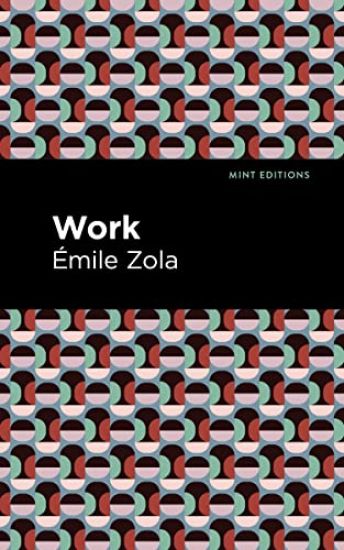
Work (1901) is a novel by French author Émile Zola. Published as the second installment of his Les Quatre Évangiles, a series of four novels inspired by the New Testament gospels and aimed at investigating prominent social issues, Work was the last of Zola’s novels to be published during his lifetime. Combining his trademark naturalist style with an interest in Charles Fourier’s theory of socialist utopianism, Zola crafts a story of hardship and perseverance without losing sight of humanity. Luc Fremont, an engineer, travels to a town at the heart of an important French industrial region. While staying in Beaumont, he is struck by the widespread poverty suffered by the working class, the very people whose expertise and labor is essential to the economic health of the nation. Calling upon an old friend, who owns a local steelworks, Luc enters into a deal in order to manage the production of La Crêcherie under an experimental cooperative model. With his determination and the hard work of the people, Luc establishes the steelworks as a functioning independent city-state, known for its profit-sharing, free housing, and focus on the lives of its workers and their families. As news of their success begins to spread, similar experiments take place across France and the globe, harnessing the transformative power of industry for the sake of people, not profit. With a beautifully designed cover and professionally typeset manuscript, this edition of Émile Zola’s Work is a classic work of French literature reimagined for modern readers.

Truth (1903) is a novel by French author Émile Zola. Published as the third installment of his Les Quatre Évangiles, a series of four novels inspired by the New Testament gospels and aimed at investigating prominent social issues, Truth was the last of Zola’s novels to be published when it appeared the year after his death. Combining his trademark naturalist style with aspects of his experience advocating on behalf of Alfred Dreyfus, a French Jew falsely convicted of spying, Zola crafts a story of prejudice and institutional corruption without losing sight of humanity. In a rural village in France, a young boy is discovered murdered and sexually assaulted in his own bedroom. Shocked and outraged, the people of the village initially turn toward a local vagrant as a suspect. As his innocence becomes more and more apparent, however, a story begins to circulate blaming the boy’s uncle, a Jewish schoolmaster, who supposedly resented his brother’s marriage to a Catholic woman. Spurred on by the local church, run by the Christian Brothers, the people stoke the flames of antisemitism while alienating the town’s growing secular minority in order to scapegoat an influential—and innocent—Jewish man. Truth is a terrifying, essential novel that looks unsparingly at the prejudices rampant in European society only decades before the Holocaust. Zola’s final novel is a thrilling examination of the interconnected nature of politics, religion, and the press, and a rallying cry for those brave souls who dare to take a stand against violence and oppression. With a beautifully designed cover and professionally typeset manuscript, this edition of Émile Zola’s Truth is a classic work of French literature reimagined for modern readers.
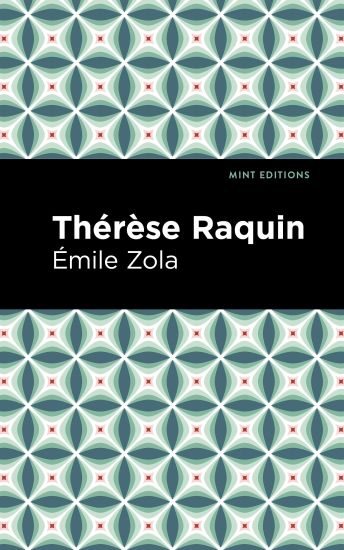
Thérèse Raquin (1867) is a novel by French author Émile Zola. Initially serialized in L’Artiste, a popular French literary magazine, Thérèse Raquin, Zola’s third novel, earned the author widespread fame and critical condemnation for its scandalous content and unsparing vision of human sexuality and violence. Thérèse Raquin effectively launched Zola’s career as a leading practitioner of literary naturalism, and has since been adapted countless times for theater, television, and film. Thérèse Raquin, the daughter of an Algerian mother and French father, is raised by her aunt, Madame Raquin, whose overbearing nature has turned her son Camille into a reclusive hypochondriac. Despite growing up like a sibling to Camille, Thérèse is forced by her aunt to marry him at the age of 21, thereby relinquishing her autonomy as a young, ambitious woman. Desperate for change, she suggests they move to Paris together, where the two women run a shop while Camille searches for his first job. In the French capital, Camille runs into an old friend, Laurent, who eventually falls in love with the unsuspecting man’s unhappy wife. Overwhelmed with desire, desperate for affection, Thérèse not only begins in an affair with Laurent, but considers the prospect of murdering her husband in order to free herself. During a boat trip, the two lovers seize their chance, but the consequences of their decision relentlessly follow them, leaving them haunted in dreams and in life by the man they thought they had lost. With a beautifully designed cover and professionally typeset manuscript, this edition of Émile Zola’s Thérèse Raquin is a classic work of French literature reimagined for modern readers.

Paris (1898) is a novel by French author Émile Zola. Paris is the final installment in Zola’s celebrated Three Cities Trilogy. Published toward the end of Zola’s career, the trilogy is an ambitious, sweeping study of one man’s struggle with faith in political, religious, and social life. Following his protagonist Abbé Pierre Froment, Zola provides a striking portrait of the soul of modern man in crisis with itself and with an ever-changing world. Paris finds Abbé Froment back in his home city, disheartened in his life and in his faith. Having failed in his quest to reform the Church, he turns his attention from institutional change to helping the poor and sick. As his reputation as an almsgiver grows, he draws the ire of his Church superiors, who are wary of his socialistic ideals. Regardless, Pierre dedicates himself to his subjects, taking in the poverty and destitution of a great city’s slums and forgetting his former ambitions. When a near-death experience involving an anarchist bombing brings him back in touch with his estranged brother Guillaume, Froment begins to wonder whether his fate must rely on an institution unwilling, and perhaps unable, to change. In the thrilling conclusion to his Three Cities Trilogy, Zola explores the meaning of faith in a faithless world through the eyes of one good man. With a beautifully designed cover and professionally typeset manuscript, this edition of Émile Zola’s Paris is a classic work of French literature reimagined for modern readers.

Lourdes (1894) is a novel by French author Émile Zola. Lourdes is the first installment in Zola’s celebrated Three Cities Trilogy. Published toward the end of Zola’s career, the trilogy is an ambitious, sweeping study of one man’s struggle with faith in political, religious, and social life. Following his protagonist Abbé Pierre Froment, Zola provides a striking portrait of the soul of modern man in crisis with itself and with an ever-changing world. Lourdes opens as Abbé Froment departs on a journey from Paris to the holy city of Lourdes. Accompanied by his childhood love, a woman who was paralyzed in an accident at the age of thirteen, Froment hopes to rediscover his faith and to reestablish his position in a beleaguered Catholic Church. There, they meet a series of diverse pilgrims, all of them dissatisfied, all of them searching for something to change or to hold onto. For Froment, this journey begins as a way to help an old friend and becomes a chance at redeeming his wayward soul. At Lourdes, surrounded by desperate, yet faithful people, he begins to remember what brought him to God in the first place. Inspired by his experiences there, he wonders if one priest could change the Church for the better. With a beautifully designed cover and professionally typeset manuscript, this edition of Émile Zola’s Lourdes is a classic work of French literature reimagined for modern readers.
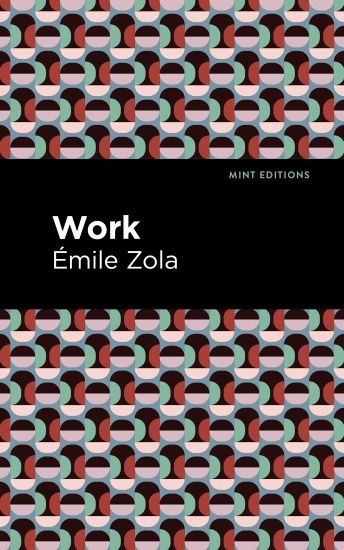
Work (1901) is a novel by French author Émile Zola. Published as the second installment of his Les Quatre Évangiles, a series of four novels inspired by the New Testament gospels and aimed at investigating prominent social issues, Work was the last of Zola’s novels to be published during his lifetime. Combining his trademark naturalist style with an interest in Charles Fourier’s theory of socialist utopianism, Zola crafts a story of hardship and perseverance without losing sight of humanity. Luc Fremont, an engineer, travels to a town at the heart of an important French industrial region. While staying in Beaumont, he is struck by the widespread poverty suffered by the working class, the very people whose expertise and labor is essential to the economic health of the nation. Calling upon an old friend, who owns a local steelworks, Luc enters into a deal in order to manage the production of La Crêcherie under an experimental cooperative model. With his determination and the hard work of the people, Luc establishes the steelworks as a functioning independent city-state, known for its profit-sharing, free housing, and focus on the lives of its workers and their families. As news of their success begins to spread, similar experiments take place across France and the globe, harnessing the transformative power of industry for the sake of people, not profit. With a beautifully designed cover and professionally typeset manuscript, this edition of Émile Zola’s Work is a classic work of French literature reimagined for modern readers.

Truth (1903) is a novel by French author Émile Zola. Published as the third installment of his Les Quatre Évangiles, a series of four novels inspired by the New Testament gospels and aimed at investigating prominent social issues, Truth was the last of Zola’s novels to be published when it appeared the year after his death. Combining his trademark naturalist style with aspects of his experience advocating on behalf of Alfred Dreyfus, a French Jew falsely convicted of spying, Zola crafts a story of prejudice and institutional corruption without losing sight of humanity. In a rural village in France, a young boy is discovered murdered and sexually assaulted in his own bedroom. Shocked and outraged, the people of the village initially turn toward a local vagrant as a suspect. As his innocence becomes more and more apparent, however, a story begins to circulate blaming the boy’s uncle, a Jewish schoolmaster, who supposedly resented his brother’s marriage to a Catholic woman. Spurred on by the local church, run by the Christian Brothers, the people stoke the flames of antisemitism while alienating the town’s growing secular minority in order to scapegoat an influential—and innocent—Jewish man. Truth is a terrifying, essential novel that looks unsparingly at the prejudices rampant in European society only decades before the Holocaust. Zola’s final novel is a thrilling examination of the interconnected nature of politics, religion, and the press, and a rallying cry for those brave souls who dare to take a stand against violence and oppression. With a beautifully designed cover and professionally typeset manuscript, this edition of Émile Zola’s Truth is a classic work of French literature reimagined for modern readers.
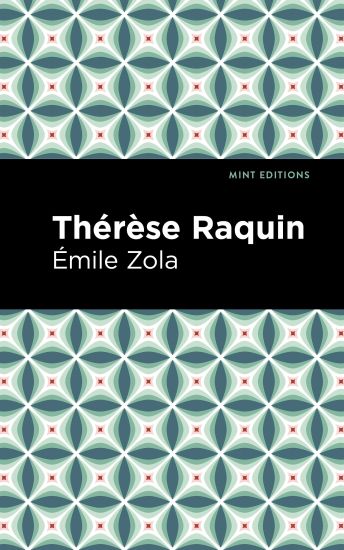
Thérèse Raquin (1867) is a novel by French author Émile Zola. Initially serialized in L’Artiste, a popular French literary magazine, Thérèse Raquin, Zola’s third novel, earned the author widespread fame and critical condemnation for its scandalous content and unsparing vision of human sexuality and violence. Thérèse Raquin effectively launched Zola’s career as a leading practitioner of literary naturalism, and has since been adapted countless times for theater, television, and film. Thérèse Raquin, the daughter of an Algerian mother and French father, is raised by her aunt, Madame Raquin, whose overbearing nature has turned her son Camille into a reclusive hypochondriac. Despite growing up like a sibling to Camille, Thérèse is forced by her aunt to marry him at the age of 21, thereby relinquishing her autonomy as a young, ambitious woman. Desperate for change, she suggests they move to Paris together, where the two women run a shop while Camille searches for his first job. In the French capital, Camille runs into an old friend, Laurent, who eventually falls in love with the unsuspecting man’s unhappy wife. Overwhelmed with desire, desperate for affection, Thérèse not only begins in an affair with Laurent, but considers the prospect of murdering her husband in order to free herself. During a boat trip, the two lovers seize their chance, but the consequences of their decision relentlessly follow them, leaving them haunted in dreams and in life by the man they thought they had lost. With a beautifully designed cover and professionally typeset manuscript, this edition of Émile Zola’s Thérèse Raquin is a classic work of French literature reimagined for modern readers.