Kirja.info on kirjojen hintavertailu.
Kenellä on paras halvin hinta? Etsimme halvimman hinnan 12 eri kirjakaupasta, jotta voit keskittyä lukemiseen.
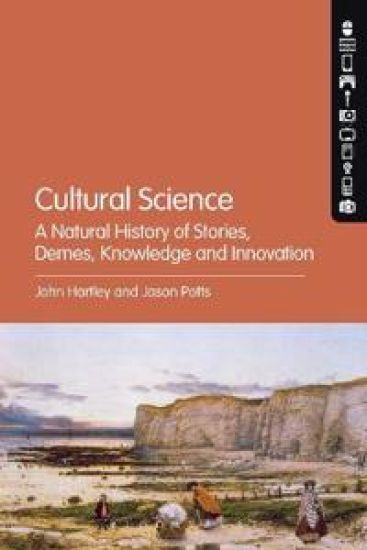
This book is available as open access through the Bloomsbury Open Access programme and is available on www. bloomsburycollections. com. Cultural Science introduces a new way of thinking about… This book is available as open access through the Bloomsbury Open Access programme and is available on www. bloomsburycollections. com. Cultural Science introduces a new way of thinking about culture. Adopting an evolutionary and systems approach, the authors argue that culture is the population-wide source of newness and innovation; it faces the future, not the past. Its chief characteristic is the formation of groups or 'demes' (organised and productive subpopulation; 'demos'). Demes are the means for creating, distributing and growing knowledge. However, such groups are competitive and knowledge-systems are adversarial. Starting from a rereading of Darwinian evolutionary theory, the book utilises multidisciplinary resources: Raymond Williams's 'culture is ordinary' approach; evolutionary science (e. g. Mark Pagel and Herbert Gintis); semiotics (Yuri Lotman); and economic theory (from Schumpeter to McCloskey). Successive chapters argue that:-Culture and knowledge need to be understood from an externalist ('linked brains') perspective, rather than through the lens of individual behaviour; -Demes are created by culture, especially storytelling, which in turn constitutes both politics and economics; -The clash of systems - including demes - is productive of newness, meaningfulness and successful reproduction of culture; -Contemporary urban culture and citizenship can best be explained by investigating how culture is used, and how newness and innovation emerge from unstable and contested boundaries between different meaning systems;-The evolution of culture is a process of technologically enabled 'demic concentration' of knowledge, across overlapping meaning-systems or semiospheres; a process where the number of demes accessible to any individual has increased at an accelerating rate, resulting in new problems of scale and coordination for cultural science to address. The book argues for interdisciplinary 'consilience', linking evolutionary and complexity theory in the natural sciences, economics and anthropology in the social sciences, and cultural, communication and media studies in the humanities and creative arts. It describes what is needed for a new 'modern synthesis' for the cultural sciences. It combines analytical and historical methods, to provide a framework for a general reconceptualisation of the theory of culture – one that is focused not on its political or customary aspects but rather its evolutionary significance as a generator of newness and innovation.
ISBN9781474279239
KustantajaBloomsbury Academic
Vuosi2016
Formaattinidottu
Sivuja264
Kielienglanti
Paino376g
Emme päivittäneet kirjan hintoja automaattisesti, koska verkkoliikenteesi tulee Suomen ulkopuolelta tai vaikuttaa epätavalliselta.