Kirja.info on kirjojen hintavertailu.
Kenellä on paras halvin hinta? Etsimme halvimman hinnan 12 eri kirjakaupasta, jotta voit keskittyä lukemiseen.
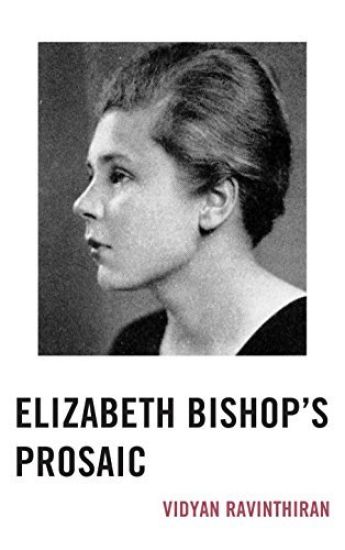
Elizabeth Bishop is now recognized as one of the greatest poets of the twentieth century—a uniquely cosmopolitan writer with connections to the US, Canada, Brazil, and also the UK, given her… Elizabeth Bishop is now recognized as one of the greatest poets of the twentieth century—a uniquely cosmopolitan writer with connections to the US, Canada, Brazil, and also the UK, given her neglected borrowings from many English authors, and her strong influence on modern British verse. Yet the dominant biographical/psychoanalytical approach leaves her style relatively untouched—and it is vital that an increasing focus on archival material does not replace our attention to the writing itself. Bishop’s verse is often compared with prose (sometimes insultingly); writing fiction, she worried she was really writing poems. But what truly is the difference between poetry and prose—structurally, conceptually, historically speaking? Is prose simply formalized speech, or does it have rhythms of its own? Ravinthiran seeks an answer to this question through close analysis of Bishop’s prose-like verse, her literary prose, her prose poems, and her letter prose. This title is a provocation. It demands that we reconsider the pejorative quality of the word ‘prosaic;’ playing on ‘mosaic,’ Ravinthiran uses Bishop’s thinking about prose to approach—for the first time—her work in multiple genres as a stylistic whole. Elizabeth Bishop’s Prosaic is concerned not only with her inimitable style, but also larger questions to do with the Anglo-American shift from closed to open forms in the twentieth century. This study identifies not just borrowings from, but rich intertextual relationships with, writers as diverse as—among others—Gerard Manley Hopkins, W. H. Auden, Virginia Woolf, Flannery O’Connor, and Dorothy Richardson. (Though Bishop criticized Woolf, she in particular is treated as a central and thus far neglected precursor, crucial to our understanding of Bishop as a feminist poet. ) Finally, the sustained discussion of how the history of prose frames effects of rhythm, syntax, and acoustic texture—in both Bishop’s prose proper and her ‘prosaic’ verse—extends a body of research which seeks now to treat literature as a form of cognition. Technique and thought are finely wedded in Bishop’s work—her literary forms evince a historical intelligence attuned to questions of power, nationality, tradition (both literary and otherwise), race, and gender.
ISBN9781611486834
KustantajaBucknell University Press
Vuosi2017
Formaattinidottu
Sivuja278
Kielienglanti
Paino372g
Emme päivittäneet kirjan hintoja automaattisesti, koska verkkoliikenteesi tulee Suomen ulkopuolelta tai vaikuttaa epätavalliselta.