Kirja.info on kirjojen hintavertailu.
Kenellä on paras halvin hinta? Etsimme halvimman hinnan 12 eri kirjakaupasta, jotta voit keskittyä lukemiseen.
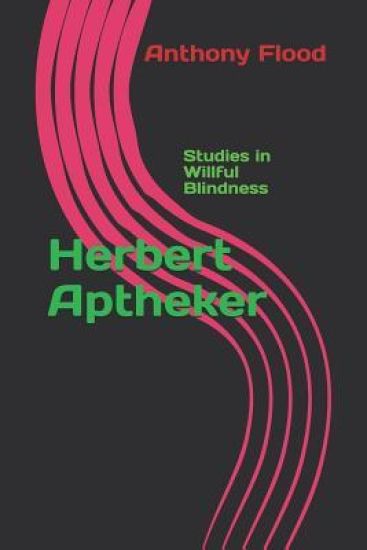
Herbert Aptheker (1915-2003), a pioneering researcher in African-American slave revolts, was also an American Communist theoretician. Anthony Flood, who attended Aptheker's lectures a half-century… Herbert Aptheker (1915-2003), a pioneering researcher in African-American slave revolts, was also an American Communist theoretician. Anthony Flood, who attended Aptheker's lectures a half-century ago, became his research assistant, friend and comrade. Decades after Flood repudiated the comradeship, it dawned on him that Aptheker's politics had blocked his research in his area of specialization: he failed to recognize The Black Jacobins, the work of C. L. R. James (1901-1989) that chronicled the only successful slave revolt in modern times. The failure was ideological. In the course of investigating this silence, Flood discovered scholars who admired both writers, but never at the same time. Doing so would have forced them to address the uncomfortable truth that one of their heroes ignored the other. That is, the white radical scholar ignored the black radical scholar who was 14 years his senior. The only explanation, Flood contends, is that Aptheker, the Stalinist, could not bring himself to acknowledge the work of James, the Trotskyist. There are other problems with Aptheker's legacy, of course, such as his uncovering the truth about slavery in the Americas while covering it up in the Soviet Union and its satellites. The "dissing" of James, however, undermines his "anti-racism" reputation as well as his argument that "partisanship with the oppressed" makes objectivity in history writing possible. He was a partisan of too many oppressors. He eventually admitted his own "willful blindness" (his words), yet that didn't stop him from defending, as late as 2000, The Truth about Hungary, his book-length apologia for the Soviet Union's crushing of the 1956 Hungarian revolution. Herbert Aptheker: Studies in Willful Blindness includes not only Flood's essay on Aptheker and James, but also vignettes of his coming into Aptheker's life as a high school student and that of Sidney Hook (Aptheker's nemesis and Flood's philosophy professor). Also included are a review of the first biography of Aptheker and an inquiry into Aptheker's status as an historian. Appendices include Aptheker's first essay (in The American Hebrew) and Flood's first letter on Aptheker (in The Journal of American History). Herbert Aptheker expressed the ethos of the American Communist Party in its heyday, an atmosphere that pervades "progressive" American politics today. If you want to look at his role in that "progression," this monograph is a good place to start.
ISBN9781094690780
KustantajaIndependently Published
Vuosi2019
Formaattinidottu
Sivuja102
Kielienglanti
Paino159g
Emme päivittäneet kirjan hintoja automaattisesti, koska verkkoliikenteesi tulee Suomen ulkopuolelta tai vaikuttaa epätavalliselta.
Tällä hetkellä 0 kirjakauppaa myy teosta Herbert Aptheker: Studies in Willful Blindness. Edullisin hinta toimitettuna on —, mikä on — halvempi kuin kallein tarjous.
Hintoja ei ole vielä päivitetty.
Hälytys tallennettu!
Ilmoitamme, kun hinta laskee.
Saat sähköpostin, kun hinta on sama tai alittaa asettamasi hinnan.
Alin hinta kauppoittain
Kauppojen halvin hinta viimeisen 90 päivän aikana.
Hintahistoriaa ei ole vielä kerätty tälle kirjalle.