Kirja.info on kirjojen hintavertailu.
Kenellä on paras halvin hinta? Etsimme halvimman hinnan 12 eri kirjakaupasta, jotta voit keskittyä lukemiseen.
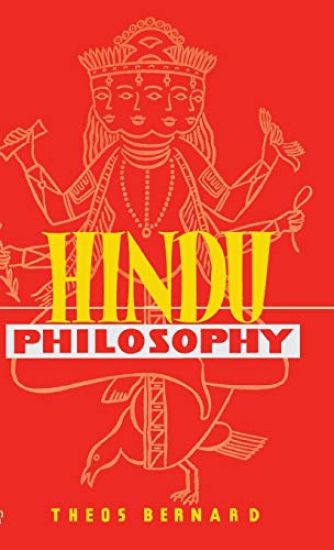
Who were India's foremost thinkers? What systems did they establish? What problems have agitated the minds of India's philosophers, intellectuals and mystics? Tersely and in pleasing style Dr.… Who were India's foremost thinkers? What systems did they establish? What problems have agitated the minds of India's philosophers, intellectuals and mystics? Tersely and in pleasing style Dr. Bernard has answered these questions satisfactorily alike to the layman and the special student of India and her philosophic life without effecting a compromise with Western philosophy and its narrow categories. Moreover, the important Kashmir Shaivism, so long omitted from works on Indian Philosophy, has at last been given its due here. In a sense, a major portion of the book is also dictionary-a dictionary of Sanskrit philosophical terms, arranged alphabetically, explained as to grammatical construction or composition, and defined, often with emphasis on special meanings within the different types of philosophy. Bertrand Arthur William Russell, 3rd Earl Russell, OM, FRS (18 May 1872 - 2 February 1970), was a British philosopher, logician, mathematician, historian, social reformer, and pacifist. Although he spent the majority of his life in England, he was born in Wales, where he also died. Russell led the British "revolt against Idealism" in the early 1900s and is considered one of the founders of analytic philosophy along with his prot g Wittgenstein and his elder Frege. He co-authored, with A. N. Whitehead, Principia Mathematica, an attempt to ground mathematics on logic. His philosophical essay "On Denoting" has been considered a "paradigm of philosophy. " Both works have had a considerable influence on logic, mathematics, set theory, linguistics and analytic philosophy. He was a prominent anti-war activist, championing free trade between nations and anti-imperialism. Russell was imprisoned for his pacifist activism during World War I, campaigned against Adolf Hitler, for nuclear disarmament, criticised Soviet totalitarianism and the United States of America's involvement in the Vietnam War. In 1950, Russell was awarded the Nobel Prize in Literature, "in recognition of his varied and significant writings in which he champions humanitarian ideals and freedom of thought. "
ISBN9780802201126
KustantajaPhilosophical Library
Vuosi1947
Formaattisidottu
Sivuja220
Kielienglanti
Paino426g
Emme päivittäneet kirjan hintoja automaattisesti, koska verkkoliikenteesi tulee Suomen ulkopuolelta tai vaikuttaa epätavalliselta.