Kirja.info on kirjojen hintavertailu.
Kenellä on paras halvin hinta? Etsimme halvimman hinnan 12 eri kirjakaupasta, jotta voit keskittyä lukemiseen.
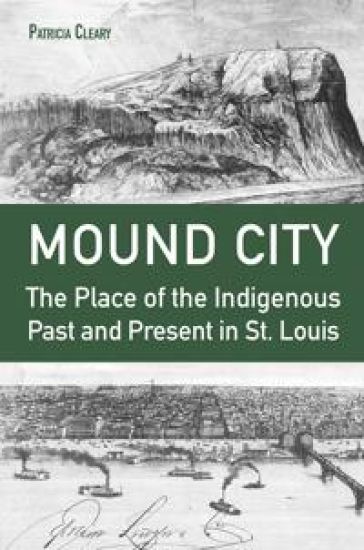
Nearly one thousand years ago, Native Americans built a satellite suburb of ancient America’s great metropolis, Cahokia, on the site that later became St. Louis. At its height, as many as 30,000… Nearly one thousand years ago, Native Americans built a satellite suburb of ancient America’s great metropolis, Cahokia, on the site that later became St. Louis. At its height, as many as 30,000 people lived in and around Cahokia. While the eastern mounds of Cahokia survive today (designated as a state historic site and UNESCO world heritage site), the monumental earthworks that stood on the western shore of the Mississippi were razed by railroad workers in the 1800s. But before and after they fell, the mounds held an important place in St. Louis history, earning it the nickname “Mound City. ” For decades, the city had an Indigenous reputation. Tourists came to marvel at the mounds and to see tribal delegations in town for trade and diplomacy. As the city grew, residents repurposed the mounds--for a reservoir, a restaurant, and railroad landfill--in the process destroying cultural artifacts and sacred burials. Despite evidence to the contrary, some white Americans declared the mounds natural features, not built ones, and cheered their leveling. Others espoused far-fetched theories about a lost race of Mound Builders killed by the ancestors of contemporary Indigenous peoples. Ignoring Indigenous people’s connections to the mounds, white Americans positioned themselves as the inheritors to the ancient traditions and asserted that modern Native peoples were destined to vanish. These are, of course, the same such views that served as justification for national policy that effected Indian Removal and, to a great extent, the exclusion of Indigenous people from politics and society. Claiming Indigenous history as their own, white St. Louisans would go on to play the roles of Mound Builders in a city-sponsored history pageant, while a women’s heritage group commemorated the mounds as local history. Drawing on a wide range of sources--including maps, daguerreotypes, real estate deeds, court records, travelers’ accounts, scientific treatises, government records, and personal correspondence--Patricia Cleary explores the layers of the Indigenous history of St. Louis. Along with the first in-depth overview of the life, death, and afterlife of the mounds, Mound City offers readers compelling evidence of the place of Indigenous peoples in the city’s growth, the evolution of its landscape, and the episodes and monuments that shaped its civic culture.
ISBN9780826223043
KustantajaUNIVERSITY OF MISSOURI PRESS
Vuosi2024
Formaattisidottu
Sivuja462
Kielienglanti
Paino1021g
Emme päivittäneet kirjan hintoja automaattisesti, koska verkkoliikenteesi tulee Suomen ulkopuolelta tai vaikuttaa epätavalliselta.