Kirjojen hintavertailu. Mukana 12 522 223 kirjaa ja 12 kauppaa.

Kirjailija

A. B. Feuer

Kirjat ja teokset yhdessä paikassa: 13 kirjaa, julkaisuja vuosilta 1991-2006, suosituimpien joukossa Australian Commandos. Vertaile teosten hintoja ja tarkista saatavuus suomalaisista kirjakaupoista.

13 kirjaa

Kirjojen julkaisuhaarukka 1991-2006.

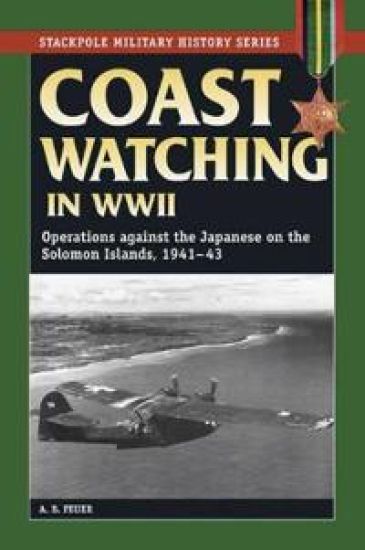
Coast Watching in World War 2

Coast Watching in World War 2

A. B. Feuer

Stackpole Books
2006
nidottu
The Allied coast watching network in the Solomons was one of the most successful intelligence operations of World War II. From their perches on jungle islands like Bougainville, coast watchers tracked Japanese shipping, sent warnings of impending air raids, and played a pivotal role during the 1942 battle of Guadalcanal when their information helped the U.S. Navy intercept and destroy twelve Japanese transports. Their existence was denied during the war, but the coast watchers’ remarkable stories of espionage and survival come to life in these firsthand accounts.
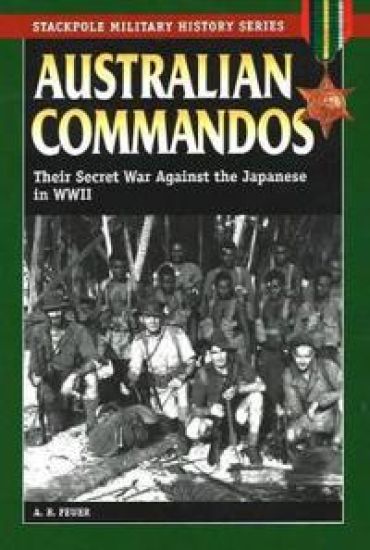
Australian Commandos

Australian Commandos

A. B. Feuer

Stackpole Books
2006
nidottu
In the jungle islands of the southwest Pacific, Australia’s elite M/Z commando teams conducted daring rescue, sabotage, and intelligence missions during World War II. While M Unit secretly set up coast-watching posts to monitor Japanese shipping movements and bombing flights, operatives of Z Unit were inserted deep behind enemy lines, where they attacked Japanese targets in brutal terrain and where capture meant death by beheading. Theirs was a lonely war, but Australian commandos made crucial contributions to Allied victory in the Pacific.
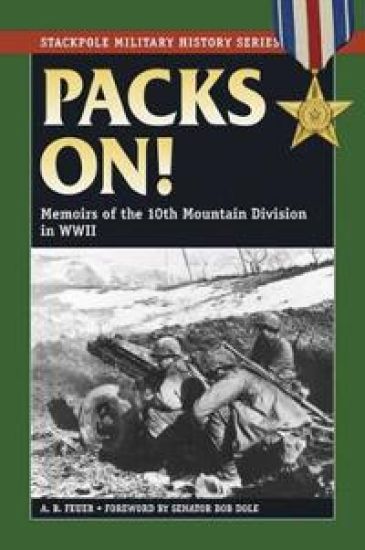
Packs on!

Packs on!

A. B. Feuer

Stackpole Books
2006
nidottu
At the outbreak of World War II, the U.S. had no units specializing in winter and mountain warfare, lagging behind its allies and, more ominously, its enemies. The 10th Mountain Division aimed to correct this imbalance, and from February to May 1945, it battled the veteran German troops of Albert Kesselring in the Alpine mountains, valleys, and rivers of northern Italy. The boys of the 10th fought, skied, and climbed their way to victory--and into history as one of the most legendary units of all time.
B-24 in China

B-24 in China

A. B. Feuer

Stackpole Books
2006
nidottu
As part of Gen. Claire Chennault’s Flying Tigers, American bomber pilots flew dangerous low-altitude missions against Japanese targets in and near China during World War II. Using B-24 Liberators equipped with top-secret radar for nighttime flying, these men sent a staggering amount of Japanese shipping--over a million tons--to the bottom of the South China Sea in little more than a year. This is the true story of aerial combat in one of the war’s most exotic theaters of operation as seen through the eyes of one of its most decorated pilots, Capt. Elmer “Hainan Harry” Haynes.
Packs On!

Packs On!

A. B. Feuer

Praeger Publishers Inc
2004
sidottu
This history of the 10th Mountain Division during World War II focuses on the personal experiences of the mountain troops who served in Alaska and Italy. Feuer conveys the opinions expressed by the veterans about the conduct of the campaigns—both the good and the bad, with no holds barred. Senator Bob Dole, who was seriously wounded during the campaign, provides a foreword. This fascinating account also reveals the differences in training and strategy from those employed by German ski troops of the same era.A selection of personal photographs, useful maps, and a timeline allow the reader to follow the progress of the 10th in Italy. In addition to combat accounts, readers will find reference to the harsh realities of war, including friendly fire, dead American soldiers used for target practice, and the vengeful shooting of German prisoners.
America at War

America at War

A. B. Feuer

Praeger Publishers Inc
2002
sidottu
Using previously unpublished diaries, letters, and photographs—plus the writings of war correspondent John T. McCutcheon—Feuer offers a vivid account of America's war in the Philippine Islands during the early part of the 20th century. This story highlights the experiences of the American soldiers, sailors, and marines who participated in the major battles. Not only did they fight a determined enemy, they also battled the weather, the jungle, and the diseases that threatened to take their lives. Their writings, including a section of poems and songs of the era, reveal the thoughts and anxieties of the American fighting man, serving his country nearly 8,000 miles from home. In 1895 Emilio Aguinaldo became the leader of Katipunan, a revolutionary society that sought complete independence from Spain. A year later, his ragtag band of soldiers defeated a Spanish regiment, a victory that incited the Filipino people to rise up against their oppressors. While the Spanish ultimately paid Aguinaldo to enter voluntary exile, in 1898, after the sinking of the ^IMaine^R, the United States would promise independence for the islands in exchange for Aguinaldo's return to lead an uprising against Spain. The U.S. State Department would later repudiate this promise, a move that would embroil United States troops in a bloody struggle to subdue the islands. This is their story.
The U.S. Navy in World War I

The U.S. Navy in World War I

A. B. Feuer

Praeger Publishers Inc
1999
sidottu
When the United States entered World War I in April 1917, the clamoring in the press for a strong army largely overshadowed the need for considerable naval contributions to the war effort. Although it was small at the time, the U.S. Navy transported thousands of doughboys to France, all the while battling the predatory German U-Boats. Henry Ford tried to put his mass-production techniques to work to produce hundreds of submarine chasers to patrol American coastlines. The fledgling Naval Air Service was assigned the daunting task of dealing with enemy aircraft over France and in the Adriatic Sea. This is the personal account of men who served on the sea and in the air, as well as the captains of industry who made victory possible. Industrial innovations contributed greatly to the Allied cause. George Eastman's Kodak Company developed ship and aircraft camouflage, and the General Electric Company perfected the hydrophone, a precursor to modern sonar. While many are aware of the exploits of Eddie Rickenbacker, the U.S. Army's ace, few know that the Navy also had an ace. After more than 80 years, these forgotten naval heroes receive the recognition that they well deserve in an account that attempts to give the war a human face through personal diaries, letters, and photographs.
Commando!

Commando!

A. B. Feuer

Praeger Publishers Inc
1996
sidottu
This little-known story of Australia's M/Z Unit commandos, and the part they played in the Southwest Pacific during World War II, is a fascinating account of daring, clandestine operations conducted by the Allies deep into enemy-held territory. M Unit personnel were secretly landed to set up coastwatching posts and radio stations to report on Japanese shipping movements and bombing flights heading to raid Allied positions. Members of the Z Unit carried out assigned raids into enemy controlled areas, and also attacked targets of opportunity. Many commandos were delivered on their missions by U.S. Navy submarines that sneaked into dangerously shallow waters to put the men ashore—and then returned to pick them up. Other operatives were inserted by PT boats, Catalina aircraft, parachute, and snake boats. Many of these operations are still classified.
The Spanish-American War at Sea

The Spanish-American War at Sea

A. B. Feuer

Praeger Publishers Inc
1995
sidottu
By piecing together diaries, letters, scrapbooks, and rare privately printed memoirs, the author has created a story which tells how America's ragtag navy—composed mainly of converted yachts, steamers and tugboats—was able to fight and win against the more powerful Spanish gunboats. The naval battles fought in places like Santiago, Cardenas, Cienfuegos, Manzanillo, Port Nipe, Guantanamo, San Juan, Guanica, and Ponce come alive in this book. The stories of the brave little ships that fought these battles—with names like the Gloucester and the Yosemite—at times against overwhelming odds, demonstrates the excellent training of the men who manned their guns under leadership of daring officers. This book fills in many of the missing pieces in the history of the Spanish-American War.
The Santiago Campaign of 1898

The Santiago Campaign of 1898

A. B. Feuer

Praeger Publishers Inc
1993
sidottu
This story is an account of the Santiago, Cuba, land campaign of the Spanish-American War, as conducted by General William R. Shafter's Fifth Army Corps. The narrative is based on firsthand information gathered from handwritten diaries, memoirs, and regimental and company histories of the men who participated in the campaign. These chronicles of frontline action paint an entirely different picture of what has been called The Splendid Little War. The opponent, far from being the cowardly Spanish soldier of myth, is revealed to be a courageous, resourceful foe. Furthermore, the attack on the outer defenses of Santiago was totally mismanaged by William Shafter, the American General in command, and his incompetent staff. Only the U.S. Navy's victory over the Spanish squadron on July 3, 1898, rescued the army from disaster.
General Chennault's Secret Weapon

General Chennault's Secret Weapon

A. B. Feuer

Praeger Publishers Inc
1992
sidottu
This book records the World War II experiences of Captain Elmer E. Haynes, who flew low-altitude night radar strikes against Japanese shipping in the South China Sea, and daylight raids against various enemy land based installations in eastern and central China. Haynes flew secretly developed B-24 Liberator bombers that were equipped with radar which had been integrated with the Norden bombsight for night missions. These B-24's operated with the 14th Air Force--General Chennault's Flying Tigers. The bombing attacks were so accurate and successful that, in a little over a year, Haynes and his fellow pilots had sunk approximately a million tons of Japanese shipping. Due to the Top Secret classification of this equipment, the story of the radar B-24's, operating with the Flying Tigers, has never before been told.The war in the Pacific was definitely brought to a quicker end by the devastating destruction caused by the sinking of such a tremendous number of Japanese merchant and naval vessels in the South China Sea. In its three years of operation, the 14th Air Force was credited with sinking two and a half million tons of enemy shipping. The radar-equipped B-24's were also used on reconnaissance missions--locating Japanese convoys for U.S. naval ships and submarines. Military historians, and anyone interested in World War II, will find this story highly informative, since it discloses never before published facts about the development of radar systems by the United States. This same radar technique was used by B-17's during the saturation night bombing raids over Germany.
Coast Watching in the Solomon Islands

Coast Watching in the Solomon Islands

A. B. Feuer

Praeger Publishers Inc
1992
sidottu
The Bougainville Reports--by Jack Read, Paul Mason, and other coast watchers--are vivid accounts of the coast watching activities on Buka and Bougainville Islands in the Solomon Islands chain during World War II and describe in detail one of the most successful intelligence operations of the war. By the time war came to the South Pacific on December 8, 1941, an excellent intra-district communication network had already been established on Bougainville. A daily system of radio reporting was put into effect by Lieutenant Commander Eric Feldt, who later wrote: Few realized that when the first waves of United States Marines landed on the bitterly contested beaches of Guadalcanal, coast watchers on Bougainville, New Georgia, and other islands were sending warning signals of impending Japanese air raids almost two hours before enemy aircraft formations appeared over the island.Japanese shipping and aircraft activity was monitored and news of spottings was telegraphed to Guadalcanal Headquarters. Information on shipping was directly responsible for the American victory in November 1942, when 12 Japanese transports, loaded with reinforcements, were intercepted and destroyed. Jack Read summarized his activities as follows: Reviewing the course of our operations, we can see that coast watching on that most northerly peg of the Solomons had fulfilled its mission long before we were driven out--and to a far greater effect than even we realized. During the early and uncertain days of the American struggle to wrest Guadalcanal from the Japanese, the reports and timely warnings from Bougainville were directly responsible for the enemy's defeat. Admiral William Halsey praised the work of the coast watchers and said that the intelligence information from Bougainville saved Guadalcanal and that Guadalcanal saved the South Pacific. These edited reports tell the remarkable story of Read, Mason, and other coast watchers and depict their struggles for survival in the Japanese-patrolled jungles of Bougainville. They provide a fascinating account that will intrigue historians, World War II and espionage buffs, and students.
Combat Diary

Combat Diary

A. B. Feuer

Praeger Publishers Inc
1991
sidottu
Feuer has fine-tuned our understanding of the Spanish-American War and the Philippine Insurrection by unearthing and publishing for the first time an illuminating combat diary. . . . Serious students of American military history will appreciate the opportunity to compare nearly a century of changing interpretations with a most valuable primary source. The editor of the Bilibid Diary, Feuer has once again rendered conspicious service to the historical profession. Barry F. Machado Professor of History Washington and Lee University The story of the Old Army as revealed through the eyes of Colonel Jacob Kreps, this book dramatically portrays life in action with the U.S. Infantry on the Western frontier, in the Spanish-American War, and in the Philippine Insurrection. Drawing on the first hand accounts preserved in the diary of Kreps, who served for more than 30 years with the U.S. Twenty-second Infantry Regiment, A. B. Feuer details the hardships endured by the soldiers in combat action. Feuer recounts the experiences of the distinguished U.S. Twenty-second Infantry Regiment beginning in 1883. He also discusses numerous other U.S. Army units--infantry, cavalry, artillery, engineering, medical, quartermaster and signal--and offers important data on the U.S. Navy and U.S. Marine Corps. Some of the accounts, such as that of the Pasig River battle and the Mindanao campaign, fill in missing chapters in the chronicles of war history. This book, which includes original maps and photographs, is valuable to anyone interested in military history.