Kirjojen hintavertailu. Mukana 12 312 863 kirjaa ja 12 kauppaa.

Kirjailija

A. C. Grayling

Kirjat ja teokset yhdessä paikassa: 51 kirjaa, julkaisuja vuosilta 2001-2026, suosituimpien joukossa Russell. Vertaile teosten hintoja ja tarkista saatavuus suomalaisista kirjakaupoista.

Mukana myös kirjoitusasut: A.C. Grayling, A C Grayling

51 kirjaa

Kirjojen julkaisuhaarukka 2001-2026.

Russell

Russell

A. C. Grayling

Oxford University Press
2002
nidottu
Bertrand Russell (1872-1970) is one of the most famous and important philosophers of the twentieth century. In this account of his life and work A.C. Grayling introduces both his technical contributions to logic and philosophy, and his wide-ranging views on education, politics, war, and sexual morality. Russell is credited with being one of the prime movers of Analytic Philosophy, and with having played a part in the revolution in social attitudes witnessed throughout the twentieth-century world. This introduction gives a clear survey of Russell's achievements across their whole range. ABOUT THE SERIES: The Very Short Introductions series from Oxford University Press contains hundreds of titles in almost every subject area. These pocket-sized books are the perfect way to get ahead in a new subject quickly. Our expert authors combine facts, analysis, perspective, new ideas, and enthusiasm to make interesting and challenging topics highly readable.
Loyal Dissent

Loyal Dissent

Patrick Derham; Ian Donaldson; A. C. Grayling; James Campbell; Peter Cox; Nick Clegg

The University of Buckingham Press
2016
nidottu
With origins as far back as the 14th Century, Westminster School is one of the oldest in the country with a long tradition of scholarship - and outstanding results, both in academic and public life.Over the centuries, Westminster has stood apart from other prominent schools. Firmly grounded between Westminster Abbey and the Houses of Parliament, it has remained curiously unswayed by the influence and ethos of figures such as Thomas Arnold and the Victorian public school tradition, combining a distinctive evolution with the retention of much of its unique character. A great many of the school's former pupils are famous names. At one time, some of those pupils were uncontrolled outside school hours and notoriously unruly about town, but always encouraged to question, challenge and debate - and above all to respect genuine scholarship. They rank among this country's most distinguished thinkers, writers, theologians, scientists, politicians, artists and musicians. Ben Jonson, George Herbert, Richard Busby, John Locke, Christopher Wren, Robert Hooke, Lord Mansfield, Charles Wesley, Warren Hastings, Jeremy Bentham, Henry Mayhew, A. A. Milne, John Spedan Lewis, Richard Doll and Tony Benn are the individuals the authors recognise as 'loyal dissenters', at once respectful of peers, staff and principles, yet unafraid to forge their own direction.
Cultural Olympians

Cultural Olympians

John Witheridge; John Clarke; Anthony Kenny; David Urquhart; Robin Poidevin; A N Wilson; Andrew Vincent; A C Grayling; Jay Winter; Ian Hesketh; David Boucher; Rowan Williams; Patrick Derham; John Taylor

The University of Buckingham Press
2013
nidottu
This book is designed to explore key questions surrounding faith, philosophy, science, culture and social progress by celebrating the life and thought of cultural leaders from Rugby School (estd. 1567).Some of the most distinguished historians, philosophers, social commentators and religious commentators are alumni of Rugby School. In this collection of essays, contributors explore the most important values that guide and challenge us today, by reflecting on the achievements of these cultural heavyweights.This collection is edited by Patrick Derham, the current Headmaster of Rugby School. Contributors include:John WitheridgeJohn ClarkeAnthony KennyDavid UrquhartRobin le PoidevinA.N. WilsonAndrew VincentA.C. GraylingJay Winter,Ian HeskethDavid BoucherRowan WilliamPatrick DerhamJohn Taylor
The Metaphysics of Experience

The Metaphysics of Experience

A. C. Grayling

BLOOMSBURY PUBLISHING PLC
2026
sidottu
AC Grayling presents a work of analytic philosophy arguing that considerations of natural language ontology tell us much about how to understand truth, reference and concepts of reality. In this detailed examination of how philosophers currently think about the 'ultimate reality', Grayling builds on three decades of thinking about metaphysical and semantic questions. Covering a wide range of central issues in metaphysics, Grayling presents stimulating insights on a range of topics including the difference between the concepts of ‘actual’ and ‘real’ and why ‘social reality’ is as ‘real’ as physical reality. He shows us the significance of epistemological scepticism and offers a revised and developed view of the consequences of it for understanding the nature and role of assertion. Grayling’s semantic anti-realism does not entail a rejection of metaphysical realism. Here the question is reframed as one about the way discourses project ontologies. By reversing the idea that perceptual discourse is the base case and that mimicry by other discourses of its grammar is a source of philosophical problems, Grayling argues that a series of familiar philosophical problems are resolved. His case for a deferral approach to ultimate reality, a metaphysical one, is compelling. Located as part of an historical development running though Parmenides, Plato, Spinoza, Berkeley, Hume, this is a work with broad implications in the metaphysics and philosophy of science. It is essential reading for any philosopher wanting to rethink the entanglement of ontology and epistemology in questions about reality.
The Metaphysics of Experience

The Metaphysics of Experience

A. C. Grayling

BLOOMSBURY PUBLISHING PLC
2026
nidottu
AC Grayling presents a work of analytic philosophy arguing that considerations of natural language ontology tell us much about how to understand truth, reference and concepts of reality. In this detailed examination of how philosophers currently think about the 'ultimate reality', Grayling builds on three decades of thinking about metaphysical and semantic questions. Covering a wide range of central issues in metaphysics, Grayling presents stimulating insights on a range of topics including the difference between the concepts of ‘actual’ and ‘real’ and why ‘social reality’ is as ‘real’ as physical reality. He shows us the significance of epistemological scepticism and offers a revised and developed view of the consequences of it for understanding the nature and role of assertion. Grayling’s semantic anti-realism does not entail a rejection of metaphysical realism. Here the question is reframed as one about the way discourses project ontologies. By reversing the idea that perceptual discourse is the base case and that mimicry by other discourses of its grammar is a source of philosophical problems, Grayling argues that a series of familiar philosophical problems are resolved. His case for a deferral approach to ultimate reality, a metaphysical one, is compelling. Located as part of an historical development running though Parmenides, Plato, Spinoza, Berkeley, Hume, this is a work with broad implications in the metaphysics and philosophy of science. It is essential reading for any philosopher wanting to rethink the entanglement of ontology and epistemology in questions about reality.
The Challenge of the Future

The Challenge of the Future

A. C. Grayling

Oneworld Publications
2026
nidottu
In an era of instability, how do we build a better future? We live in a time of unprecedented technological change and uncertainty, from AI to transhumanism. Humankind is faced with the question of what the future will be like and – more burningly – should be like. We confront increasing dangers from geopolitical instability, war and the climate crisis that threaten to render these developments either irrelevant or deadly. The answer can’t just be to call a halt. A. C. Grayling asks the question no one else is asking. What do we wish to keep from yesterday that will help us decide today what we want and don't want tomorrow. How we might navigate the complexities to build a fairer, more equal, sustainable future.
For The People

For The People

A. C. Grayling

Oneworld Publications
2025
nidottu
Around the world the foundations of democracy, freedom, civil liberties are being eroded – what can be done? Are we living through the end of the democratic moment? While democracy once seemed the bedrock of Western societies, the past few decades have revealed a fragile reality. Once liberal countries are turning to authoritarianism, wealthy individuals and corporations are interfering with elections evermore flagrantly, and faith in democracy has plummeted among every demographic. What happened? From gerrymandering and partisanship to corporate interference and tainted donations, A. C. Grayling reveals the forces undermining our democratic ideals and offers bold solutions. An urgent wake-up call to the risks this poses to us all, For The People reminds us why democracy remains worth fighting for.
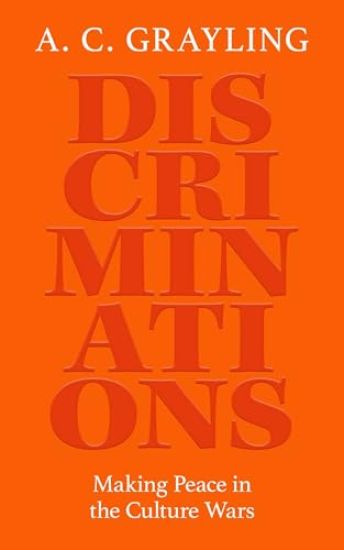
Discriminations

Discriminations

A. C. Grayling

Oneworld Publications
2025
nidottu
World-renowned philosopher A. C. Grayling explores the messy politics of the ‘culture wars’ It seems like we can’t talk about anything nowadays… Whether it’s war or something utterly inconsequential, the internet is primed for furore. And the results can be horrifying – from online pile-ons and doxing to job loss and, in some cases, death. But how did we end up here? Nuanced and historically grounded, A. C. Grayling searches for middle ground in an otherwise incendiary debate. Looking at the history of cancellation, from Ancient Greek ‘ostracism’ through hemlock cups, witch trials and the House of Un-American Activities, Discriminations is a timely examination of the state of our public culture and the chilling effect it’s having on intellectual discourse.
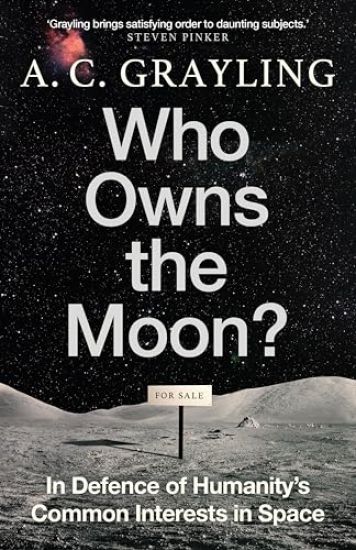
Who Owns the Moon?

Who Owns the Moon?

A. C. Grayling

Oneworld Publications
2025
pokkari
As the world's superpowers and corporations jostle for control in space, A. C. Grayling asks: who really owns our planet? 'Grayling brings satisfying order to daunting subjects.' STEVEN PINKER Silicon for microchips; manganese for batteries; titanium for missiles. The moon contains a wealth of natural resources. So, as the Earth’s supplies have begun to dwindle, it is no surprise that the world’s superpowers and wealthiest corporations have turned their eyes to the stars. As this new Space Race begins, A.C. Grayling asks: who, if anyone, owns the moon? Or Mars? Or other bodies in near space? And what do those superpowers and corporations owe to Planet Earth and its inhabitants as a whole? From feudal common land, through the rules of the sea, to the vast, nationless expanse of Antarctica, Grayling explores the history of the places which no one, and therefore everyone, owns. Examining the many ways this so-called terra nullius has fallen victim to ‘the tragedy of the commons’ – the tendency for communal resources to be exploited by a few individuals for personal gain at the expense of everyone else – Who Owns the Moon? puts forward a compelling argument for a bold new global consensus, one which recognises and defends the rights of everyone who lives on this planet.
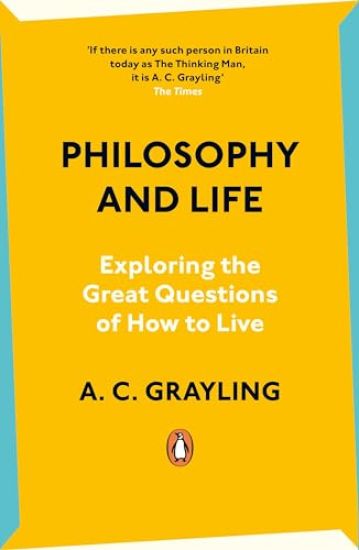
Philosophy and Life

Philosophy and Life

A. C. Grayling

PENGUIN BOOKS LTD
2024
pokkari
'Grayling brings satisfying order to daunting subjects' Steven Pinker'An enthusiastic thinker who embraces humour, common sense and lucidity' Independent_______________From the eminent philosopher, an authoritative exploration of the great questions of how to live'There is a question everyone has to ask and answer - in fact, has to keep on asking and keep on answering. It is, 'How should I live my life?' meaning, 'What values shall I live by? 'What sort of person should I be? What shall I aim for?' The great majority of people do not ask this question, they merely answer it unthinkingly, by adopting conventional views of life and what matters in it...'From Stoics to existentialists, in philosophy and literature, discussion of the philosophy of life -- of love and death, of courage, fortitude and wisdom -- challenges us all to think about what kinds of life are truly worth living. In this summation of a lifetime thinking and writing about this great question, A. C. Grayling explores with clarity and depth the ideas that each of us must use in answering it for ourselves.Drawing on the lives, experiences and works of a fantastically eclectic range of thinkers -- taking in not only philosophers such as Confucius, Seneca and Nietzsche, but also authors from Shakespeare to Ursula LeGuin, and modern thinkers such as Martha Nussbaum and Bernard Williams - Philosophy and Life brings together wisdom from across eras and continents in a tour de force on the philosophy of being human in a complicated world.
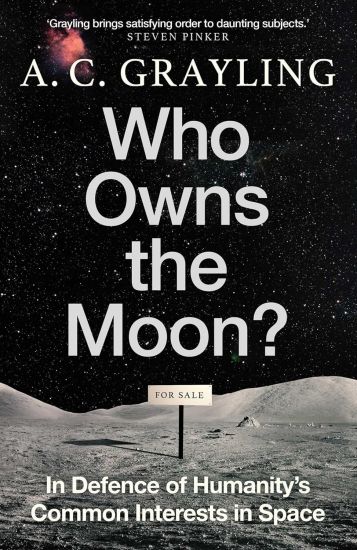
Who Owns the Moon?

Who Owns the Moon?

A. C. Grayling

Oneworld Publications
2024
sidottu
As the world's superpowers and corporations jostle for control in space, A. C. Grayling asks: who really owns our planet? 'Grayling brings satisfying order to daunting subjects.' STEVEN PINKER Silicon for microchips; manganese for batteries; titanium for missiles. The moon contains a wealth of natural resources. So, as the Earth’s supplies have begun to dwindle, it is no surprise that the world’s superpowers and wealthiest corporations have turned their eyes to the stars. As this new Space Race begins, A.C. Grayling asks: who, if anyone, owns the moon? Or Mars? Or other bodies in near space? And what do those superpowers and corporations owe to Planet Earth and its inhabitants as a whole? From feudal common land, through the rules of the sea, to the vast, nationless expanse of Antarctica, Grayling explores the history of the places which no one, and therefore everyone, owns. Examining the many ways this so-called terra nullius has fallen victim to ‘the tragedy of the commons’ – the tendency for communal resources to be exploited by a few individuals for personal gain at the expense of everyone else – Who Owns the Moon? puts forward a compelling argument for a bold new global consensus, one which recognises and defends the rights of everyone who lives on this planet.
The Art of Always Being Right: The 38 Ways to Win an Argument

The Art of Always Being Right: The 38 Ways to Win an Argument

A. C. Grayling; Arthur Schopenhauer

GIBSON SQUARE
2022
nidottu
We all know people who are incredibly persuasive. In this concise book, the philosophy of persuasion is parsed in 38 subtle rules that will give you the magic formula to achieve success in work and life. Find out when to: Counter bad arguments with bad arguments; Claim victory despite defeat; Anger your opponent; Lying is permitted. AC Grayling has skilfully edited Arthur Schopenhauer's posthumous work for the modern reader and provided additional text of his own. Schopenhauer, eclipsed at university by Hegel (whom he thought a fraud) made the topic of this book the study of a lifetime.
For the Good of the World

For the Good of the World

A. C. Grayling

Oneworld Publications
2022
pokkari
‘A must read’ Gordon Brown ‘A truly excellent book’ Sir David King The three biggest challenges facing the world today, in A. C. Grayling’s view, are climate change, technology and justice. In his timely new book, he asks: can human beings agree on a set of values that will allow us to confront the numerous threats facing the planet, or will we simply continue with our disagreements and antipathies as we collectively approach our possible extinction? As every day brings new stories about extreme weather events, spyware, lethal autonomous weapons systems, and the health imbalance between the northern and southern hemispheres, Grayling’s question – Is Global Agreement on Global Challenges Possible? – becomes ever more urgent. The solution he proposes is both pragmatic and inspiring.
The Frontiers of Knowledge

The Frontiers of Knowledge

A. C. Grayling

PENGUIN BOOKS LTD
2022
pokkari
'Grayling brings satisfying order to daunting subjects' Steven Pinker_________________________In very recent times humanity has learnt a vast amount about the universe, the past, and itself. But through our remarkable successes in acquiring knowledge we have learned how much we have yet to learn: the science we have, for example, addresses just 5 per cent of the universe; pre-history is still being revealed, with thousands of historical sites yet to be explored; and the new neurosciences of mind and brain are just beginning. What do we know, and how do we know it? What do we now know that we don't know? And what have we learnt about the obstacles to knowing more? In a time of deepening battles over what knowledge and truth mean, these questions matter more than ever. Bestselling polymath and philosopher A. C. Grayling seeks to answer them in three crucial areas at the frontiers of knowledge: science, history and psychology. A remarkable history of science, life on earth, and the human mind itself, this is a compelling and fascinating tour de force, written with verve, clarity and remarkable breadth of knowledge._________________________'Remarkable, readable and authoritative. How he has mastered so much, so thoroughly, is nothing short of amazing' Lawrence M. Krauss, author of A Universe from Nothing'This book hums with the excitement of the great human project of discovery' Adam Zeman, author of Aphantasia
For the Good of the World

For the Good of the World

A. C. Grayling

Oneworld Publications
2022
sidottu
‘A must read’ Gordon Brown ‘A truly excellent book’ Sir David King The three biggest challenges facing the world today, in A. C. Grayling’s view, are climate change, technology and justice. In his timely new book, he asks: can human beings agree on a set of values that will allow us to confront the numerous threats facing the planet, or will we simply continue with our disagreements and antipathies as we collectively approach our possible extinction? As every day brings new stories about extreme weather events, spyware, lethal autonomous weapons systems, and the health imbalance between the northern and southern hemispheres, Grayling’s question – Is Global Agreement on Global Challenges Possible? – becomes ever more urgent. The solution he proposes is both pragmatic and inspiring.
The Good State

The Good State

A. C. Grayling

Oneworld Publications
2021
pokkari
The foundations upon which our democracies stand are inherently flawed, vulnerable to corrosion from within. What is the remedy? A. C. Grayling makes the case for a clear, consistent, principled and written constitution, and sets out the reforms necessary – among them addressing the imbalance of power between government and Parliament, imposing fixed terms for MPs, introducing proportional representation and lowering the voting age to 16 (the age at which you can marry, gamble, join the army and must pay taxes if you work) – to ensure the intentions of such a constitution could not be subverted or ignored. As democracies around the world show signs of decay, the issue of what makes a good state, one that is democratic in the fullest sense of the word, could not be more important. To take just one example: by the simplest of measures, neither Britain nor the United States can claim to be truly democratic. The most basic tenet of democracy is that no voice be louder than any other. Yet in our ‘first past the post’ electoral systems a voter supporting a losing candidate is unrepresented, his or her voice unequal to one supporting a winning candidate, who frequently does not gain a majority of the votes cast. This is just one of a number of problems, all of them showing that democratic reform is a necessity in our contemporary world.
Filosofins historia : tre tusen år av tänkande
I Filosofins historia presenterar A. C. Grayling, professor i filosofi vid Oxford universitet, tre tusen år av tänkande. Det här är en sällsynt heltäckande bild av vårt intellektuella arv från den västerländska såväl som den asiatiska och afrikanska filosofiska traditionen.Med stilistisk klarhet tar Grayling läsaren från uppfattningar om världen och moralen före Buddha, Konfucius och Sokrates, vidare genom europeiskt tänkande under kristendomens dominans, från renässansen och upplysningen, till Mill, Nietzsche, Sartre och ända fram till idag.Genom att redogöra för idéer som framförts av inflytelserika tänkare, från den analytiska såväl som den kontinentala traditionen, täcker Grayling i sin tillgängliga genomgång kunskapsteori, metafysik, etik, estetik, logik, politisk filosofi, medvetande- och språkfilosofi, och hur dessa områden diskuterats genom historien. Grayling levandegör det fascinerande tankeutbyte som pågått inom och mellan epoker och frågar sig: Vad vi har lärt oss – och vad återstår att komma underfund med?
The History of Philosophy

The History of Philosophy

A. C. Grayling

PENGUIN BOOKS
2021
nidottu
"A witty, learned, authoritative survey of philosophical thought." --The New York Times Book Review The first authoritative and accessible single-volume history of philosophy to cover both Western and Eastern traditions, from one of the world's most eminent thinkers The story of philosophy is an epic tale, spanning civilizations and continents. It explores some of the most creative minds in history. But not since the long-popular classic by Bertrand Russell, A History of Western Philosophy, published in 1945, has there been a comprehensive and entertaining single-volume history of this great, intellectual, world-shaping journey. With characteristic clarity and elegance, A. C. Grayling takes the reader from the age of the Buddha, Confucius, and Socrates through Christianity's capture of the European mind, from the Renaissance and Enlightenment on to Mill, Nietzsche, Sartre and, finally, philosophy today. Surveying in tandem the great philosophical traditions of India, China, and the Persian-Arabic world, and astonishing in its range and accessibility, Grayling's The History of Philosophy is destined to be a landmark work.
The History of Philosophy

The History of Philosophy

A. C. Grayling

Penguin Books Ltd
2020
pokkari
AUTHORITATIVE AND ACCESSIBLE, THIS LANDMARK WORK IS THE FIRST SINGLE-VOLUME HISTORY OF PHILOSOPHY SHARED FOR DECADES'A cerebrally enjoyable survey, written with great clarity and touches of wit' Sunday Times The story of philosophy is an epic tale: an exploration of the ideas, views and teachings of some of the most creative minds known to humanity. But there has been no comprehensive history of this great intellectual journey since 1945. Intelligible for students and eye-opening for philosophy readers, A. C. Grayling covers with characteristic clarity and elegance subjects like epistemology, metaphysics, ethics, logic, and the philosophy of mind, as well as the history of debates in these areas, through the ideas of celebrated philosophers as well as less well-known influential thinkers. The History of Philosophy takes the reader on a journey from the age of the Buddha, Confucius and Socrates. Through Christianity's dominance of the European mind to the Renaissance and Enlightenment. On to Mill, Nietzsche, Sartre, then the philosophical traditions of India, China and the Persian-Arabic world.And finally, into philosophy today.
The Philosophy Foundation  Provocations

The Philosophy Foundation Provocations

David Birch; A C Grayling

Crown House Publishing
2018
nidottu
David Birch's Provocations: Philosophy for secondary school will help teachers to present ideas and stimulate discussions which both accommodate and engage adolescent appetites. Foreword by A. C. Grayling. Are human beings flawed? Is murder an act of insanity or just plain thoughtlessness? Do we need a soul? From the fall of Icarus to the rise of Caesar, this practical resource draws upon history, philosophy and literature to provoke students to think, question and wonder. Divided into chapters on the world, self, society and others, the book is designed to give secondary school teachers the means to listen rather than teach - and to allow the ideas and thoughts of students to form the centre of the lesson. It shares a set of mature and challenging philosophy sessions predicated on the pedagogical methods of The Philosophy Foundation, and which explore, among other things: Wagner and desire, Shakespeare and madness, Joan of Arc and gender, Faust and temptation, and Nostradamus and time. The sessions dare students to think philosophically, to generate and test ideas, and to gain deeper insights - and raise questions on slavery, consumerism, utopia, the nature of evil, the limits of freedom, belief in God, and a whole lot more. The book sets out a clear introductory outline on its use both in and out of the classroom, and contains helpful tips and advice to guide teachers to span the curriculum - covering areas applicable to history, geography, religious studies, science, art, English and citizenship. There is also an extensive bibliography for those who wish to explore the topics in greater depth. Designed for all teachers, whether they are Philosophy for Children (P4C) trained or just experimenting with philosophy, of learners aged 11-18. There is also a hardback edition available, ISBN 9781845908881.