Kirjojen hintavertailu. Mukana 12 595 353 kirjaa ja 12 kauppaa.

Kirjailija

A. David Moody

Kirjat ja teokset yhdessä paikassa: 7 kirjaa, julkaisuja vuosilta 1996-2018, suosituimpien joukossa Ezra Pound: Poet. Vertaile teosten hintoja ja tarkista saatavuus suomalaisista kirjakaupoista.

7 kirjaa

Kirjojen julkaisuhaarukka 1996-2018.

Ezra Pound: Poet

Ezra Pound: Poet

A. David Moody

Oxford University Press
2018
nidottu
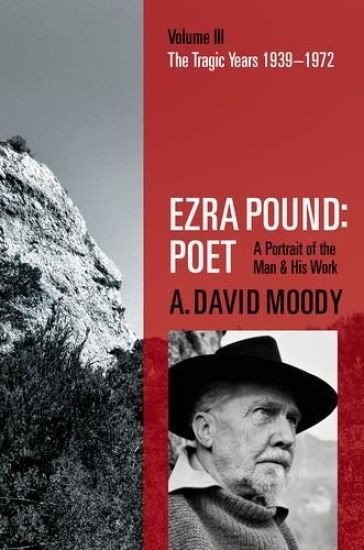
This third and final volume of A. David Moody's critical life of Ezra Pound presents Pound's personal tragedy in a tragic time. In this volume, we experience the 1939-1945 World War, and Pound's hubristic involvement in Fascist Italy's part in it; we encounter the grave moral and intellectual error of Pound holding the Jewish race responsible for the war; and his consequent downfall, being charged with treason, condemned as an anti-Semite, and shut up for twelve years in an institution for the insane. Further, we see Pound stripped for life, by his own counsel and wife, of his civil and human rights. Pound endured what was inflicted upon him, justly and unjustly, without complaint; and continued his lifetime's effort to promote, in and through his Cantos and his translations, a consciousness of a possible humane and just social order. The contradictions run deep and compel, as tragedy does, a steady and unprejudiced contemplation and an answering depth of comprehension.
Ezra Pound: Poet

Ezra Pound: Poet

A. David Moody

Oxford University Press
2018
nidottu
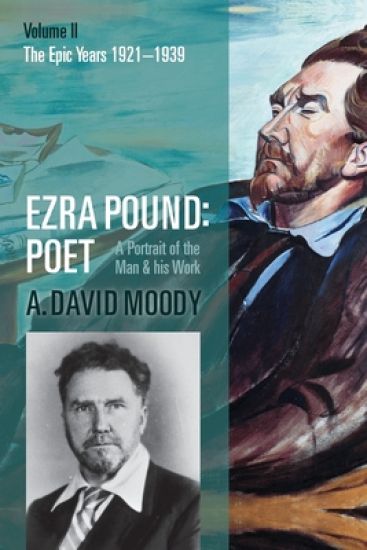
The long-awaited second volume of A. David Moody's critically acclaimed three-part biography of Ezra Pound weaves together the illuminating story of his life, his achievements as a poet and a composer, and his one-man crusade for economic justice. The years 1921-1939 were the most productive of Pound's career. In 1920s Paris, he was among the leading figures of the avant-garde and, in that ambience, he composed an opera, made original contributions to the theory of harmony, and wrote the first thirty cantos of his great epic. Moody explores this creativity in fascinating detail, examining the environment that allowed for some of Pound's greatest work. This period also brought Pound's politics firmly into view and Moody is able to shed new light on his sympathy for Mussolini's Fascism, his invoking Confucian China as a model of responsible government, and his abiding commitment to the democratic values of the American Constitution. Pound is revealed as a great poet and a flawed idealist caught up in the turmoil of his darkening time and struggling, sometimes blindly and in error and self-contradiction, to be a force for enlightenment.
Ezra Pound: Poet

Ezra Pound: Poet

A. David Moody

Oxford University Press
2015
sidottu
This third and final volume of A. David Moody's critical life of Ezra Pound presents Pound's personal tragedy in a tragic time. The first volumes of Moody's biography have been acclaimed as 'masterly' (Daily Telegraph), 'exceptional' (Literary Review), and 'invaluable' (New York Times Book Review). In this concluding volume, we experience the 1939-1945 World War, and Pound's hubristic involvement in Fascist Italy's part in it; we encounter the grave moral and intellectual error of Pound holding the Jewish race responsible for the war; and his consequent downfall, being charged with treason, condemned as an anti-Semite, and shut up for twelve years in an institution for the insane. Further, we see Pound stripped for life, by his own counsel and wife, of his civil and human rights. Pound endured what was inflicted upon him, justly and unjustly, without complaint; and continued his lifetime's effort to promote, in and through his Cantos and his translations, a consciousness of a possible humane and just social order. The contradictions run deep and compel, as tragedy does, a steady and unprejudiced contemplation and an answering depth of comprehension.
Ezra Pound: Poet

Ezra Pound: Poet

A. David Moody

Oxford University Press
2014
sidottu
This second volume of A. David Moody's full-scale portrait, covering Ezra Pound's middle years, weaves together into a single highly readable and challenging narrative, in a way that has not been done before, the illuminating story of his life, his achievement as a poet and a composer, and his one-man crusade for economic justice. There is new insight into his complicated personal relationships. There are detailed accounts of the composition of his two operas and of his original contribution to the theory of harmony. A canto by canto and decad by decad elucidation of the form and meaning of the first seventy-one cantos of his epic reveals their hitherto unperceived musical structures and their overall design. The thinking behind his support for Mussolini's economic programme during the Great Depression of the 1930s is brought to light, and shown to be not "fascist" but essentially true to the principles of the American Revolution, and, behind that, to Confucian ideas of responsible government. At the same time it is made clear that he saw only what he wanted to see in Mussolini's Fascism, and later in Hitler's Nazism, and was blind to their darker policies. And it is clear that he went most seriously wrong in deploying, as a weapon in his war on the injustice of the capitalist financial system, the anti-Semitism endemic in Europe and America and at that time turning murderous in Nazi Germany. Pound is revealed as a great poet and a flawed idealist caught up in the turmoil of his darkening time and struggling, sometimes blindly and in error and self-contradiction, to be a force for enlightenment. A third volume will carry on the narrative of his life and works from 1939 to his death in 1972.
Ezra Pound: Poet

Ezra Pound: Poet

A. David Moody

Oxford University Press
2009
nidottu
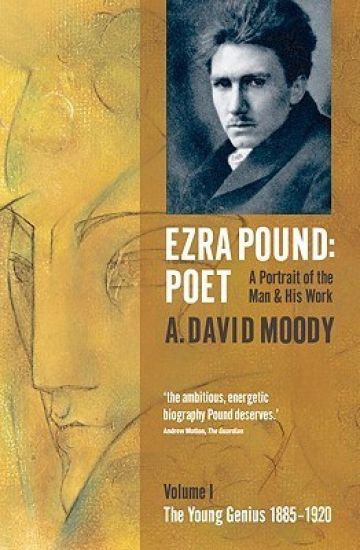
This first volume of what will be a full-scale portrait presents Ezra Pound as a very determined and energetic young genius setting out to make his way both as a poet and as a force for civilization in England and America in the years before, during and just after the 1914-18 war. In a clear and lively narrative A. David Moody weaves a story of Pound's early life and loves; of his education in America; of his apprentice years in London, devoted to training himself to be as a good and powerful a poet as he had it in him to become; of his learning there from W. B.Yeats and Ford Madox Hueffer, then forming his own Imagiste group, and going on from that to join with Wyndham Lewis in his Vorticism, and to link up also with James Joyce and T. S. Eliot to create the modernist vortex in the midst of the 1914-18 war. We see Pound scraping a living by writing prose for individualist and socialist periodicals, and emerging as not only an inspired literary critic, but as a critic of music and society as well. Above all, Moody shows Pound's evolution as a poet from the derivative idealism and aestheticism of his precocious youth into the truly original author of Homage to Sextus Propertius and Hugh Selwyn Mauberley. We find Pound established by 1920 as a force for revolution in poetry; as a force for the liberation of the individual from stifling conventions; and as a force for renaissance in America. We find him becoming committed, moreover, to the reform of the capitalist system in the name of economic justice for all. This is the first biography to put Pound's poetry at the heart of his existence, where he himself placed it, and to view his extraordinarily active life, his loves, and his creative effort, as a single complex drama. The altogether new and comprehensive account of all of his poems, from the earliest through Cathay and up to Hugh Selwyn Mauberley and the first Cantos , will illuminate his poetry and make it more accessible. With that there is an exceptionally clear and cogent analysis of the ideas informing his Imagisme and his Vorticism ; and of the ideas informing his commitments to the freedom and fulfilment of the individual, to a cultural renaissance, and to social and economic reform. The poetry, the prose writings, and the personal life are all woven together into a brilliant narrative portrait of the poet as a young man. The second volume, The Epic Years, carries on the narrative of his life and works from 1921, the year in which he took up residence in Paris.
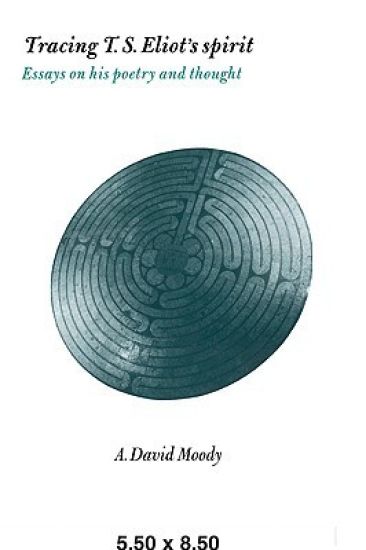
Tracing T. S. Eliot's Spirit

Tracing T. S. Eliot's Spirit

A. David Moody

Cambridge University Press
2008
pokkari
T. S. Eliot's lifelong quest for a world of the spirit is the theme of this book by leading Eliot scholar A. David Moody. The first four essays in the collection map Eliot's spiritual geography: the American taproot of his poetry, his profound engagement with the philosophy and religion of India, his near and yet detached relations with England, and his problematic cultivation of a European mind. At the centre of the collection is a study of the Latin poem Pervigilium Veneris, a fragment of which figures enigmatically in the concluding lines of The Waste Land. The third part of the collection is a set of five investigations of Eliot's poems, dealing particularly with The Waste Land, Ash Wednesday and Four Quartets, and attending to how they express and shape what he called 'the deeper, unnamed feelings which form the substratum of our being'.
Tracing T. S. Eliot's Spirit

Tracing T. S. Eliot's Spirit

A. David Moody

Cambridge University Press
1996
sidottu
T. S. Eliot’s lifelong quest for a world of the spirit is the theme of this book by leading Eliot scholar A. David Moody. The first four essays in the collection map Eliot’s spiritual geography: the American taproot of his poetry, his profound engagement with the philosophy and religion of India, his near and yet detached relations with England, and his problematic cultivation of a European mind. At the centre of the collection is a study of the Latin poem Pervigilium Veneris, a fragment of which figures enigmatically in the concluding lines of The Waste Land. The third part of the collection is a set of five investigations of Eliot’s poems, dealing particularly with The Waste Land, Ash Wednesday, and Four Quartets, and attending to how they express and shape what he called ‘the deeper, unnamed feelings which form the substratum of our being’.