Kirjojen hintavertailu. Mukana 12 595 353 kirjaa ja 12 kauppaa.

Kirjailija

A.E. Stallings

Kirjat ja teokset yhdessä paikassa: 15 kirjaa, julkaisuja vuosilta 2006-2026, suosituimpien joukossa Liberties Journal of Culture and Politics. Vertaile teosten hintoja ja tarkista saatavuus suomalaisista kirjakaupoista.

Mukana myös kirjoitusasut: A. E. Stallings, A E Stallings

15 kirjaa

Kirjojen julkaisuhaarukka 2006-2026.

Liberties Journal of Culture and Politics

Liberties Journal of Culture and Politics

Elliot Ackerman; Durs Grünbein; Thomas Chatterton Williams; Anita Shapira; Adam Zagajewski; Sally Satel; R.B. Kitaj; Matthew Stephenson; Helen Vendler; David Haziza; A.E. Stallings; Paul Berman; Clara Collier; Michael Kimmage; Peg Boyers

Liberties Journal Foundation
2021
pokkari
“A Meteor of Intelligent Substance” “Something was Missing in our Culture, and Here It Is” Liberties – A Journal of Culture and Politics features new essays and poetry from some of the world's best writers and artists to inspire and impact the intellectual and creative lifeblood of our current culture and today's politics. This summer issue of Liberties includes: Elliot Ackerman on Veterans Are Not Victims; Durs Grünbein on Fascism and the Writer; R.B. Kitaj’s Three Tales; Thomas Chatterton Williams on The Blessings of Assimilation; Anita Shapira on The Fall of Israel’s House of Labor; Sally Satel on Woke Medicine; Matthew Stephenson On Corruption’s Honey and Poison; Helen Vender on Wallace Stevens; David Haziza on Illusions of Immunity; Paul Berman on the Library of America; Clara Collier’s nostalgia for strong women in film; Michael Kimmage on American Inquisitions; Leon Wieseltier (editor) on the high price of Stoicism; Celeste Marcus (managing editor) on a Native American Tragedy; and new poetry from Adam Zagajewski, A.E. Stallings, and Peg Boyers.
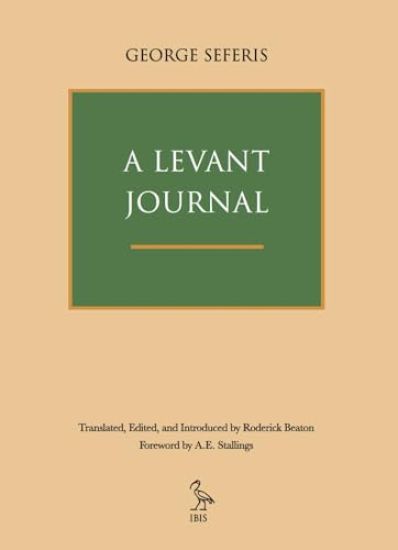
A Levant Journal

A Levant Journal

George Seferis; A. E. Stallings

WESLEYAN UNIVERSITY PRESS
2026
nidottu
An eloquent glimpse of the humanity behind the headlines by one of the twentieth century's greatest writers._x000D_ />_x000D_ />Winner of the Nobel Prize for Literature in 1963, poet, essayist, diarist, and diplomat George Seferis stands as one of the giants of twentieth-century literature. His poetry has long been recognized for its lyric purity, its charged sense of history, and its economy. His no-less marvelous prose extends his preoccupation with tradition into a more daily register, and his journals, in particular, graph the meeting of the poet's sensibility and the landscape where present confronts past. A Levant Journal offers selections from the notebooks Seferis kept during his diplomatic postings in the region. Covering the years 1941–44 and 1953–56, they record his detailed impressions of Beirut, Amman, Damascus, Cairo, Baghdad, Cyprus, Jerusalem, the Dead Sea, and various other sites he visited while working there. With characteristic vividness and concision, Seferis reflects both on what he sees and what lies behind (and ahead of) the visible, as the journals include superb passages of travel writing and meditations on the Levant's Hellenistic legacy, the holy sites of the region, the history of prominent British women travelers to the area, the future of British imperialism, and of course the turbulent politics of his day. As such, the journals move between private and public dimensions of the poet's life and provide an intimate look into Seferis's world.
Frieze Frame

Frieze Frame

A. E. Stallings

PAUL DRY BOOKS, INC
2025
pokkari
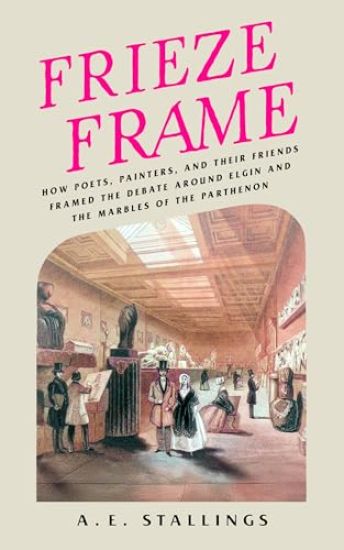
Award-winning poet and Oxford Professor of Poetry, A. E. Stallings has marshaled poetry, personal letters, paintings, a dubiously translated 1801 firman, newspaper clippings, parliamentary proceedings, a Greek political campaign, and other lore in this deliciously detailed and gossipy history of the Parthenon (AKA, Elgin) Marbles. Her narrative encompasses the removal of the marbles from the Athenian Acropolis, their various misadventures before and after installation in the British Museum, from shipwreck to boxing matches, and the debate over their future and possible reunion in Greece. Bringing fresh air to a stale debate, Frieze Frame explores the effect the Marbles have had on poets, writers, painters, actors, architects, and vice versa--how poets and painters, for instance, have framed the Marbles' place in art and culture. The poets Keats, Byron, and Cavafy, as well as an aristocrat who loses his nose and his fortune, a bad painter who commits suicide, and a general who takes his cat into battle, are among the cast of characters. In the author's own words, "I am, to a certain extent, as interested in the strange stories and people surrounding the stones as the controversy of their removal] and their fate." Key for Stallings is the creative world of the Marbles, the ways that they appear in nineteenth (and twentieth) century writing and art, race theory and beyond, and the influence they have exerted in our society: cultural figures, maybe even characters, in their own right.
Plough Quarterly No. 44 – Why Be Healthy?

Plough Quarterly No. 44 – Why Be Healthy?

David Zahl; Malcolm Guite; Kelsey Osgood; Abraham Nussbaum; A. E. Stallings; Narine Abgaryan; John Swinton; Devan Stahl; James Mumford; Jessica T. Miskelly; Brewer Eberly; Aberdeen Livingstone; Terence Sweeney; Sam Tomlin; Hazel Thomson

PLOUGH PUBLISHING HOUSE
2025
nidottu
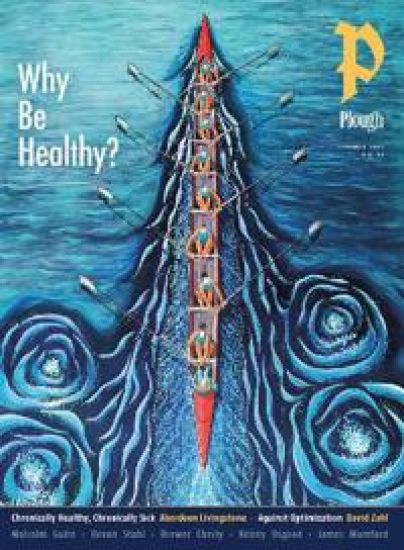
In an age of health care and wellness industries and near-religious pursuit of fitness and self-optimization, what does “health” mean for the chronically ill? For people with disabilities or mental health challenges or neurodiversity? For the aging and dying? This issue asks what it means to live well despite the limitations and frailties of our bodies, and what, beyond the scope of medicine, is needed for our flourishing. On this theme: Aberdeen Livingstone learns when to battle, and when to accept, chronic illness. Malcolm Guite defends the responsible use of pipe and pint. David Zahl calls out the wellness industry’s false promise of optimization. Abraham Nussbaum learns the limits of psychotherapy from his first patient. Cristiano Dennani photographs survivors of the Bhopal chemical spill in India. Heather M. Surls visits a tuberculosis hospital in Mafraq, Jordan. Brewer Eberly considers direct primary care, an attempt to reset the doctor-patient relationship. Devan Stahl considers what the wounds of the resurrected Christ mean for people with disabled bodies. Sam Tomlin wishes church and school weren’t such hurdles for children with autism. James Mumford finds the twelve steps of AA work when other approaches to addiction fail. Other articles in this issue: Jessica T. Miskelly, monitoring ocean currents on an icebreaker off Antarctica, feels the planet breathe. Kelsey Osgood visits a Jewish-Christian-Muslim interfaith center after October 7. Terence Sweeney profiles a repentant slaveholder, Bartolomé de las Casas. Plus: new poems by A. E. Stallings, short fiction by Narine Abgaryan, book reviews, and more. Plough Quarterly features stories, ideas, and culture for people eager to apply their faith to the challenges we face. Each issue includes in-depth articles, interviews, poetry, book reviews, and art.
In Deadly Embrace

In Deadly Embrace

A.E. Stallings

NEW YORK UNIVERSITY PRESS
2025
pokkari
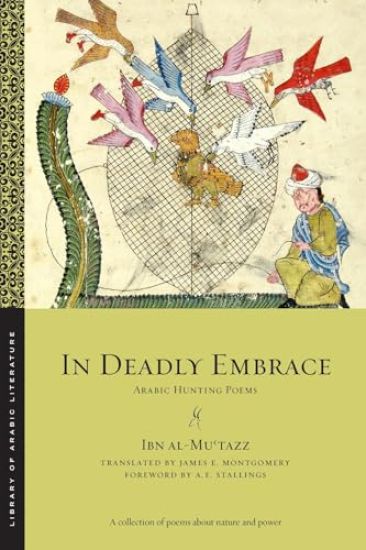
A collection of poems about nature and power To Ibn al-Mu?tazz and his Abbasid contemporaries, the hunt was more than a diversion—it was the theater for their poetic and political endeavors, captured here in fifty-nine Arabic hunting poems, or ?ardiyyat. The poems of In Deadly Embrace describe hunting expeditions with animals trained to hunt, including saluki hounds and birds of prey. Many were composed after these outings, when the hunting party gathered to enjoy the game they caught. Poetry was central to Abbasid society and served as a method of maintaining networks of patronage and friendship; the poems in this collection reflect these power dynamics and allowed Ibn al-Mu?tazz—prince of the realm and in line for the caliphate—to explore his own relationship to social and political power and to demonstrate his fitness to rule. Ibn al-Mu?tazz was an influential poet and literary theorist of the Modernist school of poetry. In Deadly Embrace merges the Modernists' new techniques and styles with age-old themes: military prowess and wisdom, fitness to rule and comradeship, the camaraderie of the hunt and the cult of heroic masculinity. Groundbreaking and evocative, the poems paint vivid pictures of hunting scenes while posing deep questions about our attentiveness to the natural world and the relationship of the human to the nonhuman. An English-only edition.
This Afterlife: Selected Poems

This Afterlife: Selected Poems

A. E. Stallings

Farrar, Straus and Giroux
2023
nidottu
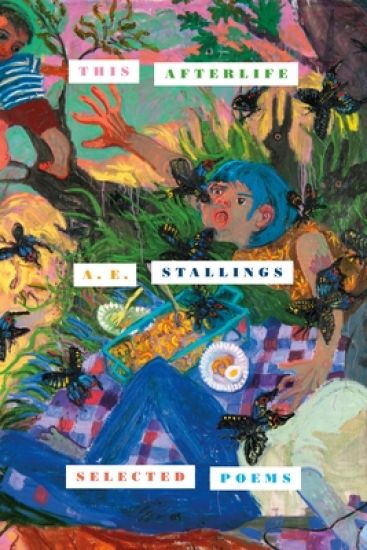
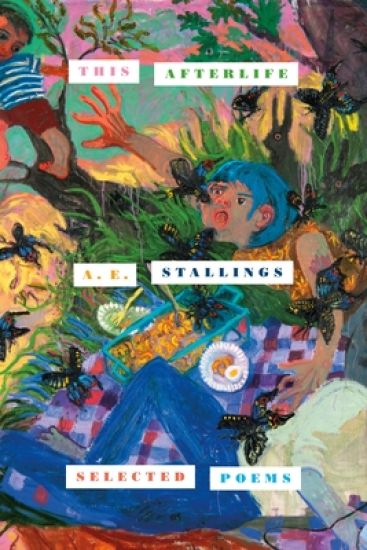
A selection of sharp, witty, and impeccably crafted poems from A. E. Stallings, the award-winning poet and translator. This Afterlife: Selected Poems brings together poetry from A. E. Stallings's four acclaimed collections, Archaic Smile, Hapax, Olives, and Like, as well as a lagniappe of outlier poems. Over time, themes and characters reappear, speaking to one another across years and experience, creating a complex music of harmony, dissonance, and counterpoint. The Underworld and the Afterlife, ancient history and the archaeology of the here and now, all slant rhyme with one another. Many of these poems unfold in the mytho-domestic sphere, through the eyes of Penelope or Pandora, Alice in Wonderland or the poet herself. Fulfilling the promise of the energy and sprezzatura of Stallings's earliest collection, her later technical accomplishments rise to meet the richness of lived experience: of marriage and motherhood, of a life lived in another language and country, of aging and mortality. Her chosen home of Greece adds layers of urgency to her fascination with Greek mythology; living in an epicenter of contemporary crises means current events and ancient history are always rubbing shoulders in her poems. Expert at traditional received forms, Stallings is also a poet of restless experiment, in cat's-cradle rhyme schemes, nonce stanzas, supple free verse, thematic variation, and metaphysical conceits. The pleasure of these poems, fierce and witty, melancholy and wise, lies in a timeless precision that will outlast the fickleness of fashion.
This Afterlife

This Afterlife

A.E. Stallings

CARCANET PRESS LTD
2022
pokkari
This Selected includes highlights from Stallings' first four books and also new poems never before collected in book form. A Poetry Book Society Winter Special Commendation 2022.
This Afterlife: Selected Poems

This Afterlife: Selected Poems

A. E. Stallings

Farrar, Straus and Giroux
2022
sidottu
A selection of sharp, witty, and impeccably crafted poems from A. E. Stallings, the award-winning poet and translator. This Afterlife: Selected Poems brings together poetry from A. E. Stallings's four acclaimed collections, Archaic Smile, Hapax, Olives, and Like, as well as a lagniappe of outlier poems. Over time, themes and characters reappear, speaking to one another across years and experience, creating a complex music of harmony, dissonance, and counterpoint. The Underworld and the Afterlife, ancient history and the archaeology of the here and now, all slant rhyme with one another. Many of these poems unfold in the mytho-domestic sphere, through the eyes of Penelope or Pandora, Alice in Wonderland or the poet herself. Fulfilling the promise of the energy and sprezzatura of Stallings's earliest collection, her later technical accomplishments rise to meet the richness of lived experience: of marriage and motherhood, of a life lived in another language and country, of aging and mortality. Her chosen home of Greece adds layers of urgency to her fascination with Greek mythology; living in an epicenter of contemporary crises means current events and ancient history are always rubbing shoulders in her poems. Expert at traditional received forms, Stallings is also a poet of restless experiment, in cat's-cradle rhyme schemes, nonce stanzas, supple free verse, thematic variation, and metaphysical conceits. The pleasure of these poems, fierce and witty, melancholy and wise, lies in a timeless precision that will outlast the fickleness of fashion.
Archaic Smile: Poems

Archaic Smile: Poems

A. E. Stallings

Farrar, Straus and Giroux
2022
nidottu
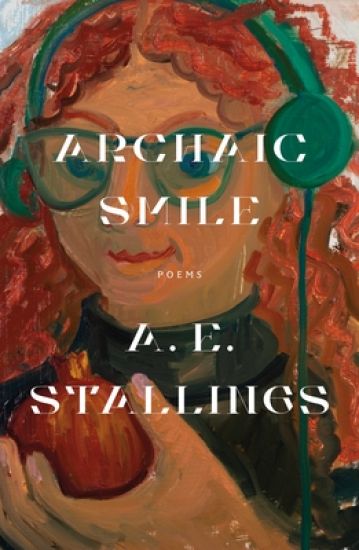
A new edition of A. E. Stallings's first book of poems, which was awarded the Richard Wilbur Award. In Archaic Smile, by the Pulitzer Prize and National Book Critics Circle Award finalist A. E. Stallings, the poet couples poetic meditations on classic stories and themes with poems about the everyday, sometimes mundane occurrences of contemporary life (like losing an umbrella or fishing with one's father), and she infuses the latter with the magic of myth and history. With the skill of a scholar and translator and the playful, pristine composition of a poet, Stallings bridges the gap between these two distant worlds. Stallings "invigorates the old forms and makes them sing" (Meryl Natchez, ZYZZYVA) in her poetry, and the scope and origins of her talents are on full display in the acclaimed author's first collection. The poems of Archaic Smile are sung with a timeless, technically impeccable, and utterly true voice.
The Battle Between the Frogs and the Mice

The Battle Between the Frogs and the Mice

A E Stallings

Paul Dry Books, Inc
2019
nidottu
"A virtuosic, witty, charming translation of the greatest epic ever written about mice, with wonderful illustrations by Grant Silverstein. Stallings' elegant rhyming couplets are the perfect choice to honor the mousy Muse."--Emily WilsonFrom the award-winning poet and translator A. E. Stallings comes a lively new edition of the ancient Greek fable The Battle between the Frogs and the Mice. Originally attributed to Homer, but now thought to have been composed centuries later by an unknown author, The Battle is the tale of a mouse named Crumbsnatcher who is killed by the careless frog King Pufferthroat, sparking a war between the two species. This dark but delightful parable about the foolishness of war is illustrated throughout in striking drawings by Grant Silverstein.The clever introduction is written from the point of view of a mouse who argues that perhaps the unknown author of the fable is not a human after all: "Who better than a mouse, then, to compose our diminutive, though not ridiculous, epic, a mouse born and bred in a library, living off lamp oil, ink, and the occasional nibble of a papyrus, constantly perched on the shoulder of some scholar or scholiast of Homer, perhaps occasionally whispering in his ear? Mouse, we may remember, is only one letter away from Muse."
Like

Like

A. E. Stallings

Farrar, Straus Giroux Inc
2019
nidottu
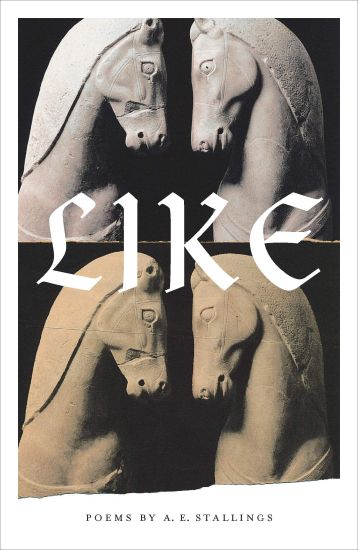
Like, that currency of social media, is a little word with infinite potential; it can be nearly any part of speech. Without it, there is no simile, that engine of the lyric poem, the lyre’s note in the epic. A poem can hardly exist otherwise. In Like, her most ambitious collection to date, A. E. Stallings continues her archaeology of the domestic, her odyssey through myth and motherhood in received and invented forms, from sonnets to syllabics. Stallings also eschews the poetry volume’s conventional sections for the arbitrary order of the alphabet. Contemporary Athens itself, a place never dull during the economic and migration crises of recent years, shakes off the dust of history and emerges as a vibrant character. Known for her wry and musical lyric poems, Stallings here explores her themes in greater depth, including the bravura performance 'Lost and Found', a meditation in ottava rima on a parent’s sublunary dance with daily-ness and time, set in the moon’s Valley of Lost Things.
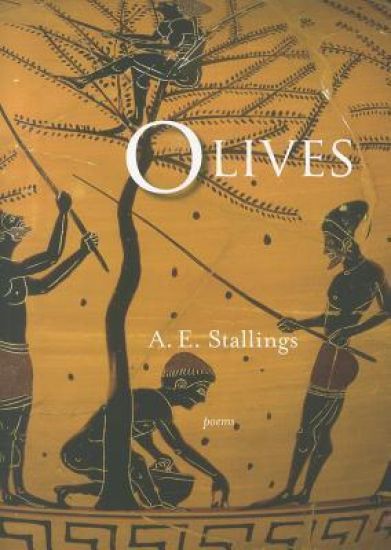
Olives

Olives

A.E. Stallings

Northwestern University Press
2012
nidottu
A. E. Stallings has established herself as one of the best American poets of her generation. In addition to a lively dialogue with both the contemporary and ancient culture of her adopted homeland, Greece, this new collection features poems that, in her inimitable voice, address the joys and anxieties of marriage and motherhood. This collection builds on previous accomplishments with some longer poems and sequences of greater philosophical scope, such as “On Visiting a Borrowed Country House in Arcadia.” Stallings possesses the rare ability to craft precise poems that pulsate with deeply felt emotion. Like the olives of the title, the book embraces the bitter but savory fruits of the ancient tree, and the tears and sweetness we harvest in our temporary lives. These poems show Stallings in complete command of her talent, able to suggest the world in a word.
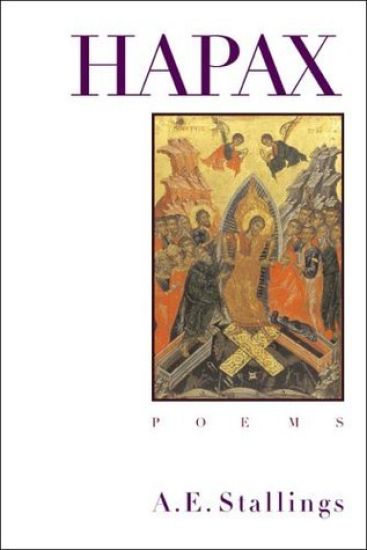
Hapax

Hapax

A.E. Stallings

Northwestern University Press
2006
sidottu
Hapax is ancient Greek for ""once, once only, once and for all,"" and ""onceness"" pervades this second book of poems by American expatriate poet A. E. Stallings. Opening with the jolt of ""Aftershocks,"" this book explores what does and does not survive its ""gone moment"" - childhood (""The Dollhouse""), ancient artifacts (""Implements from the Grave of the Poet""), a marriage's lost moments of happiness (""Lovejoy Street""). The poems also often compare the ancient world with the modern Greece where Stallings has lived for several years. Her musical lyrics cover a range of subjects from love and family to characters and themes derived from classical Greek sources (""Actaeon"" and ""Sisyphus""). Employing sonnets, couplets, blank verse, haiku, Sapphics, even a sequence of limericks, Stallings displays a seemingly effortless mastery of form. She makes these diverse forms seem new and relevant as modes for expressing intelligent thought as well as charged emotions and a sense of humor. The unique sensibility and linguistic freshness of her work has already marked her as an important, young poet coming into her own.
Hapax

Hapax

A.E. Stallings

Northwestern University Press
2006
nidottu
Hapax is ancient Greek for ""once, once only, once and for all,"" and ""onceness"" pervades this second book of poems by American expatriate poet A. E. Stallings. Opening with the jolt of ""Aftershocks,"" this book explores what does and does not survive its ""gone moment"" - childhood (""The Dollhouse""), ancient artifacts (""Implements from the Grave of the Poet""), a marriage's lost moments of happiness (""Lovejoy Street""). The poems also often compare the ancient world with the modern Greece where Stallings has lived for several years. Her musical lyrics cover a range of subjects from love and family to characters and themes derived from classical Greek sources (""Actaeon"" and ""Sisyphus""). Employing sonnets, couplets, blank verse, haiku, Sapphics, even a sequence of limericks, Stallings displays a seemingly effortless mastery of form. She makes these diverse forms seem new and relevant as modes for expressing intelligent thought as well as charged emotions and a sense of humor. The unique sensibility and linguistic freshness of her work has already marked her as an important, young poet coming into her own.