Kirjojen hintavertailu. Mukana 12 537 367 kirjaa ja 12 kauppaa.

Kirjailija

A.J.R. Russell-Wood

Kirjat ja teokset yhdessä paikassa: 6 kirjaa, julkaisuja vuosilta 1968-2002, suosituimpien joukossa Society and Government in Colonial Brazil, 1500–1822. Vertaile teosten hintoja ja tarkista saatavuus suomalaisista kirjakaupoista.

Mukana myös kirjoitusasut: A J R Russell-Wood, A. J. R. Russell-Wood, A.J.R.Russell- Wood

6 kirjaa

Kirjojen julkaisuhaarukka 1968-2002.

Society and Government in Colonial Brazil, 1500–1822
Professor Russell-Wood’s detailed studies of Brazilian social history in the colonial era have long been recognised as model contributions to the history of class, race, gender and religion. This collection combines work on particular persons and groupings with survey articles on the role of the port and the frontier in colonial Brazil and on its historiography. The author describes the administration and structure of government, and the realities of royal power, with examples drawn from the port cities and the mining townships of the interior, then moves on to examine the interplay of class, religion and race with reference to brotherhoods of persons of African descent and the racially exclusive Third Orders. One group who overcame legal, physical and social constraints were women who, whether of European or African descent, contributed decisively to the economy and society of Brazil. To conclude, there are accounts of three individuals, each of whose experiences illustrate facets of the judicial system, governance and education in Portugal’s richest colony. Les études détaillées du professeur Russell-Wood sur l’histoire sociale brésilienne durant la période coloniale ont longtemps été reconnues comme un modèle de contribution à histoire des classes, des races, des genres et des religions. Cette collection allie des travaux au sujet d’individus spécifiques et de groupements à des résumés d’enquête sur la rôle du port et de la frontière dans le Brésil colonial et dans son historiographie. L’auteur décrit l’administration et la structure gouvernementale, ainsi que les réalités du pouvoir royal, s’appuyant d’exemples tirés des cités portuaires et des communes minières de l’intérieur. Il passe ensuite à l’examen de l’interaction des classes, des religions et des races en faisant référence aux liens de fraternité qui unissaient les personnes de descendance africaine, ainsi qu’aux Troisièmes Ordres qui pratiq
Slavery and Freedom in Colonial Brazil

Slavery and Freedom in Colonial Brazil

A.J.R. Russell-Wood

Oneworld Publications
2002
pokkari
Combining modern scholarship with a wealth of documentary and archival evidence, this is an authoritative portrait of the lives of slaves and free persons of colour in colonial Brazil. The author charts the working conditions, domestic lives, preoccupations and aspirations of slaves and their fellow freed men. In a work which underlines the validity and importance of minority histories, he argues that the slaves and freedmen of colonial Brazil maintained and preserved their own cultural identity, taking decisions independently of the white ruling class. The result is not a history of extremes - black and white, slave and master - but instead an account of the ambiguities surrounding issues of race, freedom and the individual, which provides an insight not only in to the past and present of Brazil, but also into areas of racial and social identity. With an extensive preface outlining recent developments in the field, and a full and updated bibliography, this edition of aims to provide information for students and historians alike.
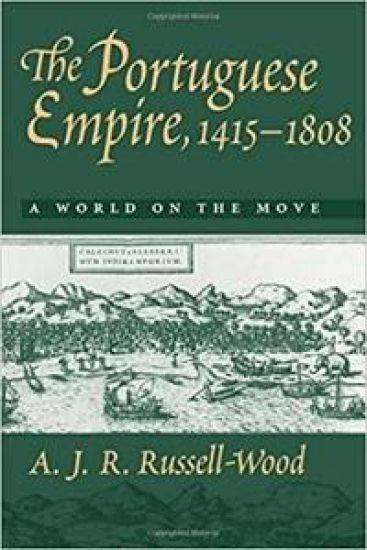
The Portuguese Empire, 1415-1808

The Portuguese Empire, 1415-1808

A. J. R. Russell-Wood

Johns Hopkins University Press
1998
pokkari
This is the story of the first and one of the greatest colonial empires: its birth, apotheosis, and decline. By approaching the history of the Portuguese empire thematically, A. J. R. Russell-Wood is able to pursue ideas and make connections that previously have been constrained by strict chronological approaches. Using the study of movement as a focus, Russell-Wood gains unique insight into the diversity, breadth, and balance between the competing interests and priorities that characterized the Portuguese culture and its expansion spanning four centuries' events on four different continents.