Kirjojen hintavertailu. Mukana 12 152 606 kirjaa ja 12 kauppaa.

Kirjailija

A. Jameson

Kirjat ja teokset yhdessä paikassa: 2 kirjaa, julkaisuja vuosilta 1975-2000, suosituimpien joukossa Computational Mathematics Driven by Industrial Problems. Vertaile teosten hintoja ja tarkista saatavuus suomalaisista kirjakaupoista.

2 kirjaa

Kirjojen julkaisuhaarukka 1975-2000.

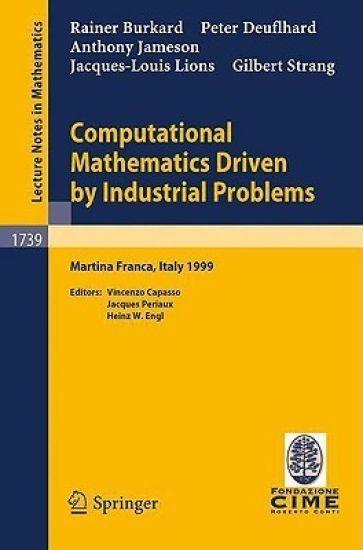
Computational Mathematics Driven by Industrial Problems

Computational Mathematics Driven by Industrial Problems

R. Burkard; P. Deuflhard; A. Jameson; J.-L. Lions; G. Strang

Springer-Verlag Berlin and Heidelberg GmbH Co. K
2000
nidottu
These lecture notes by very authoritative scientists survey recent advances of mathematics driven by industrial application showing not only how mathematics is applied to industry but also how mathematics has drawn benefit from interaction with real-word problems.The famous David Report underlines that innovative high technology depends crucially for its development on innovation in mathematics. The speakers include three recent presidents of ECMI, one of ECCOMAS (in Europe) and the president of SIAM.
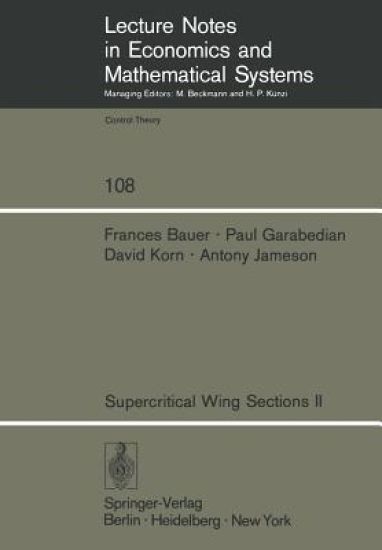
Supercritical Wing Sections II

Supercritical Wing Sections II

F. Bauer; P. R. Garabedian; D. Korn; A. Jameson

Springer-Verlag Berlin and Heidelberg GmbH Co. K
1975
nidottu
This handbook is a sequel to an earlier volume entitled "A Theory of Supercritical Wing Sections, with Computer Programs and Examples." Since the completion of the first volume, which we shall refer to as Volume I (cf. [ll), some effort has been made to improve our airfoil design program. A number of more desirable air­ foils have been designed. In addition several of our wing sections have been tested in wind tunnels. We should like to make this material available here, since it is more convenient to use the design program in conjunction with data for a fairly broad range of examples. Moreover, we have developed new analysis programs that supersede our previous work. Chapter I is devoted to a brief discussion of the mathematics involved in our additions and modifications. There is only a mini­ mum emphasis on theory, since the representation of important physical phenomena such as boundary layer shock wave interaction and separation is partly empirical. It is our contention, however, that the computer programs provide a better simulation than might have been expected. Chapter II presents numerical results found by our new methods, as well as comparisons with experimental data. Chapter III contains a discussion of the use of the program together with Fortran listings.