Kirjojen hintavertailu. Mukana 12 390 323 kirjaa ja 12 kauppaa.
Kirjailija
A K Pandey
Kirjat ja teokset yhdessä paikassa: 19 kirjaa, julkaisuja vuosilta 2017-2024, suosituimpien joukossa Amélioration des sols salins grâce à un modèle de culture d'arbres fruitiers. Vertaile teosten hintoja ja tarkista saatavuus suomalaisista kirjakaupoista.
Mukana myös kirjoitusasut: A. K. Pandey, A.K. Pandey
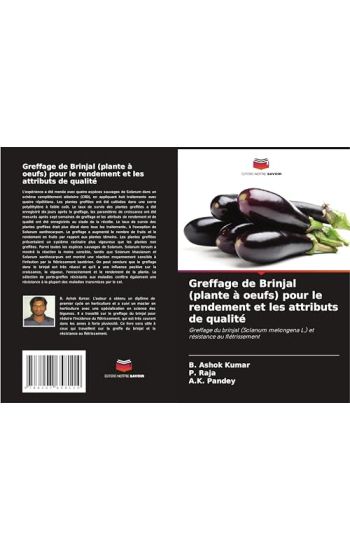
L'exp rience a t men e avec quatre esp ces sauvages de Solanum dans un sch ma compl tement al atoire (CRD), en appliquant huit traitements avec quatre r p titions. Les plantes greff es ont t cultiv es dans une serre poly thyl ne faible co t. Le taux de survie des plantes greff es a t enregistr dix jours apr s le greffage, les param tres de croissance ont t mesur s apr s sept semaines de greffage et les attributs de rendement et de qualit ont t enregistr s au stade de la r colte. Le taux de survie des plantes greff es tait plus lev dans tous les traitements, l'exception de Solanum xanthocarpum. Le greffage a augment le nombre de fruits et le rendement en fruits par rapport aux plantes t moins. Les plantes greff es pr sentaient un syst me racinaire plus vigoureux que les plantes non greff es. Parmi toutes les esp ces sauvages de Solanum, Solanum torvum a montr la r action la moins sensible, tandis que Solanum khasianum et Solanum xanthocarpum ont montr une r action moyennement sensible l'infection par le fl trissement bact rien. On peut conclure que le greffage dans le brinjal est tr s r ussi et qu'il a une influence positive sur la croissance, la vigueur, l'enracinement et le rendement de la plante. La s lection de porte-greffes r sistants aux maladies conf re galement une r sistance la plupart des maladies transmises par le sol.
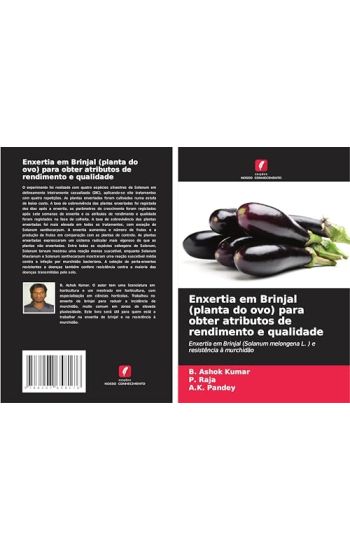
O experimento foi realizado com quatro esp cies silvestres de Solanum em delineamento inteiramente casualizado (DIC), aplicando-se oito tratamentos com quatro repeti es. As plantas enxertadas foram cultivadas numa estufa de baixo custo. A taxa de sobreviv ncia das plantas enxertadas foi registada dez dias ap s a enxertia, os par metros de crescimento foram registados ap s sete semanas de enxertia e os atributos de rendimento e qualidade foram registados na fase de colheita. A taxa de sobreviv ncia das plantas enxertadas foi mais elevada em todos os tratamentos, com exce o do Solanum xanthocarpum. A enxertia aumentou o n mero de frutos e a produ o de frutos em compara o com as plantas de controlo. As plantas enxertadas expressaram um sistema radicular mais vigoroso do que as plantas n o enxertadas. Entre todas as esp cies selvagens de Solanum, Solanum torvum mostrou uma rea o menos suscet vel, enquanto Solanum khasianum e Solanum xanthocarpum mostraram uma rea o suscet vel m dia contra a infe o por murchid o bacteriana. A sele o de porta-enxertos resistentes a doen as tamb m confere resist ncia contra a maioria das doen as transmitidas pelo solo.
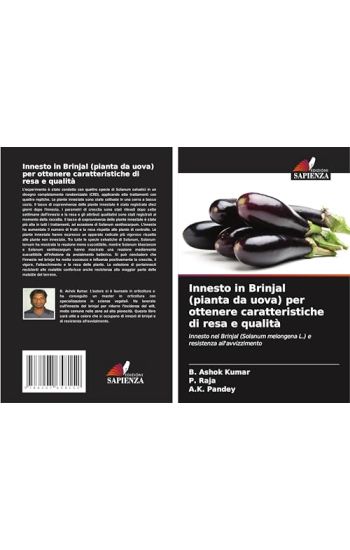
L'esperimento stato condotto con quattro specie di Solanum selvatici in un disegno completamente randomizzato (CRD), applicando otto trattamenti con quattro repliche. Le piante innestate sono state coltivate in una serra a basso costo. Il tasso di sopravvivenza delle piante innestate stato registrato dieci giorni dopo l'innesto, i parametri di crescita sono stati rilevati dopo sette settimane dall'innesto e la resa e gli attributi qualitativi sono stati registrati al momento della raccolta. Il tasso di sopravvivenza delle piante innestate stato pi alto in tutti i trattamenti, ad eccezione di Solanum xanthocarpum. L'innesto ha aumentato il numero di frutti e la resa rispetto alle piante di controllo. Le piante innestate hanno espresso un apparato radicale pi vigoroso rispetto alle piante non innestate. Tra tutte le specie selvatiche di Solanum, Solanum torvum ha mostrato la reazione meno suscettibile, mentre Solanum khasianum e Solanum xanthocarpum hanno mostrato una reazione mediamente suscettibile all'infezione da avvizzimento batterico. Si pu concludere che l'innesto nel brinjal ha molto successo e influenza positivamente la crescita, il vigore, l'attecchimento e la resa delle piante. La selezione di portainnesti resistenti alle malattie conferisce anche resistenza alla maggior parte delle malattie del terreno.
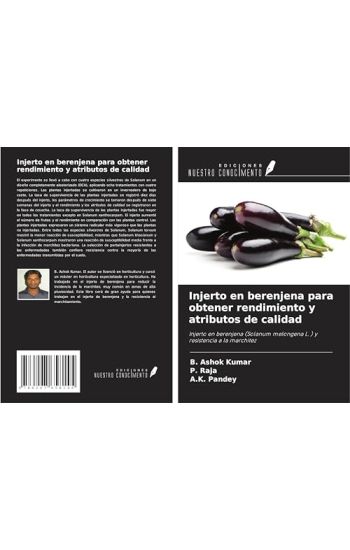
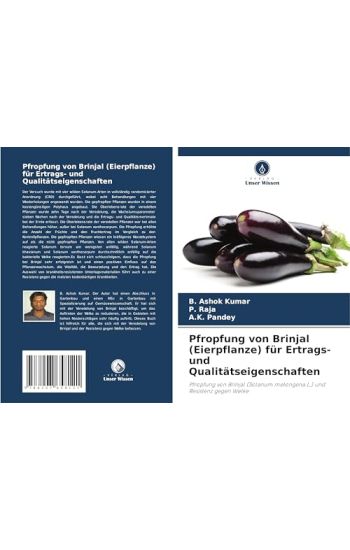
Der Versuch wurde mit vier wilden Solanum-Arten in vollst ndig randomisierter Anordnung (CRD) durchgef hrt, wobei acht Behandlungen mit vier Wiederholungen angewandt wurden. Die gepfropften Pflanzen wurden in einem kosteng nstigen Polyhaus angebaut. Die berlebensrate der veredelten Pflanzen wurde zehn Tage nach der Veredelung, die Wachstumsparameter sieben Wochen nach der Veredelung und die Ertrags- und Qualit tsmerkmale bei der Ernte erfasst. Die berlebensrate der veredelten Pflanzen war bei allen Behandlungen h her, au er bei Solanum xanthocarpum. Die Pfropfung erh hte die Anzahl der Fr chte und den Fruchtertrag im Vergleich zu den Kontrollpflanzen. Die gepfropften Pflanzen wiesen ein kr ftigeres Wurzelsystem auf als die nicht gepfropften Pflanzen. Von allen wilden Solanum-Arten reagierte Solanum torvum am wenigsten anf llig, w hrend Solanum khasianum und Solanum xanthocarpum durchschnittlich anf llig auf die bakterielle Welke reagierten.Es l sst sich schlussfolgern, dass die Pfropfung bei Brinjal sehr erfolgreich ist und einen positiven Einfluss auf das Pflanzenwachstum, die Vitalit t, die Bewurzelung und den Ertrag hat. Die Auswahl von krankheitsresistenten Unterlagsmaterialien f hrt auch zu einer Resistenz gegen die meisten bodenb rtigen Krankheiten.
The book consists of 32 chapters featuring the concepts and applications of precision farming and protected cultivation broadly covered with theoretical and practical approach. The first 8 chapters are exclusively designed to provide detailed information on concept, need, objectives, benefits, components, applications and limitations of precision farming; laser leveler and its working mechanism, components and functioning; mechanized sowing and types of mechanical seeders and their use; approaches for mapping of soils and plant attributes; site-specific weed and nutrient management; precision management of insect-pests and diseases; yield mapping in horticultural crops. An attempt has been made to cover the concept and application of protected cultivation in chapters from 9 to 30 characteristically highlighting the concept of greenhouse technology, its principles as well as historical and technological developments, agrivoltaic system, its concept and features, response of plant species under greenhouse conditions, criteria for the selection of crops and varieties for protected cultivation, basic considerations for site selection, orientation and designing of greenhouse structures, climate control mechanisms for cooling and heating in greenhouses, components, accessories and BIS codes for protected cultivation, types of Irrigation system for greenhouse production system, growing media for greenhouse cultivation, soil pasteurization namely solarization, steam sterilization, chemical sterilization and augmentation with biological agents, checking the suitability of soil and water for greenhouse crops, plug tray nursery raising, basics of fertigation in greenhouse production system, packages of practice for greenhouse cucumber, bell pepper, tomato and melons, potential of pruning as unconventional alternative for mass multiplication of greenhouse cucumber and tomato, types of soil-less cultures, GAP for protected cultivation and economic analysis of protected cultivation. Note: T&F does not sell or distribute the Hardback in India, Pakistan, Nepal, Bhutan, Bangladesh and Sri Lanka.
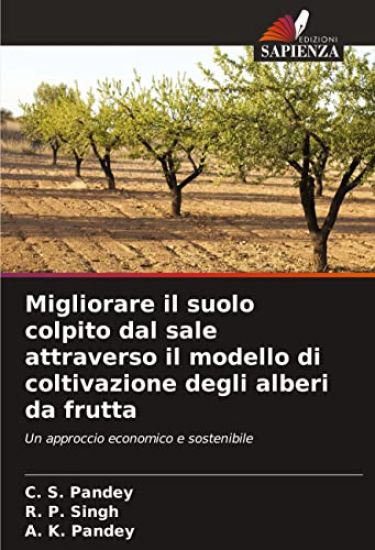
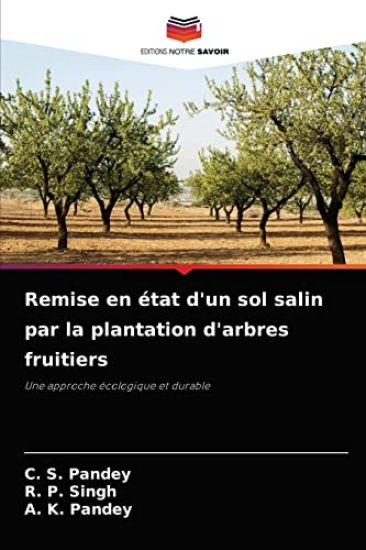
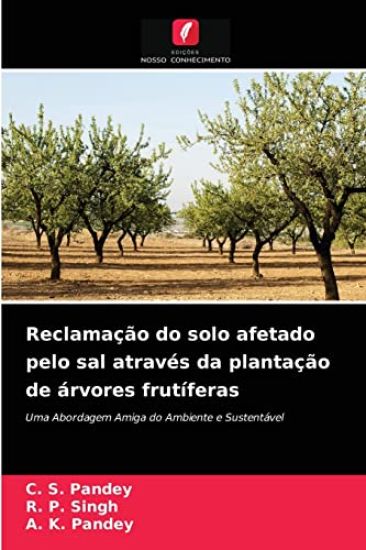
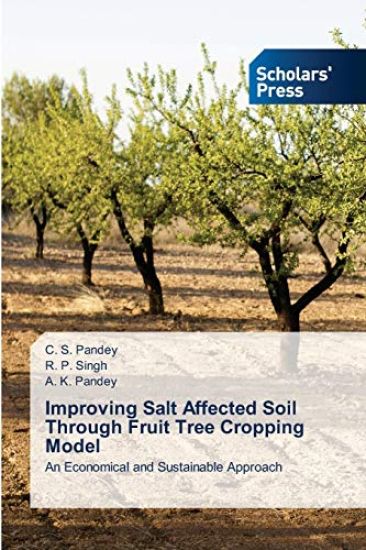
Soils that contain excess soluble salts and affect plant growth adversely are called salt affected soil. Among degraded wastelands (173.08 million ha.) in India, 7.0 million ha is adversely affected with excessive soluble salts/exchangeable sodium salts, which is unsuitable to profitable crop production. There are several physical, chemical and cultural methods of improving physic-chemical and fertility status of such soil. A number of fruit trees species have been identified to have tolerance to sodic soil and have shown their potential towards reclamation of sodic soil. The potential of such tolerant fruit species in multi-tire cropping models viz. Aonla + Ber, Aonla + Guava, Aonla + Karonda, Ber + Guava + Phalsa and Aonla + Subabool in relation to changes in physic-chemical properties and improvement of fertility status of soil have been included in this book. Considering economic feasibility and ecological suitability of different cropping systems, it may be one of the new approaches towards efficient and effective methods of land reclamation of sodic lands and waste land.
Soils that contain excess soluble salts and affect plant growth adversely are called salt affected soil. Among degraded wastelands (173.08 million ha.) in India, 7.0 million ha is adversely affected with excessive soluble salts/exchangeable sodium salts, which is unsuitable to profitable crop production. There are several physical, chemical and cultural methods of improving physic-chemical and fertility status of such soil. A number of fruit trees species have been identified to have tolerance to sodic soil and have shown their potential towards reclamation of sodic soil. The potential of such tolerant fruit species in multi-tire cropping models viz. Aonla + Ber, Aonla + Guava, Aonla + Karonda, Ber + Guava + Phalsa and Aonla + Subabool in relation to changes in physic-chemical properties and improvement of fertility status of soil have been included in this book. Considering economic feasibility and ecological suitability of different cropping systems, it may be one of the new approaches towards efficient and effective methods of land reclamation of sodic lands and waste land.