

Kirjailija
Aaron Aaberg
Kirjat ja teokset yhdessä paikassa: 89 kirjaa, julkaisuja vuodelta 2025, suosituimpien joukossa English Electric Lightning. Vertaile teosten hintoja ja tarkista saatavuus suomalaisista kirjakaupoista.
89 kirjaa

A-10 Warthog: The Plane Pilots and Soldiers Fight For
Aaron Aaberg
Independently Published
2025
nidottu
For more than forty years, the A-10 Warthog has flown into the most dangerous corners of the battlefield-low, slow, and unflinching. Designed to survive hits that would destroy any other jet and to strike with unparalleled precision at the edge of friendly lines, the A-10 became the aircraft ground troops trusted more than any other. From the deserts of Iraq to the mountains of Afghanistan, it proved not merely effective but indispensable, delivering close air support in the moments when lives hung in the balance. This book is the first comprehensive, fact-driven narrative to trace the entire trajectory of the A-10: its birth from the failures of Vietnam-era airpower, its unlikely engineering triumph over industry giants, its fierce battles for survival against shifting Air Force priorities, and its astonishing record in combat across multiple generations of warfare. Drawing from official documents, operational histories, congressional testimony, and verified field accounts, this work documents how an aircraft once dismissed as ungainly became one of the most respected tools of modern war. More than a technical chronicle, this is the story of a bond forged between an aircraft and the people it protects. Pilots learned to fight at treetop height to safeguard troops on the ground. Soldiers learned that the unmistakable growl of the GAU-8 cannon meant they were no longer alone. Through strategic shifts, political battles, and technological upheavals, the Warthog endured because it fulfilled a mission too essential to abandon. A-10 Warthog: The Plane Pilots and Soldiers Fight For is not just a history of an aircraft-it is a testament to trust, survival, and the human cost of close air support. It captures why the A-10 still matters, and why its legacy will continue to shape airpower long after its final mission.

Hawker Siddeley: The Forgotten Giant of British Aerospace
Aaron Aaberg
Independently Published
2025
nidottu
Hawker Siddeley stood at the center of Britain's aerospace revolution, shaping aviation from the wooden biplanes of the interwar years to the jet-powered innovations that defined the Cold War. From the Hurricane that helped defend Britain in 1940 to the Harrier that redefined modern air combat, the company's designs altered the course of military history and secured Britain's position as a global leader in aviation engineering. Yet despite its extraordinary achievements, Hawker Siddeley vanished from public memory-its name dissolved into nationalized structures and multinational collaborations that obscured the identity of one of the twentieth century's most consequential industrial powers. This definitive history uncovers the full story of the company's rise, influence, and quiet disappearance. It follows the evolution of aircraft design across generations, the engineers who pushed the limits of flight, and the political forces that reshaped Britain's aerospace industry. From the drawing offices of Kingston and the test pads of Dunsfold to the high-stakes battlefields of the Falklands and beyond, the narrative reveals how Hawker Siddeley's legacy became the unseen foundation of modern British aviation. Rich with detail and factual insight, Hawker Siddeley: The Forgotten Giant of British Aerospace restores recognition to a company that transformed air power yet slipped from public view. It is a sweeping account of innovation, national ambition, and the complex industrial journey that forged Britain's modern aerospace identity.
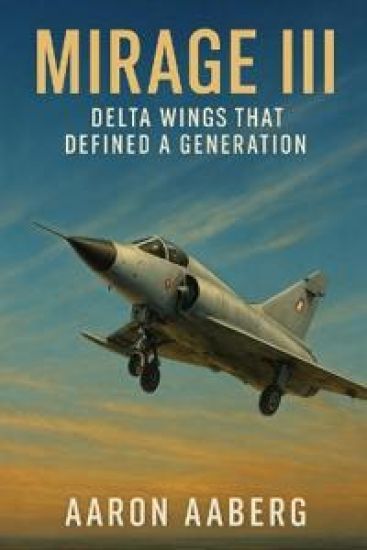
The Mirage III was more than a fighter aircraft-it was a turning point in the history of air combat. Born from France's determination to reclaim aerospace independence after World War II, the Mirage III became the world's first truly successful Mach 2 interceptor and one of the most influential jet fighters of the Cold War. With its unmistakable delta wing, blistering speed, and razor-sharp agility, it transformed how nations defended their skies and how pilots fought their wars. From the deserts of the Middle East to the mountains of Europe, from South America's vast coastlines to the conflict zones of Africa and South Asia, the Mirage III carved out a global legacy few aircraft have ever matched. It reshaped the outcome of wars, introduced dozens of nations to supersonic air power, and forced a fundamental rethinking of interception doctrine, missile warfare, and pilot training. Its performance in the Six-Day War alone altered the future of aerial strategy forever. This book traces the complete life of the Mirage III-from its experimental origins and daring delta-wing gamble, through its triumphs in air combat, its evolution into strike and reconnaissance variants, and its remarkable longevity across five decades of service. It reveals how one aircraft reshaped national defense strategies, redefined export fighter design, and helped establish France as a global aerospace power. Written with precision, authority, and narrative depth, Mirage III: Delta Wings That Defined a Generation is the definitive history of an aircraft that didn't just fly through history-it helped shape it at twice the speed of sound.

From the height of the Cold War to the age of fifth-generation fighters and commercial spaceflight, two slender, underestimated aircraft reshaped global aviation more quietly-and more profoundly-than almost any others that ever flew. The Northrop F-5 Freedom Fighter and its trainer counterpart, the T-38 Talon, carried supersonic flight into the hands of dozens of nations and trained generations of pilots who would go on to shape the modern world from the cockpit and beyond the atmosphere. F-5/T-38: The Jet That Trained the Free World is the definitive narrative history of these extraordinary aircraft. Drawing on six decades of verified operational history, global combat service, training doctrine, diplomacy, and aerospace innovation, this book traces how one lightweight design transformed air forces on every continent. From proxy wars in Southeast Asia and the Middle East to NATO training skies, from clandestine Cold War adversary squadrons to NASA's astronaut corps, the F-5 and T-38 became the invisible framework upon which modern airpower was built. Told in a flowing, cinematic narrative style and grounded entirely in fact, this book reveals how affordability, simplicity, and pilot-centered engineering outlasted generations of more technologically ambitious designs. It is a story of deterrence without spectacle, of skill over automation, and of how aviation power truly spreads-not through dominance alone, but through training, trust, and endurance.
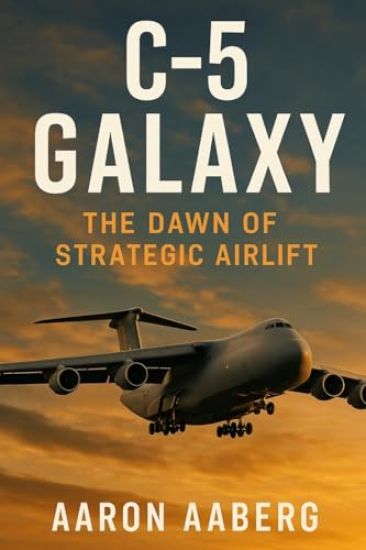
Before the C-5 Galaxy, distance ruled warfare and disaster response. Heavy armor crossed oceans by ship, crisis response unfolded at the pace of tides, and global power moved slowly by necessity. Then a single aircraft rewrote those rules. Conceived at the height of the Cold War, the C-5 Galaxy was built to move what no aircraft ever could before-tanks, helicopters, missile systems, hospitals, and entire armies-across continents in hours instead of weeks. C-5 Galaxy: The Dawn of Strategic Airlift tells the full, fact-based story of the world's largest military aircraft, from its audacious conception and engineering battles to its defining role in Vietnam, Desert Storm, the post-9/11 wars, global humanitarian crises, and great-power competition today. It reveals how the Galaxy reshaped U.S. war planning, transformed NATO deterrence, and became the backbone of modern global logistics. More than a machine, the C-5 emerges as a force that redefined strategic time itself-compressing the world, reshaping response, and proving that mobility is power. This book is the definitive narrative of how one aircraft altered the speed, scale, and reach of modern history.
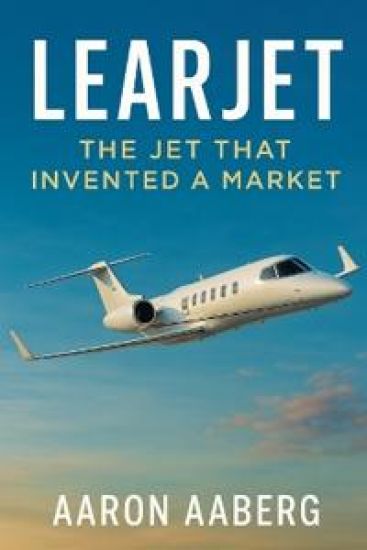
Before the Learjet, private jet travel as the world knows it simply did not exist. Airlines ruled long-distance flight, and private aircraft were slow, weather-bound, and limited in reach. When the first Learjet streaked into the sky in the early 1960s, it did more than introduce a new airplane-it created an entirely new market. For the first time, individuals, corporations, governments, and medical teams could command jet speed on their own terms. Distance collapsed, time accelerated, and the geography of business, medicine, and diplomacy was permanently redefined. Learjet: The Jet That Invented a Market traces the complete, factual story of the aircraft that transformed personal aviation. From William P. Lear's radical vision and the Swiss fighter roots of the original design to the record-breaking early models that stunned the aviation world, this book follows the Learjet's rise as the fastest, highest-flying civilian aircraft of its era. It chronicles how the Learjet sparked the birth of the modern business aviation industry, reshaped corporate strategy, altered medical evacuation forever, and became one of the most recognizable machines in popular culture. Across economic booms and global crises, corporate upheavals and technological revolutions, the Learjet continued to evolve-introducing turbofans, glass cockpits, winglets, midsize cabins, and digital flight decks. It served not only billionaires and executives but also soldiers, scientists, air ambulance crews, and government leaders. Even after production ended, thousands of Learjets continue to fly, their influence embedded in every modern business jet that followed. This book is not merely the story of an aircraft. It is the story of how speed became personal, how altitude became accessible, and how one bold idea reshaped the way the world moves.
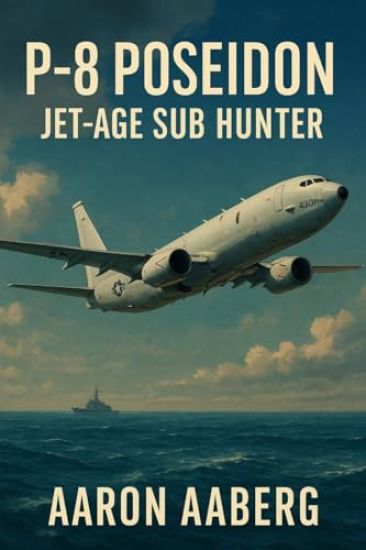
From the cold depths of the North Atlantic to the contested waters of the Indo-Pacific, the oceans have once again become the front line of global power. P-8 Poseidon: Jet-Age Sub Hunter tells the definitive story of the aircraft that transformed how the modern world watches, tracks, and deters beneath the waves. Born from the proven 737 airliner and forged into a weapon of networked maritime dominance, the Poseidon redefined what a sub hunter could be in an age of digital warfare, unmanned systems, and renewed great-power rivalry. This book traces the Poseidon's journey from concept to global cornerstone, detailing its engineering, sensors, weapons, and the crews who operate it across every major ocean. It follows real-world operations in the Pacific, Atlantic, and Indian Oceans, revealing how the aircraft reshaped anti-submarine warfare, maritime surveillance, and coalition defense. With clear technical insight and sweeping geopolitical context, this narrative captures the rise of an aircraft that did not merely replace its predecessors-but quietly changed the balance of power beneath the sea. Meticulously researched and written in an immersive narrative style, P-8 Poseidon: Jet-Age Sub Hunter stands as the most complete portrait of the world's most advanced maritime patrol aircraft-its technology, its missions, and its enduring legacy as the silent guardian of the modern ocean.
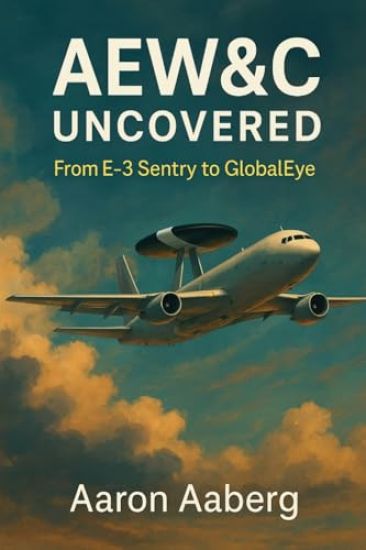
Airborne Early Warning and Control aircraft have shaped the modern battlespace more profoundly than any other airborne system. From the Cold War's race for radar supremacy to the intricate, data-driven command networks of the twenty-first century, these aircraft became the eyes, ears, and digital brain of coalition warfare. AEW&C Uncovered traces this remarkable evolution with precision, clarity, and a commitment to factual detail. Beginning with the earliest experiments in airborne radar during the Second World War, the book follows the rise of AWACS, the breakthrough that transformed airpower strategy. It recounts the global impact of the E-3 Sentry, the geopolitical forces that defined its deployments, and the engineering mastery that kept it relevant for decades. From the deserts of the Gulf War to the skies over Europe and the Pacific, AEW&C platforms proved indispensable in every major operation they touched. The narrative then turns to the revolution that followed: modern AESA radar, multi-mission platforms, and the emergence of systems like the E-7 Wedgetail and Saab's GlobalEye. These aircraft-sleek, efficient, and digitally integrated-redefined what airborne command could achieve. They brought maritime, land, air, and electronic surveillance into a single unified mission, fundamentally reshaping global security operations. Through verified history and technical depth, AEW&C Uncovered reveals how these once-specialized aircraft became the nerve centers of multi-domain command. For historians, aviation enthusiasts, defense professionals, and anyone fascinated by the quiet machinery behind modern security, this is the definitive story of the platforms that see first, decide fastest, and command the battlespace from above.
KC-135 to KC-46: The Tanker Chain That Makes Airpower Possible
Aaron Aaberg
Independently Published
2025
nidottu
For more than seventy years, American airpower has reached farther, stayed longer, and moved faster than any force in history-not because of fighters or bombers alone, but because of the tankers that quietly sustain them. From the jet-age breakthrough of the KC-135 Stratotanker to the digitally networked KC-46 Pegasus, this book tells the untold story of the aircraft that make global air operations possible every hour of every day. Blending technical mastery with sweeping strategic history, KC-135 to KC-46: The Tanker Chain That Makes Airpower Possible traces the evolution of aerial refueling from early Cold War nuclear deterrence through Vietnam, Desert Storm, Afghanistan, Iraq, and into today's era of great-power competition. It reveals how tankers shaped the way wars are fought, how alliances operate, and how the United States maintains continuous reach across oceans and continents without permanent forward basing. This is not just the history of machines, but the story of doctrine, logistics, innovation, and endurance. The book follows how tanker crews adapted across generations of conflict, how aging airframes were sustained far beyond original expectations, and how the Pegasus emerged as the next link in a chain that now spans a full century of airpower evolution. Authoritative, deeply researched, and written with narrative clarity, this book stands as the definitive account of the most indispensable-and most overlooked-aircraft in modern warfare.
Bayraktar TB2: The Export Drone That Shifted Tactics
Aaron Aaberg
Independently Published
2025
nidottu
The Bayraktar TB2 has become one of the most consequential military systems of the twenty-first century-an affordable, export-friendly armed drone that reshaped how wars are fought and who has access to modern airpower. From the mountains of southeastern Turkey to the deserts of Libya, the cities of Ukraine, and the vast frontiers of Africa, the TB2 demonstrated that persistent surveillance and precision strike were no longer the privilege of military superpowers. Its battlefield impact overturned decades of assumptions about armored warfare, air defense, and the cost of deterrence. This book traces the drone's remarkable rise: its origins in Turkey's push for defense autonomy, the engineering culture that shaped its development, and the combat debut that made it a global icon. It follows the TB2 through its most influential conflicts, examining how it toppled armored columns, exposed logistics networks, and provided smaller states with an unprecedented ability to see-and shape-the battlefield. Beyond the front lines, the TB2 transformed the global arms market. Dozens of nations adopted it, each integrating the drone into their own doctrines, borders, coastlines, and counterinsurgency strategies. It changed procurement logic, accelerated a new generation of unmanned innovation, and forced adversaries to rethink electronic warfare, air defense, and the very nature of military transparency. Bayraktar TB2: The Export Drone That Shifted Tactics is the definitive account of how a mid-sized nation's engineering ambition produced a platform that rebalanced power, redefined remote warfare, and set the template for the drone-centric battlefields of the future.

The F-117 Nighthawk was born in darkness-conceived in secrecy, built in remote deserts, and flown by pilots who could not reveal what they did or where they served. Yet when this strange, angular aircraft first slipped across Iraqi airspace in January 1991, the world discovered a machine that would redefine modern warfare. This definitive, fact-driven narrative chronicles the full life of the world's first operational stealth aircraft-from the mathematical theories that made it possible to the Have Blue prototypes, the classified years at Groom Lake, and the shadowy operations of the 4450th Tactical Group. It explores the Nighthawk's dramatic combat debut in Panama and unmatched precision during Desert Storm, its evolution through conflicts in the Balkans, Afghanistan, and Iraq, and its stunning resilience-even after the loss of Vega 31. Drawing from decades of declassified history, engineering breakthroughs, and operational accounts, the book also reveals how the Nighthawk influenced the development of the B-2, F-22, and F-35, shaped global airpower doctrine, and continued flying secretive post-retirement missions long after its public farewell. It is a story of innovation under pressure, of scientists and engineers who bent physics into a new aerodynamic language, and of aviators who trusted an aircraft unlike anything that had come before. F-117 Nighthawk: Stealth Before It Was Cool is both a sweeping historical account and a technical exploration of the aircraft that changed everything. It captures the birth of stealth, the rise of precision warfare, and the enduring legacy of a jet that operated in shadows-but reshaped the world in daylight.

From the ashes of Cold War uncertainty rose one of the most surprising transformations in modern military aviation. The B-1B Lancer, born as a high-speed nuclear penetrator designed to outpace the most advanced Soviet defenses, would later become the backbone of America's conventional strike power. Its journey-shaped by political reversals, engineering breakthroughs, global conflicts, and the relentless dedication of its crews and maintainers-charts a story as dynamic as the aircraft itself. This sweeping, fact-driven narrative traces the Lancer's origins in the turbulent defense debates of the 1970s, its dramatic revival under President Reagan, and its complete reinvention after the end of the Cold War. From the bomber's first combat over Kosovo to its relentless operational tempo after 9/11, the book explores the B-1B's evolution into a precision-strike workhorse central to joint and expeditionary warfare. Through detailed chapters that cover test flights, engineering ingenuity, high-tempo deployments, mishaps, adaptations, and its role in the era of the B-21 Raider, readers gain a comprehensive portrait of a bomber that continually redefined itself. By combining technical clarity with narrative depth, this book reveals how an aircraft designed for nuclear Armageddon became one of the most versatile, indispensable, and resilient platforms of the 21st century. It stands as a testament to the power of reinvention in military aviation-and to the people who kept the Lancer flying through four decades of change.

U-2 Dragon Lady: The Spyplane That Wouldn't Retire
Aaron Aaberg
Independently Published
2025
nidottu
For more than six decades, the U-2 Dragon Lady has flown higher, lasted longer, and adapted more boldly than any reconnaissance aircraft in history. Conceived in secrecy during the darkest days of the Cold War, the U-2 helped illuminate the hidden intentions of superpowers, map missile sites that shaped world events, and prevent miscalculation at moments when global stability hung in the balance. From the Soviet Union to the Cuban Missile Crisis, from Vietnam and the Middle East to the Global War on Terror, the Dragon Lady has remained a vital tool of strategic intelligence. This definitive, fact-based narrative traces the U-2's complete evolution-from its radical origins at the Lockheed Skunk Works to its reinvention as a modern, sensor-rich intelligence platform capable of linking satellites, drones, and ground forces. Through crises, technological revolutions, and repeated attempts at retirement, the U-2 endured by proving uniquely irreplaceable. Its pilots risked the edge of the atmosphere; its engineers pushed the limits of aerodynamics; its missions quietly shaped decisions in war rooms and diplomatic chambers around the world. Based on verifiable history and rich operational detail, U-2 Dragon Lady: The Spyplane That Wouldn't Retire reveals how an aircraft meant to serve briefly became one of the most enduring machines ever built. This is the story of the jet that refused to fade-a story of innovation, risk, and an unbroken legacy of service above 70,000 feet.

When the Boeing 767 first took flight in 1981, it did so without fanfare. Yet over four decades later, it stands as one of the most influential airliners in modern aviation history - a quiet achiever that bridged continents, redefined efficiency, and reshaped the global airline industry. Boeing 767: The Unsung Transatlantic Twin tells the remarkable story of how a twin-engine widebody transformed long-haul travel and proved that power and prestige could give way to reliability and refinement. From its conception amid the fuel crises of the 1970s to its pioneering role in ETOPS certification, the 767 became the aircraft that made transatlantic twinjet travel routine. Through its passenger service, freighter dominance, and military evolution into the KC-46 Pegasus, the 767's journey mirrors the evolution of global aviation itself - from analog gauges to glass cockpits, from mass travel to precision logistics. Drawing on verified facts and decades of engineering and operational history, this definitive narrative captures the aircraft's technical brilliance, its understated cultural impact, and its enduring role in the skies. Whether carrying travelers across the Atlantic or cargo halfway around the world, the Boeing 767 remains an icon of quiet excellence - a design so balanced and dependable that it has outlived its successors. This is not a story of glamour but of greatness earned over time. The 767 may never have been the flashiest jet in Boeing's stable, but it became its backbone - a workhorse that connected continents, generations, and the very idea of reliable flight.

The Boeing 717 was never meant to be a headline-grabber-but it became an icon all the same. Born in the aftermath of a corporate merger and built on the bones of the legendary DC-9, the 717 carried the final breath of McDonnell Douglas's proud engineering legacy into the 21st century. With its clean lines, quiet Rolls-Royce engines, and unwavering reliability, it symbolized both the end of an era and the quiet resilience of thoughtful design. From its roots in the sun-baked Long Beach assembly halls to the skies over Hawaii, Europe, and Australia, Boeing 717: The Last of the Mad Dogs tells the full story of this remarkable jetliner. It traces the aircraft's evolution from the first DC-9 of 1965 through the MD-80s and MD-90s to the final production line that closed in 2006-marking the end of a century of Southern California aircraft building. Drawing on production records, operational histories, and the experiences of those who flew and maintained the 717, this definitive chronicle reveals how a small, low-volume jet became a quiet triumph of engineering endurance. This is more than a technical account-it is a story of people, persistence, and pride. The 717 was the last of the Mad Dogs: the final descendant of one of aviation's greatest families, and a lasting reminder that great airplanes don't just change the sky-they endure in it.
For more than four decades, the Boeing 757 has defied the conventional limits of a narrowbody jet. Designed in the wake of oil shocks and regulatory upheaval, it became a transatlantic workhorse that bridged continents and generations. Boeing 757: Cult Classic of the North Atlantic tells the complete story of this extraordinary aircraft - from its 1970s conception to its 21st-century afterlife as a cargo titan and pilot's favorite. Blending technical precision with narrative clarity, this definitive chronicle traces how the 757's power, range, and efficiency redefined air travel for airlines from Delta to British Airways. It explores the engineering breakthroughs that shaped its wings and avionics, the commercial decisions that ended its production, and the deep affection it still inspires among aviators and enthusiasts worldwide. Through its long-haul triumphs, its transformation into a freight legend, and its enduring service under government, corporate, and private operators, the Boeing 757 remains a symbol of practical excellence and emotional connection - a jet that proved elegance, economy, and sheer capability could coexist. This is the story of the aircraft that refused to fade away.
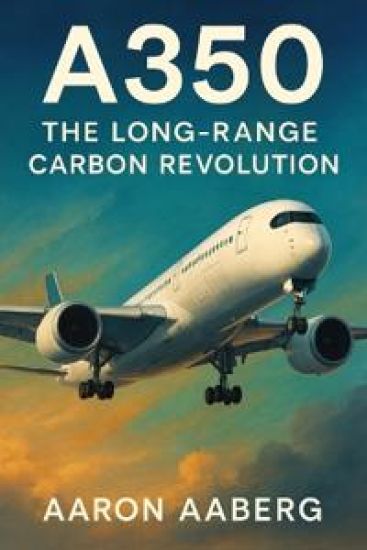
When Airbus unveiled the A350, it wasn't just introducing a new airplane-it was rewriting the rules of long-haul flight. A350: The Long-Range Carbon Revolution chronicles the story of how one of the most ambitious engineering projects in aviation history took shape, from boardroom battles and design breakthroughs to global collaboration on an unprecedented scale. This definitive narrative traces the A350's two-decade journey-from its rocky conception in the shadow of Boeing's Dreamliner to its emergence as the benchmark for efficiency, comfort, and sustainability in the 21st century. Readers are taken behind the scenes of Airbus's digital factories, carbon-fibre workshops, and transcontinental supply chains, revealing how thousands of engineers and partners brought a composite dream to life. Through vivid detail and factual storytelling, the book examines the A350's technical brilliance: its whisper-quiet Rolls-Royce Trent XWB engines, advanced fly-by-wire systems, and ultra-efficient aerodynamics. It also explores the aircraft's global impact-how it helped reshape airline strategies, enabled record-breaking routes like Singapore-Newark, and laid the groundwork for Airbus's hydrogen-powered future. A350: The Long-Range Carbon Revolution is both a tribute to human ingenuity and a reflection on how modern aviation continues to evolve-smarter, cleaner, and farther than ever before.

