Kirjojen hintavertailu. Mukana 12 595 353 kirjaa ja 12 kauppaa.

Kirjailija

Aaron M. Ellison

Kirjat ja teokset yhdessä paikassa: 9 kirjaa, julkaisuja vuosilta 2012-2025, suosituimpien joukossa A Field Guide to the Ants of New England. Vertaile teosten hintoja ja tarkista saatavuus suomalaisista kirjakaupoista.

9 kirjaa

Kirjojen julkaisuhaarukka 2012-2025.

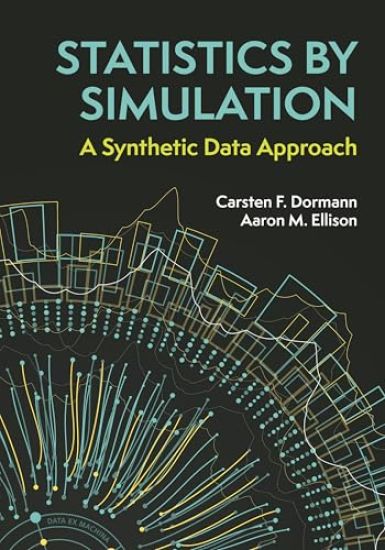
Statistics by Simulation

Statistics by Simulation

Carsten F. Dormann; Aaron M. Ellison

PRINCETON UNIVERSITY PRESS
2025
sidottu
An accessible guide to understanding statistics using simulations, with examples from a range of scientific disciplinesReal-world challenges such as small sample sizes, skewed distributions of data, biased sampling designs, and more predictors than data points are pushing the limits of classical statistical analysis. This textbook provides a new tool for the statistical toolkit: data simulations. It shows that using simulation and data-generating models is an excellent way to validate statistical reasoning and to augment study design and statistical analysis with planning and visualization. Although data simulations are not new to professional statisticians, Statistics by Simulation makes the approach accessible to a broader audience, with examples from many fields. It introduces the reasoning behind data simulation and then shows how to apply it in planning experiments or observational studies, developing analytical workflows, deploying model diagnostics, and developing new indices and statistical methods.• Covers all steps of statistical practice, from planning projects to post-hoc analysis and model checking• Provides examples from disciplines including sociology, psychology, ecology, economics, physics, and medicine• Includes R code for all examples, with data and code freely available online• Offers bullet-point outlines and summaries of each chapter• Minimizes the use of jargon and requires only basic statistical background and skills
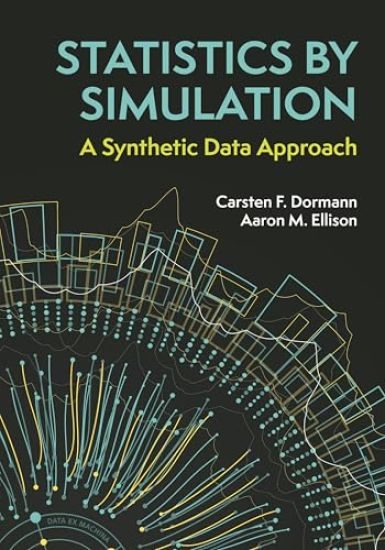
Statistics by Simulation

Statistics by Simulation

Carsten F. Dormann; Aaron M. Ellison

PRINCETON UNIVERSITY PRESS
2025
pokkari
An accessible guide to understanding statistics using simulations, with examples from a range of scientific disciplinesReal-world challenges such as small sample sizes, skewed distributions of data, biased sampling designs, and more predictors than data points are pushing the limits of classical statistical analysis. This textbook provides a new tool for the statistical toolkit: data simulations. It shows that using simulation and data-generating models is an excellent way to validate statistical reasoning and to augment study design and statistical analysis with planning and visualization. Although data simulations are not new to professional statisticians, Statistics by Simulation makes the approach accessible to a broader audience, with examples from many fields. It introduces the reasoning behind data simulation and then shows how to apply it in planning experiments or observational studies, developing analytical workflows, deploying model diagnostics, and developing new indices and statistical methods.• Covers all steps of statistical practice, from planning projects to post-hoc analysis and model checking• Provides examples from disciplines including sociology, psychology, ecology, economics, physics, and medicine• Includes R code for all examples, with data and code freely available online• Offers bullet-point outlines and summaries of each chapter• Minimizes the use of jargon and requires only basic statistical background and skills
Success in Mentoring Your Student Researchers

Success in Mentoring Your Student Researchers

Aaron M. Ellison; Manisha V. Patel

Springer International Publishing AG
2022
nidottu
This book is a guide for mentors on how to recruit, mentor, and support students through a student research experience in science, technology, engineering, mathematics, and medicine (STEMM) fields. Being a successful research mentor benefits from the self-awareness and planning, strategies and skills that Success in Mentoring your Student Researchers can help you build and develop. These are useful for mentors working with any students, but especially those who have been minoritized in STEMM or are the first in their family to attend college. The first part of the book introduces mentoring undergraduates and how it differs from traditional classroom instruction, active learning, and flipped classrooms; mentoring is collaboratively teaching research while doing research. A mentored undergraduate research experience also helps your mentees develop the skills necessary to be successful scientists and become part of STEMM communities. The central partof the book presents the undergraduate research experience as a “three-legged stool” whose legs—research, education, and community—each have unique values in advancing your mentees’ path in STEMM and all of which require setting, communicating, and realizing expectations for “success”--your mentees’ and your own. The last part of the book looks beyond the research experience, from evaluating your success as a mentor through helping your mentees to continue to develop and grow their STEMM careers and become mentors themselves. This book is the mentor’s companion to the authors’ book for students, “Success in Navigating your Student Research Experience: Moving Forward in STEMM.”
Success in Navigating Your Student Research Experience

Success in Navigating Your Student Research Experience

Aaron M. Ellison; Manisha V. Patel

Springer International Publishing AG
2022
nidottu
This book is a complete guide for students on how to make the most of intensive, experiential research outside a college classroom. Engaging in research as an undergraduate can lead to successful and rewarding careers in science, technology, engineering, mathematics, and medicine (STEMM). Being successful in an undergraduate research experience benefits from the self-awareness and planning, strategies and skills that Success in Navigating your Student Research Experience can help you build and develop. The first part of this book describes strategies and processes for finding, applying, and preparing for an undergraduate research experience that matches your own needs and interests. These strategies are useful for any student, but are particularly helpful for individuals who have been minoritized in STEMM or are the first in their family to attend college. The central part of the book presents the undergraduate research experience as a “three-legged stool” whose legs—research, education, and community—each have unique values in advancing your path in STEMM. The last part of the book illustrates the many options for continuing and expanding your path in research. These range from communicating results to colleagues to moving forward with graduate studies and careers in STEMM, in which you can become a mentor to the next generation of students.This book is the student’s companion to the authors’ book for mentors, “Success in Mentoring your Student Researchers: Moving STEMM Forward.”
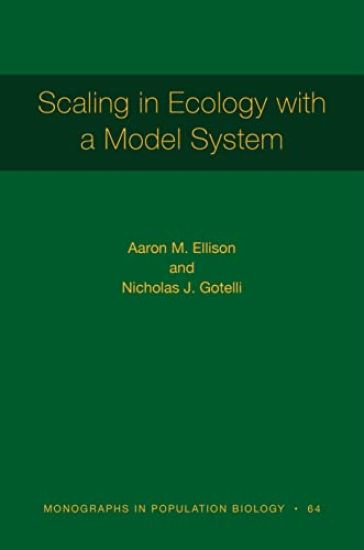
Scaling in Ecology with a Model System

Scaling in Ecology with a Model System

Aaron M. Ellison; Nicholas J. Gotelli

PRINCETON UNIVERSITY PRESS
2021
sidottu
A groundbreaking approach to scale and scaling in ecological theory and practiceScale is one of the most important concepts in ecology, yet researchers often find it difficult to find ecological systems that lend themselves to its study. Scaling in Ecology with a Model System synthesizes nearly three decades of research on the ecology of Sarracenia purpurea—the northern pitcher plant—showing how this carnivorous plant and its associated food web of microbes and macrobes can inform the challenging question of scaling in ecology.Drawing on a wealth of findings from their pioneering lab and field experiments, Aaron Ellison and Nicholas Gotelli reveal how the Sarracenia microecosystem has emerged as a model system for experimental ecology. Ellison and Gotelli examine Sarracenia at a hierarchy of spatial scales—individual pitchers within plants, plants within bogs, and bogs within landscapes—and demonstrate how pitcher plants can serve as replicate miniature ecosystems that can be studied in wetlands throughout the United States and Canada. They show how research on the Sarracenia microecosystem proceeds much more rapidly than studies of larger, more slowly changing ecosystems such as forests, grasslands, lakes, or streams, which are more difficult to replicate and experimentally manipulate.Scaling in Ecology with a Model System offers new insights into ecophysiology and stoichiometry, demography, extinction risk and species distribution models, food webs and trophic dynamics, and tipping points and regime shifts.
Scaling in Ecology with a Model System

Scaling in Ecology with a Model System

Aaron M. Ellison; Nicholas J. Gotelli

Princeton University Press
2021
pokkari
A groundbreaking approach to scale and scaling in ecological theory and practiceScale is one of the most important concepts in ecology, yet researchers often find it difficult to find ecological systems that lend themselves to its study. Scaling in Ecology with a Model System synthesizes nearly three decades of research on the ecology of Sarracenia purpurea—the northern pitcher plant—showing how this carnivorous plant and its associated food web of microbes and macrobes can inform the challenging question of scaling in ecology.Drawing on a wealth of findings from their pioneering lab and field experiments, Aaron Ellison and Nicholas Gotelli reveal how the Sarracenia microecosystem has emerged as a model system for experimental ecology. Ellison and Gotelli examine Sarracenia at a hierarchy of spatial scales—individual pitchers within plants, plants within bogs, and bogs within landscapes—and demonstrate how pitcher plants can serve as replicate miniature ecosystems that can be studied in wetlands throughout the United States and Canada. They show how research on the Sarracenia microecosystem proceeds much more rapidly than studies of larger, more slowly changing ecosystems such as forests, grasslands, lakes, or streams, which are more difficult to replicate and experimentally manipulate.Scaling in Ecology with a Model System offers new insights into ecophysiology and stoichiometry, demography, extinction risk and species distribution models, food webs and trophic dynamics, and tipping points and regime shifts.
Hemlock

Hemlock

Anthony D'Amato; Benjamin Baiser; Aaron M. Ellison; David Orwig; Wyatt Oswald; Audrey Barker Plotkin; Jonathan Thompson

Yale University Press
2014
sidottu
An appreciation of the beautiful, iconic, and endangered Eastern Hemlock and what it means to nature and society The Eastern Hemlock, massive and majestic, has played a unique role in structuring northeastern forest environments, from Nova Scotia to Wisconsin and through the Appalachian Mountains to North Carolina, Tennessee, and Alabama. A “foundation species” influencing all the species in the ecosystem surrounding it, this iconic North American tree has long inspired poets and artists as well as naturalists and scientists. Five thousand years ago, the hemlock collapsed as a result of abrupt global climate change. Now this iconic tree faces extinction once again because of an invasive insect, the hemlock woolly adelgid. Drawing from a century of studies at Harvard University’s Harvard Forest, one of the most well-regarded long-term ecological research programs in North America, the authors explore what hemlock’s modern decline can tell us about the challenges facing nature and society in an era of habitat changes and fragmentation, as well as global change.
A Primer of Ecological Statistics

A Primer of Ecological Statistics

Nicholas J. Gotelli; Aaron M. Ellison

Oxford University Press Inc
2013
nidottu
A Primer of Ecological Statistics, Second Edition explains fundamental material in probability theory, experimental design, and parameter estimation for ecologists and environmental scientists. The book emphasizes a general introduction to probability theory and provides a detailed discussion of specific designs and analyses that are typically encountered in ecology and environmental science. Appropriate for use as either a stand-alone or supplementary text for upper-division undergraduate or graduate courses in ecological and environmental statistics, ecology, environmental science, environmental studies, or experimental design, the Primer also serves as a resource for environmental professionals who need to use and interpret statistics daily but have little or no formal training in the subject. The book is divided into four parts. Part I discusses the fundamentals of probability and statistical thinking. It introduces the logic and language of probability (Chapter 1), explains common statistical distributions used in ecology (Chapter 2) and important measures of central tendency and spread (Chapter 3), explains P-values, hypothesis testing, and statistical errors (Chapter 4), and introduces frequentist, Bayesian, and Monte Carlo methods of analysis (Chapter 5). Part II discusses how to successfully design and execute field experiments and sampling studies. Topics include design strategies (Chapter 6), a 'bestiary' of experimental designs (Chapter 7), and transformations and data management (Chapter 8). Part III discusses specific analyses, and covers the material that is the main core of most statistics texts. Topics include regression (Chapter 9), analysis of variance (Chapter 10), categorical data analysis (Chapter 11), and multivariate analysis (Chapter 12). Part IV—new to this edition—discusses two central topics in estimating important ecological metrics. Topics include quantification of biological diversity (Chapter 13) and estimating occupancy, detection probability, and population sizes from marked and unmarked populations (Chapter 14). The book includes a comprehensive glossary, a mathematical appendix on matrix algebra, and extensively annotated tables and figures. Footnotes introduce advanced and ancillary material: some are purely historical, others cover mathematical/statistical proofs or details, and still others address current topics in the ecological literature. Data files and code used for some of the examples, as well as errata, are available online.
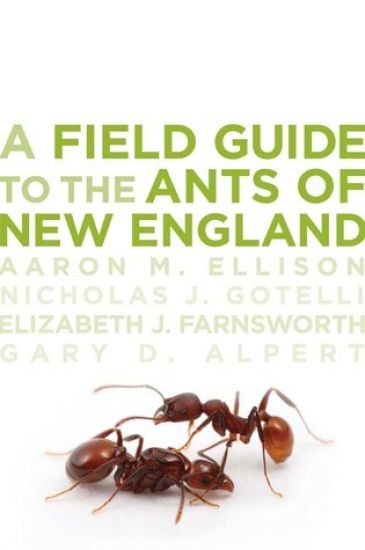
A Field Guide to the Ants of New England

A Field Guide to the Ants of New England

Aaron M. Ellison; Nicholas J. Gotelli; Elizabeth J. Farnsworth; Gary D. Alpert

Yale University Press
2012
pokkari
This book is the first user-friendly regional guide devoted to ants—the “little things that run the world.” Lavishly illustrated with more than 500 line drawings, 300-plus photographs, and regional distribution maps as composite illustrations for every species, this guide will introduce amateur and professional naturalists and biologists, teachers and students, and environmental managers and pest-control professionals to more than 140 ant species found in the northeastern United States and eastern Canada. The detailed drawings and species descriptions, together with the high-magnification photographs, will allow anyone to identify and learn about ants and their diversity, ecology, life histories, and beauty. In addition, the book includes sections on collecting ants, ant ecology and evolution, natural history, and patterns of geographic distribution and diversity to help readers gain a greater understanding and appreciation of ants.