Kirjojen hintavertailu. Mukana 12 595 353 kirjaa ja 12 kauppaa.
Kirjailija
Aaron Poochigian
Kirjat ja teokset yhdessä paikassa: 4 kirjaa, julkaisuja vuosilta 2012-2025, suosituimpien joukossa Four Walks in Central Park. Vertaile teosten hintoja ja tarkista saatavuus suomalaisista kirjakaupoista.
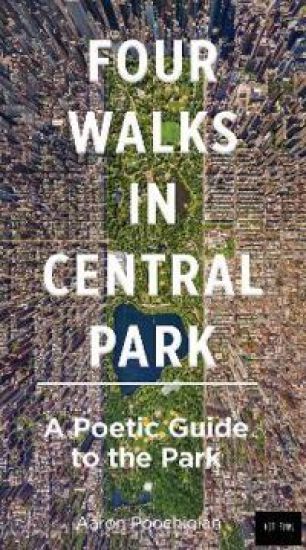
A lyrical journey through New York’s most iconic green space, one poetic step at a time. Whether you're a lifelong New Yorker or a first-time visitor, this book offers a fresh, intimate perspective on the park’s landscapes, sculptures, and stories. Four Walks in Central Park invites readers to experience the park not just as a destination, but as a living poem. Through four thoughtfully crafted walks—each aligned with a season or mood—this guide blends poetry, history, and personal reflection to illuminate the hidden rhythms of Central Park. Join poet Aaron Poochigian on a walking tour of New York City’s Central Park and experience the sights, the history, and the healing power of a walk and a poem. Including maps, historical images, an index, and an exploration of other literary references to Central Park, Four Walks in Central Park is unlike any tour you’ve ever experienced. Perfect for lovers of poetry, urban nature, and literary walking tours, this book is both a meditative companion and a celebration of one of the world’s most beloved public spaces. This beautiful book will be appreciated as a gift for anyone who has or will enjoy Central Park.
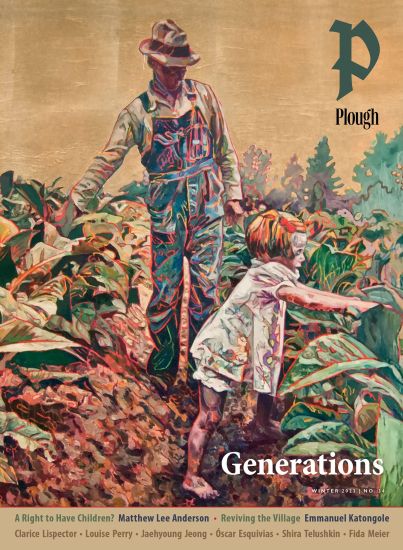
We’re born with a hunger for roots and a desire to pass on a legacy.The past two decades have seen a boom in family history services that combine genealogy with DNA testing, though this is less a sign of a robust connection to past generations than of its absence. Everywhere we see a pervasive rootlessness coupled with a cult of youth that thinks there is little to learn from our elders. The nursing home tragedies of the Covid-19 pandemic laid bare this devaluing of the old. But it’s not only the elderly who are negatively affected when the links between generations break down; the young lose out too. When the hollowing-out of intergenerational connections deprives youth of the sense of belonging to a story beyond themselves, other sources of identity, from trivial to noxious, will fill the void.Yet however important biological kinship is, the New Testament tells us it is less important than the family called into being by God’s promises. “Who is my mother, and who are my brothers?” Jesus asks a crowd of listeners, then answers: “Whoever does the will of my Father in heaven is my brother, and sister, and mother.” In this great intergenerational family, we are linked by a bond of brotherhood and sisterhood to believers from every era of the human story, past, present, and yet to be born. To be sure, our biological families and inheritances still matter, but heredity and blood kinship are no longer the primary source of our identity. Here is a cure for rootlessness.On this theme: - Matthew Lee Anderson argues that even in an age of IVF no one has a right to have a child. - Emmanuel Katongole describes how African Christians are responding to ecological degradation by returning to their roots. - Louise Perry worries that young environmentalist don’t want kids. - Helmuth Eiwen asks what we can do about the ongoing effects of the sins of our ancestors. - Terence Sweeney misses an absent father who left him nothing. - Wendy Kiyomi gives personal insight into the challenges of adopting children with trauma in their past. - Alastair Roberts decodes that long list of “begats” in Matthew’s Gospel. - Rhys Laverty explains why his hometown, Chessington, UK, is still a family-friendly neighborhood. - Springs Toledo recounts, for the first time, a buried family story of crime and forgiveness. - Monica Pelliccia profiles three generations of women who feed migrants riding the trains north.Also in the issue: - A new Christmas story by Óscar Esquivias, translated from the Spanish - Original poetry by Aaron Poochigian - Reviews of Kim Haines-Eitzen’s Sonorous Desert, Matthew P. Schneider’s God Loves the Autistic Mind, Adam Nicolson’s Life between the Tides, and Ash Davidson’s Damnation Spring. - An appreciation for Augustine’s mother, Monica - Short sketches by Clarice Lispector of her father and sonPlough Quarterly features stories, ideas, and culture for people eager to apply their faith to the challenges we face. Each issue includes in-depth articles, interviews, poetry, book reviews, and art.
Poetry. With a Foreword by Charles Martin. THE COSMIC PURR is the first collection of original poetry from Aaron Poochigian, well-known for his translations of Sappho, Aeschylus, Aratus and Apollonius of Rhodes. From the mythical to everyday themes, from the landscape of North Dakota to scenes in a bar, at a marriage ceremony, before birth or before death, Poochigian's verse is enlightened by uncommonly fresh wisdom, and deployed in the delightfully masterful, elegant and naturally-flowing metrical forms his translations are known for."Aaron Poochigian's technique is masterly, the tone tends to be tart, disillusioned, cryptic, and elegant, and it's easy to be beguiled by these poems' wit and bravura. But the pyrotechnics are used to serious ends, and the scenes that are fitfully illuminated, whether they occur in landscapes as quotidian as contemporary North Dakota or as otherworldly as mythical Greece, whether they are chilling or exhilarating, are always immediate in their reality, and they speak to the reader with a compelling cogency."--Dick Davis"Aaron Poochigian is both a classicist and a neo-classical poet. By this I mean that he prefers as subjects the common occasions of our lives and articulates them uncommonly, in verse rich with the kind of detail that becomes a style passed on in an act of friendship between him and the poets of the past who have served as his mentors."--Charles Martin"It is a delight to have some of Aaron Poochigian's modern New York replies to famous Sappho poems. Reading them is like eavesdropping on a New York wise guy discussing the 'night before' with a classical scholar: sexy, witty, learned, and moving. Worth hearing, worth re-reading, too."--Diana Der-Hovanessian"What is the cosmic purr? Pussycat poet Aaron Poochigian is the one to show us in his ebullient lines. He returns where he started--to the northern plains--then spins on a dime to the wider world 'where life was all night long / drinking and dancing, bursting into song.' In 'The Parlor' he nods ironically to his Armenian heritage, and a few pages later he lights an elegiac candle for a dying friend. A major translator from classical Greek, Poochigian offers in his own poetry a hip formality, a timeless sense of the contemporary, and when he brings the classics into this scene they live again as freshly as ever."--David Mason