Kirjailija
Aaron W. Hughes
Kirjat ja teokset yhdessä paikassa: 33 kirjaa, julkaisuja vuosilta 2005-2026, suosituimpien joukossa The Football Paradox. Vertaile teosten hintoja ja tarkista saatavuus suomalaisista kirjakaupoista.
Mukana myös kirjoitusasut: Aaron W Hughes
33 kirjaa
Kirjojen julkaisuhaarukka 2005-2026.
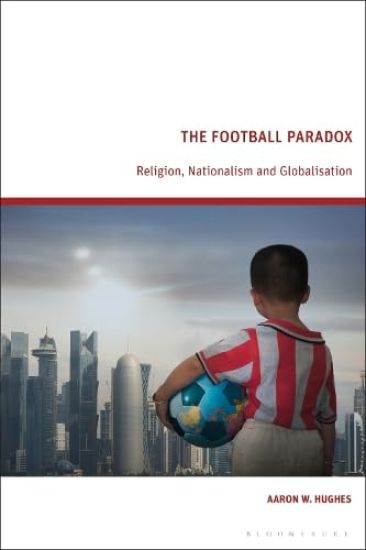
By examining football, and exploring the religious, economic and political forces that interact with the sport, this book demonstrates how the global game becomes a prism through which we can view and understand the world we inhabit. With over three billion fans in the world, football has a larger following than either Christianity or Islam, the world’s two largest religions, and in this book, Aaron W. Hughes illustrates how football and religion function in our increasingly globalized world. At the same time, the book considers how our globalized world has changed our understanding of both football and religion. Hughes situates football within the larger discourse of religion and sports, paying attention to some of the sociological features of sport and showing how football can function as a modern religion, especially in the context of the postmodern urban landscape. Drawing upon a set of case studies and examples from the MENA region, Europe, and North and South America, and using theoretical frameworks from religious studies and global studies, each chapter highlights common themes and articulates questions for future research. Through case studies, such as the 2022 World Cup in Qatar, this book highlights how the sport has increasingly become an important arena for soft power and sportswashing, yet paradoxically also of female empowerment and the symbolic construction of cultural belonging. This book concludes by making the case for the creation of a new subfield called “football studies”.
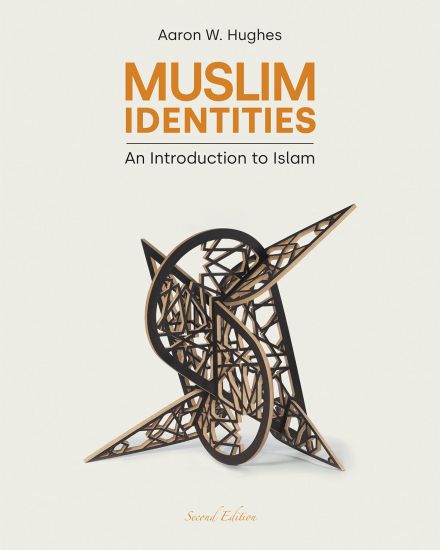
Muslim Identities: An Introduction to Islam (Second Edition) presents a fully updated introduction to the religion of Islam and the various social groups who define themselves as Muslim. Unlike other such works, it presents both insider and outsider accounts with the aim of striking a unique balance between overly apologetical and overly Orientalist perspectives. With the first edition described as a “truly outstanding book”, and “the very best introduction currently available in English for non-Muslims seeking a sound approach to Islam” (Journal of Islamic Studies), this new edition offers both students and general readers a comprehensive and balanced introduction to the world’s second-largest religion.
An Anxious Inheritance reveals the tensions between the early framers of Islam and the ever-expandable category of non-Muslims. Examining the encounter with these religious others, and showing how the Qur'an functioned as both a script to understand them and a map to classify them, this study traces the key role that these religious others played in what would ultimately emerge as (Sunni) orthodoxy. This orthodoxy would appear to be the natural outgrowth of the Prophet Muhammad's preaching, but it ultimately amounted to little more than a retroactive projection of later ideas onto the earliest period. Non-Muslims (among them Christians, Jews, Zoroastrians) and the "wrong" kinds of Muslims (e.g., the Shi'a) became integral--by virtue of their perceived stubbornness, infidelity, heresy, or the like--to the understanding of what true religion was not and, just as importantly, what it should be. These non-Muslims were rarely real individuals or groups; rather, they functioned as textual foils that could be conveniently orchestrated, and ultimately controlled, to facilitate Muslim self-definition. Without such religious others proper belief could, quite literally, not be articulated. Shedding new light on the early history of Islam, while also problematizing the binary of orthodoxy/heresy in the study of religion, An Anxious Inheritance makes significant contributions to a number of diverse academic fields.
Religion in 50 More Words: A Redescriptive Vocabulary provides a succinct historical, social, and political examination of some of the key words used in the modern study of religion. Differing from the first volume’s more theoretical focus, this volume analyzes more common first order descriptive terms that are used throughout the field, inviting readers to theorize their traditional vocabulary. Topics covered include:• Atheism/Theism• Conversion• Cult • Evil • Fundamentalism • Idol • Magic • Pilgrimage • Ritual • Sacrifice Religion in 50 More Words submits such terms to a critical interrogation and subsequent redescription. This paves the way for a collective and more critical reframing of the field. The volume, along with Religion in 50 Words, provides an indispensable resource for students and academics working in the field of religious studies and cognate disciplines.
Religion in 50 Words: A Critical Vocabulary is the first of a two-volume work that seeks to transform the study of religion by offering a radically critical perspective. It does so by providing a succinct and critical examination of the key words used in the modern study of religion. Arranged alphabetically, the book explores the historic roots, varied uses, and current significance and utility of the technical terms used within the current field of religious studies. These are the terms that both students and scholars routinely deploy to think about, describe, and analyze data—sometimes without realizing that they are themselves technical tools in need of attention.Among the topics covered: Belief Critical Culture Definition Environment GenderIdeologyLived religion Material religionOrthodoxy PoliticsRaceSacred/profaneSecularTheory This book submits all of its terms to a critical interrogation and subsequent re-description, thereby allowing a collective reframing of the field. This volume is an indispensable resource for students and academics working in religious studies.
One would think that the space between Islam and Judaism would prove fertile enough to engage in questions of social, religious, cultural, and intellectual interactions. Yet, for a variety of political reasons this is unfortunately rarely the case. In Somewhere Between Islam and Judaism, Hughes reflects on what it means to work in both traditions, but feel at home in neither. The essays collected in this volume provide a set of critical reflections on what it means to study these two religious traditions within the larger context of the academic study of religion. Using case studies that span from the rise of Islam to the current state of Islamic studies and Jewish studies, this work examines the discourses that scholars use to bring Islam and Judaism into what they believe to be sharper focus. In the process, Hughes forces us to confront the countless blindspots, assumptions, and problematic assertions, which structure, frame, and otherwise bring Islamic and Jewish data into focus or, alternatively, obscure it. Somewhere Between Islam and Judaism will be of interest to scholars and students of religion concerned with comparison and those studying Islam, Judaism and Jewish-Muslim relations.
Muslim and Jew: Origins, Growth, Resentment seeks to show how and why Islam and Judaism have been involved in political and theological self-definitions using the other since the seventh century. This short volume provides a historical and comparative survey of how each religion has thought about the other and, in so doing, about itself. It confines itself to those points at which Judaism and Islam intersect and cross-pollinate, and explores how this delicate process continues into the present with the Israeli–Palestinian conflict. Muslim and Jew thus seeks to move beyond the intersection of a monolithic Judaism and a monolithic Islam and instead examines and organizes the messiness of the encounter as both religions sought to define themselves within, from, and against the other.
Comparison is held to be one of the central methods of the academic study of religion. While many ostensibly engage in the comparative act, often overlooked is what it actually means to do this. What is comparison? Why engage in it and for what purposes? Can there be such a thing as a valid or invalid comparison? Can comparison itself be compared to anything? This book starts with the premise that while there are good comparisons and bad comparisons, what is common to both is the sheer artificiality of the enterprise and develops an analytical framework for using the method in the context of religious studies. After briefly tracing the history and genealogy of the category, Hughes draws on his own extensive work in Judaism and Islam to argue that comparison can be a useful method, but only under strictly controlled conditions.
In this controversial study, Aaron W. Hughes breaks with received opinion, which imagines two distinct religions, Judaism and Islam, interacting in the centuries immediately following the death of Muhammad in the early seventh century. Tradition describes these relations using tropes such as that of "symbiosis." Hughes instead argues that various porous groups--neither fully Muslim nor Jewish--exploited a shared terminology to make sense of their social worlds in response to the rapid process of Islamicization. What emerged as normative rabbinic Judaism on the one hand, and Sunni and Shi'a Islam on the other were ultimately responses to such marginal groups. The so-called "Golden Age" in places such as Muslim Spain and North Africa continued to see the articulation of this "Islamic" Judaism in the writings of luminaries such as Bahya ibn Paquda, Abraham ibn Ezra, Judah Halevi, and Moses Maimonides. Drawing on social theory, comparative religion, and primary texts, Hughes presents a compelling case for rewriting our understanding of Jews and Muslims in their earliest centuries of interaction. Not content to remain solely in the past, he examines the continued interaction of Muslims and Jews, now reimagined as Palestinians and Israelis, into the present.
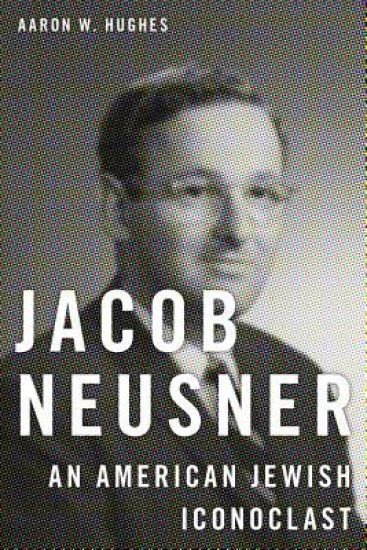
Biography: Neusner is a social commentator, a post-Holocaust theologian, and an outspoken political figure. Jacob Neusner (born 1932) is one of the most important figures in the shaping of modern American Judaism. He was pivotal in transforming the study of Judaism from an insular project only conducted by—and of interest to—religious adherents to one which now flourishes in the secular setting of the university. He is also one of the most colorful, creative, and difficult figures in the American academy. But even those who disagree with Neusner's academic approach to ancient rabbinic texts have to engage with his pioneering methods. In this comprehensive biography, Aaron Hughes shows Neusner to be much more than a scholar of rabbinics. He is a social commentator, a post-Holocaust theologian, and was an outspoken political figure during the height of the cultural wars of the 1980s. Neusner's life reflects the story of what happened as Jews migrated to the suburbs in the late 1940s, daring to imagine new lives for themselves as they successfully integrated into the fabric of American society. It is also the story of how American Jews tried to make sense of the world in the aftermath of the extermination of European Jewry and the subsequent creation of the State of Israel in 1948, and how they sought to define what it meant to be an American Jew. Unlike other great American Jewish thinkers, Neusner was born in the U.S., and his Judaism was informed by an American ethos. His Judaism is open, informed by and informing the world. It is an American Judaism, one that has enabled American Jews—the freest in history—to be fully American and fully Jewish.
Many scholars of Islam are interested in creating a liberal, inclusive, pluralistic, feminist, and modern version of the religion that they believe to be explicit in the pages of the Qur'an, but missed by earlier interpreters. In so doing, they create "good" Islam and, in the process, seek to define what does and does not get to count as authentic. As the purveyors of what they now believe to be veritable Islam, they subsequently claim that rival presentations are bastardizations based either on Orientalism and Islamophobia (if one is a non-Muslim) or misogyny and homophobia (if one is a Muslim that disagrees with them). Instead of engaging in critical scholarship, they engage in a constructive and theological project that they deceive themselves into thinking is both analytical and empirical. This book provides a hard-hitting examination of the spiritual motivations, rhetorical moves, and political implications associated with these apologetical discourses. It argues that what is at stake is relevance, and examines the consequences of engaging in mythopoesis as opposed to scholarship.
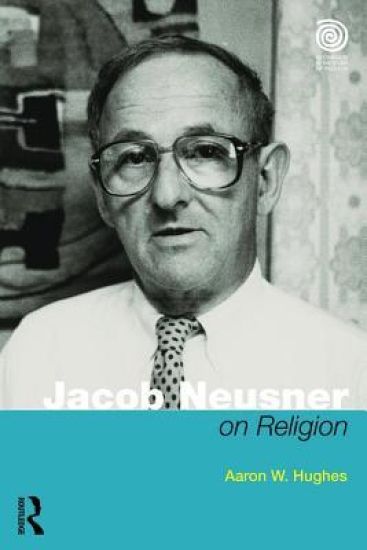
Jacob Neusner was a prolific and innovative contributor to the study of religion for over fifty years. A scholar of rabbinic Judaism, Neusner regarded Jewish texts as data to address larger questions in the academic study of religion that he helped to formulate. Jacob Neusner on Religion offers the first full critical assessment of his thought on the subject of religion. Aaron W. Hughes delineates the stages of Neusner’s career and provides an overview of Neusner’s personal biography and critical reception. This book is essential reading for students and scholars interested in Neusner specifically, or in the history of Religious Studies, Jewish Studies, and philosophy of religion more broadly.