Kirjailija
Abraham Kuruvilla
Kirjat ja teokset yhdessä paikassa: 28 kirjaa, julkaisuja vuosilta 2009-2025, suosituimpien joukossa Mark. Vertaile teosten hintoja ja tarkista saatavuus suomalaisista kirjakaupoista.
28 kirjaa
Kirjojen julkaisuhaarukka 2009-2025.
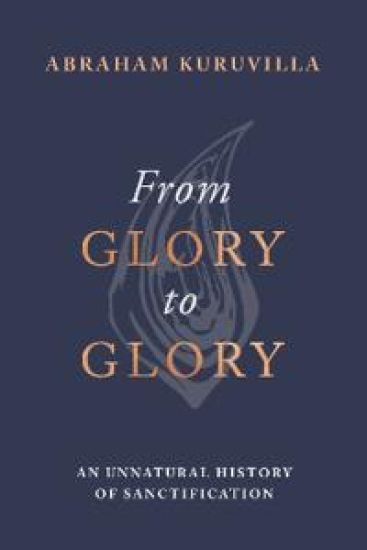
Spiritual formation is critical for the Christian. And preaching is, effectively, spiritual formation from the pulpit, seeking to bring to bear the thrust of a portion of Scripture upon the lives of believers. However, the careful integration of the divine call for holiness, with the concrete processes of transformation in response to that call, remains a challenge. How does the former lead to the latter, to culminate in Christlikeness? This book fills that gap, as it shows the unnatural, supernatural journey from the glory of creation to the glory of redeemed humanity. Abraham Kuruvilla informs and equips pastors, preachers and church leaders to focus on God's work to overcome the sinful flesh in humanity through the agency of the Spirit and through the Spirit's product: Scripture. These are the ways that God brings His people from glory to ever-increasing glory. This is not a model or plan of action, but rather an invitation towards being conformed to Christlikeness.
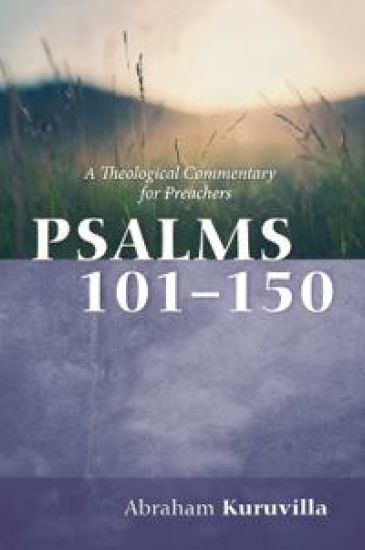
This three-volume commentary on the Psalms engages hermeneutics for preaching, employing theological exegesis that enables the preacher to utilize all the psalms in the Psalter to craft effective sermons. It unpacks the crucial link between Scripture and application: the theology of each preaching text/psalm--what the author is doing with what he is saying in each psalm--is explored and explicated. While the primary goal of the commentary is to take the preacher from text to theology, it also provides a sermon outline for each of the preaching units in the Psalms. The unique approach of this work results in a theology-for-preaching commentary that promises to be useful for anyone teaching from the Psalter with an emphasis on application.
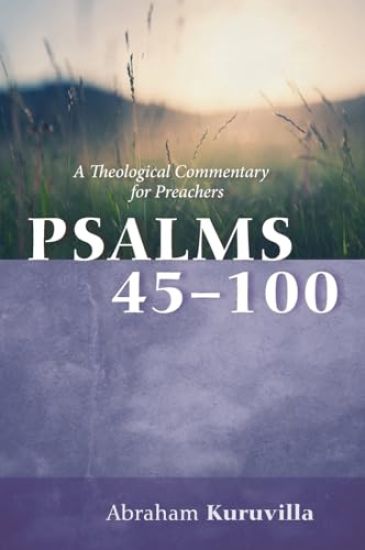
This three-volume commentary on the Psalms engages hermeneutics for preaching, employing theological exegesis that enables the preacher to utilize all the psalms in the Psalter to craft effective sermons. It unpacks the crucial link between Scripture and application: the theology of each preaching text/psalm--what the author is doing with what he is saying in each psalm--is explored and explicated. While the primary goal of the commentary is to take the preacher from text to theology, it also provides a sermon outline for each of the preaching units in the Psalms. The unique approach of this work results in a theology-for-preaching commentary that promises to be useful for anyone teaching from the Psalter with an emphasis on application.
This three-volume commentary on the Psalms engages hermeneutics for preaching, employing theological exegesis that enables the preacher to utilize all the psalms in the Psalter to craft effective sermons. It unpacks the crucial link between Scripture and application: the theology of each preaching text/psalm--what the author is doing with what he is saying in each psalm--is explored and explicated. While the primary goal of the commentary is to take the preacher from text to theology, it also provides a sermon outline for each of the preaching units in the Psalms. The unique approach of this work results in a theology-for-preaching commentary that promises to be useful for anyone teaching from the Psalter with an emphasis on application.


This three-volume commentary on the Psalms engages hermeneutics for preaching, employing theological exegesis that enables the preacher to utilize all the psalms in the Psalter to craft effective sermons. It unpacks the crucial link between Scripture and application: the theology of each preaching text/psalm--what the author is doing with what he is saying in each psalm--is explored and explicated. While the primary goal of the commentary is to take the preacher from text to theology, it also provides a sermon outline for each of the preaching units in the Psalms. The unique approach of this work results in a theology-for-preaching commentary that promises to be useful for anyone teaching from the Psalter with an emphasis on application.
This book looks into the liturgy of the Mar Thoma Church. The Mar Thoma Church claims to be Eastern and Reformed. An enquiry is made into the liturgy of the Eucharist to look into the the prayer for illumination. The measuring rod to determine the Eastern and the Reformed nature is the Eastern fathers such as Gregory Nazianzen, Athanasius, St. Basil, etc., and the Reformer John Calvin. The prayer for illumination as laid out in the Eucharistic liturgy of the Mar Thoma Church is compared to the prayer for illumination in the Syrian liturgy and the Genevan psalter. Some observations are made and, accordingly, conclusions are drawn. Based on the conclusions, some implications are given for the Mar Thoma Church.
This book looks into the liturgy of the Mar Thoma Church. The Mar Thoma Church claims to be Eastern and Reformed. An enquiry is made into the liturgy of the Eucharist to look into the the prayer for illumination. The measuring rod to determine the Eastern and the Reformed nature is the Eastern fathers such as Gregory Nazianzen, Athanasius, St. Basil, etc., and the Reformer John Calvin. The prayer for illumination as laid out in the Eucharistic liturgy of the Mar Thoma Church is compared to the prayer for illumination in the Syrian liturgy and the Genevan psalter. Some observations are made and, accordingly, conclusions are drawn. Based on the conclusions, some implications are given for the Mar Thoma Church.
From Ancient Text to Valid Application
Josiah D Boyd; Abraham Kuruvilla
Wipf Stock Publishers
2021
pokkari
As a child needs nutrient-rich calories to grow healthily, so God's people experience maturation through consistent, Spirit-empowered feedings from the Bible prepared by a capable, Spirit-filled chef. This is why Paul emphatically charged Timothy, an overseer of a local congregation, to unwaveringly and unrelentingly ""preach the word"" (2 Tim 4:1-2), a task that assumes not only Scripture's right explanation but also its valid application. Unfortunately, while much scholarly attention has been paid to the former facet, less has been given to the latter. One homiletician, Abraham Kuruvilla (Privilege the Text A Theological Hermeneutic for Preaching), has recently attempted to fill this void by articulating and demonstrating a methodology through which a preacher can, with confidence and clarity, lead the people of God from the word of God to its intended, and thus binding, application. This work explores the effectiveness of his proposed theology and hermeneutic for the identification, development, communication, and reception of biblically founded, theologically valid, and hearer-relevant application.

From Ancient Text to Valid Application
Josiah D Boyd; Abraham Kuruvilla
Wipf Stock Publishers
2021
sidottu
As a child needs nutrient-rich calories to grow healthily, so God's people experience maturation through consistent, Spirit-empowered feedings from the Bible prepared by a capable, Spirit-filled chef. This is why Paul emphatically charged Timothy, an overseer of a local congregation, to unwaveringly and unrelentingly ""preach the word"" (2 Tim 4:1-2), a task that assumes not only Scripture's right explanation but also its valid application. Unfortunately, while much scholarly attention has been paid to the former facet, less has been given to the latter. One homiletician, Abraham Kuruvilla (Privilege the Text A Theological Hermeneutic for Preaching), has recently attempted to fill this void by articulating and demonstrating a methodology through which a preacher can, with confidence and clarity, lead the people of God from the word of God to its intended, and thus binding, application. This work explores the effectiveness of his proposed theology and hermeneutic for the identification, development, communication, and reception of biblically founded, theologically valid, and hearer-relevant application.
1 and 2 Timothy, Titus: A Theological Commentary for Preachers engages hermeneutics for preaching, employing theological exegesis that enables the preacher to utilize all the units of these epistles to craft effective sermons. This commentary unpacks the crucial link between Scripture and application: the theology of each preaching text (pericope). The three letters--collectively, the Pastoral Epistles--are divided into eighteen pericopes, and what the author is doing with what he is saying in each is explored. The overall theological trajectory of the Pastoral Epistles concerns the promotion of God's economy by the community of God's people. The specific theological thrust of individual preaching units is captured in this commentary, making possible a sequential homiletical movement through each pericope of the three epistles. While the primary goal of the commentary is to take the preacher from text to theology, it also provides two sermon outlines for each of the eighteen preaching units of the Pastoral Epistles. The unique approach of this work results in a theology-for-preaching commentary that promises to be useful for anyone teaching through 1 and 2 Timothy and Titus with an emphasis on application.

A Manual for Preaching - The Journey from Text to Sermon
Abraham Kuruvilla
Baker Academic, Div of Baker Publishing Group
2019
nidottu
Abraham Kuruvilla's A Vision for Preaching offered an integrated biblical and theological vision for preaching. A Manual for Preaching addresses the practical (and perennial) issue of how to move from the biblical text to an effective sermon. The author, a well-respected teacher of preachers, shows how to discern the text's theological meaning and let that meaning shape the development of the sermon. Clearly written and illustrated with Old Testament and New Testament examples, the book helps preachers negotiate larger swaths of Scripture and includes two annotated sermon manuscripts from Kuruvilla.
A fundamental issue for preachers of the Bible has always been achieving an approach that is both faithful to the textual intention as well as fitting for the listening audience. What is historical and distant (the text) is, in preaching, made contemporary and near (praxis). Particularly pertinent is how this transaction may be conducted with respect to the self-contained and well-defined quantum of the scriptural text that is regularly employed in liturgical contexts—the pericope. This book answers the question: In a sermon intending to proclaim application from a pericope, what is the hermeneutical basis for moving validly from text to praxis, i.e., with authority and relevance? The concept of theology as a bridge between text and praxis has not been specifically researched or rigorously substantiated. Kuruvilla seeks to do both, utilizing as entrées language philosophy, literary criticism, and a thorough understanding of "ordinary" language. Drawing from a variety of hermeneutical resources, he establishes "pericopal theology" as the intermediary between text and praxis. How this theology is discerned from the text and how application may be determined therefrom form the crux of this book. This novel approach lends validity to the movement from text to praxis and promises to be useful for any approach to the biblical text intended to culminate in application. Kuruvilla's approach provides a substantial technical basis for such an operation. Thus the preacher must be a "theologian-homiletician." It is the working out of this nomenclature, especially the "theologian" half of the appellation, that is the essence of this work, uniting as it does in one portfolio the responsibility of negotiating the demands of both hermeneutics and homiletics.
The book looks into the liturgy of the Mar Thoma Church. The Mar Thoma Church claims to be eastern and reformed. An enquiry is made into the liturgy of the passion week and the Eucharist to look into the theology of Atonement (work of Christ) and the nature of the Holy Spirit respectively. The measuring rod to determine the Eastern and the Reformed nature is the Eastern Fathers such as Gregory Nazianzen, Athanasius, St. Basil, etc., and the Reformer John Calvin. The theology of atonement (work of Christ) and the nature of the Holy Spirit as laid out in the liturgy of the Mar Thoma Church are compared to the teachings of the Eastern Fathers and Reformer John Calvin. Some observations are made and accordingly conclusions are drawn. Based on the conclusions some implications are made for the Mar Thoma Church. Abraham Kuruvilla is priest with the Mar Thoma Syrian Church. He completed his BD from Mar Thoma Theological Seminary, Kerala, India, and ThM from Princeton Theological Seminary, USA. He is presently serving in Philadelphia as a parish priest.