Kirjojen hintavertailu. Mukana 12 589 865 kirjaa ja 12 kauppaa.

Kirjailija

Abraham M. Nussbaum

Kirjat ja teokset yhdessä paikassa: 6 kirjaa, julkaisuja vuosilta 2017-2024, suosituimpien joukossa Prescribing Together. Vertaile teosten hintoja ja tarkista saatavuus suomalaisista kirjakaupoista.

6 kirjaa

Kirjojen julkaisuhaarukka 2017-2024.

DSM-5-TR® Pocket Guide for Child and Adolescent Mental Health

DSM-5-TR® Pocket Guide for Child and Adolescent Mental Health

Robert J. Hilt; Abraham M. Nussbaum

American Psychiatric Association Publishing
2024
pokkari
The Diagnostic and Statistical Manual of Mental Disorders, 5th Edition, Text Revision (DSM-5-TR) provides an incredibly useful evidence-based, consensus-driven framework for diagnosing mental illness in individuals. When working with children and adolescents, it is insufficient to match the exhibited mental distress to a classification in DSM-5-TR; great care must be given to understanding the cultural, family, gender/sex, and other factors impacting a child’s mental health today. That is what makes the DSM-5-TR® Pocket Guide for Child and Adolescent Mental Health so necessary: it serves as a pragmatic translation of DSM-5-TR to clinical practice to provide the most effective treatment. The diagnostic interview remains the focus of this volume, but the information has been updated to reflect the changes in DSM-5-TR. Readers of all skill levels and experience will find practical guidance for 15-, 30-, and 45-minute versions of the interview. The medication tables have also been updated to reflect current evidence. The book also features new sections with chapters describing:Developing a therapeutic allianceMeeting a young person experiencing mental distressCrisis care for a young personPositive psychology interviewsDrawing on a decade of clinical research and community practice, this pocket guide offers a person-centered approach to care that is relevant in multiple settings—which is particularly useful when considering that young people are more likely to receive an initial mental health diagnosis and treatment in a non–behavioral health setting. With short, easily referenced chapters and immediately actionable information, the DSM-5-TR® Pocket Guide for Child and Adolescent Mental Health is an indispensable companion for the student, trainee, and seasoned clinician alike.
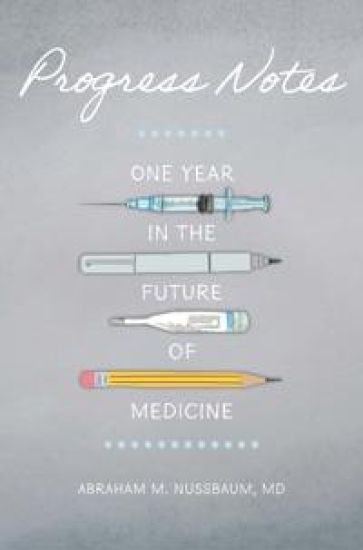
Progress Notes

Progress Notes

Abraham M. Nussbaum

Johns Hopkins University Press
2024
sidottu
A groundbreaking approach to training doctors could transform the future of health care.Winner of the Nautilus Book Award by the Nautilus Book Awards, Winner of the Ippy Book AwardFor decades, physicians have been trained on the textbook of the body, from the corpse in a cadaver lab to the patient in a procedure suite. This type of training usually leads them to specialize in specific organs or systems and breeds an increasingly impersonal view of medicine in which the importance of person-to-person care—the hallmark of a good relationship between doctors and patients—has been lost.In this engrossing narrative, you'll meet seven extraordinary students who embarked on a new way to train doctors that attempts to regain what's been lost. These medical students follow patients instead of physicians, accompanying patients to primary care appointments, emergency room visits, and even surgical procedures, developing deep connections and understanding the intricate interplay between the health of our bodies and the health of our communities. They learn the textbook of a community in addition to the textbook of the body.Through poignant stories of these seven students and the people they meet as patients, Dr. Abraham M. Nussbaum illustrates the power of becoming a doctor and the possibility of changing the way we train doctors. As the students acquire a wealth of knowledge about the human body, they also navigate immense challenges and responsibilities. Throughout the year, they go about their lives, find love, and start families, all while getting to know their patients and their lives. Progress Notes follows the evolution of medical education and is a must-read for premedical students, medical students, and medical professionals seeking insight into the changing landscape of their field as well as for readers captivated by medical dramas and the pursuit of transformative care that benefits us all.
The Pocket Guide to the DSM-5-TR® Diagnostic Exam

The Pocket Guide to the DSM-5-TR® Diagnostic Exam

Abraham M. Nussbaum

American Psychiatric Association Publishing
2022
pokkari
Designed for interviewers at all levels of experience, The Pocket Guide to the DSM-5-TR Diagnostic Exam is the clinician's companion for using DSM-5-TR in diagnostic interviews. Both experienced clinicians and those still in training will benefit from the thoughtful, yet practical, fashion in which DSM-5 revisions are reviewed and incorporated into the 30-minute diagnostic interview. This guide is written for all levels of experience, since every clinician needs to master both DSM-5-TR criteria and how to conduct a fruitful diagnostic interview. The book: • Provides insight into the process of establishing a therapeutic alliance, which remains the goal of any psychiatric encounter, even one as brief as the diagnostic interview.• Offers an extensive set of resources to enhance understanding. These include a brief, easy-to-use summary of DSM-5-TR disorders; the Mental Status Examination and a psychiatric glossary; suggestions for mental health treatment planning; guidance for the ABPN Clinical Skills Evaluation; DSM-5-TR-related diagnostic tools and scales; and coverage of alternative diagnostic systems and rating scales.• Provides a sequential framework for generating a differential diagnosis, using a six-step approach, that will help clinicians develop their clinical decision-making skills and ensure that they consider the many and interrelated causes of mental disorders. Direct, practical, and informative, The Pocket Guide to the DSM-5-TR Diagnostic Exam will enable readers to efficiently and effectively employ DSM-5 as part of a comprehensive diagnostic interview.
Prescribing Together

Prescribing Together

Warren A. Kinghorn; Abraham M. Nussbaum

American Psychiatric Association Publishing
2021
pokkari
What if, rather than acting only as dispensers of medication, mental health clinicians and primary care clinicians treating mental disorders were also collaborators with patients in the prescribing relationship? It's a simple but profound shift in how to think about approaching psychopharmacology, and in Prescribing Together, Warren Kinghorn and Abraham Nussbaum argue that this sort of human-to-human relationship-building is critical to prescribing more effectively and to achieving health equity. While many other books have focused on what to prescribe for given conditions, this volume is more concerned with how to prescribe: how to talk to patients about medications, how to understand the cultural and social factors that affect how both clinicians and patients relate to medication, and how to build trust in the relationship. Each chapter offers a practical introduction to at least one key concept or skill, from cultural formation and structural competency to medication concordance and deprescribing. Profiles, rich in personal anecdotes, of a diverse group of accomplished clinicians serve as an engaging, real-life foundation for evidence-based strategies for building strong alliances in the context of 13 mental disorder categories, including: • Schizophrenia• Bipolar disorder• Major depressive disorder• Generalized anxiety disorder• Neurocognitive disorders• Borderline personality disorder In drawing a contrast between a dispenser and a collaborator model, Prescribing Together encourages clinicians not just to look at their patients, but to look with them at their lived experience, to understand their stories and interpersonal and social contexts—all with the aim of returning agency to patients and empowering them to set meaningful goals and to be active particpants in their own flourishing.
The Finest Traditions of My Calling

The Finest Traditions of My Calling

Abraham M. Nussbaum

Yale University Press
2017
pokkari
A deeply concerned physician reflects on today’s doctor-patient relationships and offers a compelling vision of a better way to practice medicine Patients and doctors alike are keenly aware that the medical world is in the midst of great change. We live in an era of continuous healthcare reforms, many of which focus on high volume, efficiency, and cost-effectiveness. This compelling, thoughtful book is the response of a practicing psychiatrist who explains how population-based reforms have diminished the relationship between doctors and patients, to the detriment of both. As an antidote to failed reforms and an alternative to stubbornly held traditions, Dr. Abraham M. Nussbaum suggests ways that doctors and patients can learn what it means to be ill and to seek medical assistance. Using a variety of riveting stories from his own and others’ experiences, the author develops a series of metaphors to explore a doctor’s role in different healthcare reform scenarios: scientist, technician, author, gardener, teacher, servant, and witness. Each role influences what a physician sees when examining a person as a patient. Dr. Nussbaum cautions that true healthcare reform can happen only when those who practice medicine can see, and be seen by, their patients as fellow creatures. His memoir makes a hopeful appeal for change, and his insights reveal the direction that change must take.
DSM-5® Pocket Guide for Elder Mental Health

DSM-5® Pocket Guide for Elder Mental Health

Sophia Wang; Abraham M. Nussbaum

American Psychiatric Association Publishing
2017
pokkari
Many practitioners are hesitant to treat mental health issues in older adults, believing that special expertise is required to do so effectively. DSM-5 Pocket Guide for Elder Mental Health is based on the premise that all practitioners can acquire the confidence needed to work with older patients. Primary care practitioners, clinical psychiatrists, psychiatric nurses, psychiatric residents, and resident fellows are just some of the professionals who will benefit from memorable cases that illustrate how the presented information can quickly be applied to the reader's own patients, handy mnemonics that make complex diagnostic information easy to commit to memory, and informative tables that help readers easily locate DSM-5 information for billing purposes. All of the information presented in this guide is grounded in real-world advice, so readers can be confident that the information provided is practical and clinically based as they learn how to • Perform 15- and 30-minute diagnostic interviews• Recognize the main elements of the most common mental health disorders• Reach an initial diagnosis• Engage patients in psychosocial, psychotherapeutic, and psychopharmacological treatment plans and work with caregivers• Know when to refer patients for additional subspecialty mental health treatment. With expert consensus threaded throughout, DSM-5 Pocket Guide for Elder Mental Health is the ideal companion for trainees and seasoned professionals alike, who will find the thoughtful, practical information they need to efficiently and effectively employ DSM-5 as part of comprehensive diagnostic interview and treatment planning for their older patients.