Kirjojen hintavertailu. Mukana 12 152 606 kirjaa ja 12 kauppaa.

Kirjailija

Adam B. Seligman

Kirjat ja teokset yhdessä paikassa: 18 kirjaa, julkaisuja vuosilta 1994-2026, suosituimpien joukossa Ritual and its Consequences. Vertaile teosten hintoja ja tarkista saatavuus suomalaisista kirjakaupoista.

Mukana myös kirjoitusasut: Adam B Seligman

18 kirjaa

Kirjojen julkaisuhaarukka 1994-2026.

Ritual and its Consequences

Ritual and its Consequences

Adam B Seligman; Robert P Weller; Michael J Puett; Bennett Simon

Oxford University Press Inc
2008
nidottu
Ritual is usually understood as pointing to some essence beyond the ritual act itself. This ambitious interdisciplinary study offers a convincing challenge to this understanding. The authors begin by seeking to explain how the conventional idea arose in the first place. They locate its origin in a post-Protestant and post-Enlightenment vision of ritual action that emphasizes rituals as merely external signs of interior states. This approach, say the authors, is part of a far larger way of relating to the self and to the world, which they label "sincerity." But ritual, they say, is the very opposite of sincerity because it consists of stylized, repetitive interactions that construct an "as if" world, a world of role, propriety, play, and even fantasy, rather than pointing to the world as it actually is. In fact, that is ritual's great contribution. Ritual modes of behavior make a shared social world possible by helping to navigate between diverse people and groups, rather than attempting to transcend and efface boundaries. After setting forth this argument, the authors go on to build on it by showing how sincerity and ritual are stand-ins for two very different ways of being in the world. Although both modes are always present to some degree, modernity has deeply privileged sincerity and authenticity. And, they say, we are now paying a heavy price for this extreme and often totalizing projection of personality in contemporary political life.
Boundaries and Community

Boundaries and Community

Adam B. Seligman

UNIVERSITY OF TORONTO PRESS
2026
pokkari
Boundaries and Community is an essential guide for building bridges in a world marked by deep divisions. Across eleven concise chapters, this book offers practical tools and reflective insights for fostering meaningful connections within and across racially, ethnically, politically, and religiously divided communities. Rather than simply describing the problems that fracture our collective lives, it provides a hands-on toolkit for addressing them and empowers readers to move beyond ideological stalemates and take constructive action. Each chapter tackles a critical challenge of collective life – shared experience, collective responsibility, individual rights and communal belonging, social trust, and more – offering a clear “rule” for action, real-life examples, and thought-provoking questions for group discussion. By modelling a forum for open, community-engaged dialogue, the book equips concerned citizens with strategies to address local issues without resorting to polarized formulas of the right or left. Boundaries and Community serves as both diagnosis and roadmap, helping readers orient themselves in today’s polarized climate and inspiring them to forge new pathways for cooperation and understanding. Whether you are a community leader, organizer, or simply someone who cares about collective well-being, this book provides the tools and inspiration to act together – even with those with whom you fundamentally disagree.
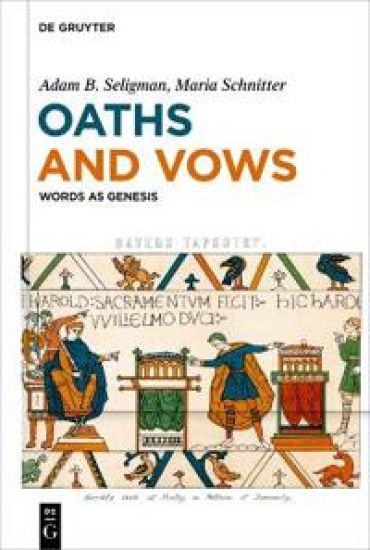
Oaths and Vows

Oaths and Vows

Adam B. Seligman; Maria Schnitter

De Gruyter
2024
sidottu
Oaths, vows, promises, curses – all share family resemblances. They are performatives, carrying illocutionary force. Oaths have rightly been termed, "conditional self-curses", promises have been argued to be but a more developed form of vows, and oaths and vows are often used interchangeably. This book focuses on private vows and oaths including those publically proclaimed. Through analysis of legal, liturgical, mythical and literary works, it seeks to uncover a phenomenology of oaths and vows. Viewing oaths and vows as the human creative force par excellence, it surveys their role in circumscribing and directing both erotic desire and aggression; and so – in their performative function – as standing at the foundation of society and sociability. As acts of trust which establish new obligations understandings of the role of oaths and vows are compared in the Jewish and Christian contexts, in terms of the importance of intentionality in vow making and oath taking, as well as the nature of the obligations ensuing from such locutionary acts. Analysis of the comic and tragic consequences of the violation of marriage oaths as presented in European literature from the 12th to 19th centuries reveals their perception as "habituating" Eros.
Über die Herausforderung der Verschiedenheit und die neue Wertereligion
In ihren Festreden anlässlich der Verleihung des Dr. Leopold Lucas-Preises des Jahres 2020 stellen Adam B. Seligman und Linda Woodhead ihre unterschiedlichen Ansätze zum Zusammenhang von Religion und Gesellschaft prägnant und anschaulich dar. Seligman zeichnet aus sozialpsychologischer Perspektive nach, wie das Zugehörigkeitsgefühl zu einer Gruppe konstruiert und erlernt wird. Da gesellschaftlich geformte Kategorien die Selbst- und Weltwahrnehmung prägen, fordert die Begegnung mit Angehörigen anderer Gruppen immer auch die eigene Selbstwahrnehmung heraus und kann Unbehagen auslösen. Er problematisiert verschiedene gängige Strategien, dieses durch Differenzerfahrung ausgelöste Unbehagen aufzulösen und plädiert schließlich dafür, dass Angehörige verschiedener Religionsgemeinschaften in einer religiös pluralistischen Gesellschaft dazu bereit sein müssen, dieses Unbehagen auszuhalten und sich eines Urteils über die Weltsicht der anderen zu enthalten.Linda Woodhead befasst sich in ihrer Rede mit dem Bedeutungsverlust christlicher Religion in den liberalen Demokratien des Westens. Dieser Bedeutungsverlust ist nach ihren soziologischen Forschungen nicht gleichzusetzen mit einem Ende der Religion, vielmehr übernehmen moralische Werte Funktionen der Religion. Diese Religion der Werte zeichnet sich durch einen Fokus auf Selbstverwirklichung aus, während altruistische Wertvorstellungen parallel zum Christentum an Bedeutung verlieren. Die historischen Wurzeln für diese Entwicklung sieht Woodhead in einer zunehmenden Moralisierung des Christentums, die Religion stark oder ausschließlich über Werte definiert. In der Folge absorbieren Wertüberzeugungen Funktionen der Religion, prägen das Identitätsgefühl und Wahrnehmungen der Zusammengehörigkeit und Differenz. Dagegen können viele spirituelle Bedürfnisse weder von den moralisierten Religionen noch von der neuen Wertereligion erfüllt werden. Dadurch lässt sich das (Wieder-)Auftauchen vieler spiritueller und magischer Praktiken erklären.
How Things Count as the Same

How Things Count as the Same

Adam B. Seligman; Robert P. Weller

Oxford University Press Inc
2020
nidottu
In their third book together, Adam B. Seligman and Robert P. Weller address a seemingly simple question: What counts as the same? Given the myriad differences that divide one individual from another, why do we recognize anyone as somehow sharing a common fate with us? For that matter, how do we live in harmony with groups who may not share the sense of a common fate? Such relationships lie at the heart of the problems of pluralism that increasingly face so much of the world today. Note that "counting as" the same differs from "being" the same. Counting as the same is not an empirical question about how much or how little one person shares with another or one event shares with a previous event. Nothing is actually the same. That is why, as humans, we construct sameness all the time. In the process, of course, we also construct difference. Creating sameness and difference leaves us with the perennial problem of how to live with difference instead of seeing it as a threat. How Things Count as the Same suggests that there are multiple ways in which we can count things as the same, and that each of them fosters different kinds of group dynamics and different sets of benefits and risks for the creation of plural societies. While there might be many ways to understand how people construct sameness, three stand out as especially important and form the focus of the book's analysis: Memory, Mimesis, and Metaphor.
How Things Count as the Same

How Things Count as the Same

Adam B. Seligman; Robert P. Weller

Oxford University Press Inc
2018
sidottu
In their third book together, Adam B. Seligman and Robert P. Weller address a seemingly simple question: What counts as the same? Given the myriad differences that divide one individual from another, why do we recognize anyone as somehow sharing a common fate with us? For that matter, how do we live in harmony with groups who may not share the sense of a common fate? Such relationships lie at the heart of the problems of pluralism that increasingly face so much of the world today. Note that "counting as" the same differs from "being" the same. Counting as the same is not an empirical question about how much or how little one person shares with another or one event shares with a previous event. Nothing is actually the same. That is why, as humans, we construct sameness all the time. In the process, of course, we also construct difference. Creating sameness and difference leaves us with the perennial problem of how to live with difference instead of seeing it as a threat. How Things Count as the Same suggests that there are multiple ways in which we can count things as the same, and that each of them fosters different kinds of group dynamics and different sets of benefits and risks for the creation of plural societies. While there might be many ways to understand how people construct sameness, three stand out as especially important and form the focus of the book's analysis: Memory, Mimesis, and Metaphor.
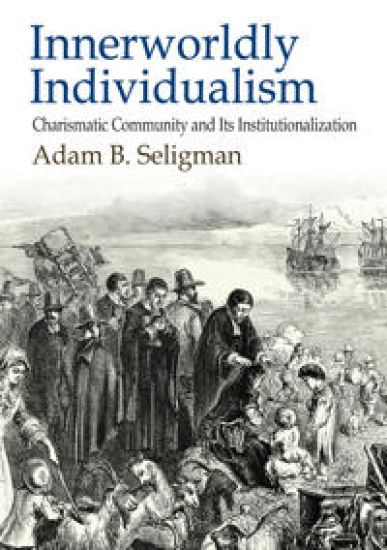
Innerworldly Individualism

Innerworldly Individualism

Adam B. Seligman

AldineTransaction
2016
nidottu
Inner worldly Individualism looks to colonial history, in particular, seventeenth-century New England, to understand the sources of modern nation building. Seligman analyses how cultural assumptions of collective identity and social authority emerged out of the religious beliefs of the first generation of settlers in New England. He goes on to examine how these assumptions crystallized three generations later into patterns of normative order, forming the foundation of an American consciousness. Seligman uses sociological research grounded in early American history as his laboratory, and does so in a highly original way.Seligman uses Max Weber's paradigm of sociological inquiry to explore how a combination of ideational and structural factors helped to develop modern conceptions of authority and collective identity among New England communities. Seligman addresses a number of significant issues, including social change, the mutual interaction and development of process and structure, and the role of charisma in the forging of a social order. His book profoundly increases our understanding of the ideological and social processes prevalent in early American history as well as their contemporary influence on civil identity.Inner worldly Individualism uniquely intertwines sociological study with cultural history. It uses American history to develop and elucidate problems of broad theoretical significance. Seligman's argument is bolstered by a close examination of concrete detail. His book will be of interest to anthropologists, sociologists, political theorists, and historians of American culture.
Living with Difference

Living with Difference

Adam B. Seligman; Rahel R. Wasserfall; David W. Montgomery

University of California Press
2016
sidottu
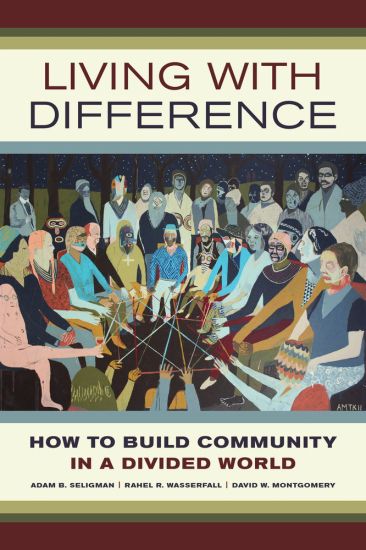
Whether looking at divided cities or working with populations on the margins of society, a growing number of engaged academics have reached out to communities around the world to address the practical problems of living with difference. This book explores the challenges and necessities of accommodating difference, however difficult and uncomfortable such accommodation may be. Drawing on fourteen years of theoretical insights and unique pedagogy, CEDAR-Communities Engaging with Difference and Religion-has worked internationally with community leaders, activists, and other partners to take the insights of anthropology out of the classroom and into the world. Rather than addressing conflict by emphasizing what is shared, Living with Difference argues for the centrality of difference in creating community, seeking ways not to overcome or deny differences but to live with and within them in a self-reflective space and practice. This volume also includes a manual for organizers to implement CEDAR's strategies in their own communities.
Living with Difference

Living with Difference

Adam B. Seligman; Rahel R. Wasserfall; David W. Montgomery

University of California Press
2016
pokkari
Whether looking at divided cities or working with populations on the margins of society, a growing number of engaged academics have reached out to communities around the world to address the practical problems of living with difference. This book explores the challenges and necessities of accommodating difference, however difficult and uncomfortable such accommodation may be. Drawing on fourteen years of theoretical insights and unique pedagogy, CEDAR-Communities Engaging with Difference and Religion-has worked internationally with community leaders, activists, and other partners to take the insights of anthropology out of the classroom and into the world. Rather than addressing conflict by emphasizing what is shared, Living with Difference argues for the centrality of difference in creating community, seeking ways not to overcome or deny differences but to live with and within them in a self-reflective space and practice. This volume also includes a manual for organizers to implement CEDAR's strategies in their own communities.
Rethinking Pluralism

Rethinking Pluralism

Adam B. Seligman; Robert P. Weller

Oxford University Press Inc
2012
nidottu
How can we order the world while accepting its enduring ambiguities? Rethinking Pluralism suggests a new approach to the problem of ambiguity and social order, which goes beyond the default modern position of 'notation' (resort to rules and categories to disambiguate). The book argues that alternative, more particularistic modes of dealing with ambiguity through ritual and shared experience better attune to contemporary problems of living with difference. It retrieves key aspects of earlier discussions of ambiguity evident in rabbinic commentaries, Chinese texts, and Greek philosophical and dramatic works, and applies those texts to modern problems. The book is a work of recuperation that challenges contemporary constructions of tradition and modernity. In this, it draws on the tradition of pragmatism in American philosophy, especially John Dewey's injunctions to heed the particular, the contingent and experienced as opposed to the abstract, general and disembodied. Only in this way can new forms of empathy emerge congruent with the deeply plural nature of our present experience. While we cannot avoid the ambiguities inherent to the categories through which we construct our world, the book urges us to reconceptualize the ways in which we think about boundaries - not just the solid line of notation, but also the permeable membrane of ritualization and the fractal complexity of shared experience.
Rethinking Pluralism

Rethinking Pluralism

Adam B. Seligman; Robert P. Weller

Oxford University Press Inc
2012
sidottu
How can we order the world while accepting its enduring ambiguities? Rethinking Pluralism suggests a new approach to the problem of ambiguity and social order, which goes beyond the default modern position of 'notation' (resort to rules and categories to disambiguate). The book argues that alternative, more particularistic modes of dealing with ambiguity through ritual and shared experience better attune to contemporary problems of living with difference. It retrieves key aspects of earlier discussions of ambiguity evident in rabbinic commentaries, Chinese texts, and Greek philosophical and dramatic works, and applies those texts to modern problems. The book is a work of recuperation that challenges contemporary constructions of tradition and modernity. In this, it draws on the tradition of pragmatism in American philosophy, especially John Dewey's injunctions to heed the particular, the contingent and experienced as opposed to the abstract, general and disembodied. Only in this way can new forms of empathy emerge congruent with the deeply plural nature of our present experience. While we cannot avoid the ambiguities inherent to the categories through which we construct our world, the book urges us to reconceptualize the ways in which we think about boundaries - not just the solid line of notation, but also the permeable membrane of ritualization and the fractal complexity of shared experience.
Ritual and Its Consequences

Ritual and Its Consequences

Adam B. Seligman; Robert P. Weller

Oxford University Press Inc
2008
sidottu
This pioneering, interdisciplinary work shows how rituals allow us to live in a perennially imperfect world. Drawing on a variety of cultural settings, the authors utilize psychoanalytic and anthropological perspectives to describe how ritual--like play--creates "as if" worlds, rooted in the imaginative capacity of the human mind to create a subjunctive universe. The ability to cross between imagined worlds is central to the human capacity for empathy. Ritual, they claim, defines the boundaries of these imagined worlds, including those of empathy and other realms of human creativity, such as music, architecture and literature. The authors juxtapose this ritual orientation to a "sincere" search for unity and wholeness. The sincere world sees fragmentation and incoherence as signs of inauthenticity that must be overcome. Our modern world has accepted the sincere viewpoint at the expense of ritual, dismissing ritual as mere convention. In response, the authors show how the conventions of ritual allow us to live together in a broken world. Ritual is work, endless work. But it is among the most important things that we humans do.
Modernity's Wager

Modernity's Wager

Adam B. Seligman

Princeton University Press
2003
pokkari
Adam Seligman, one of our most important social thinkers, continues the incisive critique of modernity he began in his previously acclaimed The Idea of Civil Society and The Problem of Trust. In this provocative new work of social philosophy, Seligman evaluates modernity's wager, namely, the gambit to liberate the modern individual from external social and religious norms by supplanting them with the rational self as its own moral authority. Yet far from ensuring the freedom of the individual, Seligman argues, "the fundamentalist doctrine of enlightened reason has called into being its own nemesis" in the forms of ethnic, racial, and identity politics. Seligman counters that the modern human must recover a notion of authority that is essentially transcendent, but which extends tolerance to those of other--or no--faiths. Through its denial of an authority rooted in an experience of transcendence, modernity fails to account for individual and collective moral action. First, deprived of a sacred source of the self, depictions of moral action are reduced to motives of self interest. Second, dismissing the sacred leaves the resurgence of religious movements unexplained. In this rigorous and imaginative study, Seligman seeks to discover a durable source of moral authority in a liberalized world. His study of shame, pride, collective guilt, and collective responsibility demonstrates the mutual relationship between individual responsibility and communal authority. Furthermore, Seligman restores the indispensable role of religious traditions--as well as the features of those traditions that enhance, rather than denigrate, tolerance. Sociologists, political theorists, moral philosophers, and intellectual historians will find Seligman's thesis enlightening, as will anyone concerned with the ethical and religious foundations of a tolerant society.
Market and Community

Market and Community

Mark I. Lichbach; Adam B. Seligman

Pennsylvania State University Press
2000
pokkari
Social order results from a complex interaction of individual actions, institutional structures, and cultural norms. But just how do they relate to one another, and is any one factor predominant? The answers that social science has provided reflect the competing paradigms of the rationalist, structuralist, and culturalist approaches.In this innovative book, two prominent social scientists coming from competing research traditions attempt to chart a course between them, drawing on their respective strengths to present a new model based on a classificatory scheme of market/community/contract/hierarchy. The discussion, which includes a closing dialogue between the authors, covers both methodological and empirical issues, with a review of classic theories of revolution and an analysis of the process of relegitimation following the French Revolution and the Dutch Revolt against the Hapsburgs.
The Problem of Trust

The Problem of Trust

Adam B. Seligman

Princeton University Press
2000
pokkari
The problem of trust in social relationships was central to the emergence of the modern form of civil society and much discussed by social and political philosophers of the early modern period. Over the past few years, in response to the profound changes associated with postmodernity, trust has returned to the attention of political scientists, sociologists, economists, and public policy analysts. In this sequel to his widely admired book, The Idea of Civil Society, Adam Seligman analyzes trust as a fundamental issue of our present social relationships. Setting his discussion in historical and intellectual context, Seligman asks whether trust--which many contemporary critics, from Robert Putnam through Francis Fukuyama, identify as essential in creating a cohesive society--can continue to serve this vital role. Seligman traverses a wide range of examples, from the minutiae of everyday manners to central problems of political and economic life, showing throughout how civility and trust are being displaced in contemporary life by new "external' system constraints inimical to the development of trust. Disturbingly, Seligman shows that trust is losing its unifying power precisely because the individual, long assumed to be the ultimate repository of rights and values, is being reduced to a sum of group identities and an abstract matrix of rules. The irony for Seligman is that, in becoming postmodern, we seem to be moving backward to a premodern condition in which group sanctions rather than trust are the basis of group life.
The Idea of Civil Society

The Idea of Civil Society

Adam B. Seligman

Princeton University Press
1995
pokkari
As the countries of East-Central Europe struggle to create liberal democracy and the United States and other Western nations attempt to rediscover their own tarnished civil institutions, Adam Seligman identifies the neglect of the idea of "civil society" as a central concern common to both cultures today. Two centuries after its origins in the Enlightenment, the idea of civil society is being revived to provide an answer to the question of how individuals can pursue their own interests while preserving the greater good of society and, similarly, how society can advance the interests of the individuals who comprise it. However, as Seligman shows, the erosion of the very moral beliefs and philosophical assumptions upon which the idea of civil society was founded makes its revival much more difficult than is generally recognized.
Innerworldly Individualism

Innerworldly Individualism

Adam B. Seligman

Transaction Publishers
1994
sidottu
Innerworldly Individualism looks to colonial history, in particular, seventeenth-century New England, to understand the sources of modern nation building. Seligman analyzes how cultural assumptions of collective identity and social authority emerged out of the religious beliefs of the first generation of settlers in New England. He goes on to examine how these assumptions crystallized three generations later into patterns of normative order, forming the foundation of an American consciousness. Seligman uses sociological research grounded in early American history as his laboratory, and does so in a highly original way.Seligman uses Max Weber's paradigm of sociological inquiry to explore how a combination of ideational and structural factors helped to develop modern conceptions of authority and collective identity among New England communities. Seligman addresses a number of significant issues, including social change, the mutual interaction and development of process and structure, and the role of charisma in the forging of a social order. His book profoundly increases our understanding of the ideological and social processes prevalent in early American history as well as their contemporary influence on civil identity.Innerworldly Individualism uniquely intertwines sociological study with cultural history. It uses American history to develop and elucidate problems of broad theoretical significance. Seligman's argument is bolstered by a close examination of concrete detail. His book will be of interest to anthropologists, sociologists, political theorists, and historians of American culture.