Kirjailija
Adam Gopnik
Kirjat ja teokset yhdessä paikassa: 30 kirjaa, julkaisuja vuosilta 2001-2025, suosituimpien joukossa S.j. Perelman: Writings (loa #346). Vertaile teosten hintoja ja tarkista saatavuus suomalaisista kirjakaupoista.
30 kirjaa
Kirjojen julkaisuhaarukka 2001-2025.
Adam Gopnik presents the very best of S. J. Perelman, America's zaniest humorist. S. J. Perelman (1904-1979) wrote for the Marx Brothers films Horse Feathers and Monkey Business and won an Oscar for his screenwriting on Around the World in Eighty Days, but he remains best known for his many sketches and essays penned for The New Yorker during its golden age of humor. In these short comic pieces--Perelman called them feuilletons--his penchant for wordplay, witticism, spoofery, self-deprecation, and plain zaniness are on full display. The New York Times once noted his ability in these magazine pieces to transform the common clich or figure of speech into an exploding cigar. Author and New Yorker staff writer Adam Gopnik has selected the very best of them, including his parodies of books and films, his biting social satire, autobiographical pieces, and a selection from the celebrated Cloudland Revisited series, in which Perelman reminisces nostalgically about books and movies encountered in youth before describing in his inimitable hyperkinetic style the rude shock of revisiting them as an adult. Also included in this volume are the acclaimed play The Beauty Part (1963) from Perelman's Broadway career; profiles of the Marx Brothers, Dorothy Parker, and his brother-in-law Nathanael West; a selection of letters written to correspondents such as Groucho Marx and Paul Theroux; and a garland of Perelman's witticisms strung together by Adam Gopnik.
From Ear-to-Ear recounts Steven Blier’s picaresque and entertaining road to a successful career as a collaborative pianist, bringing to life his partnerships with iconic performers like Renée Fleming, Susan Graham, Jessye Norman, Cecilia Bartoli and Lorraine Hunt Lieberson, and beloved mentors, including Alvin Epstein and Martha Schlamme. Drawing on his innovative work as a vocal coach and concert producer with his acclaimed New York Festival of Song, he takes readers deep into his artistic process. But Blier also tells a parallel story: his lifelong battle with a rare form of muscular dystrophy. Aided by his intense determination and wry sense of humour, Blier continues his life at the piano. As Adam Gopnik writes in his foreword, From Ear to Ear is “genuinely heroic, a testament to the power of music.”
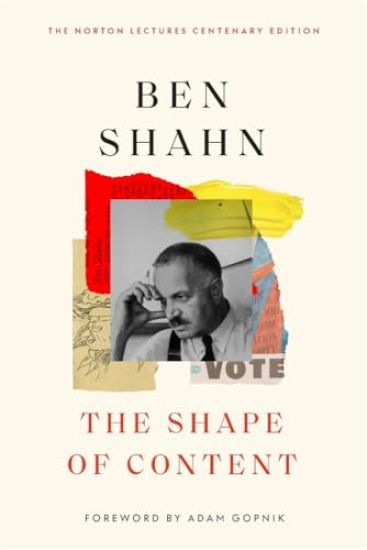
“The clearest, most forceful statement on art by an artist of our time that I have read.” —Frank Getlein, New RepublicAn illustrated guide to artistic creation from one of the twentieth century’s most provocative and expressive painters.Can art be taught? For the celebrated activist-painter Ben Shahn, the answer was a qualified yes. Any would-be artist can take a few courses and dip their toes in the water. But a true education goes far beyond the classroom.The Shape of Content, compiled from Shahn’s 1956–1957 Norton Lectures, appeals for artists to break the confines of formal instruction. In wide-ranging reflections on art history, the problems of form, and his own career, Shahn conveys the stubborn determination required to move beyond dilettantism and toward an authentic voice. But he delivers no easy formulas. Critics celebrate artists’ seemingly effortless moments of inspiration, yet genuine achievement is always the fruit of prodigious labor. To the perennial questions of “What shall I paint?” and “How shall I paint it?” Shahn replies: Live and think and try. Read endlessly, develop and test opinions, and above all, don’t stop painting.A figurative realist in an age of high abstraction and an unabashed leftist at the height of the Cold War, Shahn was never quite at home in his own time. The accessibility and popularity of his work, and his sometimes-unfashionable humanism, made him a frequent target of critics during his life. And yet it is precisely these features that have since cemented Shahn as a giant of twentieth-century art. Today, his lectures offer potent lessons for anyone who shares his belief in the power of art to change minds and contest injustice.
An incredible accordion-folded gift book that features a panoramic portrait of the island of Manhattan, seen from both the East River and the Hudson River The Manhattan skyline has always held a unique allure in the world’s imagination. At street level, the scale of the city is dynamic and shifting, from towering skyscrapers to intimate pocket parks and older side streets. At a certain distance, the outline of the city is revealed. Traveling the length of Manhattan by boat, along the two rivers that surround the island, photographer Laurent Dequick shows us the city unfurling in a spectacular accordion-folded book. On one side of the book we follow along a continuous panoramic view from the Hudson River; on the other we take in the view from the East River.Manhattan Skyline reveals a new look at New York City, featuring stunning photographs alongside captions to identify key landmarks and an index of the main buildings and districts. A foreword by Adam Gopnik sets the stage.
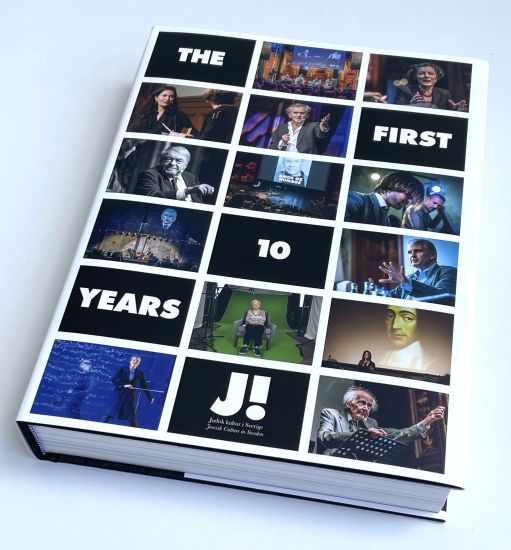
The first 10 years
Anders Hammarlund; Devin E. Naar; Amos Elon; Adam Gopnik; Eddy Portnoy; Jody Rosen; Stefanie Halpern; Eric Kandel; Christian Witt-Dörring; Fredric Bedoire; Allan Janik; Steven Beller; Per Svensson
Judisk Kultur i Sverige
2024
sidottu
The First Ten Years är en ambitiös sammanställning av de många uppmärksammade symposier, konferenser, konserter, litterära samtal, teatergästspel, samtal, läsningar, utställningar, böcker och mycket mera som kulturinstitutionen Judisk Kultur i Sverige har initierat och genomfört under de första tio åren. Boken innehåller texter från de internationella symposier som genomförts kring "Jewish Cities", som Berlin, New York, Wien och Thessaloniki. Därtill kommer en generös sammanställning av bilder från alla möten under åren, de många internationella gästerna som kommit till Sverige. Dessa inkluderar världsledande musiker, kompositörer och dirigenter. Nobelprisförfattare, framstående intellektuella och filmskapare. Därtill komiker, skådespelare, sångare, poeter och artister.Boken är redigerad av Lizzie Oved Scheja och Daniel Pedersen.Bland författarna återfinns Steven Beller, Allan Janik, Fredric Bedoire, Christian Witt-Dörring, Eric Kandel, Stefanie Halpern, Jody Rosen, Eddy Portnoy, Annie Polland, Daniel Soyer, David Denby, Adam Gopnik, Letty Cottin Pogrebin, Sandee Brawarsky, Tony Michels, Jackie Jakubowski, Amos Elon, Graeme Gilloch, Jay Howard Geller, Devin E. Naar and Anders Hammarlund Med texter av Hugo von Hofmannsthal, Moses Mendelssohn, Walter Benjamin, Ernst Bloch, Franz Hessel, Siegfrid Kracauer och Else Lasker-Schüler.Boken är rikligt illustrerad med hundratals färgfotografier.
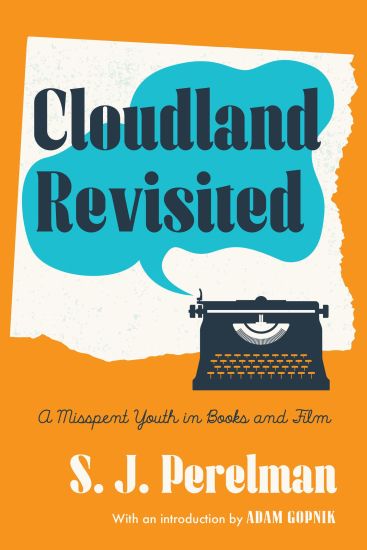
Gathered for the first time: one of America's great humorists revisits the books and movies from his youth--often with some embarassment--in this complete, 22-piece collection From October 1948 to October 1953, The New Yorker published humorist S. J. Perelman's "Cloudland Revisited" series: 22 reviews of once-popular books and silent films whose expiration dates had passed. All but forgotten even at the time, they were nonetheless part of Perelman's youth and made an indelible mark on him. In the comic genius's biting satire they live once again: Gertrude Atherton's sensationalist fantasy Black OxenSax Rohmer's supervillain blockbuster The Mystery of Dr. Fu-Manchuthe "underwater" silent film adaptation of Twenty Thousand Leagues under the SeaEdgar Rice Burrough's 1914 novel Tarzan of the Apesand George Barr McCutcheon's 1901 historical fantasy novel Graustark--the Game of Thrones of its era--which launched numerous sequels and film adaptations The complete series is collected here for the first time. With self-deprecating humor and frequent embarrassment, Perelman reflects on how rereading and rewatching brings us in contact with how we, like an old book or film, have both changed and remained the same. This paperback includes a tribute to Perelman's art by another beloved New Yorker writer, Adam Gopnik.
All That Happiness Is: Some Words on What Matters
Adam Gopnik
Liveright Publishing Corporation
2024
sidottu
Our society is obsessed with achievement. Young people are pushed toward the next test or the "best" grammar school, high school, or college they can get into. Adults push themselves toward the highest-paying, most prestigious jobs, seeking promotions and public recognition. As Adam Gopnik points out, the result is not so much a rat race as a rat maze, with no way out. Except one: to choose accomplishment over achievement. Achievement, Gopnik argues, is the completion of the task imposed from outside. Accomplishment, by contrast, is the end point of an engulfing activity one engages in for its own sake. From stories of artists, philosophers, and scientists to his own fumbling attempts to play Beatles songs on a guitar, Gopnik demonstrates that while self-directed passions sometimes do lead to a career, the contentment that flows from accomplishment is available to each of us. A book to read and return to at any age, All That Happiness Is offers timeless wisdom against the grain.
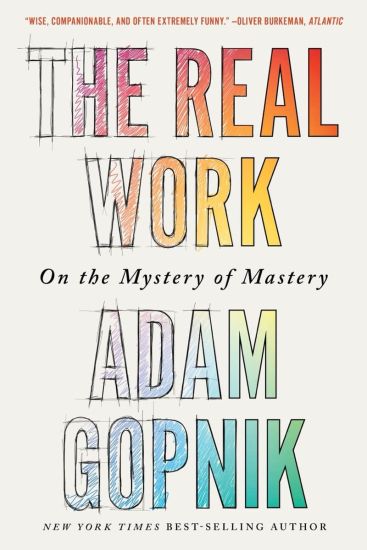
For decades now, Adam Gopnik has been one of our most beloved writers, a brilliantly perceptive critic of art, food, France, and more. But recently, he became obsessed by a more fundamental matter, one he had often meditated on in The New Yorker: How do masters learn their miraculous skill, whether it was drawing a museum-ready nude or baking a perfect sourdough loaf? How could anyone become so good at anything? There seemed to be a fundamental mystery to mastery. Was it possible to unravel it? In The Real Work--the term magicians use for the accumulated craft that makes for a great trick--Gopnik becomes a dedicated student of several masters of their craft: a classical painter, a boxer, a dancing instructor, a driving instructor, and others. Rejecting self-help bromides and bullet points, he nevertheless shows that the top people in any field share a set of common qualities and methods. For one, their mastery is always a process of breaking down and building up--of identifying and perfecting the small constituent parts of a skill and the combining them for an overall effect greater than the sum of those parts. For another, mastery almost always involves intentional imperfection--as in music, where vibrato, a way of not quite landing on the right note, carries maximum expressiveness. Gopnik's simplest and most invigorating lesson, however, is that we are surrounded by mastery. Far from rare, mastery is commonplace, if we only know where to look: from the parent who can whip up a professional strudel to the social worker who--in one of the most personally revealing passages Gopnik has ever written--helps him master his own demons. Spirited and profound, The Real Work will help you understand how mastery can happen in your own life--and, significantly, why each of us relentlessly seeks to better ourselves in the first place.
Bestselling author and New Yorker writer Adam Gopnik embarks on a wildly creative inquiry into perhaps the oldest question: how do we learn a new skill? For decades, Adam Gopnik has been one of our most beloved writers, a brilliantly perceptive critic of art, food, France, and more. But recently, he became obsessed by a fundamental matter: how did the people he was writing about learn their outlandish skill, whether it was drawing a nude or baking a sourdough loaf? In The Real Work-the term magicians use for the accumulated craft that makes for a great trick-Gopnik apprentices himself to an artist, a dancer, a boxer, and even a driving instructor (from the DMV), among others, trying his late-middle-age hand at things he assumed were beyond him. He finds that mastering a skill is a process of methodically breaking down and building up, piece by piece-and that true mastery, in any field, requires mastering other people's minds. Exuberant and profound, The Real Work is ultimately about why we relentlessly seek to better ourselves in the first place.
For decades now, Adam Gopnik has been one of our most beloved writers, a brilliantly perceptive critic of art, food, France, and more. But recently, he became obsessed by a more fundamental matter, one he had often meditated on in The New Yorker: How do masters learn their miraculous skill, whether it was drawing a museum-ready nude or baking a perfect sourdough loaf? How could anyone become so good at anything? There seemed to be a fundamental mystery to mastery. Was it possible to unravel it? In The Real Work--the term magicians use for the accumulated craft that makes for a great trick--Gopnik becomes a dedicated student of several masters of their craft: a classical painter, a boxer, a dancing instructor, a driving instructor, and others. Rejecting self-help bromides and bullet points, he nevertheless shows that the top people in any field share a set of common qualities and methods. For one, their mastery is always a process of breaking down and building up--of identifying and perfecting the small constituent parts of a skill and the combining them for an overall effect greater than the sum of those parts. For another, mastery almost always involves intentional imperfection--as in music, where vibrato, a way of not quite landing on the right note, carries maximum expressiveness. Gopnik's simplest and most invigorating lesson, however, is that we are surrounded by mastery. Far from rare, mastery is commonplace, if we only know where to look: from the parent who can whip up a professional strudel to the social worker who--in one of the most personally revealing passages Gopnik has ever written--helps him master his own demons. Spirited and profound, The Real Work will help you understand how mastery can happen in your own life--and, significantly, why each of us relentlessly seeks to better ourselves in the first place.
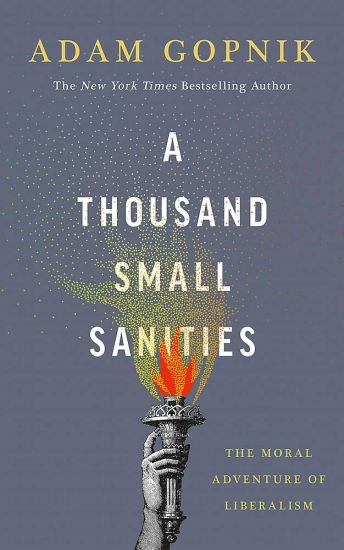
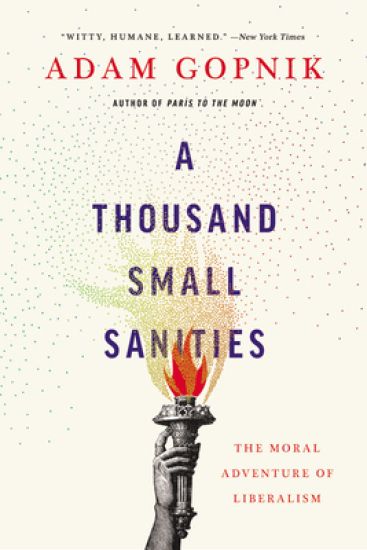
Inte sedan 1900-talets början har liberalismen varit så hårt angripen från både höger och vänster som i dag. Vår tids förtroendekris för liberala idéer och institutioner har skapat en kris för hela det demokratiska systemet.Tusen små framsteg är ett manifest som hämtar kraft ur de röster som skapade och utvecklade den liberala tanketraditionen, från Montaigne och Mill till medborgarrättsrörelsen. Mot bakgrund av detta framhäver Adam Gopnik att liberalismen inte är någon form av medelväg. Vad den vill åstadkomma – och i praktiken har åstadkommit – är radikala förändringar med humana medel. Det gör den till ett av mänsklighetens största moraliska äventyr. I detta auktoritära tidevarv hänger vår frihet att forma våra egna liv på dess fortlevnad.Med ett förord av Bengt Westerberg.
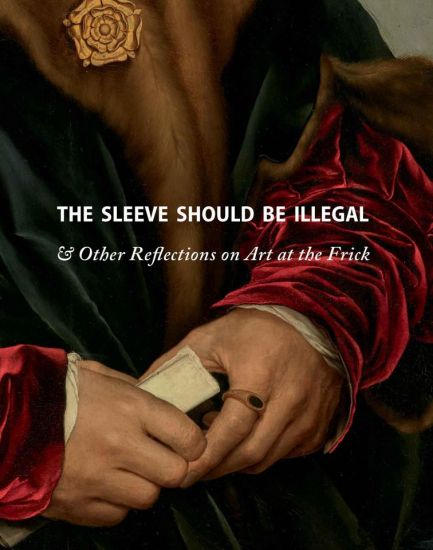
Explore the treasures of The Frick Collection through the eyes of a diverse group of contemporary writers, artists and other cultural figures, from George Condo, Lydia Davis and Julie Mehretu to Abbi Jacobson and Edmund White A cultural haven for museumgoers in New York and beyond, The Frick Collection holds masterpieces by some of the most celebrated artists in the Western tradition—among them Bellini, Gainsborough, Goya, Rembrandt, Vermeer and Whistler—installed in a Gilded Age mansion on Fifth Avenue. This book includes 61 reflections on the Frick’s preeminent collection, with the contributors writing about an artwork that has personal significance, sharing how it has moved, challenged, puzzled or inspired them. Each text is accompanied by an illustration of the artwork. For example, writer Jonathan Lethem tells how he started going to the Frick as a teenager, to gaze at Hans Holbein’s portraits of Thomas Cromwell and Sir Thomas More. Historian Simon Schama revels in Turner’s Mortlake Terrace: Early Summer Morning, which reminds him of his own childhood growing up next to the River Thames. This engaging anthology attests to the inspirational power of art and reminds us that there is no one way to look. Authors include: André Aciman, Ida Applebroog, Firelei Báez, Victoria Beckham, Tom Bianchi, Carter Brey, Rosanne Cash, Jerome Charyn, Roz Chast, George Condo, Gregory Crewdson, Joan K. Davidson, Lydia Davis, Edmund de Waal, Rineke Dijkstra, Mark Doty, Lena Dunham, Stephen Ellcock, Donald Fagen, Rachel Feinstein and John Currin, Teresita Fernández, Bryan Ferry, Michael Frank, Moeko Fujii, Adam Gopnik, Vivian Gornick, Agnes Gund, Carolina Herrera, Alexandra Horowitz, Abbi Jacobson, Bill T. Jones, Maira Kalman, Nina Katchadourian, Susanna Kaysen, Jonathan Lethem, Kate D. Levin, David Masello, Julie Mehretu, Daniel Mendelsohn, Rick Meyerowitz, Duane Michals, Susan Minot, Mark Morris, Nico Muhly, Vik Muniz, Wangechi Mutu, Catherine Opie, Jed Perl, Taylor M. Polites, Diana Rigg, Jenny Saville, Simon Schama, Lloyd Schwartz, Annabelle Selldorf, Arlene Shechet, Judith Thurman, Colm Tóibín, Chris Ware, Darren Waterston, Edmund White and Robert Wilson.
'WITTY, HUMANE, LEARNED' NEW YORK TIMESThe New York Times-bestselling author offers a stirring defence of liberalism against the dogmatisms of our timeNot since the early twentieth century has liberalism, and liberals, been under such relentless attack, from both right and left. The crisis of democracy in our era has produced a crisis of faith in liberal institutions and, even worse, in liberal thought.A Thousand Small Sanities is a manifesto rooted in the lives of people who invented and extended the liberal tradition. Taking us from Montaigne to Mill, and from Middlemarch to the civil rights movement, Adam Gopnik argues that liberalism is not a form of centrism, nor simply another word for free markets, nor merely a term denoting a set of rights. It is something far more ambitious: the search for radical change by humane measures. Gopnik shows us why liberalism is one of the great moral adventures in human history--and why, in an age of autocracy, our lives may depend on its continuation.
A stirring defense of liberalism against the dogmatisms of our time from an award-winning and New York Times bestselling author.Not since the early twentieth century has liberalism, and liberals, been under such relentless attack, from both right and left. The crisis of democracy in our era has produced a crisis of faith in liberal institutions and, even worse, in liberal thought. A Thousand Small Sanities is a manifesto rooted in the lives of people who invented and extended the liberal tradition. Taking us from Montaigne to Mill, and from Middlemarch to the civil rights movement, Adam Gopnik argues that liberalism is not a form of centrism, nor simply another word for free markets, nor merely a term denoting a set of rights. It is something far more ambitious: the search for radical change by humane measures. Gopnik shows us why liberalism is one of the great moral adventures in human history -- and why, in an age of autocracy, our lives may depend on its continuation.
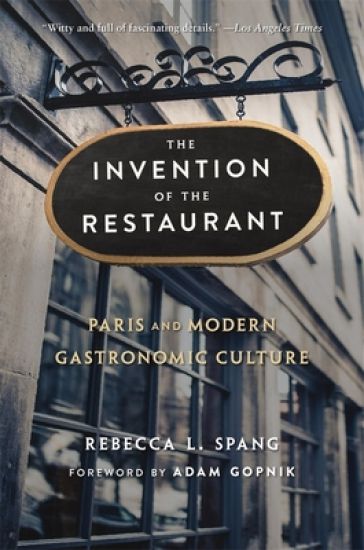
Winner of the Louis Gottschalk PrizeWinner of the Thomas J. Wilson Memorial Prize“Witty and full of fascinating details.”—Los Angeles TimesWhy are there restaurants? Why would anybody consider eating alongside perfect strangers in a loud and crowded room to be an enjoyable pastime? To find the answer, Rebecca Spang takes us back to France in the eighteenth century, when a restaurant was not a place to eat but a quasi-medicinal bouillon not unlike the bone broths of today.This is a book about the French revolution in taste—about how Parisians invented the modern culture of food, changing the social life of the world in the process. We see how over the course of the Revolution, restaurants that had begun as purveyors of health food became symbols of aristocratic greed. In the early nineteenth century, the new genre of gastronomic literature worked within the strictures of the Napoleonic state to transform restaurants yet again, this time conferring star status upon oysters and champagne.“An ambitious, thought-changing book…Rich in weird data, unsung heroes, and bizarre true stories.”—Adam Gopnik, New Yorker“[A] pleasingly spiced history of the restaurant.”—New York Times“A lively, engrossing, authoritative account of how the restaurant as we know it developed…Spang is…as generous in her helpings of historical detail as any glutton could wish.”—The Times
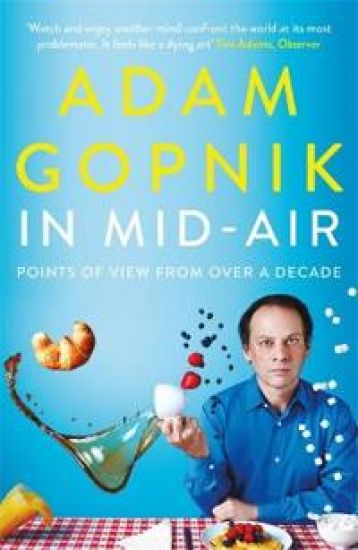
'Engaging, witty, thoughtful, clever, casual, ebullient, erudite and thoroughly modern' Spectator'A dazzling talent - hilarious, winning and deft' Malcolm Gladwell In Mid-Air is a collection of short essays by the acclaimed writer and speaker, Adam Gopnik. Known for his ability to perceive 'the whole world in a grain of sand', he uses this format to take a dizzying range of subjects and intricately explore their meaning to our lives - as people, as citizens and as families. From how he works so that his daughter can have holes in her clothes, to why appropriation is more empowering than oppressing; from French sex to binge-watching TV, from the secret of a happy marriage to why we should mention the war - each topic is illuminated by his erudition and wit. As in their original form on the radio, Gopnik's essays - each one a pleasure garden of wry confessions, self-deprecating asides, wordplay and striking insights - feel like the most intimate of conversations between writer and reader; yet at the same time they capture a public forum of pithy debate and tender persuasion. Above all, In Mid-Air initiates a sense of wonder in the ordinary that yearns to be shared.
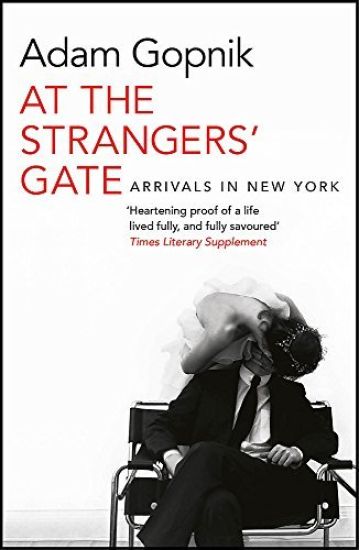
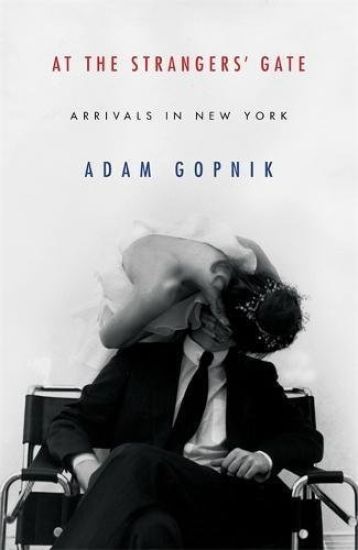
'A dazzling talent' Malcolm GladwellWhen Adam Gopnik and his soon-to-be-wife, Martha, left the comforts of home in Montreal for New York, the city then, much like today, was a pilgrimage site for the young, the arty, and the ambitious. But it was also becoming a city of greed, where both life's consolations and its necessities were increasingly going to the highest bidder. At the Strangers' Gate builds a portrait of this particular moment in New York through the story of this couple's journey--from their excited arrival as aspiring artists to their eventual growth into a New York family. Gopnik transports us to his tiny basement room on the Upper East Side, and later to SoHo, where he captures a unicorn: an affordable New York loft. He takes us through his professional meanderings, from graduate student-cum-library-clerk to the corridors of Conde Nast and the galleries of MoMA. Between tender and humorous reminiscences, including affectionate portraits of Richard Avedon, Robert Hughes, and Jeff Koons, among many others, Gopnik discusses the ethics of ambition, the economy of creative capital, and the peculiar anthropology of art and aspiration in New York, then and now.
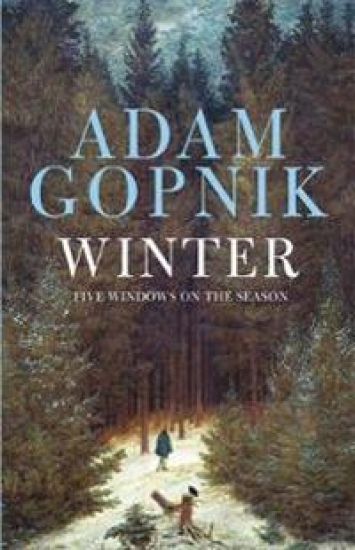
Winter takes us on an intimate tour of the artists, poets, composers, writers, explorers, scientists and thinkers who helped shape a new and modern idea of winter. We learn how literature heralds the arrival of the middle class; how snow science leads to existential questions of God and our place in the world; how the race to the poles marks the human drive to imprint meaning on a blank space. Offering a kaleidoscopic take on the season, Winter is a homage to an idea of a season and a journey through the modern imagination.
From the hit podcast and radio show, a collection of soul-bearing stories from The Moth's archives. A wedding toast hone horribly awry. A rapper's obsession with a Sarah McLachlan song. A death-defying stunt in a bullring. The fight to save Mother Teresa's life. These are the spellbinding tales from The Moth's storytellers. Inspired by friends telling stories on a porch, The Moth was born in small-town Georgia, garnered a cult following in New York City, and then rose to national acclaim with the wildly popular podcast and Peabody Award-winning weekly public radio show The Moth Radio Hour. A beloved read for Moth enthusiasts and all who savor well-told, hilarious, and heartbreaking stories.