Kirjojen hintavertailu. Mukana 12 657 676 kirjaa ja 12 kauppaa.

Kirjailija

Adam Jaworski

Kirjat ja teokset yhdessä paikassa: 5 kirjaa, julkaisuja vuosilta 1986-2010, suosituimpien joukossa Linguistic Picture of Women's Position in Society. Vertaile teosten hintoja ja tarkista saatavuus suomalaisista kirjakaupoista.

5 kirjaa

Kirjojen julkaisuhaarukka 1986-2010.

Tourism Discourse

Tourism Discourse

Adam Jaworski

Palgrave Macmillan
2010
sidottu
Tourism Discourse offers new insights into the role of spoken, written and visual discourse in representing and producing tourism as a global cultural industry. With a view to the interplay between the symbolic and economic orders of global mobility, the book is grounded in empirically-based studies of key tourism genres.
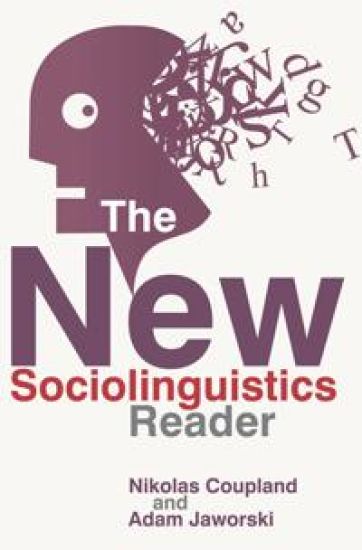
The New Sociolinguistics Reader

The New Sociolinguistics Reader

Nikolas Coupland; Adam Jaworski

Red Globe Press
2009
nidottu
Fully updated and expanded for the second edition, this core textbook provides rigorous coverage of the key themes and debates at the cutting edge of sociolinguistics research and brings together many of the most influential scholars in the field. Comprising six distinctive parts and almost fifty individual chapters, it introduces students to a wealth of issues in sociolinguistics, including refashioning linguistic identities, code-switching, language rights and the social functions of small talk. Chapters are richly illustrated with examples and informed by the latest scholarly debates. This is an essential companion for all undergraduates and postgraduates involved in the study of sociolinguistics. It will be an ideal resource for lecturers teaching modules on topics such as language variation, language and gender, language attitudes and multilingualism.
The New Sociolinguistics Reader

The New Sociolinguistics Reader

Nikolas Coupland; Adam Jaworski

Red Globe Press
2009
sidottu
Fully updated and expanded for the second edition, this core textbook provides rigorous coverage of the key themes and debates at the cutting edge of sociolinguistics research and brings together many of the most influential scholars in the field. Comprising six distinctive parts and almost fifty individual chapters, it introduces students to a wealth of issues in sociolinguistics, including refashioning linguistic identities, code-switching, language rights and the social functions of small talk. Chapters are richly illustrated with examples and informed by the latest scholarly debates. This is an essential companion for all undergraduates and postgraduates involved in the study of sociolinguistics. It will be an ideal resource for lecturers teaching modules on topics such as language variation, language and gender, language attitudes and multilingualism.
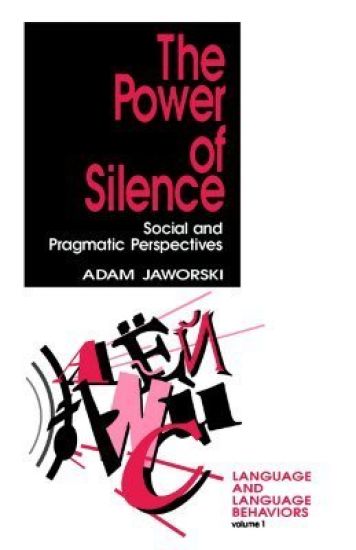
The Power of Silence

The Power of Silence

Adam Jaworski

SAGE Publications Inc
1993
nidottu
Adam Jaworski tells his reader in the preface to The Power of Silence that he wants 'to show silence as a rich and powerful tool of communication and to provide some clues as to how it works in different areas of human communication and how it can be accounted for by various theories.' Jaworski does this, and more, in this very extensive exploration of silence as a means of communication. . . The gems of Jaworski's discussion come through his examples, which are woven together from his own Polish background and an astute coverage of cross-cultural (Polish, Amish, Apache), feminist and mass media research on silence. The book covers a broad scope of orientations: linguistic, psycholinguistic, paralinguistic, ethnographic, pragmatic, literary, and artistic. As such, The Power of Silence has broad appeal to anyone who deals even marginally with communication issues, especially teachers, who will appreciate his coverage of silence in the classroom. . . Jaworski's book serves the necessary function of bringing together various types of research on silence into one volume. . . . He has accomplished his task. It would not be a mistake to recommend the book to students as an introduction to silence and communication. Jaworski's full bibliography, and the book overall, is an invaluable resource for scholars of linguistics, communication theory, discourse analysis, political communication, literature, the rhetoric of art, intercultural communication, women and language, and mass media. --Discourse & Society Is silence the antithesis of communication? Or is it simply another way in which humans exchange information? In this theoretical yet accessible account of a variety of different aspects of silence, Jaworski contends that silence is an extremely powerful communicative tool. This innovative volume includes a research overview that shows the influence of related work in the fields of media studies, politics, gender studies, aesthetics, and literature. For example, one section of the book illustrates the power of silencing in politics; another chapter emphasizes the importance of silence beyond linguistics and politics in terms of artistic expression. By incorporating the work of a wide array of theorists--such as Brown and Levinson (politeness), Leach (taboo), Rosch (prototypes), and Sperber and Wilson (relevance)--Jaworski keeps his approach intentionally broad and eclectic in order to explore the concept of silence as a rich and evocative aspect of communication. The author argues that, in theoretically pragmatic terms, silence can be accounted for by the same principles as those of speech. He then investigates new ways of studying socially-motivated language, particularly emphasizing silence and the silenced. By applying several frameworks of analyses to both linguistic and non-linguistic dimensions of silence, Jaworski contributes to the integrative study of culture, of which language is an integral part. Researchers, professors, and advanced students throughout communication studies and sociolinguistics will find this volume to be an innovative and essential resource.
Linguistic Picture of Women's Position in Society
A discussion of English and Polish gender systems, generic words, forms of address, referring expressions and other topics, provides evidence that in these two languages males and females are not treated equally. The main concern of this book is linguistic sexism. The data indicate that speakers of both languages treat male as the norm, attribute less desirable qualities to the speech and behaviour of women, stereotype women more than men, or simply make women linguistically invisible members of society.