

Kirjailija
Adam Kahane
Kirjat ja teokset yhdessä paikassa: 10 kirjaa, julkaisuja vuosilta 2007-2026, suosituimpien joukossa Mit Feinden verhandeln. Vertaile teosten hintoja ja tarkista saatavuus suomalaisista kirjakaupoista.
10 kirjaa
Kirjojen julkaisuhaarukka 2007-2026.
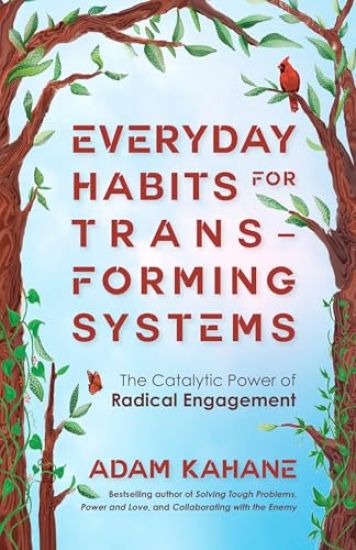
Revolutionize Your World: The Power of Radical Engagement In a world crying out for change, Everyday Habits for Transforming Systems is your guidebook for action. Adam Kahane, the best-selling author of Collaborating with the Enemy and a global authority on solving tough problems, delivers game-changing advice for anyone ready to make a difference. This is a manifesto for world-changers. Drawing on decades of work with leaders from national and organizational presidents to front-line managers and grass-roots activists, Kahane distills seven potent habits that enable ordinary citizens to become extraordinary agents of transformation. Imagine: Cracking open entrenched systems with simple actionsCollaborating across deep divides to achieve the impossibleUncovering hidden leverage points others missPersevering through setbacks with renewed purpose and energyThrough riveting real-world examples, Kahane shows how these habits have sparked revolutions, brokered peace, and reimagined societies. Now he's handing you the keys to that transformative power. Whether you're battling climate change, reinventing healthcare, or simply trying to make your community better, this book is your essential guide. It's time to stop feeling powerless and start creating the change you want to see. Don't just survive in a changing world--step in to transform it.
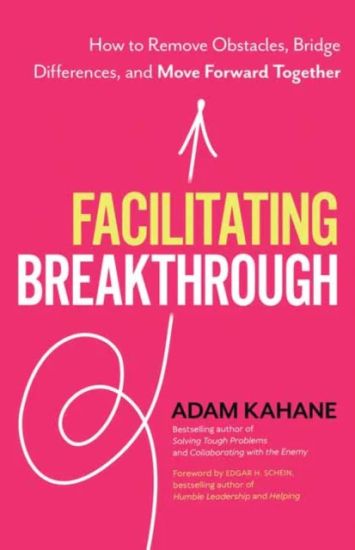
This book introduces a new approach to solving any stubborn, intractable conflict, based on the author's experiences bringing people together in international hot spots like South Africa, Columbia, India, and more. People today face increasing complexity and decreasing control. They need to work with more people across more divides. But the traditional ways of advancing--subsuming individual interests to the good of the whole, or providing total autonomy for all stakeholders to work out their own solution--aren't adequate to resolving these difficult situations. Drawing on his experiences working with Black people and white people in post-apartheid in South Africa, First Nations people and the government in Canada, multiple stakeholders in war-torn Columbia, and many more, Kahane describes what he calls transformative facilitation. It combines the two approaches, cycling back and forth between them. The facilitator pays careful attention to what is going on in the group and decides which approach will work best at any given moment. Adam Kahane describes precisely what the facilitator needs to watch for and how to manage the delicate balance between a focus on the collective and a focus on specific stakeholder needs. This book is for anyone who helps people collaborate in any setting. Not only does it offer a way to facilitate breakthroughs, it is a breakthrough in itself.

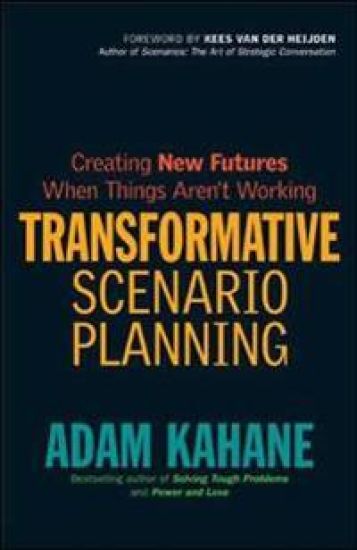
Transformative Scenario Planning: Working Together to Change the Future
Adam Kahane
Berrett-Koehler
2012
nidottu
People who are trying to solve tough economic, social, or environmental problems often find themselves frustratingly stuck. They cannot solve their problems in their current context; the larger system within which they are operating is too unstable or unfair or unsustainable. They cannot transform this system on their own or by working only with their friends or colleagues; the system is too complex to be grasped or shifted by any one person or organization or sector. And the actors whose cooperation would be necessary to transform the system don't understand or agree with or trust each other enough to work together. This book describes a powerful new methodology for dealing with this increasingly common set of challenges. "Transformative Scenario Planning "is a creative and constructive way for actors from across a whole system to work together to transform that system. It is a way for them to get unstuck and to move forward on solving their tough problems."Transformative Scenario Planning" takes the well-established methodology of adaptive scenario planning--rigorously constructing a set of stories of alternative possible futures--and turns it on its head. It uses scenarios not only to understand and adapt to the future but also to challenge and change it. It offers a way for us to transform ourselves and our relationships with one another and thereby to transform the systems of which we are part.

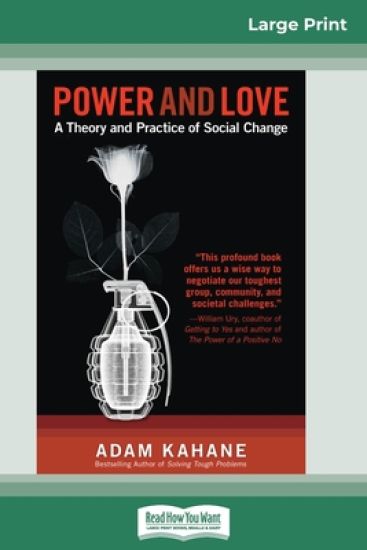
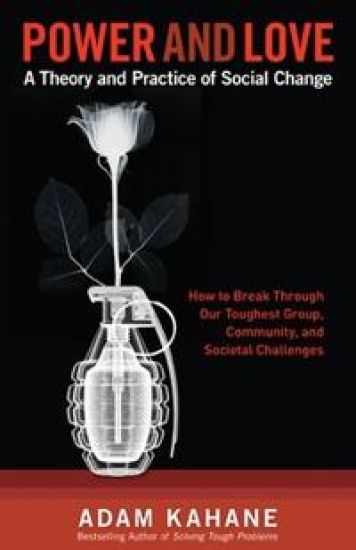
War is no way to resolve our most problematic group, community, and societal issues, but neither is a peace that simply sweeps our problems under the rug. To create lasting change we have to learn to work fluidly with two distinct, fundamental drives that are in tension: power the single-minded desire to achieve one's solitary purpose; and love the drive towards unity. They are seemingly contradictory but in fact complimentary. As Martin Luther King put it, "Power without love is reckless and abusive, and love without power is sentimental and anemic." Using revealing stories from complex situations he has been involved in all over the world the Middle East, South Africa, Europe, India, Guatemala, the Philippines, Australia, Canada and the United States Kahane reveals how to dynamically balance these two forces. Just as when we are toddlers we learn to shift from one foot to the other to move ourselves forward, so we can learn to shift back and forth between power and love in order to move society forward.

Tough problems usually don't get solved peacefully. They either don't get solved at all - they get stuck - or they get solved by force. These frustrating and frightening outcomes occur all the time. Families replay the same argument over and over, or a parent lays down the law. Organizations keep returning to a familiar crisis, or a boss decrees a new strategy. Communities split over a controversial issue, or a politician dictates the answer. Countries negotiate to a stalemate, or they go to war. Either the people involved in a problem can't agree on what the solution is, or the people with power - authority, money, guns - impose their solution on everyone else..The way we talk and listen expresses our relationship with the world. When we fall into the trap of telling and of not listening, we close ourselves off from being changed by the world and we limit ourselves to being able to change the world only by force. But when we talk and listen with an open mind and an open heart and an open spirit, we bring forth our better selves and a better world.
Solving Tough Problems: An Open Way of Talking, Listening, and Creating New Realities
Adam Kahane
Berrett-Koehler
2007
nidottu
Adam Kahane spent years working in the world's hotspots, and came away with a new understanding of how to resolve conflict in a way that seems reasonable - and doable - to all parties. The result is Solving Tough Problems. Written in a relaxed, persuasive style, this is not a "how-to" book with glib answers, but rather, a very personal story of the author's progress from a young "expert" convinced of the need to provide cold, "correct" answers to an effective facilitator of positive change - by learning how to create environments that enable new ideas and creative solutions to emerge. The book explores the connection between individual learning and institutional change, and how leaders can move beyond politeness and formal statements, beyond routine debate and defensiveness, toward deeper and more productive dialogue. Both tough and inspiring, the book explores models, technologies, and examples that foster and facilitate "dialogues of the heart."