Kirjojen hintavertailu. Mukana 12 514 574 kirjaa ja 12 kauppaa.

Kirjailija

Adam Michnik

Kirjat ja teokset yhdessä paikassa: 6 kirjaa, julkaisuja vuosilta 1986-2015, suosituimpien joukossa Letters from Freedom. Vertaile teosten hintoja ja tarkista saatavuus suomalaisista kirjakaupoista.

6 kirjaa

Kirjojen julkaisuhaarukka 1986-2015.

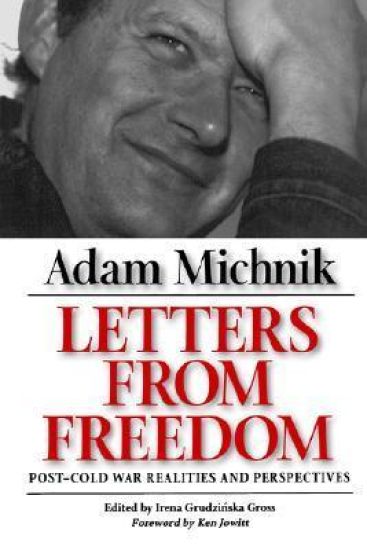
Letters from Freedom

Letters from Freedom

Adam Michnik; Ken Jowitt

University of California Press
1998
pokkari
A hero to many, Polish writer Adam Michnik ranks among today's most fearless and persuasive public figures. His imprisonment by Poland's military regime in the 1980s did nothing to quench his outpouring of writings, many of which were published in English as "Letters from Prison". Beginning where that volume ended, "Letters from Freedom" finds Michnik briefly in prison at the height of the 'cold civil war' between authorities and citizens in Poland, then released. Through his continuing essays, articles, and interviews, the reader can follow all the momentous changes of the last decade in Poland and East-Central Europe. Some of the writings have appeared in English in various publications; most are translated here for the first time. Michnik is never detached. His belief that people can get what they want without hatred and violence has always translated into action, and his actions, particularly the activity of writing, have required his contemporaries to think seriously about what it is they want. His commitment to freedom is absolute, but neither wild-eyed nor humorless; with a characteristic combination of idealism and pragmatism, Michnik says, 'In the end, politics is the art of foreseeing and implementing the possible'. Michnik's blend of conviction and political acumen is perhaps most vividly revealed in the interviews transcribed in the book, whether he is the subject of the interview or is conducting a conversation with Czeslaw Milosz, Vaclav Havel, or Wojciech Jaruzelski. These face-to-face exchanges tell more about the forces at work in contemporary Eastern Europe than could any textbook. Sharing Michnik's intellectual journey through a tumultuous era, we touch on all the subjects important to him in this wide-ranging collection and find they have importance for everyone who values conscience and responsibility. In the words of Jonathan Schell, 'Michnik is one of those who bring honor to the last two decades of the twentieth century'.
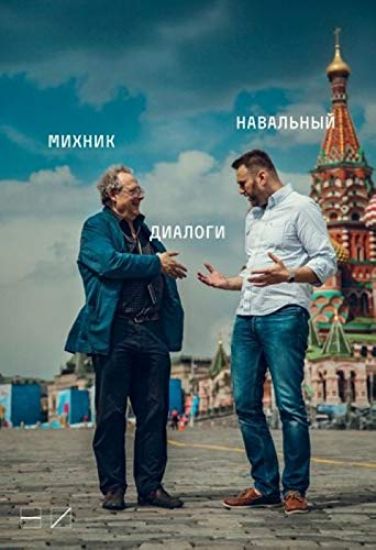
Mikhnik. Navalnyj. Dialogi

Mikhnik. Navalnyj. Dialogi

Aleksej Navalnyj; Adam Michnik

Novoe izdatelstvo
2015
nidottu
Alexei Navalny, Russian opposition firebrand, and Adam Michnik, Polish thinker and seasoned activist, take a walk in Red Square, Moscow, to talk about Poland's struggle for independence from the USSR, the collapse of the Soviet empire, and nothing less than the future of Russia. From dissidents to solidarity, Michnik talks animatedly about battling the 'salami' tactics of the old Polish communist regime. Step by step, beneath the Kremlin walls, Navalny is looking for parallels. How did a small group of opposition-minded Poles come to form a ten-million-strong political movement? 'Our strength lay in our solidarity,' says Michnik. Navalny knows what he's up against: 'Putin's main weapon is his ability to bribe the population.' But he also knows his fellow countrymen, for there is 'no one in the country who approves of palace-buying officials.' They pass by Lenin's tomb many times, searching for a way forward. When it's much easier to talk revolution than to actually make it happen, how do you breach the walls of the Kremlin? Here is a clarion call. The blueprint for a new Russia.In Russian language.
The Art of Peacemaking

The Art of Peacemaking

István Bibó; Adam Michnik

Yale University Press
2015
sidottu
István Bibó (1911–1979) was a Hungarian lawyer, political thinker, prolific essayist, and minister of state for the Hungarian national government during the Hungarian Revolution of 1956. This magisterial compendium of Bibó’s essays introduces English-speaking audiences to the writings of one of the foremost theorists and psychologists of twentieth-century European politics and culture. Elegantly translated by Péter Pásztor and with a scholarly introduction by Iván Zoltán Dénes, the essays in this volume address the causes and fallout of European political crises, postwar changes in the balance of power among countries, and nation-building processes.
The Trouble with History

The Trouble with History

Adam Michnik; James Davison Hunter

Yale University Press
2014
sidottu
A brilliant meditation on politics, morality, and history from one of the most courageous and controversial authors of our age Renowned Eastern European author Adam Michnik was jailed for more than six years by the communist regime in Poland for his dissident activities. He was an outspoken voice for democracy in the world divided by the Iron Curtain and has remained so to the present day. In this thoughtful and provocative work, the man the Financial Times named “one of the 20 most influential journalists in the world” strips fundamentalism of its religious component and examines it purely as a secular political phenomenon. Comparing modern-day Poland with postrevolutionary France, Michnik offers a stinging critique of the ideological “virus of fundamentalism” often shared by emerging democracies: the belief that, by using techniques of intimidating public opinion, a state governed by “sinless individuals” armed with a doctrine of the only correct means of organizing human relations can build a world without sin. Michnik employs deep historical analysis and keen political observation in his insightful five-point philosophical meditation on morality in public life, ingeniously expounding on history, religion, moral thought, and the present political climate in his native country and throughout Europe.
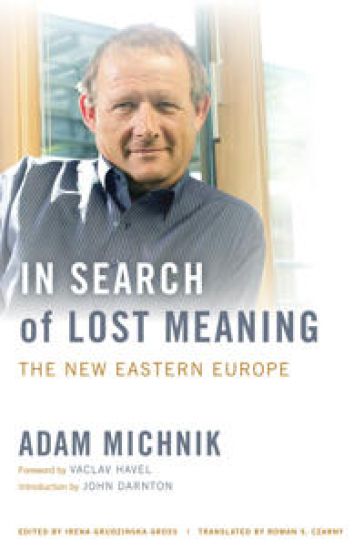
In Search of Lost Meaning

In Search of Lost Meaning

Adam Michnik; Vaclav Havel

University of California Press
2011
sidottu
In this new collection of essays, Adam Michnik - one of Europe's leading dissidents - traces the post-cold-war transformation of Eastern Europe. He writes again in opposition, this time to post-communist elites and European Union bureaucrats. Composed of history, memoir, and political critique, "In Search of Lost Meaning" shines a spotlight on the changes in Poland and the Eastern Bloc in the post-1989 years. Michnik asks what mistakes were made and what we can learn from climactic events in Poland's past, in its literature, and the histories of Central and Eastern Europe. He calls attention to pivotal moments in which central figures like Lech Walesa and political movements like Solidarity came into being, how these movements attempted to uproot the past, and how subsequent events have ultimately challenged Poland's enduring ethical legacy of morality and liberalism. Reflecting on the most recent efforts to grapple with Poland's Jewish history and residual guilt, this profoundly important book throws light not only on recent events, but also on the thinking of one of their most important protagonists.
Letters From Prison and Other Essays

Letters From Prison and Other Essays

Adam Michnik; Czeslaw Milosz

University of California Press
1986
pokkari
Among the voices that speak to us from Poland today, the most important may be that of Adam Michnik. Michnik now sits in a jail belonging to the totalitarian regime, yet his first concern--and herein lies one of the keys to his thinking, and one should add, to his character--is with the quality of his own conduct, which, together with teh conduct of other victims of the present situation, will, he is sure, one day set the tone for whatever political system follows the totalitarian debacle. His essays are the most valuable guide we have to the origins of the revolution, and, more particularly, to its innovative practices.