Kirjojen hintavertailu. Mukana 12 573 896 kirjaa ja 12 kauppaa.

Kirjailija

Adam T. Smith

Kirjat ja teokset yhdessä paikassa: 6 kirjaa, julkaisuja vuosilta 2003-2026, suosituimpien joukossa Heritage Forensics. Vertaile teosten hintoja ja tarkista saatavuus suomalaisista kirjakaupoista.

Mukana myös kirjoitusasut: Adam T Smith

6 kirjaa

Kirjojen julkaisuhaarukka 2003-2026.

Heritage Forensics

Heritage Forensics

Lori Khatchadourian; Adam T. Smith; Ian Lindsay; Husik Ghulyan

CORNELL UNIVERSITY PRESS
2026
pokkari
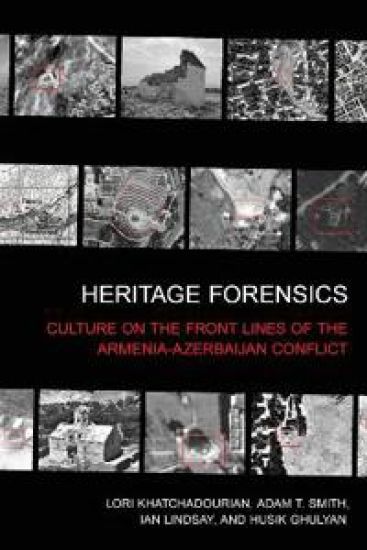
Heritage Forensics introduces a new framework for investigating cultural heritage caught up in war, ethnic cleansing, and secrecy. The volume combines satellite-based spatial analysis with humanistic research and humanitarian concern to document the impact of the protracted conflict between Armenian and Azerbaijan on the medieval and modern heritagescape of the South Caucasus. Drawing on the findings of Caucasus Heritage Watch, the authors demonstrate how cultural erasure, looting, and violence have inflicted harm on historical sites and the descendant communities for whom they hold enduring significance. Out of the forensic materials provided by the Nagorno-Karabakh Wars, Lori Khatchadourian, Adam T. Smith, Ian Lindsay, and Husik Ghulyan offer a reflexive approach for bearing witness to abuses of cultural heritage that emphasizes historical and political context and the careful use of powerful technologies in an era of post-truths. Heritage Forensics establishes a model for investigating cultural heritage threatened by political violence and is an invaluable resource for scholars, journalists, activists, and policy makers alike.
Heritage Forensics

Heritage Forensics

Lori Khatchadourian; Adam T. Smith; Ian Lindsay; Husik Ghulyan

CORNELL UNIVERSITY PRESS
2026
sidottu
Heritage Forensics introduces a new framework for investigating cultural heritage caught up in war, ethnic cleansing, and secrecy. The volume combines satellite-based spatial analysis with humanistic research and humanitarian concern to document the impact of the protracted conflict between Armenian and Azerbaijan on the medieval and modern heritagescape of the South Caucasus. Drawing on the findings of Caucasus Heritage Watch, the authors demonstrate how cultural erasure, looting, and violence have inflicted harm on historical sites and the descendant communities for whom they hold enduring significance. Out of the forensic materials provided by the Nagorno-Karabakh Wars, Lori Khatchadourian, Adam T. Smith, Ian Lindsay, and Husik Ghulyan offer a reflexive approach for bearing witness to abuses of cultural heritage that emphasizes historical and political context and the careful use of powerful technologies in an era of post-truths. Heritage Forensics establishes a model for investigating cultural heritage threatened by political violence and is an invaluable resource for scholars, journalists, activists, and policy makers alike.
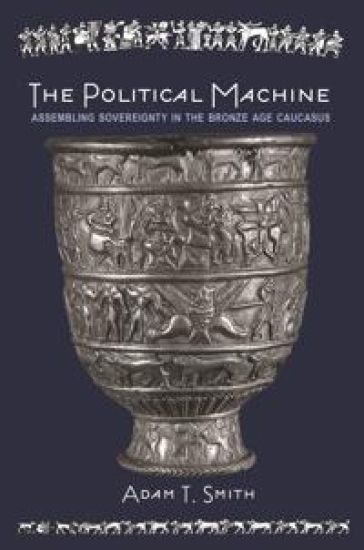
The Political Machine

The Political Machine

Adam T. Smith

Princeton University Press
2020
pokkari
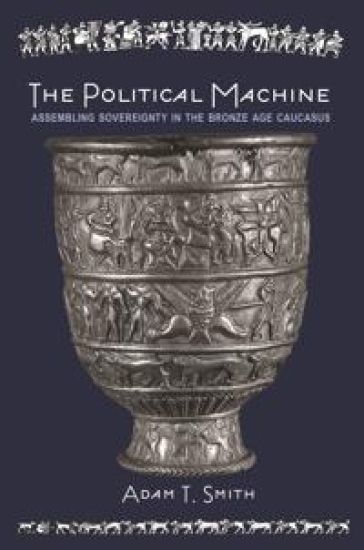
The Political Machine investigates the essential role that material culture plays in the practices and maintenance of political sovereignty. Through an archaeological exploration of the Bronze Age Caucasus, Adam Smith demonstrates that beyond assemblies of people, polities are just as importantly assemblages of things—from ballots and bullets to crowns, regalia, and licenses. Smith looks at the ways that these assemblages help to forge cohesive publics, separate sovereigns from a wider social mass, and formalize governance—and he considers how these developments continue to shape politics today.Smith shows that the formation of polities is as much about the process of manufacturing assemblages as it is about disciplining subjects, and that these material objects or "machines" sustain communities, orders, and institutions. The sensibilities, senses, and sentiments connecting people to things enabled political authority during the Bronze Age and fortify political power even in the contemporary world. Smith provides a detailed account of the transformation of communities in the Caucasus, from small-scale early Bronze Age villages committed to egalitarianism, to Late Bronze Age polities predicated on radical inequality, organized violence, and a centralized apparatus of rule.From Bronze Age traditions of mortuary ritual and divination to current controversies over flag pins and Predator drones, The Political Machine sheds new light on how material goods authorize and defend political order.
The Political Machine

The Political Machine

Adam T. Smith

Princeton University Press
2015
sidottu
The Political Machine investigates the essential role that material culture plays in the practices and maintenance of political sovereignty. Through an archaeological exploration of the Bronze Age Caucasus, Adam Smith demonstrates that beyond assemblies of people, polities are just as importantly assemblages of things--from ballots and bullets to crowns, regalia, and licenses. Smith looks at the ways that these assemblages help to forge cohesive publics, separate sovereigns from a wider social mass, and formalize governance--and he considers how these developments continue to shape politics today. Smith shows that the formation of polities is as much about the process of manufacturing assemblages as it is about disciplining subjects, and that these material objects or "machines" sustain communities, orders, and institutions. The sensibilities, senses, and sentiments connecting people to things enabled political authority during the Bronze Age and fortify political power even in the contemporary world. Smith provides a detailed account of the transformation of communities in the Caucasus, from small-scale early Bronze Age villages committed to egalitarianism, to Late Bronze Age polities predicated on radical inequality, organized violence, and a centralized apparatus of rule. From Bronze Age traditions of mortuary ritual and divination to current controversies over flag pins and Predator drones, The Political Machine sheds new light on how material goods authorize and defend political order.
The Archaeology and Geography of Ancient Transcaucasian Societies, Volume I

The Archaeology and Geography of Ancient Transcaucasian Societies, Volume I

P. S. Avetisyan; R. S. Badalyan; Alan Greene; Adam T. Smith

Oriental Institute of the University of Chicago
2009
sidottu
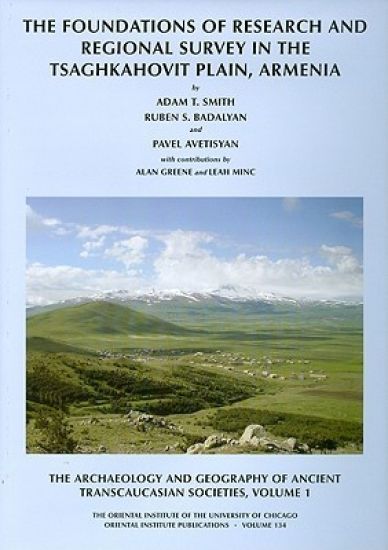
Until recently, the South Caucasus was a virtual /terra/ /incognita/ on Western archaeological maps of southwest Asia. The conspicuous absence of marked places, of site names, toponyms, and topography gave the impression of a region distant, unknown, and vacant. The Joint American-Armenian Project for the Archaeology and Geography of Ancient Transcaucasian Societies (Project ArAGATS) was founded in 1998 to explore this terrain. Our investigations were guided by two overarching goals: to illuminate the social and political transformations central to the regions unique (pre)history and to explore the broader intellectual implications of collaboration between the rich archaeological traditions of Armenia (former U.S.S.R.) and the United States. This volume provides the first encompassing report on the ongoing studies of Project ArAGATS, detailing the general context of contemporary archaeological research in the South Caucasus as well as the specific context of our regional investigations in the Tsaghkahovit Plain of central Armenia. The book opens with detailed examinations of the history of archaeology in the South Caucasus, the theoretical problems that currently orient archaeological research, and a comprehensive reevaluation of the material bases for regional chronology and periodization. The work then provides the complete results of our regional investigations in the Tsaghkahovit Plain, including the findings of the first systematic pedestrian survey ever conducted in the Caucasus. Thanks to the results presented in this volume, and Project ArAGATSs ongoing excavations in the area, the Tsaghkahovit Plain is today the best known archaeological region in the South Caucasus. The present volume thus provides archaeologists with both an orientation to the prehistory of the South Caucasus and the complete findings of the first phase of Project ArAGATSs field investigations.
The Political Landscape

The Political Landscape

Adam T Smith

University of California Press
2003
pokkari
How do landscapes - defined in the broadest sense to incorporate the physical contours of the built environment, the aesthetics of form, and the imaginative reflections of spatial representations - contribute to the making of politics? Shifting through the archaeological, epigraphic, and artistic remains of early complex societies, this provocative and far-reaching book is the first systematic attempt to explain the links between spatial organization and politics from an anthropological point of view. The Classic-period Maya, the kingdom of Urartu, and the cities of early southern Mesopotamia provide the focal points for this multidimensional account of human polities. Are the cities and villages in which we live and work, the lands that are woven into our senses of cultural and personal identity, and the national territories we occupy merely stages on which historical processes and political rituals are enacted? Or do the forms of buildings and streets, the evocative sensibilities of architecture and vista, the aesthetics of place conjured in art and media constitute political landscapes - broad sets of spatial practices critical to the formation, operation, and overthrow of polities, regimes, and institutions? Smith brings together contemporary theoretical developments from geography and social theory with anthropological perspectives and archaeological data to pursue these questions.