Kirjojen hintavertailu. Mukana 12 390 323 kirjaa ja 12 kauppaa.

Kirjailija

Adam Winn

Kirjat ja teokset yhdessä paikassa: 8 kirjaa, julkaisuja vuosilta 2008-2026, suosituimpien joukossa Israel's Lord: Yhwh as "Two Powers" in Second Temple Literature. Vertaile teosten hintoja ja tarkista saatavuus suomalaisista kirjakaupoista.

8 kirjaa

Kirjojen julkaisuhaarukka 2008-2026.

Israel's Lord: Yhwh as "Two Powers" in Second Temple Literature

Israel's Lord: Yhwh as "Two Powers" in Second Temple Literature

David E. Wilhite; Adam Winn

Fortress Academic
2026
nidottu
Israel's Lord: YHWH as "Two Powers" in Second Temple Literature addresses the nature of Jewish monotheism in Second Temple literature, advancing an argument that much of the literature reflects the existence of two powers in heaven that are both rightly understood as YHWH. To this end, Wilhite and Winn review various figures such God's Word, God's Wisdom, the Angel of the Lord, the Son of Man, and others that bear features closely associate with the God of Israel. Using criteria related to these features they argue that most, though not all, of these figures are rightly identified as the figure who appeared in Israel's scriptures and was called YHWH. Such a "two powers" paradigm is relevant for understanding early Christian commitments regarding Jesus. The debate about Jesus' divinity depends in large part on what options were available for the earliest Christians when considering his titles and status. The authors contend that with such a "two powers" paradigm available to the earliest Christians, it should inform any reading of New Testament texts and their varying depictions of Jesus as "Lord."
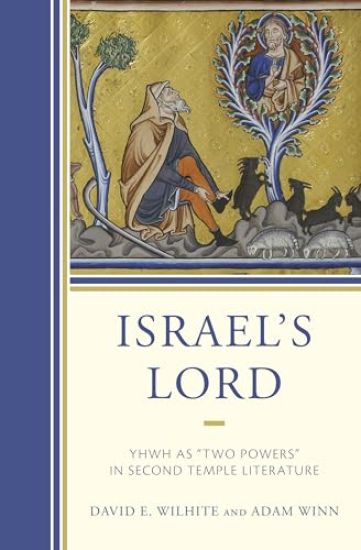
Israel’s Lord

Israel’s Lord

David E. Wilhite; Adam Winn

BLOOMSBURY PUBLISHING PLC
2024
sidottu
Israel’s Lord addresses the nature of Jewish monotheism in the Second Temple period, especially in relation to a concept known as "two powers" in heaven. Wilhite and Winn review the various figures that were depicted as the second power in heaven, such as God's Word, God’s Wisdom, the Angel of the Lord, the Son of Man, and others. By establishing a set of criteria by which to evaluate whether ancient Jews from this period would consider a certain figure divine, the authors re-assess the various candidates, finding some, but not all, to be rightly described as the second power in heaven – that is, the figure who appeared in Israel’s scriptures and was also called YHWH. This two powers paradigm provides a way forward for studying this period in general and the rise of Christianity in particular. The debate about Jesus' divinity depends in large part on what options were available for the earliest Christians when considering his titles and status. Since a second power figure is found in a wide array of sources, the authors contend that this should inform any reading of New Testament texts and their varying depictions of Jesus as the "Lord" of Israel.
Christology in Mark's Gospel: Four Views

Christology in Mark's Gospel: Four Views

J. R. Daniel Kirk; Adam Winn; Sandra Huebenthal; L. W. Hurtado

Zondervan
2021
nidottu
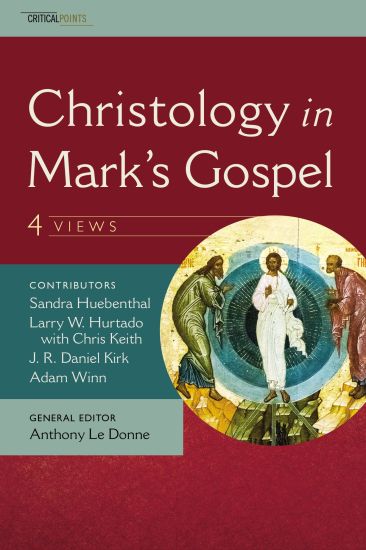
Gain Insights on Mark's Christology from Today's Leading ScholarsThe Gospel of Mark, widely assumed to be the earliest narrative of Jesus's life and the least explicit in terms of Christology, has long served as a worktable for the discovery of Christian origins and developing theologies. The past ten years of scholarship have seen an unprecedented shift toward an early, high Christology, the notion that very early in the history of the Jesus movement his followers worshipped him as God. Other studies have challenged this view, arguing that Mark's story is incomplete, intentionally ambiguous, or presents Jesus in entirely human terms.Christology in Mark's Gospel: Four Views brings together key voices in conversation in order to offer a clear entry point into early Christians' understanding of Jesus's identity: Sandra Huebenthal (Suspended Christology), Larry W. Hurtado (Mark's Presentation of Jesus; with rejoinder by Chris Keith), J. R. Daniel Kirk (Narrative Christology of a Suffering King), and Adam Winn (Jesus as the YHWH of Israel in the Gospel of Mark).Each author offers a robust presentation of their position, followed by lively interaction with the other contributors and one "last-word" rejoinder. The significance of this discussion is contextualized by the general editor Anthony Le Donne's introduction and summarized in the conclusion.The CriticalPoints Series offers rigorous and nuanced engagement between today's best scholars for advancing the scholarship of tomorrow. Like its older sibling, the CounterPoints Series, it provides a forum for comparison and critique of different positions, focusing on critical issues in today's Christian scholarship: in biblical studies, in theology, and in philosophy.
Killing a Messiah – A Novel

Killing a Messiah – A Novel

Adam Winn

IVP Academic
2020
nidottu
As Passover approaches, the city of Jerusalem is a political tinderbox. Judah, a resistance leader, plots to overthrow the Roman occupation. Eleazar and his father, the high priest Caiaphas, seek peace in the city at all costs. Pilate, the Roman governor, maneuvers to keep order (and his own hold on power). Caleb, a shopkeeper, is reluctantly caught up in the intrigue. When rumors start spreading about the popular prophet Jesus, hailed by many as the Messiah, Roman and Jewish leaders alike fear unrest and violence during the upcoming festival. Then, in the midst of this tension, unexpected alliances emerge. In Killing a Messiah, New Testament scholar Adam Winn weaves together stories of historical and fictional characters in a fresh reimagining of the events leading up to Jesus' execution. Based on what we know of the first-century context, Winn's narrative offers compelling explanations for gaps in the Gospel accounts. The social, political, and religious realities of Jesus' world come to life and shed new light on our reading of the biblical texts. In a city full of political entanglements, espionage, and competing interests, the blame for the crucifixion is complex and can't land on just a single party. It takes more than one to kill a messiah.
Reading Mark`s Christology Under Caesar – Jesus the Messiah and Roman Imperial Ideology
The Gospel of Mark has been studied from multiple angles using many methods. But often there remains a sense that something is wanting, that the full picture of Mark's Gospel lacks some background circuitry that would light up the whole. Adam Winn finds a clue in the cataclysmic destruction of Jerusalem by the Romans in AD 70. For Jews and Christians it was an apocalyptic moment. The gods of Rome seemed to have conquered the God of the Jews. Could it be that Mark wrote his Gospel in response to Roman imperial propaganda surrounding this event? Could a messiah crucified by Rome really be God’s Son appointed to rule the world? Winn considers how Mark might have been read by Christians in Rome in the aftermath of the fall of Jerusalem. He introduces us to the propaganda of the Flavian emperors and excavates the Markan text for themes that address the Roman imperial setting. We discover an intriguing first-century response to the question “Christ or Caesar?"
The Purpose of Mark's Gospel

The Purpose of Mark's Gospel

Adam Winn

Mohr Siebeck
2008
nidottu
In this book, Adam Winn addresses the long debated question of the purpose of Mark's gospel. After placing the composition of Mark in Rome at a time shortly after the destruction of the Jerusalem Temple, he seeks to reconstruct the historical situation facing both the Markan evangelist and his community. This reconstruction focuses on the rise of the new Roman Emperor Vespasian and the aftermath of the Jewish Revolt in Rome. A significant feature of this reconstruction is the propaganda used to gain and secure Vespasian's power-propaganda that included oracles and portents, divine healings, and grand triumphs. Of particular interest is the propagandistic claim that Vespasian was the true fulfillment of Jewish messianic prophecies. Winn argues that such a claim would have created a christological crisis for the fledgling church in Rome-a crisis that called for a compelling Christian response. Winn seeks to demonstrate that Mark's gospel could be read as just such a response. He demonstrates how the major features of Mark's gospel-his incipit, Christology, teaching on discipleship, and eschatology-can be read as a counter résumé to the impressive résumé of Vespasian. In the end, this project concludes that Mark was composed for the purpose of countering Roman imperial propaganda that had created a crisis for its author and community.