Kirjojen hintavertailu. Mukana 12 200 456 kirjaa ja 12 kauppaa.
Kirjailija
Adam Zagajewski
Kirjat ja teokset yhdessä paikassa: 23 kirjaa, julkaisuja vuosilta 1994-2024, suosituimpien joukossa Liberties Journal of Culture and Politics. Vertaile teosten hintoja ja tarkista saatavuus suomalaisista kirjakaupoista.
Michael Ignatieff; Mary Gaitskill; Sergei Lebedev; Antonia Bouis; Karen Solie; Michael Walzer; David A. Bell; Justin E.H. Smith; Michael C. Kimmage; Andrew Scull; Robert Alter; Steven B. Smith; Benjamin Moser; Helen Vendler; John Hodgen; Adam Zagajewski
Liberties, a Journal of Culture and Politics, is essential reading for those engaged in the cultural and political issues of our time. In this issue of Liberties: Michael Ignatieff - The Mind’s Emancipation; Mary Gaitskill - The Trials of the Young; Sergei Lebedev - Putin’s Philosopher: A Memoir; Michael Walzer - Moral Concern; Justin E. H. Smith – The Happiness Industrial Complex; Andrew Scull – The Fashions in Trauma; David A. Bell – The Triumph of Anti-Politics in America; Michael Kimmage – A Defense of Delight in a Dark Time; Robert Alter – Proust and the Mystification of the Jews; Steven B. Smith – What is a Statesman?; Benjamin Moser – Rembrandt’s shadows; Helen Vendler – The Poetry of Charm; Celeste Marcus – Priorism, or the Joshua Katz Affair; Leon Wieseltier – Problems and Struggles; and, new poems by Karen Solie, Adam Zagajewski, and John Hodgen.Published quarterly, Liberties, is a collection of the most significant writers today as well as launching the voices of tomorrow.Liberties features serious, independent, stylish, and controversial essays by significant writers and introduces the next generation of writers and poets to inspire and impact the intellectual and creative lifeblood of today’s culture and politics. Nobel Prize winners, leading op-ed writers, well-known non-fiction writers, rising talents, and poets from around the world are part of the Liberties series.There’s a reason why engaged citizens, cultural warriors, political leaders, opinion makers, and activists from across the cultural and political spectrum read and cherish Liberties.
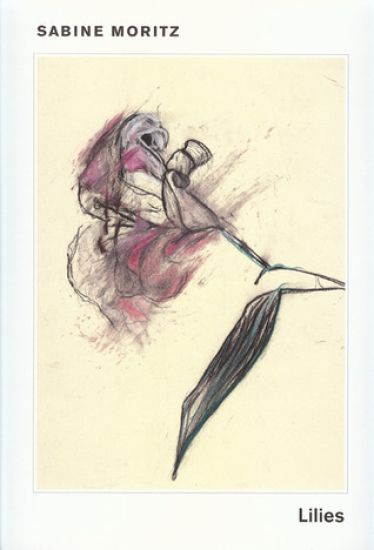
Following her 2010 publication dedicated to roses, Cologne-based artist Sabine Moritz here turns her attention to lilies, which she first began depicting in the mid 1990s. Working on paper to produce fifty-nine charcoal, pastel and oil pastel drawings, similiarly she often approaches works as studies or exercises in observation and representation. During the development of this publication, which was originally conceived as a collection of Moritz s drawings of lilies, the artist had the idea to introduce another ongoing body of work drawings of objects alongside the lilies. These objects are primarily statues, statuettes and figurines hand-made works of art from different periods in history, such as a classical torso, an African figurine, and a Buddhist head. Moritz s drawings of objects reflect a range of ideas and registers, moods and sentiments. Including the objects alongside the lilies opens up questions of time, life, death, belief, truth, human psychology and the very process o
Franz Kratter; Joseph Rohrer; Hermann Blumenthal; lwan Franke; Alexander Granach; Józef Wittlin; Sigmund Bromberg-Bytkowski; Alfred Döblin; Joseph Roth; Stanistaw Lem; Alicja Dorabialska; Andrzej Kusniewicz; Zygmunt Haupt; Karolina Lanckoronska; Leon Weliczker Wells; Adolf Folkman; Stefan Szende; Adam Zagajewski; Karl Schlögel; Juri Andruchowytsch; Leopold Unger; Jurko Prochasko; Ronald Hinrichs; Katharina Schubert; Irene Stratenwerth; Oleh Turiy; Sonja Longolius; Bogustaw Bakuta; Armin Eidherr; lryna Kryworuczka; Olena Onufriv
Lviv en stad som nämns i krigsrapporter och nyhetsinslag. Men Lviv är lika mycket en stad mitt i Europa och dess historia. Och mitt i Europas kulturarv. I Lviv en resa till Europa möter vi resenärer, skönlitterära författare, vetenskapsmän, modernister och småborgare, lyriker och offer för omänsklig förföljelse. De vittnar om det habsburgska Lemberg, om det polska Lwów, om det judiska Lemberik, om det ryska Lvov och det ukrainska Lviv. Och om staden med många namn under nazistisk ockupation.I Lvivs intellektuella liv uppstod banbrytande matematiska resonemang, modernism på jiddisch och livräddande tyfusforskning. Från mångnationella Lviv kommer nydanande europeiska författarskap. Matematikern Stanislav Ulam och författarna Alfred Döblin och Joseph Roth är bara några av många. Lviv är inte en stad i periferin. Den som förbigår staden förbigår också delar av Europas gemensamma historia, vetenskapsarv och kultur.
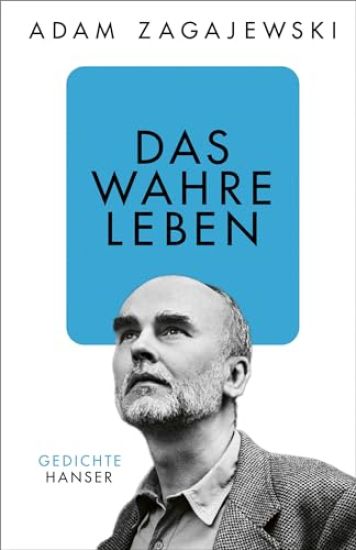
Adam Zagajewski var en av Polens största poeter. När han gick bort 2021 hade han hunnit ge ut ett tiotal diktsamlingar, liksom ett antal essäsamlingar och två prosaverk.Det sanna livet innehåller ett urval dikter ur hans två sista böcker. Det är poesi som rör sig mellan nuet och minnena, Europa och Amerika, den prosaiska döden och oväntade stunder av glädje.Emi-Simone Zawall har skrivit förord och dikterna är tolkade av Irena Grönberg.
Elliot Ackerman; Durs Grünbein; Thomas Chatterton Williams; Anita Shapira; Adam Zagajewski; Sally Satel; R.B. Kitaj; Matthew Stephenson; Helen Vendler; David Haziza; A.E. Stallings; Paul Berman; Clara Collier; Michael Kimmage; Peg Boyers
“A Meteor of Intelligent Substance” “Something was Missing in our Culture, and Here It Is” Liberties – A Journal of Culture and Politics features new essays and poetry from some of the world's best writers and artists to inspire and impact the intellectual and creative lifeblood of our current culture and today's politics. This summer issue of Liberties includes: Elliot Ackerman on Veterans Are Not Victims; Durs Grünbein on Fascism and the Writer; R.B. Kitaj’s Three Tales; Thomas Chatterton Williams on The Blessings of Assimilation; Anita Shapira on The Fall of Israel’s House of Labor; Sally Satel on Woke Medicine; Matthew Stephenson On Corruption’s Honey and Poison; Helen Vender on Wallace Stevens; David Haziza on Illusions of Immunity; Paul Berman on the Library of America; Clara Collier’s nostalgia for strong women in film; Michael Kimmage on American Inquisitions; Leon Wieseltier (editor) on the high price of Stoicism; Celeste Marcus (managing editor) on a Native American Tragedy; and new poetry from Adam Zagajewski, A.E. Stallings, and Peg Boyers.
Michael Ignatieff; Laura Kipnis; David Grossman; Ramachandra Guha; Thomas Chatterton Williams; Hannah Sullivan; Mark Lilla; Helen Vendler; Sean Wilentz; Adam Zagajewski; Louise Glück; James Wolcott; Andrea Marcolongo; Eli Lake; Sally Satel; Moshe Halbertal; Joshua Bennett; David Thomson; Julius Margolin; Clara Collier; Shawn McCreesh
Liberties - A Journal of Culture and Politics features new essays and poetry from some of today’s best writers and artists, along with introducing new talent, to inspire and impact the intellectual and creative lifeblood of culture and politics. This inaugural issue of Liberties includes: Michael Ignatieff on liberalism and the environment; Laura Kipnis cheers transgression; David Grossman on literature and peace; Ramachandra Guha on the Indian tragedy; Thomas Chatterton Williams on the real James Baldwin; Mark Lilla on the power of indifference; Helen Vendler on Yeats' The Second Coming; Sean Wilentz on abolition and American origins; Adam Zagajeweski on Gustav Mahler; James Wolcott on America’s modern Jacobins; Andrea Marcolongo on how language defines us; Eli Lake on the birth of American unexceptionalism; Sally Satel on the riddle of addiction; Moshe Halbertal on creating a democratic Jewish state; David Thomson on the wonder of Terrence Malick; Julius Margolin’s memoir confronting hatred; Clara Collier on plague literature; Shawn McCreesh’s personal look at a youthful community of addiction; new poetry from the most recent winner of the Nobel Prize in Literature, Louise Glück, Joshua Bennett, and Hannah Sullivan; and, Leon Wieseltier (editor) and Celeste Marcus (managing editor).
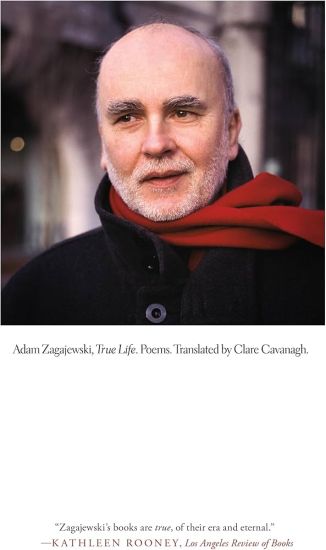
A stunning, intimate collection by the late great Polish poet Adam Zagajewski. . . . I think I sought wisdom (without resignation) in poemsand also a certain calm madness.I found, much later, a moment's joyand melancholy's dark contentment. In True Life, the Polish writer Adam Zagajewski, one of the world's most admired and beloved poets, turns his gaze to the past with piercing clarity and a tone of wry, lyrical melancholy. He captures the rhythms of a city street on the page and the steady beat of the passage of time against it ("Roads cannot be destroyed // Even if peonies cover them / smelling like eternity") and writes of the endless struggle between stasis and change, between movement and stillness ("We knew / it would be the same / as always // It would all go back to normal"). Mary Oliver called Zagajewski "the most pertinent, impressive, meaningful poet of our time," and Philip Boehm wrote in The New York Times Book Review that his poems "pull us from whatever routine threatens to dull our senses, from whatever might lull us into mere existence." True Life, first published in Polish in 2019 and translated with genius by Clare Cavanagh, reveals the astonishing, immortal depths of Zagajewski's insight and artistry.
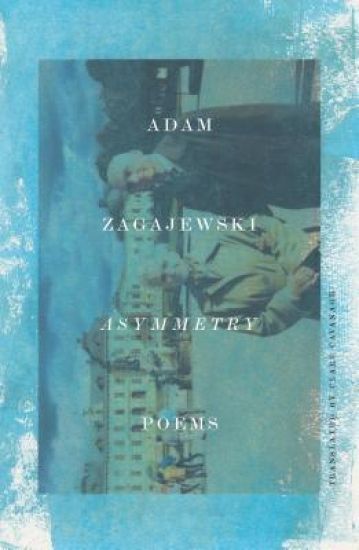
A stunning new collection from Poland's leading poet Give me back my childhood, republic of loquacious sparrows, measureless thickets of nettlesand the timid wood owl's nightly sobs. One of the most vibrant voices of our time, Adam Zagajewski is a modern master of the poetic form. In Asymmetry, his first collection of poems in five years, he revisits the themes that have long concerned him: the enduring imprint of history, the beauty of nature, the place of the exile. Though as sanguine as ever, Zagajewski often turns to elegy in this deeply powerful collection, remembering loved ones he's lost: a hairdresser, the philosopher Krzystzof Michalski, and, most poignantly, his parents. A moving reflection on family, the sublimity of everyday life, death, and happiness, Asymmetry is a magnificent distillation of an astounding poetic voice.
"Wahre Poesie kann nicht ohne die Begegnung mit dem Geist existieren." Diese Begegnung färbt die Poesie laut Adam Zagajewski mit Fragen, mit Begeisterung und mit Zweifeln, und das ist seiner Meinung nach das Wesen der Poesie. In seinem Festvortrag anlässlich der Verleihung des Leopold Lucas-Preises 2016 beschreibt er sein Verständnis von Dichtung sowie seine Forderungen an sie. Poesie dürfe sich nicht vom Alltäglichen abwenden, da sie sich vom Wirklichen, vom Konkreten nähre. Adam Zagajewski versteht Poesie nicht als Antwort, sondern als Pause von den Geschehnissen in der Welt, die nicht zu begreifen sind. Zagajewskis Werke sind von philosophischen und theologischen Aspekten geprägt und schlagen Brücken der Begegnung und des Verstehens zwischen Ost- und Westeuropa und dem nordamerikanischen Kontinent.
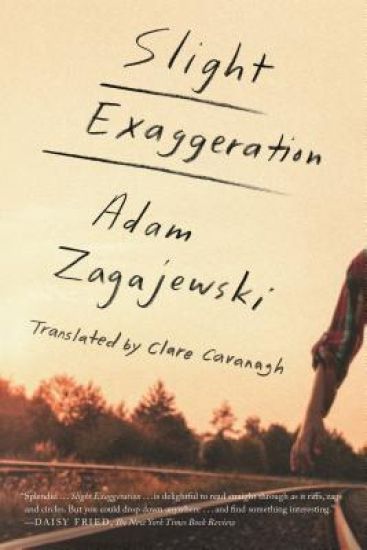
A new essay collection by the noted Polish poet For Adam Zagajewski--one of Poland's great poets--the project of writing, whether it be poetry or prose, is an occasion to advance what David Wojahn has characterized as his "restless and quizzical quest for self-knowledge." Slight Exaggeration is an autobiographical portrait of the poet, arranged not chronologically but with that same luminous quality that distinguishes Zagajewski's spellbinding poetry--an affinity for the invisible. In a mosaic-like blend of criticism, reflections, European history, and aphoristic musings, Zagajewski tells the stories of his life in glimpses and reveries--from the Second World War and the occupation of Poland that left his family dispossessed to Joseph Brodsky's funeral on the Venetian island of San Michele--interspersed with intellectual interrogations of the writers and poets (D. H. Lawrence, Giorgos Seferis, Zbigniew Herbert, Paul Val ry), composers and painters (Brahms, Rembrandt), and modern heroes (Helmuth James Graf von Moltke) who have influenced his work. A wry and philosophical defense of mystery, Slight Exaggeration recalls Zagajewski's poetry in its delicate negotiation between the earthbound and the ethereal, "between brief explosions of meaning and patient wandering through the plains of ordinary days." With an enduring inclination to marvel, Zagajewski restores the world to us--necessarily incomplete and utterly astonishing.
"The highway became the Red Sea.""We moved through the storm like a sheer valley.""You drove; I looked at you with love."""" from "Storm""""""One of the most gifted and readable poets of his time, Adam Zagajewski is proving to be a contemporary classic. Few writers in either poetry or prose can be said to have attained the lucid intelligence and limpid economy of style that have become a matter of course with Zagajewski. It is these qualities, combined with his wry humor, gentle skepticism, and perpetual sense of history's dark possibilities, that have earned him a devoted international following. This collection, gracefully translated by Clare Cavanagh, finds the poet reflecting on place, language, and history. Especially moving here are his tributes to writers, friends known in person or in books people such as Milosz and Sebald, Brodsky and Blake which intermingle naturally with portraits of family members and loved ones. "Eternal Enemies" is a luminous meeting of art and everyday life."
I love to swim in the sea, which keepstalking to itselfin the monotone of a vagabondwho no longer recalls exactly how long he's been on the road. Swimming is like prayer: palms join and part, join and part, almost without end.--from "On Swimming" Without End draws from each of Adam Zagajewski's English-language collections, both in and out of print--Tremor, Canvas, and Mysticism for Beginners--and features new work that is among his most refreshing and rewarding. These poems, lucidly translated, share the vocation that allows us, in Zagajewski's words, "to experience astonishment and to stop still in that astonishment for a long moment or two."
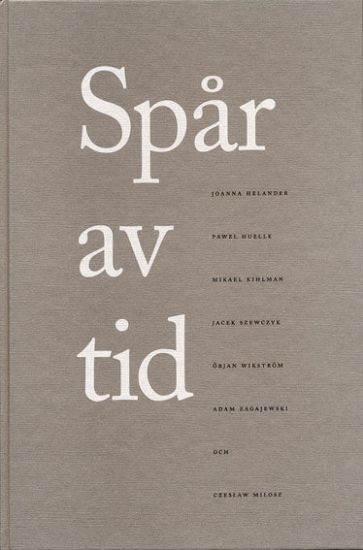
Företal av Torgny Lindgren "Poesi av mark och luft". En resa i ett okänt grannland och ett fascinerande dokument om människors livsvillkor i Polen, sett ur sex olika konstnärers perspektiv.