Kirjailija
Adedeji B. Badiru
Kirjat ja teokset yhdessä paikassa: 65 kirjaa, julkaisuja vuosilta 1993-2026, suosituimpien joukossa Flexible Supply Chain. Vertaile teosten hintoja ja tarkista saatavuus suomalaisista kirjakaupoista.
65 kirjaa
Kirjojen julkaisuhaarukka 1993-2026.
Communication is the glue that binds the diverse elements of the national economy. A flexible supply chain system creates postal communication agility and adaptability to respond to the changing technologies of the modern era. This book uses a systems-based approach of the tools and techniques of Industrial Engineering applied to a new concept of flexible supply chain systems, patterned after well-known and successful flexible manufacturing systems. It focuses on how Industrial Engineering can be used to achieve flexibility, resiliency, and efficiency in response to the needs of the global postal system. Flexible Supply Chain: Industrial Engineering Optimization Modeling of the Postal Service System provides an understanding of the techniques of using flexibility to improve operations. It capitalizes on a framework of Industrial Engineering and focuses on a global chain of non-commodity products and services. By using flexibility as the foundation for efficiency, it ties in with the digital revolution of communication and retains an affiliation with community involvement. The book uses the DEJI Systems Model and the Triple C Model as a structure of system productivity and creates a template through which other supply chains can be improved. The global supply chain is presently stressed and in need of new ideas and operational strategies. This book is an ideal read for engineers working in manufacturing production, civil, mechanical, and other industries. It will be of interest to engineering managers and consultants as well as those involved with business management. University students and instructors will also find this book useful.
We cannot manage and control what we cannot measure and assess. Poor assessment results have been cited as a primary reason for project failures, in terms of cost, schedule, and quality. This book introduces metrics, rubrics, and standards pertinent to assessing innovation.Assessing Innovation: Metrics, Rubrics, and Standards provides a new view for the embracing of innovation and establishing a quantitative basis for determining innovation levels. It bridges innovation with practice and presents a systems view as it incorporates the human element and discusses the different roles carried out. This book offers standards that will guide readers as they tackle sustaining innovation and leverages Badiru’s Umbrella Model in the process.The inclusion of methodologies suitable for determining where and when innovation is happening, and to what extent it is currently being carried out, make this a unique book, along with being the only book that addresses innovation metrics, rubrics, and standards in an integrated fashion. Seen as a way to help advance the diverse pursuit of innovation, this book is an ideal read for those in engineering, business, industry, academia, government, and the military.
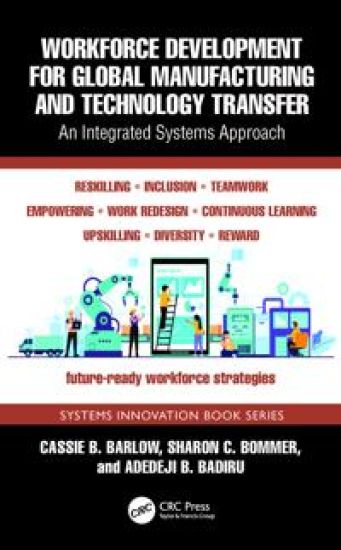
Workforce Development for Global Manufacturing and Technology Transfer
Cassie B. Barlow; Sharon C. Bommer; Adedeji B. Badiru
TAYLOR FRANCIS LTD
2025
sidottu
Many countries are now emerging as new hubs for international manufacturing due to the increasing costs in traditional outsourcing locations. The success of this transition will rely heavily on the establishment and maintenance of a reliable manufacturing infrastructure through an integrated systems approach.Workforce Development for Global Manufacturing and Technology Transfer: An Integrated Systems Approach focuses on work-integrated education, training, and learning. It offers practical case studies from the manufacturing and technology sector and advocates for the integration of people, technology, and processes to develop a critical workforce that aligns with national priorities. The book presents practical and modern strategies that nations, cities, and communities can adopt to develop and sustain manufacturing for sustainable industrialization.While this book primarily focuses on manufacturing workforce development, it is relevant to manufacturers worldwide and applies to a global audience by covering topics such as project management, product development, technology justification, and various modes of technology transfer.
Industrial Engineering Strategy for Constructive Technologies
Adedeji B. Badiru
TAYLOR FRANCIS LTD
2025
sidottu
There is an urgent need to develop robust strategies to respond to and leverage new and emerging technologies, particularly those based on artificial intelligence (AI). Industrial engineering’s systems-focused approach offers the best mechanism to address this urgent global need.Industrial Engineering Strategy for Constructive Technologies: A Systems-Based Approach for the Global Economy focuses on managing digital engineering using a systems methodology to ensure that all the parts and pieces fit together. It addresses the role of AI, is cognizant of social concerns about technological encroachment, and highlights the sustainability of operations. This book leverages resilience engineering in technology utilization and, at the same time, recognizes humans in the loop of technology. This book also discusses how to use a systems-based approach for accepting and integrating new technologies. The global market is yearning for new guidelines and strategies for coping with the ever-increasing and changing technological landscape.This book is an essential read for university students and instructors and those in the fields of engineering as well as industry, business, government, and the military.
The Oil & Gas industry is changing rapidly in response to current developments and opportunities around the world. Project management guidelines for the industry must adapt accordingly, particularly in the present digital age. It is in this context that a new edition after 10 years is needed now. This new edition is developed as a 2-volume set and will incorporate the most recent developments in the qualitative and quantitative tools and techniques of industrial and systems engineering for specific applications in the oil and gas industry.Project Management for the Oil and Gas Industry: A Global System Approach focuses on the latest systems modeling tools, post-COVID-19 management of global projects, enhanced oil and gas supply chains management, digital engineering operations, quality management framework, oil & gas economics in the view of prevailing trade opportunities, world conflicts, impacts of international sanctions on oil and gas trade, black marketing of oil and gas around the world, sustainability and environmental impact assessments, impacts of regional wars on oil and gas movements globally, the emergence of new pushes for renewable energy, new global risk management, communication, cooperation, and coordination of oil and gas operations, and the application of the DEJI Systems Model. Each volume in this 2-vol set is self-contained and can be purchased and used independently.This professional 2-volume set provides all related information to practitioners, designers, consultants, consultants, contractors, risk and quality managers, along with project managers and systems engineers involved in oil and gas projects, and related industries.Project Management for the Oil and Gas Industry: Systems Engineering and Technology (9781032646954) and Project Management for the Oil and Gas Industry: Agile Systems and Environmental Concerns (9781032647012) can also be purchased individually.
This volume focuses on the broad scope of systems engineering and recent energy technology developments as they relate to the oil and gas industry, which remains a lifeline to communities around the world. In 2015, the United Nations adopted the 17 Sustainable Development Goals (SDGs) to, among other things, curtail the catastrophe that will befall the world from the increasing menace of global warming and climate change. The best way to achieve most or all the goals is to use a comprehensive systems-based approach, specifically, leveraging the efficacy of systems engineering for project management in the oil and gas industry.Systems Engineering and Technology presents the systems-based interrelationships of energy generation, transmission, distribution, and consumption. This volume will expand on elements of the first edition to encapsulate new developments in technologies, from a systems approach. In tackling climate change problems, both qualitative and quantitative approaches must be pursued. This allows us to bring in technological approaches as well as human-centered social considerations.The premise of this volume is that a systems engineering approach is the key to making the desired progress, where renewables and conventional oil and gas can coexist. This book contains a mix of technical, social, economic, engineering, and political considerations ideal for practitioners, designers, consultants, contractors, risk and quality managers, along with project managers and systems engineers involved in oil and gas projects, and related industries.This book is also available as a set - Project Management for the Oil and Gas Industry: A Global System Approach (9781032646046).
A lot of managerial finessing is needed to handle the present era of the operations of the oil and gas industry, under the pressure of environmental issues. The recent emergence of the techniques of Agile systems offers a tremendous collection of new approaches for addressing the managerial impediments to oil and gas operations.Agile Systems and Environmental Concerns covers how Agile systems are based on principles that emphasize team collaboration, continual planning, and continual learning, thus making an operation more responsive and adaptive to operational changes. Agile is an iterative approach to project management that helps teams achieve results faster and more accurately.This volume contains a variety of Agile management tools and techniques to address communication, cooperation, and coordination requirements related to risk management and environmental issues, ideal for practitioners, designers, consultants, contractors, risk and quality managers, along with project managers and systems engineers involved in oil and gas projects, and related industries.This book is also available as a set - Project Management for the Oil and Gas Industry: A Global System Approach (9781032646046).
Industrial Engineering in Systems Design
Brian Peacock; Adedeji B. Badiru
TAYLOR FRANCIS LTD
2024
nidottu
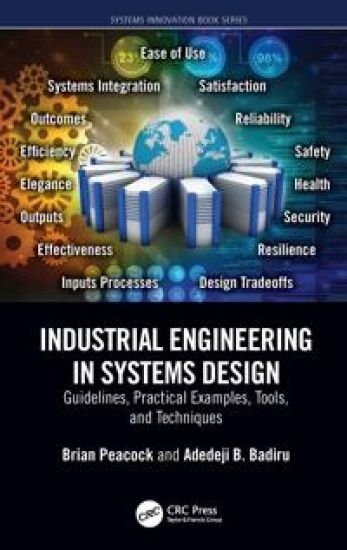
This book focuses on and promotes the applications of the diverse tools and techniques of industrial engineering to the design and operation of systems in industry, business, the government, and the military. Industrial engineering is growing rapidly as an educational option and is a practice favorite in Asia, South America, and many parts of Europe. This book will meet the needs of those growth markets.Industrial Engineering in Systems Design: Guidelines, Practical Examples, Tools, and Techniques offers a wide range of engineering tools from checklists to in-depth analysis guidelines for systems design and operation. The book discusses the integration of industrial and systems engineering from both qualitative and quantitative techniques for systems design. In addition, guidelines for operational resiliency for industry in the case of disruptions, such as a pandemic are covered, and the book provides case examples for industries in developing and under-developed nations. The inclusion of practical examples of where industrial engineering has contributed to the advancement and survival of industries makes this book a very interesting and useful resource.This is a practical guide for professional engineers and consultants involved in the design and operation of systems, particularly manufacturing, production, and supply chain systems, and can also be used as a reference for students.
Handbook of Mathematical and Digital Engineering Foundations for Artificial Intelligence
Adedeji B. Badiru; Olumuyiwa Asaolu
TAYLOR FRANCIS LTD
2024
nidottu
Artificial intelligence (AI) and digital engineering have become prevalent in business, industry, government, and academia. However, the workforce still has a lot to learn on how to leverage them. This handbook presents the preparatory and operational foundations for the efficacy, applicability, risk, and how to take advantage of these tools and techniques. Handbook of Mathematical and Digital Engineering Foundations for Artificial Intelligence: A Systems Methodology provides a guide for using digital engineering platforms for advancing AI applications. The book discusses an interface of education and research in the pursuit of AI developments and highlights the facilitation of advanced education through AI and digital engineering systems. It presents an integration of soft and hard skills in developing and using AI and offers a rigorous systems approach to understanding and using AI. This handbook will be the go-to resource for practitioners and students on applying systems methodology to the body of knowledge of understanding, embracing, and using digital engineering tools and techniques.The recent developments and emergence of Chatbots (AI tools) all have mathematical foundations for their efficacy. Such AI tools include ChatGPT, GPT-4, Bard, Tidio Support Bot, Kuki AI Companion, Meena, BlenderBot, Rose AI Chatbot, Replika: AI Friend, Eviebot, and Tay. This handbook highlights the importance of mathematical and digital foundations for AI developments. The handbook will enhance the understanding and appreciation of readers about the prevailing wave of artificial intelligence products, and, thereby, fitting the current market needs.
People want to create a better world and planet; however, where, and how to start remains the question. Systems Engineering’s problem-solving methodology can help with its ability to answer multiple questions along with connecting actions and impacts. This book uses the Systems Engineering problem-solving methodology to frame how each answer impacts the planet when multiple actions are strung together no matter where they take place.Systems Engineering: Influencing Our Planet and Reengineering Our Actions illustrates a hierarchical Systems Engineering view of the world with each individual in mind as a link in the chain. It uses an Industrial Engineering framework for action implementations and identifies humans’ interconnected actions. The book discusses the implementation of the Systems Engineering problem-solving methodology and leverages existing concepts of environmental sustainability. A template is present for personal actions for environment social responsibility using a Systems Engineering problem-solving approach and focuses on the foundational use of the trademarked DEJI Systems Model® for action design, evaluation, justification, and integration.This book is a perfect read for all academic disciplines and all engineering fields, as well as business and management fields. It reminds us of the Environmental Foundation of NAE’s 14 Grand Challenges and the part we can play.
Communication is the glue that binds the diverse elements of the national economy. A flexible supply chain system creates postal communication agility and adaptability to respond to the changing technologies of the modern era. This book uses a systems-based approach of the tools and techniques of Industrial Engineering applied to a new concept of flexible supply chain systems, patterned after well-known and successful flexible manufacturing systems. It focuses on how Industrial Engineering can be used to achieve flexibility, resiliency, and efficiency in response to the needs of the global postal system.Flexible Supply Chain: Industrial Engineering Optimization Modeling of the Postal Service System provides an understanding of the techniques of using flexibility to improve operations. It capitalizes on a framework of Industrial Engineering and focuses on a global chain of non-commodity products and services. By using flexibility as the foundation for efficiency, it ties in with the digital revolution of communication and retains an affiliation with community involvement. The book uses the DEJI Systems Model and the Triple C Model as a structure of system productivity and creates a template through which other supply chains can be improved. The global supply chain is presently stressed and in need of new ideas and operational strategies.This book is an ideal read for engineers working in manufacturing production, civil, mechanical, and other industries. It will be of interest to engineering managers and consultants as well as those involved with business management. University students and instructors will also find this book useful.
The underlying premise for Industry 4.0 is a systems approach. This book introduces the concept of Systems 4.0 as a foundational requirement for the success of Industry 4.0 in the same way that Quality 4.0 has emerged to advance Industry 4.0.Systems 4.0: Systems Foundations for Industry 4.0 discusses the role of the professional engineer in advancing commerce and industry. It offers an introduction to Industry 4.0 and how to leverage the digital era to improve industrial operations. The book presents and describes the first industrial revolution on through to the fourth revolution and provides general systems engineering principles that can be used with Industry 4.0.This is a practical guide for professional engineers and consultants involved in Industrial Engineering, Mechanical Engineering, Operations Management and can also be used as a reference for students.
Operational Excellence in the New Digital Era
Adedeji B. Badiru; Lauralee Cromarty
TAYLOR FRANCIS LTD
2024
nidottu
Operational excellence, as a quest in the prevailing digital era, is predicated on a systems view of the operating environments in business, industry, government, academia, and other organizational entities.This book uses a systems-based approach to show how operational excellence can be pursued, achieved, and sustained. It offers a systems perspective for operational excellence and discusses the evolution of products from the classical operation era to present day digital operations. It covers the role of global markets on domestic operations, presents operational work design and ergonomics, and combines industrial engineering, advanced research, and practical experience.This book is a useful guide for scholars, practitioners and those involved in engineering, management, and business fields.
Sustainability is one of the most embraced topics nowadays. Everybody is affected by issues of sustainability. Every organization needs to pay attention to these issues. As long as more people and more organizations are engaging in business and industry activities, there will always be a need for sustainability. This book presents tools such as lean six sigma to help sustain results by using process focused decisions. This book covers tools and techniques of industrial engineering to promote sustainability. It discusses a systems approach, the evolution of new products, development of sustainability alliances, and highlights the role of sustainability in advancing organizational goals. The book also addresses sustainability as a coordinated project using a project management approach. It includes the interface of humans and technology and presents an integration of analytics. The book is ideal for all engineering, business, and management fields.
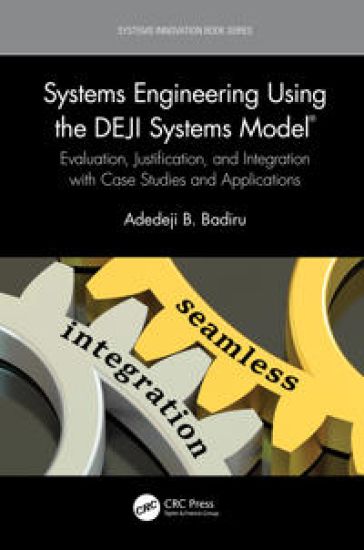
While we need to work more with a systems approach, there are few books that provide systems engineering theory and applications. This book presents a comprehensive collection of systems engineering models. Each of the models is fully covered with guidelines of how and why to use them, along with case studies.Systems Engineering Using the DEJI Systems Model®: Evaluation, Justification, and Integration with Case Studies and Applications provides systems integration as a unifying platform for systems of systems and presents a structured model for systems applications and explicit treatment of human-in-the-loop systems. It discusses systems design in detail and covers the justification methodologies along with examples. Systems evaluation tools and techniques are also included with a discussion on how engineering education is playing a major role for systems advancement.Practicing professionals, as well as educational institutions, governments, businesses, and industries, will find this book of interest.
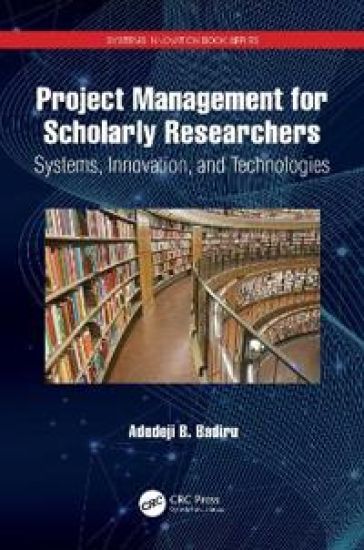
This book presents practical guidelines for university research and administration. It uses a project management framework within a systems perspective to provide strategies for planning, scheduling, allocating resources, tracking, reporting, and controlling university-based research projects and programs.Project Management for Scholarly Researchers: Systems, Innovation, and Technologies covers the technical and human aspects of research management. It discusses federal requirements and compliance issues, in addition to offering advice on proper research lab management and faculty mentoring. It explains the hierarchy of needs of researchers to help readers identify their own needs for their research enterprises.This book provides rigorous treatment and guidance for all engineering fields and related business disciplines, as well as all management and humanities fields.
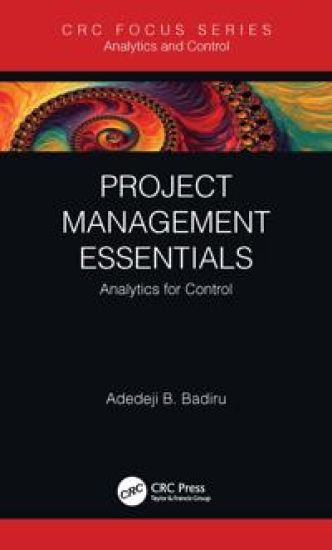
This Focus book presents the basic principles and practice of project management and simple analytics for project control, using the systems framework of Design, Evaluation, Justification, and Integration (DEJI). The overriding theme of the book is that every pursuit can be organized as a project.This short form book presents the evolution of products in the classical era of introducing new projects needing project management. It discusses the development of project alliances, includes the role of project management in advancing organization goals, illustrates the early applications of project management, and includes humans in the loop. The book will also cover project systems and work design, while showing the integration of quantitative and qualitative analytics.This book can serve as a reference for everyone, since everyone is engaged in project management, whether formal or informal
Artificial Intelligence and Digital Systems Engineering
Adedeji B. Badiru
TAYLOR FRANCIS LTD
2024
nidottu
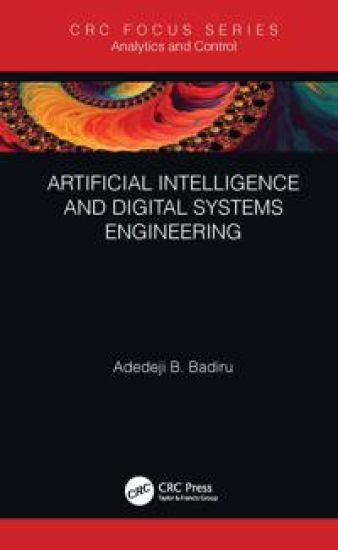
The resurgence of artificial intelligence has been fueled by the availability of the present generation of high-performance computational tools and techniques. This book is designed to provide introductory guidance to artificial intelligence, particularly from the perspective of digital systems engineering.Artificial Intelligence and Digital Systems Engineering provides a general introduction to the origin of AI and covers the wide application areas and software and hardware interfaces. It will prove to be instrumental in helping new users expand their knowledge horizon to the growing market of AI tools, as well as showing how AI is applicable to the development of games, simulation, and consumer products, particularly using artificial neural networks.This book is for the general reader, university students, and instructors of industrial, production, civil, mechanical, and manufacturing engineering. It will also be of interest to managers of technology, projects, business, plants, and operations.
Good data analytics is the basis for effective decisions. Whoever has the data, has the ability to extract information promptly and effectively to make pertinent decisions. The premise of this handbook is to empower users and tool developers with the appropriate collection of formulas and techniques for data analytics and to serve as a quick reference to keep pertinent formulas within fingertip reach of readers. This handbook includes formulas that will appeal to mathematically inclined readers. It discusses how to use data analytics to improve decision-making and is ideal for those new to using data analytics to show how to expand their usage horizon. It provides quantitative techniques for modeling pandemics, such as COVID-19. It also adds to the suite of mathematical tools for emerging technical areas. This handbook is a handy reference for researchers, practitioners, educators, and students in areas such as industrial engineering, production engineering, project management, civil engineering, mechanical engineering, technology management, and business management worldwide.
Global Supply Chain: Using Systems Engineering Strategies to Respond to Disruptions uses a systems-based approach of the tools and techniques of industrial engineering applied to the global supply chain. The specific application addressed in this book is the supply chain, which has been disrupted due to COVID-19 and the closure of several plants in the chain.The book presents the basic tools of industrial engineering applicable to a dynamic supply chain system. It recognizes the nuances of human factors in any commerce and industry and covers the basic elements of a supply chain from a systems perspective. It highlights the global impacts of disruption caused by COVID-19 and leverages the Triple C Model of system communication, cooperation, and coordination. It also illustrates the applicability of the DEJI systems model for supply chain design, evaluation, justification, and integration. Supply chain modeling optimization examples are offered, and the introduction of a newly developed learning curve model, applied to the global supply chain, is presented. The contents of the book are applicable not only to the food supply chain but also to the supply of other commodities, including physical products, services, and desired end results.The book is written for engineers working in production, civil, mechanical, and other industries. It will be of interest to engineering managers, consultants as well as those involved with business management. University students and instructors will also find this book useful as a general reference.