Kirjojen hintavertailu. Mukana 12 595 353 kirjaa ja 12 kauppaa.

Kirjailija

Aditya Joshi

Kirjat ja teokset yhdessä paikassa: 5 kirjaa, julkaisuja vuosilta 2018-2022, suosituimpien joukossa Structural Geological Atlas. Vertaile teosten hintoja ja tarkista saatavuus suomalaisista kirjakaupoista.

5 kirjaa

Kirjojen julkaisuhaarukka 2018-2022.

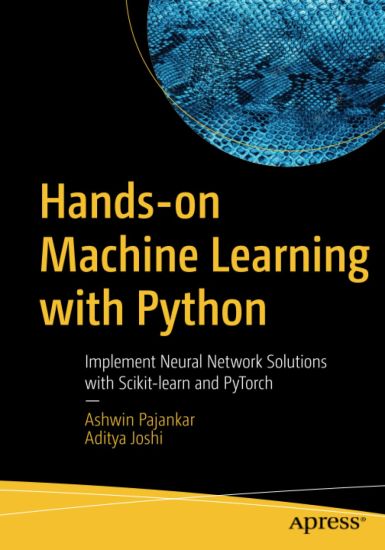
Hands-on Machine Learning with Python

Hands-on Machine Learning with Python

Ashwin Pajankar; Aditya Joshi

APRESS
2022
nidottu
Here is the perfect comprehensive guide for readers with basic to intermediate level knowledge of machine learning and deep learning. It introduces tools such as NumPy for numerical processing, Pandas for panel data analysis, Matplotlib for visualization, Scikit-learn for machine learning, and Pytorch for deep learning with Python. It also serves as a long-term reference manual for the practitioners who will find solutions to commonly occurring scenarios.The book is divided into three sections. The first section introduces you to number crunching and data analysis tools using Python with in-depth explanation on environment configuration, data loading, numerical processing, data analysis, and visualizations. The second section covers machine learning basics and Scikit-learn library. It also explains supervised learning, unsupervised learning, implementation, and classification of regression algorithms, and ensemble learning methods in an easy manner with theoreticaland practical lessons. The third section explains complex neural network architectures with details on internal working and implementation of convolutional neural networks. The final chapter contains a detailed end-to-end solution with neural networks in Pytorch.After completing Hands-on Machine Learning with Python, you will be able to implement machine learning and neural network solutions and extend them to your advantage. What You'll LearnReview data structures in NumPy and Pandas Demonstrate machine learning techniques and algorithmUnderstand supervised learning and unsupervised learning Examine convolutional neural networks and Recurrent neural networksGet acquainted with scikit-learn and PyTorchPredict sequences in recurrent neural networks and long short term memory Who This Book Is ForData scientists, machine learning engineers, and software professionals with basic skills in Python programming.
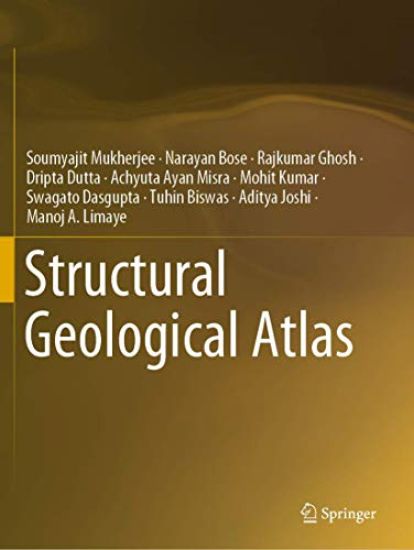
Structural Geological Atlas

Structural Geological Atlas

Soumyajit Mukherjee; Narayan Bose; Rajkumar Ghosh; Dripta Dutta; Achyuta Ayan Misra; Mohit Kumar; Swagato Dasgupta; Tuhin Biswas; Aditya Joshi; Manoj A. Limaye

Springer Verlag, Singapore
2021
nidottu
This book presents more than 600 eye-catching structural geological photographs and explanatory descriptions, from different Indian terrains. This book will enable easy identification of deformation features, one of the most important tasks in structural geology at the meso- and micro-scales. The book focuses on ductile and brittle shear sense indicators. This book suits for the undergraduate and graduate geoscience students. The book will be of considerable interest to tectonicians and structural geologists, given the enormous international importance of Indian terrains for exploration and other purposes.
Structural Geological Atlas

Structural Geological Atlas

Soumyajit Mukherjee; Narayan Bose; Rajkumar Ghosh; Dripta Dutta; Achyuta Ayan Misra; Mohit Kumar; Swagato Dasgupta; Tuhin Biswas; Aditya Joshi; Manoj A. Limaye

Springer Verlag, Singapore
2019
sidottu
This book presents more than 600 eye-catching structural geological photographs and explanatory descriptions, from different Indian terrains. This book will enable easy identification of deformation features, one of the most important tasks in structural geology at the meso- and micro-scales. The book focuses on ductile and brittle shear sense indicators. This book suits for the undergraduate and graduate geoscience students. The book will be of considerable interest to tectonicians and structural geologists, given the enormous international importance of Indian terrains for exploration and other purposes.
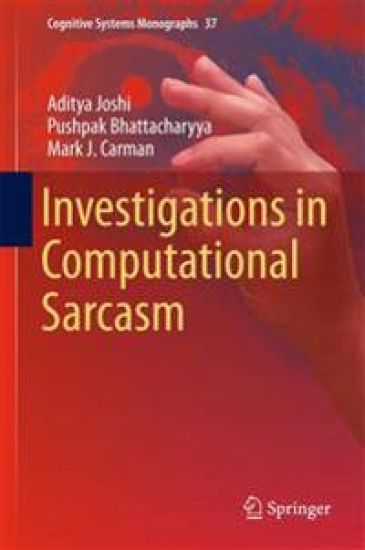
Investigations in Computational Sarcasm

Investigations in Computational Sarcasm

Aditya Joshi; Pushpak Bhattacharyya; Mark J. Carman

Springer Verlag, Singapore
2019
nidottu
This book describes the authors’ investigations of computational sarcasm based on the notion of incongruity. In addition, it provides a holistic view of past work in computational sarcasm and the challenges and opportunities that lie ahead. Sarcastic text is a peculiar form of sentiment expression and computational sarcasm refers to computational techniques that process sarcastic text. To first understand the phenomenon of sarcasm, three studies are conducted: (a) how is sarcasm annotation impacted when done by non-native annotators? (b) How is sarcasm annotation impacted when the task is to distinguish between sarcasm and irony? And (c) can targets of sarcasm be identified by humans and computers. Following these studies, the book proposes approaches for two research problems: sarcasm detection and sarcasm generation. To detect sarcasm, incongruity is captured in two ways: ‘intra-textual incongruity’ where the authors look at incongruity within the text to be classified (i.e., target text) and ‘context incongruity’ where the authors incorporate information outside the target text. These approaches use machine-learning techniques such as classifiers, topic models, sequence labelling, and word embeddings. These approaches operate at multiple levels: (a) sentiment incongruity (based on sentiment mixtures), (b) semantic incongruity (based on word embedding distance), (c) language model incongruity (based on unexpected language model), (d) author’s historical context (based on past text by the author), and (e) conversational context (based on cues from the conversation). In the second part of the book, the authors present the first known technique for sarcasm generation, which uses a template-based approach to generate a sarcastic response to user input. This book will prove to be a valuable resource for researchers working on sentiment analysis, especially as applied to automation in social media.
Investigations in Computational Sarcasm

Investigations in Computational Sarcasm

Aditya Joshi; Pushpak Bhattacharyya; Mark J. Carman

Springer Verlag, Singapore
2018
sidottu
This book describes the authors’ investigations of computational sarcasm based on the notion of incongruity. In addition, it provides a holistic view of past work in computational sarcasm and the challenges and opportunities that lie ahead. Sarcastic text is a peculiar form of sentiment expression and computational sarcasm refers to computational techniques that process sarcastic text. To first understand the phenomenon of sarcasm, three studies are conducted: (a) how is sarcasm annotation impacted when done by non-native annotators? (b) How is sarcasm annotation impacted when the task is to distinguish between sarcasm and irony? And (c) can targets of sarcasm be identified by humans and computers. Following these studies, the book proposes approaches for two research problems: sarcasm detection and sarcasm generation. To detect sarcasm, incongruity is captured in two ways: ‘intra-textual incongruity’ where the authors look at incongruity within the text to be classified (i.e., target text) and ‘context incongruity’ where the authors incorporate information outside the target text. These approaches use machine-learning techniques such as classifiers, topic models, sequence labelling, and word embeddings. These approaches operate at multiple levels: (a) sentiment incongruity (based on sentiment mixtures), (b) semantic incongruity (based on word embedding distance), (c) language model incongruity (based on unexpected language model), (d) author’s historical context (based on past text by the author), and (e) conversational context (based on cues from the conversation). In the second part of the book, the authors present the first known technique for sarcasm generation, which uses a template-based approach to generate a sarcastic response to user input. This book will prove to be a valuable resource for researchers working on sentiment analysis, especially as applied to automation in social media.