Kirjojen hintavertailu. Mukana 12 565 142 kirjaa ja 12 kauppaa.

Kirjailija

Adriaan H. Bredero

Kirjat ja teokset yhdessä paikassa: 3 kirjaa, julkaisuja vuosilta 1994-2004, suosituimpien joukossa Bernard of Clairvaux. Vertaile teosten hintoja ja tarkista saatavuus suomalaisista kirjakaupoista.

3 kirjaa

Kirjojen julkaisuhaarukka 1994-2004.

Bernard Of Clairvaux

Bernard Of Clairvaux

Adriaan H. Bredero

T. T.Clark Ltd
2004
nidottu
"Bredero has produced a book that summarizes his lifelong preoccupation with the greatest saint of the twelfth century . . . The problem that intrigues Bredero . . . is the tension between Bernard the powerful churchman, resented by many contemporaries and by many interpreters still today, and Bernard the monk, master communicator of the most intimate spiritual experiences, beloved by numerous contemporaries, by John Calvin, and by many readers still today . . . A magisterial overview." John Van Engen in Church History Adriaan H. Bredero first began reading Bernard of Clairvaux in 1944 as a young university student forced into hiding by the Nazi occupation of the Netherlands. Over the past sixty years, Bredero's academic interest in Bernard has branched out to cover topics as diverse as the historical value of the vita prima, Bernard's part in the conflict between Cîteaux and Cluny, and the image of St. Bernard as it has been developed by hagiographers and scholars through the ages. Bernard of Clairvaux: Between Cult and History summarizes Bredero's lifelong study of Bernard, the Cistercian monk who was arguably the most influential ecclesiastical figure of the twelfth century and who remains one of the church's most venerated saints.
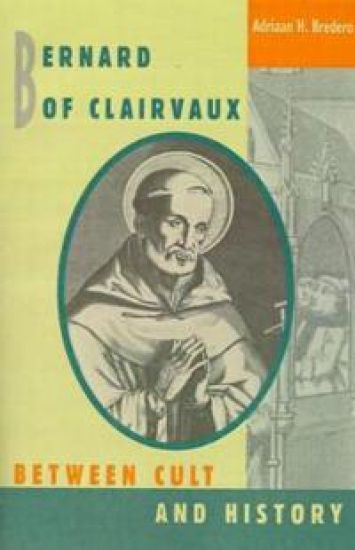
Bernard of Clairvaux

Bernard of Clairvaux

Adriaan H. Bredero

William B Eerdmans Publishing Co
2001
pokkari
Bernard of Clairvaux between Cult and History summarizes Bredero's lifelong study of Bernard, the Cistercian monk who was arguably the most influential ecclesiastical figure of the twelfth century and who remains one of the church's most venerated saints. This volume, which Bredero himself calls his "final report of a long investigation," does not pretend to offer yet another biography of Bernard. Rather, it paves the way for future biographical scholarship by pointing out - and often suggesting resolutions to - the many problems that beset this field of inquiry. Toward this end, Bredero deals care fully with three key areas in the field of Bernard studies. First, he examines the textual problems surrounding the earliest hagiography of Bernard, in particular the vita prima, and the relationship between the authors of this work and Bernard. Second, Bredero evaluates Bernard as he has been discussed in historiography and literature. Third, he deals with the question of how Bernard ought to be viewed in his own historical context, his actions during his "earthly" life. For Bredero, the "chimera" nature of Bernard the man derives from a disjunction between "history" and "cult," between Bernard as historical actor and Bernard as object of cult. This volume will be invaluable to anyone interested in these parallel strains of fact and legend and particularly so to those who would attempt to reconcile them.
Christendom and Christianity in the Middle Ages

Christendom and Christianity in the Middle Ages

Adriaan H. Bredero

William B Eerdmans Publishing Co
1994
pokkari
Though buffetted on all sides by rapid and at times cataclysmic social, political, and economic change, the medieval church was able to make adjustments that kept it from becoming simply a fossil from the past rather than an enduring institution of salvation. The dynamic interaction between the medieval church and society gives form to this compelling and well-informed study by Adriaan Bredero. By considering medieval Christianity in full relation to its historical context, Bredero elucidates complex medieval realities - many of which run counter to common modern notions about the Middle Ages. Bredero moves beyond the usual treatment of history by framing his overall discussion in terms of a fascinating and relevant question: To what extent is Christianity today still molded by medieval society? The book begins with an overview of religion and the church in medieval society, from the early Christianization of Western Europe through the fifteenth century. Bredero counters earlier romanticized assessments of the Middle Ages as a thoroughly Christian period by arriving at a definition of Christendom, not in its original sense as the empire of Charlemagne, but rather as "the countries, people, and matters which stood under the influence of Christ." Other chapters develop the following topics: medieval conceptions of reality that are prone to modern misunderstanding, such as a view of time that distinguished the distant, "ancient" past - an ideal, golden age - from the recent, "modern" past - an inferior, sub-Christian time - a concept that led to the rise of millenarianism; the role of Jerusalem in Western Christian thought - as a goal for pilgrims, a motivation for the Crusades, and a source of holy relics; the "Truce of God" movement as an attempt by bishops to restore peace, along with an analysis of its motives, limitations, and consequences; the rise of the Cistercian and Cluniac orders as reform movements within monasticism, with particular attention to the r