Kirjojen hintavertailu. Mukana 12 265 469 kirjaa ja 12 kauppaa.
Kirjailija
Adrian Bejan
Kirjat ja teokset yhdessä paikassa: 21 kirjaa, julkaisuja vuosilta 1995-2026, suosituimpien joukossa Thermal Design and Optimization. Vertaile teosten hintoja ja tarkista saatavuus suomalaisista kirjakaupoista.
A comprehensive and rigorous introduction to thermal system design from a contemporary perspective Thermal Design and Optimization offers readers a lucid introduction to the latest methodologies for the design of thermal systems and emphasizes engineering economics, system simulation, and optimization methods. The methods of exergy analysis, entropy generation minimization, and thermoeconomics are incorporated in an evolutionary manner. This book is one of the few sources available that addresses the recommendations of the Accreditation Board for Engineering and Technology for new courses in design engineering. Intended for classroom use as well as self-study, the text provides a review of fundamental concepts, extensive reference lists, end-of-chapter problem sets, helpful appendices, and a comprehensive case study that is followed throughout the text. Contents include: *Introduction to Thermal System Design *Thermodynamics, Modeling, and Design Analysis *Exergy Analysis *Heat Transfer, Modeling, and Design Analysis *Applications with Heat and Fluid Flow *Applications with Thermodynamics and Heat and Fluid Flow *Economic Analysis *Thermoeconomic Analysis and Evaluation *Thermoeconomic Optimization Thermal Design and Optimization offers engineering students, practicing engineers, and technical managers a comprehensive and rigorous introduction to thermal system design and optimization from a distinctly contemporary perspective. Unlike traditional books that are largely oriented toward design analysis and components, this forward-thinking book aligns itself with an increasing number of active designers who believe that more effective, system-oriented design methods are needed. Thermal Design and Optimization offers a lucid presentation of thermodynamics, heat transfer, and fluid mechanics as they are applied to the design of thermal systems. This book broadens the scope of engineering design by placing a strong emphasis on engineering economics, system simulation, and optimization techniques. Opening with a concise review of fundamentals, it develops design methods within a framework of industrial applications that gradually increase in complexity. These applications include, among others, power generation by large and small systems, and cryogenic systems for the manufacturing, chemical, and food processing industries. This unique book draws on the best contemporary thinking about design and design methodology, including discussions of concurrent design and quality function deployment. Recent developments based on the second law of thermodynamics are also included, especially the use of exergy analysis, entropy generation minimization, and thermoeconomics. To demonstrate the application of important design principles introduced, a single case study involving the design of a cogeneration system is followed throughout the book. In addition, Thermal Design and Optimization is one of the best new sources available for meeting the recommendations of the Accreditation Board for Engineering and Technology for more design emphasis in engineering curricula. Supported by extensive reference lists, end-of-chapter problem sets, and helpful appendices, this is a superb text for both the classroom and self-study, and for use in industrial design, development, and research. A detailed solutions manual is available from the publisher.

Time and beauty are two of our most visceral perceptions. Yet, their nature is seldom questioned. In this ground-breaking new work, Adrian Bejan — a true 'original' among physicists — explains, in a scholarly yet colorful style, the scientific basis for the perception of time and beauty.Organized into three main ideas, the book begins first with the perception of time. The author expounds on why we feel that time flies faster as we get older. Perceived time, also called 'mind time,' is different from clock time. In this context, time is another word for 'perceived change'. Next, readers will discover that beauty is appealing because beautifully-shaped images are scanned faster by two eyes. To observe our immediate surroundings and to understand them faster is highly advantageous to survival; hence, there is an underlying evolutionary advantage to our discernment for ideal ratios, shapes, and beauty at large. Finally, time and beauty are jointly understood to explain why the global pandemic had decelerated our mind time. This understanding arms us with techniques to slow down our mind time (which accelerates with age), and to create the conditions for living longer and more creatively.Scientists may have contemplated aspects of time and beauty separately. In contrast, the author submits an original and rewarding approach to understanding them together. In the process, key questions to our cognition are answered. Why does the mind 'try' to make sense of a new mental image? Why is there a natural tendency to organize a new input and mentally position it among past perceptions? Through physics, the book offers a general answer: to empower the individual with speed and clarity of thought, understanding, decision-making and movement. The same answer holds for the other disparate perceptions illustrated in this book, from time and beauty to ideas, message, shape, perspective, art, science, illusions, and dreams.
HEAT TRANSFER Provides authoritative coverage of the fundamentals of heat transfer, written by one of the most cited authors in all of Engineering Heat Transfer presents the fundamentals of the generation, use, conversion, and exchange of heat between physical systems. A pioneer in establishing heat transfer as a pillar of the modern thermal sciences, Professor Adrian Bejan presents the fundamental concepts and problem-solving methods of the discipline, predicts the evolution of heat transfer configurations, the principles of thermodynamics, and more. Building upon his classic 1993 book Heat Transfer, the author maintains his straightforward scientific approach to teaching essential developments such as Fourier conduction, fins, boundary layer theory, duct flow, scale analysis, and the structure of turbulence. In this new volume, Bejan explores topics and research developments that have emerged during the past decade, including the designing of convective flow and heat and mass transfer, the crucial relationship between configuration and performance, and new populations of configurations such as tapered ducts, plates with multi-scale features, and dendritic fins. Heat Transfer: Evolution, Design and Performance: Covers thermodynamics principles and establishes performance and evolution as fundamental concepts in thermal sciencesDemonstrates how principles of physics predict a future with economies of scale, multi-scale design, vascularization, and hierarchical distribution of many small featuresExplores new work on conduction architecture, convection with nanofluids, boiling and condensation on designed surfaces, and resonance of natural circulation in enclosuresIncludes numerous examples, problems with solutions, and access to a companion website Heat Transfer: Evolution, Design and Performance is essential reading for undergraduate and graduate students in mechanical and chemical engineering, and for all engineers, physicists, biologists, and earth scientists.
The book begins with familiar designs found all around and inside us (such as the ‘trees’ of river basins, human lungs, blood and city traffic). It then shows how all flow systems are driven by power from natural engines everywhere, and how they are endlessly shaped because of freedom. Finally, Professor Bejan explains how people, like everything else that moves on earth, are driven by power derived from our “engines” that consume fuel and food, and that our movement dissipates the power completely and changes constantly for greater access, economies of scale, efficiency, innovation and life. Written for wide audiences of all ages, including readers interested in science, patterns in nature, similarity and non-uniformity, history and the future, and those just interested in having fun with ideas, the book shows how many “design change” concepts acquire a solid scientific footing and how they exist with the evolution of nature, society, technology and science.
This updated edition of a widely admired text provides a user-friendly introduction to the field that requires only routine mathematics. The book starts with the elements of fluid mechanics and heat transfer, and covers a wide range of applications from fibrous insulation and catalytic reactors to geological strata, nuclear waste disposal, geothermal reservoirs, and the storage of heat-generating materials. As the standard reference in the field, this book will be essential to researchers and practicing engineers, while remaining an accessible introduction for graduate students and others entering the field. The new edition features 2700 new references covering a number of rapidly expanding fields, including the heat transfer properties of nanofluids and applications involving local thermal non-equilibrium and microfluidic effects.
An advanced, practical approach to the first and second laws of thermodynamics Advanced Engineering Thermodynamics bridges the gap between engineering applications and the first and second laws of thermodynamics. Going beyond the basic coverage offered by most textbooks, this authoritative treatment delves into the advanced topics of energy and work as they relate to various engineering fields. This practical approach describes real-world applications of thermodynamics concepts, including solar energy, refrigeration, air conditioning, thermofluid design, chemical design, constructal design, and more. This new fourth edition has been updated and expanded to include current developments in energy storage, distributed energy systems, entropy minimization, and industrial applications, linking new technologies in sustainability to fundamental thermodynamics concepts. Worked problems have been added to help students follow the thought processes behind various applications, and additional homework problems give them the opportunity to gauge their knowledge. The growing demand for sustainability and energy efficiency has shined a spotlight on the real-world applications of thermodynamics. This book helps future engineers make the fundamental connections, and develop a clear understanding of this complex subject. Delve deeper into the engineering applications of thermodynamicsWork problems directly applicable to engineering fieldsIntegrate thermodynamics concepts into sustainability design and policyUnderstand the thermodynamics of emerging energy technologies Condensed introductory chapters allow students to quickly review the fundamentals before diving right into practical applications. Designed expressly for engineering students, this book offers a clear, targeted treatment of thermodynamics topics with detailed discussion and authoritative guidance toward even the most complex concepts. Advanced Engineering Thermodynamics is the definitive modern treatment of energy and work for today's newest engineers.
Convection in Porous Media, 4th Edition, provides a user-friendly introduction to the subject, covering a wide range of topics, such as fibrous insulation, geological strata, and catalytic reactors. The presentation is self-contained, requiring only routine mathematics and the basic elements of fluid mechanics and heat transfer. The book will be of use not only to researchers and practicing engineers as a review and reference, but also to graduate students and others entering the field. The new edition features approximately 1,750 new references and covers current research in nanofluids, cellular porous materials, strong heterogeneity, pulsating flow, and more.
A new edition of the bestseller on convection heat transfer A revised edition of the industry classic, Convection Heat Transfer, Fourth Edition, chronicles how the field of heat transfer has grown and prospered over the last two decades. This new edition is more accessible, while not sacrificing its thorough treatment of the most up-to-date information on current research and applications in the field. One of the foremost leaders in the field, Adrian Bejan has pioneered and taught many of the methods and practices commonly used in the industry today. He continues this book's long-standing role as an inspiring, optimal study tool by providing: Coverage of how convection affects performance, and how convective flows can be configured so that performance is enhancedHow convective configurations have been evolving, from the flat plates, smooth pipes, and single-dimension fins of the earlier editions to new populations of configurations: tapered ducts, plates with multiscale features, dendritic fins, duct and plate assemblies (packages) for heat transfer density and compactness, etc.New, updated, and enhanced examples and problems that reflect the author's research and advances in the field since the last editionA solutions manual Complete with hundreds of informative and original illustrations, Convection Heat Transfer, Fourth Edition is the most comprehensive and approachable text for students in schools of mechanical engineering.
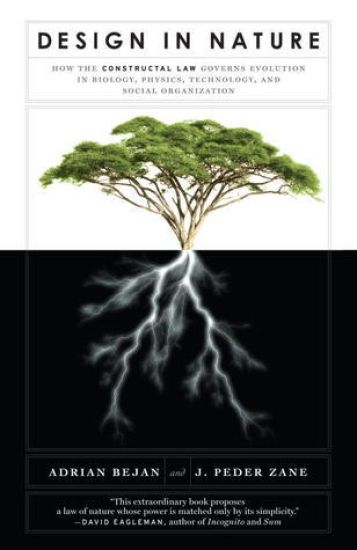
In this groundbreaking book, Adrian Bejan takes the recurring patterns in nature--trees, tributaries, air passages, neural networks, and lightning bolts--and reveals how a single principle of physics, the constructal law, accounts for the evolution of these and many other designs in our world. Everything--from biological life to inanimate systems--generates shape and structure and evolves in a sequence of ever-improving designs in order to facilitate flow. River basins, cardiovascular systems, and bolts of lightning are very efficient flow systems to move a current--of water, blood, or electricity. Likewise, the more complex architecture of animals evolve to cover greater distance per unit of useful energy, or increase their flow across the land. Such designs also appear in human organizations, like the hierarchical "flowcharts" or reporting structures in corporations and political bodies. All are governed by the same principle, known as the constructal law, and configure and reconfigure themselves over time to flow more efficiently. Written in an easy style that achieves clarity without sacrificing complexity, Design in Nature is a paradigm-shifting book that will fundamentally transform our understanding of the world around us.
Porous and Complex Flow Structures in Modern Technologies represents a new approach to the field, considering the fundamentals of porous media in terms of the key roles played by these materials in modern technology. Intended as a text for advanced undergraduates and as a reference for practicing engineers, the book uses the physics of flows in porous materials to tie together a wide variety of important issues from such fields as biomedical engineering, energy conversion, civil engineering, electronics, chemical engineering, and environmental engineering. Thus, for example, flows of water and oil through porous ground play a central role in energy exploration and recovery (oil wells, geothermal fluids), energy conversion (effluents from refineries and power plants), and environmental engineering (leachates from waste repositories). Similarly, the demands of miniaturization in electronics and in biomedical applications are driving research into the flow of heat and fluids through small-scale porous media (heat exchangers, filters, gas exchangers). Filters, catalytic converters, the drying of stored grains, and a myriad of other applications involve flows through porous media. By providing a unified theoretical framework that includes not only the traditional homogeneous and isotropic media but also models in which the assumptions of representative elemental volumes or global thermal equilibrium fail, the book provides practicing engineers the tools they need to analyze complex situations that arise in practice. This volume includes examples, solved problems and an extensive glossary of symbols.
end of Chapter 11 (geophysical aspects). Once again we decided that, except for a brief mention, convection in unsaturated media had to be beyond the scope of this book. D.A.N.againenjoyedthehospitalityoftheDepartmentofMechanicalEngine- ing and Materials Science at Duke University while on Research and Study Leave from the University of Auckland, and both of those institutions again provided ?nancial support. We are grateful for comments from Graham Weir and Roger Young on a draft of Section 11.9, a topic on which we had much to learn. We also are grateful to a large number of people who provided us with preprints of their papers prior to publication. Other colleagues have improved our understanding of the subject of this book in ways too numerous to mention here. Once again we relied on the expertise and hard work of Linda Hayes for the preparation of the electronic version of our manuscript, and again the staff at the Engineering Library of Duke University made our search of the literature an enjoyable experience.
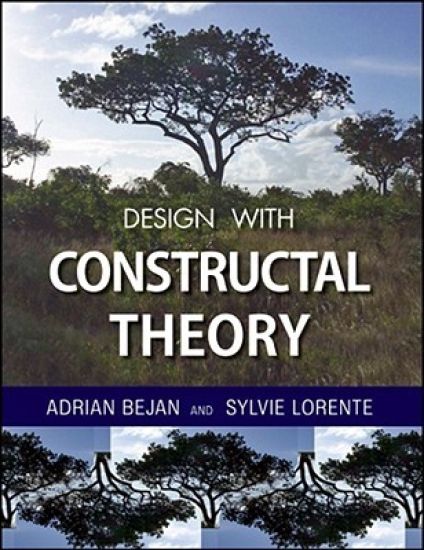
Design course on the universal principle of configurations in nature and engineering-the constructal law Design with Constructal Theory offers a revolutionary new approach based on physics for understanding and predicting the designs that arise in nature and engineering, from the tree and the forest to the cooling of electronics, urban design, decontamination, and vascular smart materials. This book shows how you can use the method of constructal theory to design human-made systems in order to reduce trial and error and increase the system performance. First developed in the late 1990s, constructal theory holds that flow architecture arises from the natural evolutionary tendency to generate greater flow access in time and in flow configurations that are free to morph. It unites flow systems with solid mechanical structures, which are viewed as systems for the flow of stresses. Constructal theory unites nature with engineering, and helps us generate novel designs across the board, from high-density packages to vascular materials with new functionalities (self-healing, self-cooling), and from tree-shaped heat exchangers to svelte fluid-flow and solid structures. Design with Constructal Theory starts with basic principles and then shows how these principles are applied to understanding and designing increasingly complex systems. Problems and exercises at the end of each chapter give you an opportunity to use constructal theory to solve actual design problems. This book is based on a design course developed by the two authors for upper-level undergraduates and graduate students at Duke University and other universities all over the world. With the authors' expert guidance, students and professionals in mechanical, civil, environmental, chemical, aerospace, and biomedical engineering will understand natural systems, and then practice design as science, by relying on constructal strategies to pursue and discover novel and effective designs.
Porous and Complex Flow Structures in Modern Technologies represents a new approach to the field, considering the fundamentals of porous media in terms of the key roles played by these materials in modern technology. Intended as a text for advanced undergraduates and as a reference for practicing engineers, the book uses the physics of flows in porous materials to tie together a wide variety of important issues from such fields as biomedical engineering, energy conversion, civil engineering, electronics, chemical engineering, and environmental engineering. Thus, for example, flows of water and oil through porous ground play a central role in energy exploration and recovery (oil wells, geothermal fluids), energy conversion (effluents from refineries and power plants), and environmental engineering (leachates from waste repositories). Similarly, the demands of miniaturization in electronics and in biomedical applications are driving research into the flow of heat and fluids through small-scale porous media (heat exchangers, filters, gas exchangers). Filters, catalytic converters, the drying of stored grains, and a myriad of other applications involve flows through porous media. By providing a unified theoretical framework that includes not only the traditional homogeneous and isotropic media but also models in which the assumptions of representative elemental volumes or global thermal equilibrium fail, the book provides practicing engineers the tools they need to analyze complex situations that arise in practice. This volume includes examples, solved problems and an extensive glossary of symbols.
Seemingly universal geometric forms unite the flow systems of engineering and nature. For example, tree-shaped flows can be seen in computers, lungs, dendritic crystals, urban street patterns, and communication links. In this groundbreaking book, first published in 2000, Adrian Bejan considers the design and optimization of engineered systems and discovers a deterministic principle of the generation of geometric form in natural systems. Shape and structure spring from the struggle for better performance in both engineering and nature. This idea is the basis of the new constructal theory: the objective and constraints principle used in engineering is the same mechanism from which the geometry in natural flow systems emerges. From heat exchangers to river channels, the book draws many parallels between the engineered and the natural world. Among the topics covered are mechanical structure, thermal structure, heat trees, ducts and rivers, turbulent structure, and structure in transportation and economics. The numerous illustrations, examples, and homework problems in every chapter make this an ideal text for engineering design courses. Its provocative ideas will also appeal to a broad range of readers in engineering, natural sciences, economics, and business.