Kirjailija
Adrian Shaughnessy
Kirjat ja teokset yhdessä paikassa: 12 kirjaa, julkaisuja vuosilta 2010-2026, suosituimpien joukossa Herb Lubalin: American Graphic Designer. Vertaile teosten hintoja ja tarkista saatavuus suomalaisista kirjakaupoista.
12 kirjaa
Kirjojen julkaisuhaarukka 2010-2026.
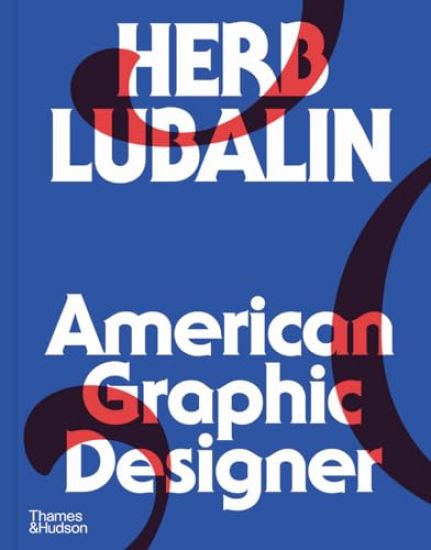
Available again, a major monograph on the legendary US typographer and graphic designer Herb Lubalin. One of the original Mad Men, Herb Lubalin (1918–1981) was a giant of American design and typography whose passion for rebellion and innovation made him one of the most successful art directors of the 20th century and beyond. He is perhaps most recognized for his typeface Avant Garde, but his reach extended far and wide. A constant boundary breaker on both a visual and social level, he was a co-creator of the culture-shocking magazines Avant-Garde, Eros and Fact, and founder of the equally influential U&lc. Herb Lubalin: American Graphic Designer features hundreds of examples of Lubalin’s work and previously unseen photographs of him at work and play. Divided into sections on his work in advertising, typography and editorial, it also features an extensive biographical text by Adrian Shaughnessy that includes interviews with George Lois, Seymour Chwast, Alan Peckolick, Carl Fischer, Steven Heller and members of the Lubalin family. Produced in association with the Herb Lubalin Study Center at Cooper Union, New York, and with the active cooperation of the Lubalin family, this monograph is the definitive work on one of America’s most influential designers.
Margaret Calvert: Woman at Work
Margaret Calvert; Adrian Shaughnessy; Marion Deuchars
THAMES HUDSON LTD
2026
sidottu
The first book dedicated to Margaret Calvert, pioneer of design for public service, a groundbreaking typographer and recipient of 2024’s New York Type Directors Club Medal. Margaret Calvert’s design work on the signs of Britain’s national road network, with Jock Kinneir, means that it is almost impossible to travel anywhere in the UK and not benefit from her skill as a designer. Her ultra-legible typeface and engaging pictograms have become an integral part of everyday British life, and they have set the benchmark for highway signage internationally. Following a distinguished career as a graphic designer, Margaret Calvert became an influential educator at the Royal College of Art, where she taught a generation of designers, many of whom have achieved global recognition. Today, working in her home studio, she takes on projects that personally inspire her. This monograph – the first dedicated to her work – captures the full arc of her career, encompassing the three distinct phases of her professional life and offering insight into her early years in South Africa and her formative experiences after moving to the UK as a teenager. Lavishly illustrated with rare glimpses into her archive and details of her legendary typefaces, it is designed by Margaret and A2/SW/HK, the studio co-founded by her frequent creative partner (and former student) Henrik Kubel and Scott Williams. The book is edited by Adrian Shaughnessy, with an introduction by Eye magazine editor, John L. Walters and an essay by Margaret’s friend and former student Marion Deuchars.
The first book dedicated to the career of graphic designer Chris Ashworth, charting his ‘Swiss Grit’ approach from his time at Ray Gun magazine in the 1990s to his experimental type projects of the present day. Chris Ashworth fuses a career as a creative director driving strategic brand work for global brands with three decades of passion for experimental graphic design and typography. Disorder is the first book dedicated to the product of this rule-breaking output and his inimitable ‘Swiss Grit’ approach, which sees modernist type principles combine with a soulful street aesthetic. From work made for the influential Ray Gun music magazine in the 1990s, through to his more recent hands-on, type-based projects for clients such as Nike and New Order, Disorder is concerned with the human craft of creativity – the details, imperfections and serendipitous moments. Disorder is an AI-free zone. Covering work made from 1997 to 2024, the book features 488 pages of published and unpublished work from Ray Gun (issues 44–58), alongside marked-up chromalins, diary entries and discarded early layouts. Disorder charts the development of Ashworth’s career from an independent designer to becoming creative director at Microsoft in Seattle, and brings together a selection of his ‘found-type’ photography and music-inspired artworks. Ashworth sees his work – craft-based, handmade – as a counterpoint to our screen dependent digital culture, and the manifestation of an alternative view, arguing that creative development away from the computer offers unique and precious merits.
Manuals
Tony Brook; Adrian Shaughnessy; Sarah Schrauwen; Massimo Vignelli
THAMES HUDSON LTD
2024
sidottu
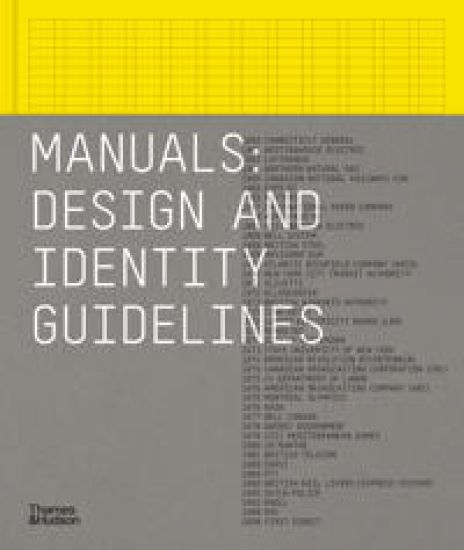
Introducing Manuals - the most comprehensive study of corporate identity design manuals from the golden era of identity design. The 41 manuals featured have been expertly photographed, retaining all essential details, and are presented in a spacious and functional layout, allowing you to fully appreciate these wonderful examples of sophisticated information design. These include manuals for Canadian National Railways (1965); New York City Transit Authority (1970); Olivetti (1971); NASA (1976); PTT [Dutch postal/telephone services] (1989); RAC (1998). The photography is accompanied by a foreword by the late Massimo Vignelli, an afterword by designer Lance Wyman, and texts from Adrian Shaughnessy, Richard Danne, Martha Fleming, Greg D’Onofrio and Patricia Belen, alongside interviews with branding and visual identity practitioners Armin Vit, Sean Perkins, John Lloyd, Michael Burke, Sean Wolcott, Liza Enebeis and John Bateson.
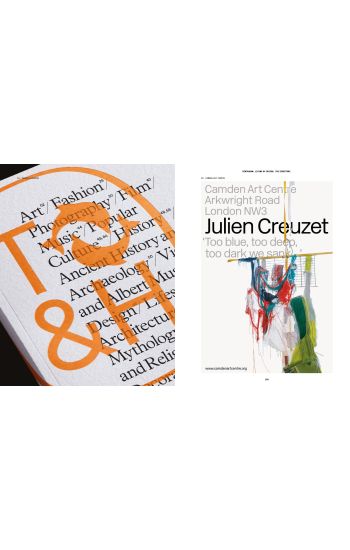
Five years in the making, Pentagram: Living by Design is an in-depth survey of the group from its beginnings in 1970s London to its current status as one of the powerhouses of international design. Pentagram: Living by Design (two volumes) is the definitive statement on 50 years of Pentagram. This is an in-depth survey of the group from its beginnings in 1970s London to its current status as one of the powerhouses of international design. Book one, The Biography, offers a comprehensive analysis of the group, its partners, its achievements, its multidisciplinary approach, and its unique business model. This is accompanied by a plethora of images (some never published), a visual essay of Pentagram’s work across four main sectors, a selection of partners writings, a Pentagram family tree, and much more.Book two, The Directory, has profiles of 50 partners, past and present, accompanied by extensive coverage of their work. It’s a stellar roll call: from the five famous founders to some of the most celebrated names in contemporary design. It also includes a list of everyone who worked in the firm’s various offices. Both books are designed by Tony Brook and the Spin design team and use a range of paper stocks and special colours.
The Graphic Language of Neville Brody 3
Adrian Shaughnessy; Neville Brody; Steven Heller
THAMES HUDSON LTD
2023
nidottu
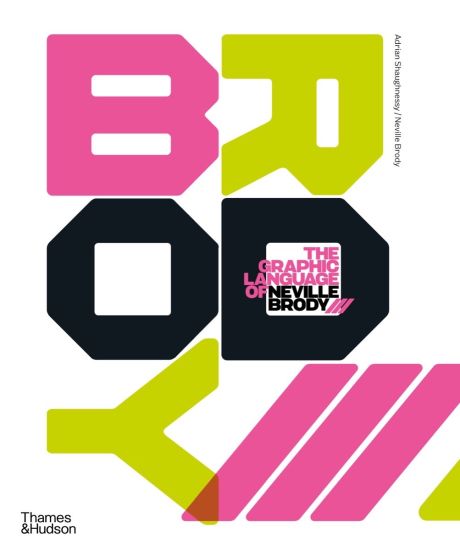
The long-awaited third monograph on the work of the most important British designer of his generation, showcasing projects from the last thirty years of his career. Neville Brody’s work sits at the intersections between graphic design, communication design and graphic art, pushing boundaries and blurring lines between them as he fuses influences from art, design, fashion, music, low and high cultures. Brody has been one of the most consistently innovative and shapeshifting graphic designers of the past fifty years. He has produced a body of commercial work covering editorial, brand identity, typography, systems, information and interface design of unparalleled boldness and sophistication for global clients that include Shiseido, Coca-Cola, Samsung, Nikon, LVMH, Nike and Dom Perignon, and UK clients such as the BBC, Channel 4, Tate Modern and The Times. The Graphic Language of Neville Brody 3 also captures a body of one-off creative works and site-specific collaborations that are motivated by creativity, political and cultural viewpoints, provocation, and expression. The Graphic Language of Neville Brody 3 brings almost thirty years of work together in thematic sections that address the key fields of his vibrant design projects, including typographic experimentation, cultural subversion, and design systems. Richly illustrated, each project is explored in detail, revealing the work that has defined Brody’s recent practise across six chapters, from major brands to magazine editorials and features, revealing how Brody’s design language has been informed, evolved and remarkably stayed true to key themes and ideas throughout his career to date. Brody has produced a rich, dynamic and surprising body of new work that will attract a new generation of designers and art directors. This inspirational volume will be essential reading for anyone interested in the evolution of graphic design over the past three decades.
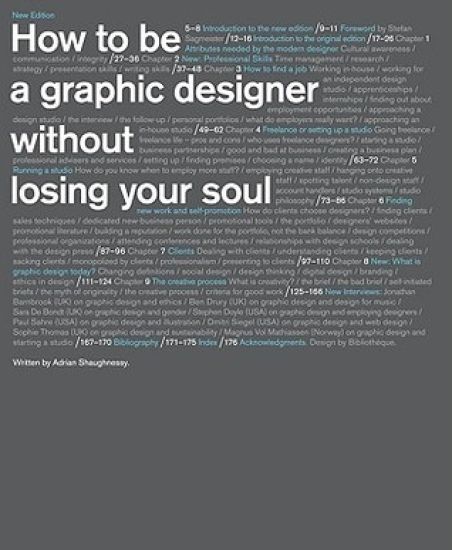
How to Be a Graphic Designer Withou: New Expanded Version
Adrian Shaughnessy
PRINCETON ARCHITECTURAL PRESS
2010
nidottu
Published to instant acclaim in 2005, our best selling How to Be a Graphic Designer without Losing Your Soul has become a trusted resource for graphic designers around the world, combining practical advice with philosophical guidance to help young professionals embark on their careers. This new, expanded edition brings this essential text up to date with new chapters on professional skills, the creative process, and global trends that include social responsibility, ethics, and the rise of digital culture. How to Be a Graphic Designer offers clear, concise guidance along with focused, no-nonsense strategies for setting up, running, and promoting a studio; finding work; and collaborating with clients. The book also includes inspiring new interviews with leading designers, including Jonathan Barnbrook, Sara De Bondt, Stephen Doyle, Ben Drury, Paul Sahre, Dmitri Siegel, Sophie Thomas, and Magnus Vol Mathiassen.
Graphic designers constantly complain that there is no career manual to guide them through the profession