Kirjojen hintavertailu. Mukana 12 595 353 kirjaa ja 12 kauppaa.

Kirjailija

Adrian Wallwork

Kirjat ja teokset yhdessä paikassa: 32 kirjaa, julkaisuja vuosilta 2012-2026, suosituimpien joukossa English for Presentations at International Conferences. Vertaile teosten hintoja ja tarkista saatavuus suomalaisista kirjakaupoista.

32 kirjaa

Kirjojen julkaisuhaarukka 2012-2026.

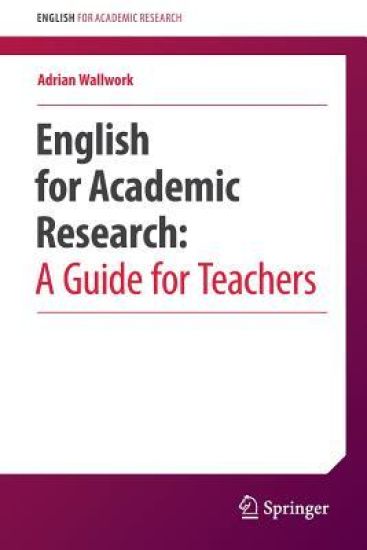
English for Academic Research:  A Guide for Teachers

English for Academic Research: A Guide for Teachers

Adrian Wallwork

Springer International Publishing AG
2016
nidottu
Scientific English is possibly the most rewarding area of EFL teaching. It differs from English for Academic Purposes (EAP) as it is directed to a much smaller audience: PhD and postdoc students. Courses on Scientific English are held in universities throughout the world, yet there is very little support for teachers in understanding what to teach andhow to teach it.This guide is part of the English for Academic Research series. Part 1 of the book sheds light on the world of academia, the writing of research papers, and the role of journal editors and reviewers. Part 2 gives practical suggestions on how to help your students improve their presentation skills. In Part 3 you will learn how to teach academic skills using nonacademic examples. Parts 1-3 are thus useful for anyone involved in teaching academic English, whether they have used the other books in the series or not. Part 4 suggests two syllabuses for teaching writing and presenting skills, based on the two core books: English for Writing Research PapersEnglish for Presentations at International ConferencesThis book will help you i) understand the world of your students (i.e. academic research),ii) plan courses, and iii) exploit the What's the Buzz? sections in the books on Writing,Presentations, Correspondence and Interacting on Campus.Adrian Wallwork has written over 30 books covering General English (Cambridge University Press, Scholastic), Business English (Oxford University Press), and Scientific English (Springer). He has trained several thousand PhD students from all over the world to write and present their research. Adrian also runs a scientific editing service: English forAcademics (E4AC).
English for Interacting on Campus

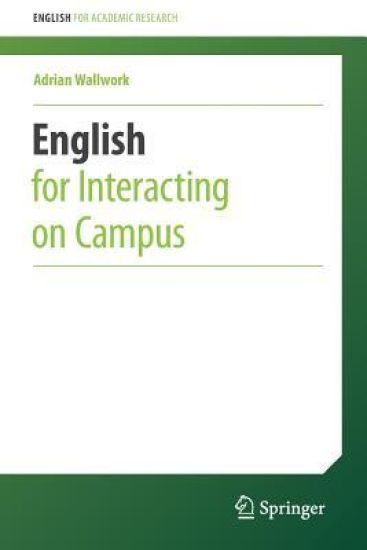
English for Interacting on Campus

Adrian Wallwork

Springer International Publishing AG
2016
nidottu
This volume covers the day-to-day activities of a non-native English speaking student carrying out research, attending lectures, socializing, and living in a foreign country. Whether on a US campus as a foreign student, or in a non-English speaking country where classes are given in English, this book will help students build confidence in interacting with professors and fellow students.
English for Presentations at International Conferences

English for Presentations at International Conferences

Adrian Wallwork

Springer International Publishing AG
2016
nidottu
Good presentation skills are key to a successful career in academia. This guide provides examples taken from real presentations given both by native and non-native academics covering a wide variety of disciplines.The easy-to-follow guidelines and tips will teach you how to: plan, prepare and practice a well-organized, interesting presentationavoid errors in English by using short easy-to-say sentencesimprove your English pronunciation and intonationgain confidence, and overcome nerves and embarrassmenthighlight the essential points you want your audience to rememberattract and retain audience attentiondeal with questions from the audienceThis new edition contains several additional features, including stimulating factoids and discussion points both for self-study and in-class use. New chapters also cover:learning from talks on TEDnetworking with potential collaborators, professors, fellow researchersinteracting successfully with non-native audiencespostersEAP teachers will find this book to be a great source of tips for training students, and for preparing both instructive and entertaining lessons.Other books in the series cover: writing research papers; English grammar, usage, and style; academic correspondence; interacting on campus; plus exercises books and a teacher's guide.Please visit http://www.springer.com/series/13913 for a full list of titles in the series.Adrian Wallwork is the author of more than 30 ELT and EAP textbooks. He has trained several thousand PhD students and academics from 35 countries to write research papers, prepare presentations, and communicate with editors, referees and fellow researchers.
English for Academic Correspondence

English for Academic Correspondence

Adrian Wallwork

Springer International Publishing AG
2016
nidottu
Written specifically for researchers of all disciplines whose first language is not English, this guide presents easy-to-follow rules and tips, along with authentic examples taken from real emails, referees' reports and cover letters, will show you how to:write effective emails (subject lines, structure, requests, level of formality)review other people's manuscripts reply effectively and constructively to referees' reports correspond with editorswrite letters regarding summer schools, internships, and PhD and postdoc programswrite reference lettersThis new edition contains over 40% new material, including stimulating factoids and discussion points both for self-study and in-class use, as well as suggestions for drafting proposals for research projects and writing research statements.EAP teachers will find this book to be a great source of tips for training students, and for providing both instructive and entertaining lessons.Other books in the series cover: writing research papers; presentations at international conferences; English grammar, usage and style; and interacting on campus; plus exercise books and a teacher's guide to the whole series.Please visit http://www.springer.com/series/13913 for a full list of titles in the series.Adrian Wallwork is the author of more than 30 ELT and EAP textbooks. He has trained several thousand PhD students and academics from 35 countries to write research papers, prepare presentations, and communicate with editors, referees and fellow researchers.
CVs, Resumes, and LinkedIn

CVs, Resumes, and LinkedIn

Adrian Wallwork

Springer-Verlag New York Inc.
2014
nidottu
Are you a graduate, postgraduate or PhD student? Are you simply looking for a new job in the private or public sector, in research or industry? If your aim is to produce a professional CV or resume, then this book is for you. Based on interviews with recruiters and HR managers, and an analysis of hundreds of CVs from around 40 different countries, the book is structured as a series of FAQs.Topics covered include:how recruiters and HR people analyse a CVwhether using a template is a good ideathe difference between a CV and a resumehow to present your personal details and whether to include a photohow to write an Executive Summarywhat to write in each section (Education, Work Experience, Skills, Personal Interests)how to write dateshow to highlight your language, communication and team skillshow to get and write referencesYou will also learn some hints and strategies for writing a:cover letterLinkedIn profilereference letterbioThe last chapter of the book contains a simple template to help you get the job of your dreams!
Presentations, Demos, and Training Sessions

Presentations, Demos, and Training Sessions

Adrian Wallwork

Springer-Verlag New York Inc.
2014
nidottu
This is the first book ever for non-native speakers on how to conduct technical demos and training sessions. You will also learn how to present your company, and explain your products and services. The book is designed to help both those who have never done presentations before, as well as those whose English is already good but who want to improve their presentation skills.The focus is on language, rather than on the creation of slides from a technical/artistic point of view. This book will help you to:prepare and practice a well organized, interesting and memorable presentationgive effective demos and training sessions either on site or via audio/video conferencehighlight the essential points you want the audience to rememberavoid problems in English by using short easy-to-say sentencesinvolve your audience, check their understanding, and deal with their questionsimprove your pronunciationovercome problems with nerves and embarrassmentmotivate your audience to listen and act on what you have saidThere is an introduction for trainers on how to teach presentations and demos within a Business English course.
User Guides, Manuals, and Technical Writing

User Guides, Manuals, and Technical Writing

Adrian Wallwork

Springer-Verlag New York Inc.
2014
nidottu
This book is intended for anyone whose job involves writing formal documentation. It is aimed at non-native speakers of English, but should also be of use for native speakers who have no training in technical writing.Technical writing is a skill that you can learn and this book outlines some simple ideas for writing clear documentation that will reflect well on your company, its image and its brand.The book has four parts:Structure and Content: Through examples, you will learn best practices in writing the various sections of a manual and what content to include.Clear Unambiguous English: You will learn how to write short clear sentences and paragraphs whose meaning will be immediately clear to the reader.Layout and Order Information: Here you will find guidelines on style issues, e.g., headings, bullets, punctuation and capitalization.Typical Grammar and Vocabulary Mistakes: This section is divided alphabetically and covers grammatical and vocabulary issues that are typical of user manuals.
Telephone and Helpdesk Skills

Telephone and Helpdesk Skills

Adrian Wallwork

Springer-Verlag New York Inc.
2014
nidottu
If you are a non-native English speaker and make telephone calls as part of your work, then this book is for you. By applying the suggested guidelines, you will stand a much greater chance of making an effective telephone call. You will learn how to:prepare for a call both psychologically and from an English language point of viewreceive calls (if you work on reception)leave messagesfind out about another company and talk about your own companychase people (i.e. people who have not followed up your requests)deal with difficult calls and callers, and improve your telephone manneruse the telephone while working on a help desk or helplineresolve language difficulties (i.e. when you cannot understand the other person's English)improve your pronunciationuse resources on the Internet to improve your listening skillsThe book concludes with a chapter of useful phrases. There is a brief introduction for trainers on how to teach telephone and helpdesk skills within a Business English course.
Email and Commercial Correspondence

Email and Commercial Correspondence

Adrian Wallwork

Springer-Verlag New York Inc.
2014
nidottu
If you write emails and letters as part of your work, then this book is for you. By applying the suggested guidelines, you will stand a much greater chance of getting the desired reply to your emails in the shortest time possible.Some of the key guidelines covered include:Write meaningful subject lines - otherwise recipients may not even open your mail.Always put the most important point in the first line - otherwise the reader may not read it.Be concise and only mention what is truly relevant. Write the minimum amount possible - you will also make fewer mistakes!Be a little too formal than too informal - you don’t want to offend anyone.If you have two long important things to say, say them in separate emails.Give clear instructions and reasonable deadlines.If you need people to cooperate with you, it is essential to highlight the benefits for them of cooperating with you.Empathize with your recipient's busy workload.Never translate typical phrases literally - learn equivalent phrases.The book concludes with a chapter of useful phrases. There is also a brief introduction for trainers on how to teach Business / Commercial English.
Meetings, Negotiations, and Socializing

Meetings, Negotiations, and Socializing

Adrian Wallwork

Springer-Verlag New York Inc.
2014
nidottu
This book is a guide to taking part in meetings and negotiations, and to the socializing required before and after such events. If you are a non-native English speaker, with an intermediate level and above, and you work for a company with international relations, then this book is the solution to all your English problems!Four main topics are covered:1. Meetings2. Negotiations3. Socializing4. How to understand fast-speaking native English speakersThis book is designed to be used like a manual or user guide - you don't need to read it starting from page 1. Like a manual it has lots of short subsections, and is divided into short paragraphs with many bullet points. This is to help you find what you want quickly and also to assimilate the information as rapidly and as effectively as possible. The book concludes with a chapter of useful phrases.There is an introduction for trainers on how to teach the skills required for meetings, negotiations and socializing in Business / Commercial English.
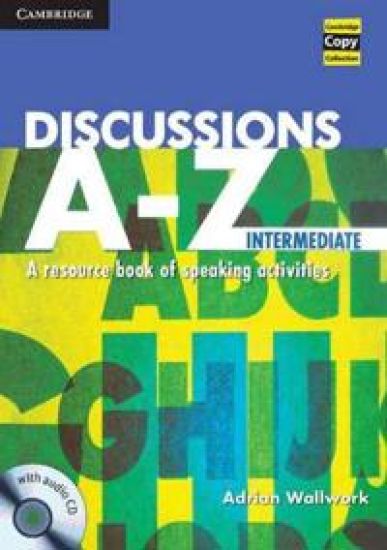
Discussions A-Z Intermediate Book and Audio CD

Discussions A-Z Intermediate Book and Audio CD

Adrian Wallwork

Cambridge University Press
2013
muu
This photocopiable resource book and audio CD of speaking activities is designed to encourage engaging and natural discussion among intermediate-level students. The book consists of 26 topic-based units, each filled with a variety of stimulating activities. All the activities are free-standing, and comprehensive teacher's notes give a clear indication of the preparation required, as well as keys to the activities, complete audioscripts and suggestions for discussion-based writing tasks. The audio recordings include listening material from the book in a wide range of native-speaker accents.
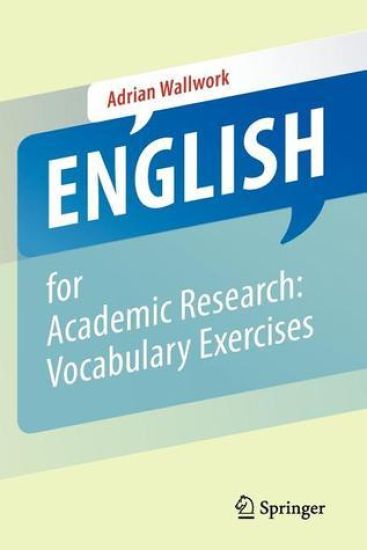
English for Academic Research: Vocabulary Exercises

English for Academic Research: Vocabulary Exercises

Adrian Wallwork

Springer-Verlag New York Inc.
2012
nidottu
This book is based on a study of referees' reports and letters from journal editors on reasons why papers written by non-native researchers are rejected due to problems with English (long sentences, redundancy, poor structure etc). It draws on English-related errors from around 5000 papers written by non-native authors, around 3000 emails, 500 abstracts by PhD students, and over 1000 hours of teaching researchers how to write and present research papers. The exercises are organized into nine chapters on: adjectives and adverbs (e.g. actual vs current, different vs several, continually vs continuously), link words (e.g. on the contrary vs on the other hand, despite vs nevertheless), nouns (e.g. danger vs hazard, measure vs measurement), prepositions (e.g. among vs between, in vs into, with vs within), verbs (e.g. check vs control, compose vs comprise, arise vs raise, exclude vs rule out), false friends and synonyms, spelling, useful phrases, emailsNearly all exercises require no actual writing but simply choosing between various options, thus facilitating self-study, e-reading and rapid progress. The exercises can also be integrated into English for Academic Purposes (EAP) and English for Special Purposes (ESP) courses at universities and research institutes.The book can be used in conjunction with the other exercise books in the series: English for Academic Research: Writing ExercisesEnglish for Academic Research: Grammar Exercises