Kirjojen hintavertailu. Mukana 12 335 846 kirjaa ja 12 kauppaa.

Kirjailija

Adriana Cavarero

Kirjat ja teokset yhdessä paikassa: 17 kirjaa, julkaisuja vuosilta 2000-2023, suosituimpien joukossa Toward a Feminist Ethics of Nonviolence. Vertaile teosten hintoja ja tarkista saatavuus suomalaisista kirjakaupoista.

17 kirjaa

Kirjojen julkaisuhaarukka 2000-2023.

Toward a Feminist Ethics of Nonviolence

Toward a Feminist Ethics of Nonviolence

Adriana Cavarero; Judith Butler; Bonnie Honig

FORDHAM UNIVERSITY PRESS
2021
sidottu
Toward a Feminist Ethics of Nonviolence brings together major feminist thinkers to debate Cavarero's call for a postural ethics of nonviolence and a sociality rooted in bodily interdependence. Toward a Feminist Ethics of Nonviolence brings together three major feminist thinkers—Adriana Cavarero, Judith Butler, and Bonnie Honig—to debate Cavarero's call for a postural ethics of nonviolence. The book consists of three longer essays by Cavarero, Butler, and Honig, followed by shorter responses by a range of scholars that widen the dialogue, drawing on post-Marxism, Italian feminism, queer theory, and lesbian and gay politics. Together, the authors contest the boundaries of their common project for a pluralistic, heterogeneous, but urgent feminist ethics of nonviolence.

Toward a Feminist Ethics of Nonviolence

Toward a Feminist Ethics of Nonviolence

Adriana Cavarero; Judith Butler; Bonnie Honig

Fordham University Press
2021
pokkari
Toward a Feminist Ethics of Nonviolence brings together major feminist thinkers to debate Cavarero’s call for a postural ethics of nonviolence and a sociality rooted in bodily interdependence. Toward a Feminist Ethics of Nonviolence brings together three major feminist thinkers—Adriana Cavarero, Judith Butler, and Bonnie Honig—to debate Cavarero’s call for a postural ethics of nonviolence. The book consists of three longer essays by Cavarero, Butler, and Honig, followed by shorter responses by a range of scholars that widen the dialogue, drawing on post-Marxism, Italian feminism, queer theory, and lesbian and gay politics. Together, the authors contest the boundaries of their common project for a pluralistic, heterogeneous, but urgent feminist ethics of nonviolence.

Surging Democracy

Surging Democracy

Adriana Cavarero

Stanford University Press
2021
pokkari
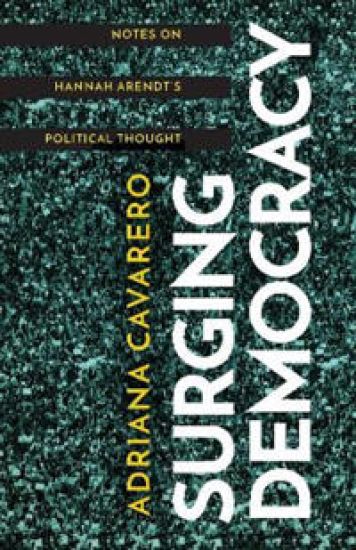
What does a truly democratic experience of political action look like today? In this provocative new work, Adriana Cavarero weighs in on contemporary debates about the relationship between democracy, happiness, and dissent. Drawing on Arendt's understanding of politics as a participatory experience, but also discussing texts by Émile Zola, Elias Canetti, Boris Pasternak, and Roland Barthes, along with engaging Judith Butler, Cavarero proposes a new view of democracy, based not on violence, but rather on the spontaneous experience of a plurality of bodies coming together in public. Expanding on the themes explored in previous works, Cavarero offers a timely intervention into current thinking about the nature of democracy, suggesting that its emergence thrives on the nonviolent creativity of a widespread, participatory, and relational power that is shared horizontally rather than vertically. From digital democracy to selfies to contemporary protest movements, Cavarero argues that we need to rethink our focus on individual happiness and turn toward rediscovering the joyful emotions of birth through plural interaction. Yes, let us be happy, she urges, but let us do so publicly, politically, together.
Surging Democracy

Surging Democracy

Adriana Cavarero

Stanford University Press
2021
sidottu
What does a truly democratic experience of political action look like today? In this provocative new work, Adriana Cavarero weighs in on contemporary debates about the relationship between democracy, happiness, and dissent. Drawing on Arendt's understanding of politics as a participatory experience, but also discussing texts by Émile Zola, Elias Canetti, Boris Pasternak, and Roland Barthes, along with engaging Judith Butler, Cavarero proposes a new view of democracy, based not on violence, but rather on the spontaneous experience of a plurality of bodies coming together in public. Expanding on the themes explored in previous works, Cavarero offers a timely intervention into current thinking about the nature of democracy, suggesting that its emergence thrives on the nonviolent creativity of a widespread, participatory, and relational power that is shared horizontally rather than vertically. From digital democracy to selfies to contemporary protest movements, Cavarero argues that we need to rethink our focus on individual happiness and turn toward rediscovering the joyful emotions of birth through plural interaction. Yes, let us be happy, she urges, but let us do so publicly, politically, together.
Inclinations

Inclinations

Adriana Cavarero

Stanford University Press
2016
sidottu
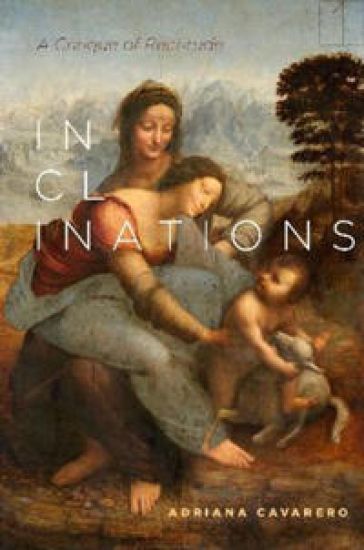
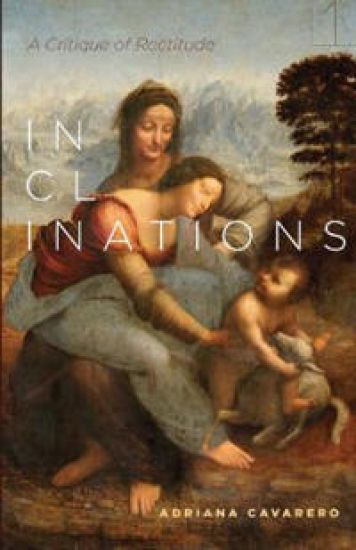
In this new and accessible book, Italy's best known feminist philosopher examines the moral and political significance of vertical posture in order to rethink subjectivity in terms of inclination. Contesting the classical figure of homo erectus or "upright man," Adriana Cavarero proposes an altruistic, open model of the subject—one who is inclined toward others. Contrasting the masculine upright with the feminine inclined, she references philosophical texts (by Plato, Thomas Hobbes, Immanuel Kant, Hannah Arendt, Elias Canetti, and others) as well as works of art (Barnett Newman, Leonardo da Vinci, Artemisia Gentileschi, and Alexander Rodchenko) and literature (Marcel Proust and Virginia Woolf).
Inclinations

Inclinations

Adriana Cavarero

Stanford University Press
2016
pokkari
In this new and accessible book, Italy's best known feminist philosopher examines the moral and political significance of vertical posture in order to rethink subjectivity in terms of inclination. Contesting the classical figure of homo erectus or "upright man," Adriana Cavarero proposes an altruistic, open model of the subject—one who is inclined toward others. Contrasting the masculine upright with the feminine inclined, she references philosophical texts (by Plato, Thomas Hobbes, Immanuel Kant, Hannah Arendt, Elias Canetti, and others) as well as works of art (Barnett Newman, Leonardo da Vinci, Artemisia Gentileschi, and Alexander Rodchenko) and literature (Marcel Proust and Virginia Woolf).
Thou Shalt Not Kill

Thou Shalt Not Kill

Adriana Cavarero; Angelo Scola

Fordham University Press
2015
pokkari
In this fascinating and rare little book, a leading Italian feminist philosopher and the Archbishop of Milan face off over the contemporary meaning of the biblical commandment not to kill. The result is a series of erudite and wide-ranging arguments that move from murder and suicide to just war and drone strikes, from bioethics and biopolitics to hermeneutics and philology, from Theodor Adorno and Max Horkheimer to Hannah Arendt and Michel Foucault, from Torah and Scripture to art and literature, from the essence of human dignity and the paradoxes of fratricide to engagements with Levinasian ethics. Less a direct debate than a disputation in the classical sense, Thou Shalt Not Kill proves to be a searching meditation on one of the unstated moral premises shared by otherwise bitterly opposed political factions. It will stimulate the mind of the novice while also reminding more advanced readers of the necessity and desirability of thinking in the present.
Thou Shalt Not Kill

Thou Shalt Not Kill

Adriana Cavarero; Angelo Scola

Fordham University Press
2015
sidottu
In this fascinating and rare little book, a leading Italian feminist philosopher and the Archbishop of Milan face off over the contemporary meaning of the biblical commandment not to kill. The result is a series of erudite and wide-ranging arguments that move from murder and suicide to just war and drone strikes, from bioethics and biopolitics to hermeneutics and philology, from Theodor Adorno and Max Horkheimer to Hannah Arendt and Michel Foucault, from Torah and Scripture to art and literature, from the essence of human dignity and the paradoxes of fratricide to engagements with Levinasian ethics. Less a direct debate than a disputation in the classical sense, Thou Shalt Not Kill proves to be a searching meditation on one of the unstated moral premises shared by otherwise bitterly opposed political factions. It will stimulate the mind of the novice while also reminding more advanced readers of the necessity and desirability of thinking in the present.
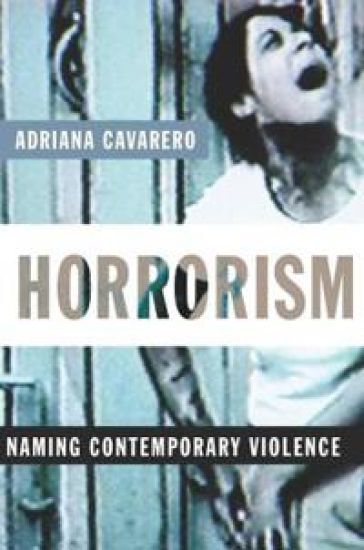
Horrorism

Horrorism

Adriana Cavarero

Columbia University Press
2011
pokkari
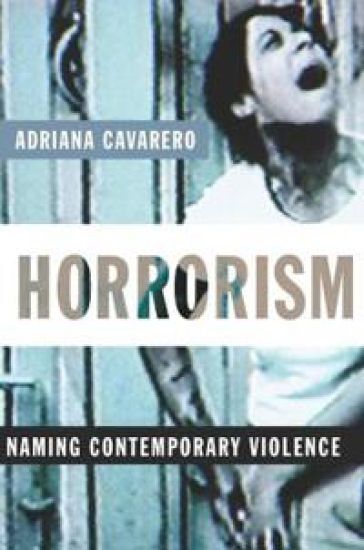
Words like "terrorism" and "war" no longer encompass the scope of contemporary violence. With this explosive book, Adriana Cavarero, one of the world's most provocative feminist theorists and political philosophers, effectively renders such terms obsolete. She introduces a new word--"horrorism"--to capture the experience of violence. Unlike terror, horrorism is a form of violation grounded in the offense of disfiguration and massacre. Numerous outbursts of violence fall within Cavarero's category of horrorism, especially when the phenomenology of violence is considered from the perspective of the victim rather than that of the warrior. Cavarero locates horrorism in the philosophical, political, literary, and artistic representations of defenseless and vulnerable victims. She considers both terror and horror on the battlefields of the Iliad, in the decapitation of Medusa, and in the murder of Medea's children. In the modern arena, she forges a link between horror, extermination, and massacre, especially the Nazi death camps, and revisits the work of Primo Levi, Hannah Arendt's thesis on totalitarianism, and Arendt's debate with Georges Bataille on the estheticization of violence and cruelty. In applying the horroristic paradigm to the current phenomena of suicide bombers, torturers, and hypertechnological warfare, Cavarero integrates Susan Sontag's views on photography and the eroticization of horror, as well as ideas on violence and the state advanced by Thomas Hobbes and Carl Schmitt. Through her searing analysis, Caverero proves that violence against the helpless claims a specific vocabulary, one that has been known for millennia, and not just to the Western tradition. Where common language fails to form a picture of atrocity, horrorism paints a brilliant portrait of its vivid reality.
Horrorism

Horrorism

Adriana Cavarero

Columbia University Press
2008
sidottu
Words like "terrorism" and "war" no longer encompass the scope of contemporary violence. With this explosive book, Adriana Cavarero, one of the world's most provocative feminist theorists and political philosophers, effectively renders such terms obsolete. She introduces a new word--"horrorism"--to capture the experience of violence. Unlike terror, horrorism is a form of violation grounded in the offense of disfiguration and massacre. Numerous outbursts of violence fall within Cavarero's category of horrorism, especially when the phenomenology of violence is considered from the perspective of the victim rather than that of the warrior. Cavarero locates horrorism in the philosophical, political, literary, and artistic representations of defenseless and vulnerable victims. She considers both terror and horror on the battlefields of the Iliad, in the decapitation of Medusa, and in the murder of Medea's children. In the modern arena, she forges a link between horror, extermination, and massacre, especially the Nazi death camps, and revisits the work of Primo Levi, Hannah Arendt's thesis on totalitarianism, and Arendt's debate with Georges Bataille on the estheticization of violence and cruelty. In applying the horroristic paradigm to the current phenomena of suicide bombers, torturers, and hypertechnological warfare, Cavarero integrates Susan Sontag's views on photography and the eroticization of horror, as well as ideas on violence and the state advanced by Thomas Hobbes and Carl Schmitt. Through her searing analysis, Caverero proves that violence against the helpless claims a specific vocabulary, one that has been known for millennia, and not just to the Western tradition. Where common language fails to form a picture of atrocity, horrorism paints a brilliant portrait of its vivid reality.
For More Than One Voice

For More Than One Voice

Adriana Cavarero

Stanford University Press
2005
pokkari
The human voice does not deceive. The one who is speaking is inevitably revealed by the singular sound of her voice, no matter "what" she says. We take this fact for granted—for example, every time someone asks, over the telephone, "Who is speaking?" and receives as a reply the familiar utterance, "It's me." Starting from the given uniqueness of every voice, Cavarero rereads the history of philosophy through its peculiar evasion of this embodied uniqueness. She shows how this history—along with the fields it comprehends, such as linguistics, musicology, political theory, and studies in orality—might be grasped as the "devocalization of Logos," as the invariable privileging of semantike over phone, mind over body. Female figures—from the Sirens to the Muses, from Echo to opera singers—provide a crucial counterhistory, one in which the embodied voice triumphs over the immaterial semantic. Reconstructing this counterhistory, Cavarero proposes a "politics of the voice" wherein the ancient bond between Logos and politics is reconfigured, and wherein what matters is not the communicative content of a given discourse, but rather who is speaking.
For More Than One Voice

For More Than One Voice

Adriana Cavarero

Stanford University Press
2005
sidottu
The human voice does not deceive. The one who is speaking is inevitably revealed by the singular sound of her voice, no matter "what" she says. We take this fact for granted—for example, every time someone asks, over the telephone, "Who is speaking?" and receives as a reply the familiar utterance, "It's me." Starting from the given uniqueness of every voice, Cavarero rereads the history of philosophy through its peculiar evasion of this embodied uniqueness. She shows how this history—along with the fields it comprehends, such as linguistics, musicology, political theory, and studies in orality—might be grasped as the "devocalization of Logos," as the invariable privileging of semantike over phone, mind over body. Female figures—from the Sirens to the Muses, from Echo to opera singers—provide a crucial counterhistory, one in which the embodied voice triumphs over the immaterial semantic. Reconstructing this counterhistory, Cavarero proposes a "politics of the voice" wherein the ancient bond between Logos and politics is reconfigured, and wherein what matters is not the communicative content of a given discourse, but rather who is speaking.
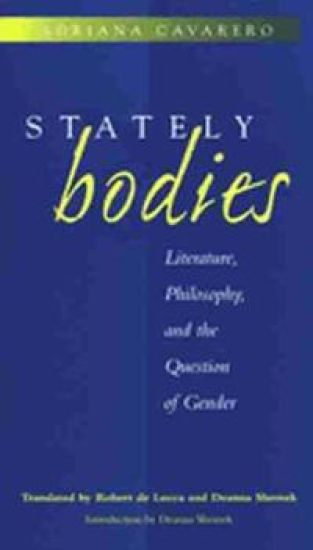
Stately Bodies

Stately Bodies

Adriana Cavarero

The University of Michigan Press
2002
sidottu
Stately Bodies explores the curious prevalence of bodily metaphors in conceptions of noncorporeal institutions: the state, the law, and politics itself. The book builds on work from Adriana Cavarero's well-received study, In Spite of Plato: A Feminist Rewriting of Ancient Philosophy. In that work Cavarero--as political theorist, philosopher, classicist, and close reader--examines literary and philosophical texts from Greek antiquity to modern to reveal the paradox that characterizes notions of the "body politic" in Western political philosophy.She examines bodily metaphor in political discourse and in fictional depictions of politics, including Sophocles' Antigone, Plato's Timaeus, Livy, John of Salisbury, Shakespeare's Hamlet, and Hobbes' Leviathan. An appendix explores two texts by women that disrupt these notions: Maria Zambrano's Tomb of Antigone and Ingeborg Bachmann's Undine Goes.Cavarero exposes the problematic nature of the mind/body dualism that has been essential in Western thought. Her insight that the expelled, depoliticized body is a female one becomes an instrument for decoding many paradoxical tropes of the political body. For instance, Cavarero revisits Antigone as the tragedy in which a body that is displaced, bleeding, and matrilinear allows the construction of a political order where misogynous rationality rules. Throughout the book, Cavarero argues that women have been cast by male thinkers into the realm of the corporeal as nonpolitical, and also suggests that this nonpolitical position is also a source of knowledge and power, that politics is a masculine pursuit that should not be admired or envied.Adriana Cavarero is Professor of Philosophy, University of Verona, and frequently is Visiting Professor. New York University. Her books Relating Narratives: Storytelling and Selfhood and In Spite of Plato: A Feminist Rewriting of Ancient Philosophy were published by Routledge.
Stately Bodies

Stately Bodies

Adriana Cavarero

The University of Michigan Press
2002
nidottu
Stately Bodies explores the curious prevalence of bodily metaphors in conceptions of noncorporeal institutions: the state, the law, and politics itself. The book builds on work from Adriana Cavarero's well-received study, In Spite of Plato: A Feminist Rewriting of Ancient Philosophy. In that work Cavarero--as political theorist, philosopher, classicist, and close reader--examines literary and philosophical texts from Greek antiquity to modern to reveal the paradox that characterizes notions of the "body politic" in Western political philosophy.She examines bodily metaphor in political discourse and in fictional depictions of politics, including Sophocles' Antigone, Plato's Timaeus, Livy, John of Salisbury, Shakespeare's Hamlet, and Hobbes' Leviathan. An appendix explores two texts by women that disrupt these notions: Maria Zambrano's Tomb of Antigone and Ingeborg Bachmann's Undine Goes.Cavarero exposes the problematic nature of the mind/body dualism that has been essential in Western thought. Her insight that the expelled, depoliticized body is a female one becomes an instrument for decoding many paradoxical tropes of the political body. For instance, Cavarero revisits Antigone as the tragedy in which a body that is displaced, bleeding, and matrilinear allows the construction of a political order where misogynous rationality rules. Throughout the book, Cavarero argues that women have been cast by male thinkers into the realm of the corporeal as nonpolitical, and also suggests that this nonpolitical position is also a source of knowledge and power, that politics is a masculine pursuit that should not be admired or envied.Adriana Cavarero is Professor of Philosophy, University of Verona, and frequently is Visiting Professor. New York University. Her books Relating Narratives: Storytelling and Selfhood and In Spite of Plato: A Feminist Rewriting of Ancient Philosophy were published by Routledge.
Relating Narratives

Relating Narratives

Adriana Cavarero

Routledge
2000
sidottu
Relating Narratives is a major new work by the philosopher and feminist thinker Adriana Cavarero. First published in Italian to widespread acclaim, Relating Narratives is a fascinating and challenging new account of the relationship between selfhood and narration. Drawing a diverse array of thinkers from both the philosophical and the literary tradition, from Sophocles and Homer to Hannah Arendt, Karen Blixen, Walter Benjamin and Borges, Adriana Cadarero's theory of the `narratable self' shows how narrative models in philosophy and literature can open new ways of thinking about formation of human identities. By showing how each human being has a unique story that can be told about them, Adriana Cavarero inaugurates an important shift in thinking about subjectivity and identity which relies not upon categorical or discursive norms, but rather seeks to account for `who' each one of us uniquely is.
Relating Narratives

Relating Narratives

Adriana Cavarero

Routledge
2000
nidottu
Relating Narratives is a major new work by the philosopher and feminist thinker Adriana Cavarero. First published in Italian to widespread acclaim, Relating Narratives is a fascinating and challenging new account of the relationship between selfhood and narration. Drawing a diverse array of thinkers from both the philosophical and the literary tradition, from Sophocles and Homer to Hannah Arendt, Karen Blixen, Walter Benjamin and Borges, Adriana Cadarero's theory of the `narratable self' shows how narrative models in philosophy and literature can open new ways of thinking about formation of human identities. By showing how each human being has a unique story that can be told about them, Adriana Cavarero inaugurates an important shift in thinking about subjectivity and identity which relies not upon categorical or discursive norms, but rather seeks to account for `who' each one of us uniquely is.