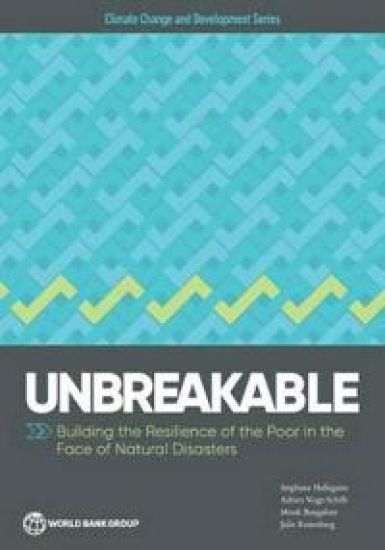
Unbreakable
Stephane Hallegatte; Mook Bangalore; Julie Rozenberg; Adrien Vogt-Schilb
World Bank Publications
2016
nidottu
Economic losses from natural disasters totaled $92 billion in 2015." Such statements, all too commonplace, assess the severity of disasters by no other measure than the damage inflicted on buildings, infrastructure, and agricultural production. But $1 in losses does not mean the same thing to a rich person that it does to a poor person; the gravity of a $92 billion loss depends on who experiences it. By focusing on aggregate losses—the traditional approach to disaster risk—we restrict our consideration to how disasters affect those wealthy enough to have assets to lose in the first place, and largely ignore the plight ofpoor people.This report moves beyond asset and production losses and shifts its attention to how natural disasters affect people’s well-being. Disasters are far greater threats to wellbeing than traditional estimates suggest. This approach provides a more nuanced view of natural disasters than usual reporting, and a perspective that takes fuller account of poor people’s vulnerabilities.As climate change magnifies natural hazards, and because protection infrastructure alone cannot eliminate risk, a more resilient population has never been more critical to breaking the cycle of disaster-induced poverty.