Kirjojen hintavertailu. Mukana 12 390 323 kirjaa ja 12 kauppaa.
Kirjailija
Adrienne Evans
Kirjat ja teokset yhdessä paikassa: 7 kirjaa, julkaisuja vuosilta 2014-2024, suosituimpien joukossa Digital Feeling. Vertaile teosten hintoja ja tarkista saatavuus suomalaisista kirjakaupoista.
This book offers a trailblazing account of postfeminist sensibility as a digital feeling that shapes how we understand the world around us. It explores how we feel in a world where the digital has become intertwined with our intimate relationships to ourselves and to others. The book develops a novel approach that draws on feminist theories of affect, emotion, and structures of feeling, to analyse the entanglements of the digital and the non-digital, and the public and the private, and to show how good feeling shapes a contemporary moment that often leads us back to normativity and reproduces systemic inequality. This is achieved through several different digital media spheres, including: the Instagram account Barbie Savior, #fitspo content, TikTok influencers and their Get Ready With Me videos, the archive of hot men on TubeCrush, and the intimacies of the internet cat, suggesting that each offers a snapshot of our current emotional landscapes.
This book offers a trailblazing account of postfeminist sensibility as a digital feeling that shapes how we understand the world around us. It explores how we feel in a world where the digital has become intertwined with our intimate relationships to ourselves and to others. The book develops a novel approach that draws on feminist theories of affect, emotion, and structures of feeling, to analyse the entanglements of the digital and the non-digital, and the public and the private, and to show how good feeling shapes a contemporary moment that often leads us back to normativity and reproduces systemic inequality. This is achieved through several different digital media spheres, including: the Instagram account Barbie Savior, #fitspo content, TikTok influencers and their Get Ready With Me videos, the archive of hot men on TubeCrush, and the intimacies of the internet cat, suggesting that each offers a snapshot of our current emotional landscapes.
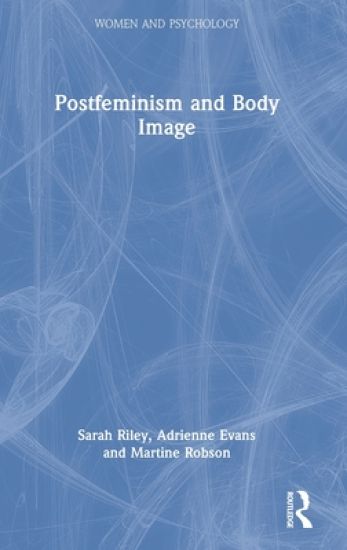
Postfeminism and Body Image is a groundbreaking work that provides a poststructuralist and psychosocial analysis of key issues at the intersections of body image, psychology and media. The book outlines the theoretical framework through the work of renowned philosophers, Michel Foucault and Gilles Deleuze, and their use in feminist scholarship, to address body-image issues and challenges in the context of a postfeminist sensibility. The authors rethink body image, calling into question assumptions and obligations that affect recent issues related to social-media use, body positivity, the transformation imperative, body shaming and muscular masculinity. The analysis shows the advantage of seeing body image as a form of non-linear warfare, structured by contradiction, confusion and critique, where attempts to challenge oppressive body image practices are appropriated under the guise of positive alternatives to maintain that oppression. Through real-world examples, these nuanced concepts are made relatable and comprehensible to the readers. The book also offers a number of affirmative and hopeful ways forward. This is an indispensable resource for students and professionals of Gender studies, Health Psychology, Social Psychology and Media and Cultural Studies. It is also ideal for anyone exploring body image, self-image, postfeminism and poststructualism.
Postfeminism and Body Image is a groundbreaking work that provides a poststructuralist and psychosocial analysis of key issues at the intersections of body image, psychology and media. The book outlines the theoretical framework through the work of renowned philosophers, Michel Foucault and Gilles Deleuze, and their use in feminist scholarship, to address body-image issues and challenges in the context of a postfeminist sensibility. The authors rethink body image, calling into question assumptions and obligations that affect recent issues related to social-media use, body positivity, the transformation imperative, body shaming and muscular masculinity. The analysis shows the advantage of seeing body image as a form of non-linear warfare, structured by contradiction, confusion and critique, where attempts to challenge oppressive body image practices are appropriated under the guise of positive alternatives to maintain that oppression. Through real-world examples, these nuanced concepts are made relatable and comprehensible to the readers. The book also offers a number of affirmative and hopeful ways forward. This is an indispensable resource for students and professionals of Gender studies, Health Psychology, Social Psychology and Media and Cultural Studies. It is also ideal for anyone exploring body image, self-image, postfeminism and poststructualism.
Winner of the 2021 BPS Book Award: Academic Text category, this groundbreaking book employs a transdisciplinary and poststructuralist methodology to develop the concept of ‘postfeminist healthism,’ a twenty-first-century understanding of women’s physical and mental health formed at the intersections of postfeminist sensibilities, neoliberal constructs of citizenship and the notion of health as an individual responsibility managed through consumption. Postfeminist healthism is used in this book to explore seven topics where postfeminist sensibility has the most impact on women’s health: self-help, weight, surgical technologies, sex, pregnancy, responsibilities for others’ health and pro-anorexia communities. The book explores the ways in which the desire to be normal and live a good life is tied to expectations of ‘normal-perfection’ circulated across interpersonal interactions, media representations and expert discourses. It diagnoses postfeminist healthism as unhealthy for both those women who participate in it and those whom it excludes and considers how more positive directions may emerge. By exploring the under-researched intersection of postfeminism and health studies, this book will be invaluable to researchers and students in psychology, gender and women’s studies, health research, media studies and sociology.
Winner of the 2021 BPS Book Award: Academic Text category, this groundbreaking book employs a transdisciplinary and poststructuralist methodology to develop the concept of ‘postfeminist healthism,’ a twenty-first-century understanding of women’s physical and mental health formed at the intersections of postfeminist sensibilities, neoliberal constructs of citizenship and the notion of health as an individual responsibility managed through consumption. Postfeminist healthism is used in this book to explore seven topics where postfeminist sensibility has the most impact on women’s health: self-help, weight, surgical technologies, sex, pregnancy, responsibilities for others’ health and pro-anorexia communities. The book explores the ways in which the desire to be normal and live a good life is tied to expectations of ‘normal-perfection’ circulated across interpersonal interactions, media representations and expert discourses. It diagnoses postfeminist healthism as unhealthy for both those women who participate in it and those whom it excludes and considers how more positive directions may emerge. By exploring the under-researched intersection of postfeminism and health studies, this book will be invaluable to researchers and students in psychology, gender and women’s studies, health research, media studies and sociology.
Key cultural shifts have enabled a "new sexualization" of women. Neoliberal, consumerist, and postfeminist media culture have shaped ways of understanding female sexuality, embodied by the figure of the choosing, empowered, entrepreneurial consumer citizen-woman, whose economic capital determines feminine success (and failure). Informed by older constructs of privilege such as class, sexuality, race and (dis)ability, this version of sexiness also constrains by folding contemporary femininity back into previous panics about youth, excess, "bad" consumption, and appropriate feminine behavior. In Technologies of Sexiness, Adrienne Evans and Sarah Riley identify how current understandings of sexiness in public life and academic discourse have produced a "doubled stagnation," cycling around old debates without forward momentum. Developing a theoretical and methodological framework, they expand on the notion of a "technology of sexiness." They ask what happens and what is lost when people make sense of themselves within the complexities and contradictions of consumer-oriented constructs of sexiness. How do these discourses come to "transform the self"? This book provides a framework for understanding how women make sense of their sexual identities in the context of a feminization of sexual consumerism. The authors analyze material collected with two groups of women: the "pleasure pursuers" and "functioning feminists," who broadly occupy positions across the pre- and post-Thatcher eras, and the changes brought about by the feminist movement. As one of the first book-length empirical studies to explore age-related femininities in the context of what "sexiness" means today, the authors develop a series of insights into various "technologies of the self" through analyses of space, nostalgia, and claims to authentic sexiness.