Kirjojen hintavertailu. Mukana 12 390 323 kirjaa ja 12 kauppaa.

Kirjailija

Aek Phakiti

Kirjat ja teokset yhdessä paikassa: 10 kirjaa, julkaisuja vuosilta 2007-2025, suosituimpien joukossa Experimental Research Methods in Language Learning. Vertaile teosten hintoja ja tarkista saatavuus suomalaisista kirjakaupoista.

10 kirjaa

Kirjojen julkaisuhaarukka 2007-2025.

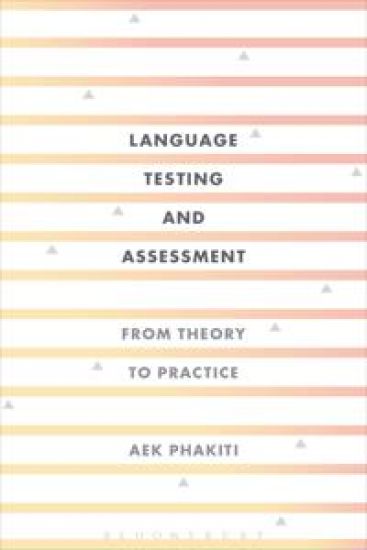
Language Testing and Assessment

Language Testing and Assessment

Aek Phakiti

Bloomsbury Academic
2025
nidottu
This book covers crucial knowledge and skill sets for developing language tests and setting assessments. Aimed at practitioners of applied linguistics and TESOL and complete with online resources in a companion website for students and lecturers, the book:- covers the theoretical and methodological framework and rationale for language test use, assessment techniques in different language skills and basic strategies for analysis of test quality- stresses the importance of test reliability, validity and fairness in language assessment- provides its audience with theoretical and practical knowledge in language assessment- forms an accessible gateway into the often intimidating world of language assessment, and a unique opportunity for the readers to ground their knowledge of principles in language assessment research.This book equips readers with the ability to use theories and principles in language testing and assessment to design and use language tests and assessments optimally, given the available time and resources in a given context, and promote good practice and research in language testing and assessment.
Language Testing and Assessment

Language Testing and Assessment

Aek Phakiti

Bloomsbury Academic
2025
sidottu
This book covers crucial knowledge and skill sets for developing language tests and setting assessments. Aimed at practitioners of applied linguistics and TESOL and complete with online resources in a companion website for students and lecturers, the book:- covers the theoretical and methodological framework and rationale for language test use, assessment techniques in different language skills and basic strategies for analysis of test quality- stresses the importance of test reliability, validity and fairness in language assessment- provides its audience with theoretical and practical knowledge in language assessment- forms an accessible gateway into the often intimidating world of language assessment, and a unique opportunity for the readers to ground their knowledge of principles in language assessment research.This book equips readers with the ability to use theories and principles in language testing and assessment to design and use language tests and assessments optimally, given the available time and resources in a given context, and promote good practice and research in language testing and assessment.
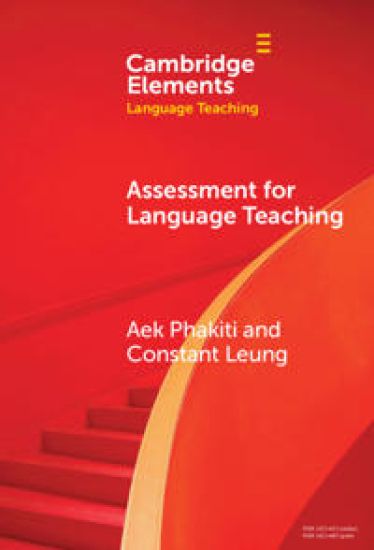
Assessment for Language Teaching

Assessment for Language Teaching

Aek Phakiti; Constant Leung

Cambridge University Press
2024
pokkari
This Element reviews the key foundational concepts, beliefs, and practices underpinning approaches to assessment in English Language Teaching. Exploring major concepts and practices through educational, social, and ethical perspectives, it offers theoretically informed and close-to-practice descriptions and up-to-date explanations of the affordances and limitations of different assessment approaches related to language teaching. This Element presents a cohesive and pragmatic framework that allows teachers to efficiently implement tests and assessments in their contexts.
Assessment for Language Teaching

Assessment for Language Teaching

Aek Phakiti; Constant Leung

Cambridge University Press
2024
sidottu
This Element reviews the key foundational concepts, beliefs, and practices underpinning approaches to assessment in English Language Teaching. Exploring major concepts and practices through educational, social, and ethical perspectives, it offers theoretically informed and close-to-practice descriptions and up-to-date explanations of the affordances and limitations of different assessment approaches related to language teaching. This Element presents a cohesive and pragmatic framework that allows teachers to efficiently implement tests and assessments in their contexts.
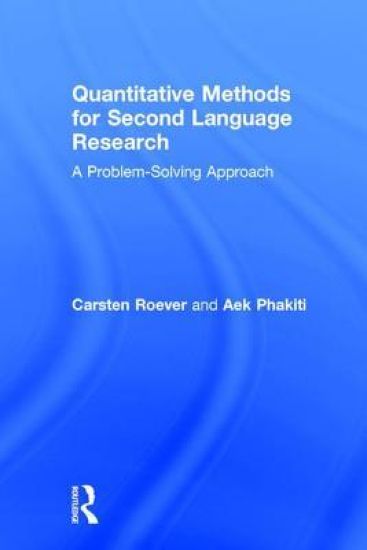
Quantitative Methods for Second Language Research

Quantitative Methods for Second Language Research

Carsten Roever; Aek Phakiti

Routledge
2017
nidottu
Quantitative Methods for Second Language Research introduces approaches to and techniques for quantitative data analysis in second language research, with a primary focus on second language learning and assessment research. It takes a conceptual, problem-solving approach by emphasizing the understanding of statistical theory and its application to research problems while paying less attention to the mathematical side of statistical analysis. The text discusses a range of common statistical analysis techniques, presented and illustrated through applications of the IBM Statistical Package for Social Sciences (SPSS) program. These include tools for descriptive analysis (e.g., means and percentages) as well as inferential analysis (e.g., correlational analysis, t-tests, and analysis of variance [ANOVA]). The text provides conceptual explanations of quantitative methods through the use of examples, cases, and published studies in the field. In addition, a companion website to the book hosts slides, review exercises, and answer keys for each chapter as well as SPSS files. Practical and lucid, this book is the ideal resource for data analysis for graduate students and researchers in applied linguistics.
Quantitative Methods for Second Language Research

Quantitative Methods for Second Language Research

Carsten Roever; Aek Phakiti

Routledge
2017
sidottu
Quantitative Methods for Second Language Research introduces approaches to and techniques for quantitative data analysis in second language research, with a primary focus on second language learning and assessment research. It takes a conceptual, problem-solving approach by emphasizing the understanding of statistical theory and its application to research problems while paying less attention to the mathematical side of statistical analysis. The text discusses a range of common statistical analysis techniques, presented and illustrated through applications of the IBM Statistical Package for Social Sciences (SPSS) program. These include tools for descriptive analysis (e.g., means and percentages) as well as inferential analysis (e.g., correlational analysis, t-tests, and analysis of variance [ANOVA]). The text provides conceptual explanations of quantitative methods through the use of examples, cases, and published studies in the field. In addition, a companion website to the book hosts slides, review exercises, and answer keys for each chapter as well as SPSS files. Practical and lucid, this book is the ideal resource for data analysis for graduate students and researchers in applied linguistics.
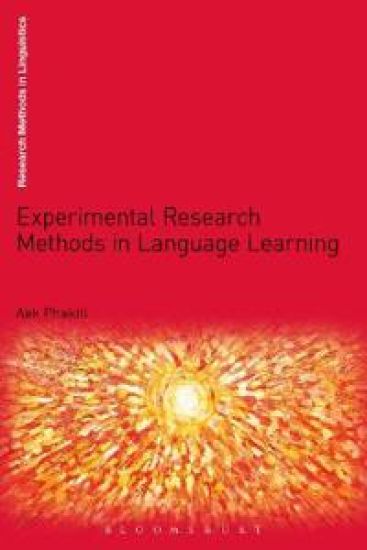
Experimental Research Methods in Language Learning

Experimental Research Methods in Language Learning

Aek Phakiti

Bloomsbury Academic USA
2014
nidottu
Language learning research aims to describe and fully explain how and why language learning takes place, but can fall short of its stated purpose. Systematic, rigorous research is needed if the growing field of language learning is to progress methodically. This book demonstrates and fully explains such a methodology. Given that research in language acquisition yields practical pedagogical implications, it is crucial that it is rigorous and accurate. This book offers a quantitative research methodology that relies on statistical analysis in order to make inferences and conclusions about language learning. Experimental research aims to understand differences between or within groups of learners under manipulated environments. It requires strict control of conditions, enabling interpretations with a low factor of error. Aek Phakiti provides step-by-step guidelines and underlying principles, epistemology and methodology, in a book that is essential for advanced students of language acquisition and language and education.
Experimental Research Methods in Language Learning

Experimental Research Methods in Language Learning

Aek Phakiti

Bloomsbury Academic USA
2014
sidottu
Language learning research aims to describe and fully explain how and why language learning takes place, but can fall short of its stated purpose. Systematic, rigorous research is needed if the growing field of language learning is to progress methodically. This book demonstrates and fully explains such a methodology. Given that research in language acquisition yields practical pedagogical implications, it is crucial that it is rigorous and accurate.This book offers a quantitative research methodology that relies on statistical analysis in order to make inferences and conclusions about language learning. Experimental research aims to understand differences between or within groups of learners under manipulated environments. It requires strict control of conditions, enabling interpretations with a low factor of error. Aek Phakiti provides step-by-step guidelines and underlying principles, epistemology and methodology, in a book that is essential for advanced students of language acquisition and language and education.
Teaching Academic Writing

Teaching Academic Writing

Brian Richard Paltridge; Lindy Woodrow; Lesley Harbon; Aek Phakiti; Huizhong Shen; Marie Stevenson; David Hirsh

The University of Michigan Press
2009
nidottu
How does academic writing vary between educational settings, disciplines, and cultures? How do different approaches to knowledge affect academic writing? Teaching Academic Writing combines research and practice to explore the questions that instructors may have about academic writing in the second language classroom. Whether for writing teachers new to the second language classroom or ESL teachers new to academic writing instruction, this textbook provides an accessible and detailed survey of the key issues and ideas that shape the teaching of academic writing to ESL students today. Chapters address a full range of critical topics, including the context and process of academic writing, needs analysis, teaching approaches, the interrelationship between writing and vocabulary, intercultural perspectives, feedback, and assessment. Each chapter includes Classroom Implications, tasks and techniques for teaching, and some possible exercises to use with students. Chapters begin with thought-provoking questions and end with a section designed to help users consider their own beliefs and classroom practices. This textbook also includes suggestions for practical resources that can be used in the academic writing classroom.