Kirjojen hintavertailu. Mukana 12 330 817 kirjaa ja 12 kauppaa.

Kirjailija

Aeschylus

Kirjat ja teokset yhdessä paikassa: 236 kirjaa, julkaisuja vuosilta 1845-2026, suosituimpien joukossa Aeschylus Plays: I. Vertaile teosten hintoja ja tarkista saatavuus suomalaisista kirjakaupoista.

236 kirjaa

Kirjojen julkaisuhaarukka 1845-2026.

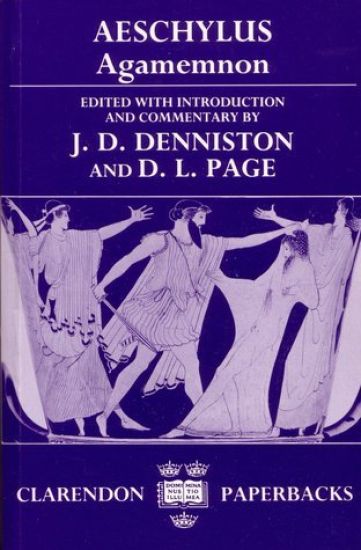
Agamemnon

Agamemnon

Aeschylus

The University of Michigan Press
1998
nidottu
The Bibliotheca Teubneriana, established in 1849, has evolved into the world's most venerable and extensive series of editions of Greek and Latin literature, ranging from classical to Neo-Latin texts. Some 4-5 new editions are published every year. A team of renowned scholars in the field of Classical Philology acts as advisory board: Gian Biagio Conte (Scuola Normale Superiore di Pisa)Marcus Deufert (Universitat Leipzig)James Diggle (University of Cambridge)Donald J. Mastronarde (University of California, Berkeley)Franco Montanari (Universita di Genova)Heinz-Gunther Nesselrath (Georg-August-Universitat Goettingen)Dirk Obbink (University of Oxford)Oliver Primavesi (Ludwig-Maximilians Universitat Munchen)Michael D. Reeve (University of Cambridge)Richard J. Tarrant (Harvard University) Formerly out-of-print editions are offered as print-on-demand reprints. Furthermore, all new books in the Bibliotheca Teubneriana series are published as eBooks. The older volumes of the series are being successively digitized and made available as eBooks.If you are interested in ordering an out-of-print edition, which hasn't been yet made available as print-on-demand reprint, please contact us: [email protected] editions of Latin texts published in the Bibliotheca Teubneriana are collected in the online database BTL Online.
Eumenides

Eumenides

Aeschylus

The University of Michigan Press
1998
nidottu
The Bibliotheca Teubneriana, established in 1849, has evolved into the world's most venerable and extensive series of editions of Greek and Latin literature, ranging from classical to Neo-Latin texts. Some 4-5 new editions are published every year. A team of renowned scholars in the field of Classical Philology acts as advisory board: Gian Biagio Conte (Scuola Normale Superiore di Pisa)Marcus Deufert (Universitat Leipzig)James Diggle (University of Cambridge)Donald J. Mastronarde (University of California, Berkeley)Franco Montanari (Universita di Genova)Heinz-Gunther Nesselrath (Georg-August-Universitat Goettingen)Dirk Obbink (University of Oxford)Oliver Primavesi (Ludwig-Maximilians Universitat Munchen)Michael D. Reeve (University of Cambridge)Richard J. Tarrant (Harvard University) Formerly out-of-print editions are offered as print-on-demand reprints. Furthermore, all new books in the Bibliotheca Teubneriana series are published as eBooks. The older volumes of the series are being successively digitized and made available as eBooks.If you are interested in ordering an out-of-print edition, which hasn't been yet made available as print-on-demand reprint, please contact us: [email protected] editions of Latin texts published in the Bibliotheca Teubneriana are collected in the online database BTL Online.
Choephoroe

Choephoroe

Aeschylus

The University of Michigan Press
1998
nidottu
The Bibliotheca Teubneriana, established in 1849, has evolved into the world's most venerable and extensive series of editions of Greek and Latin literature, ranging from classical to Neo-Latin texts. Some 4-5 new editions are published every year. A team of renowned scholars in the field of Classical Philology acts as advisory board: Gian Biagio Conte (Scuola Normale Superiore di Pisa)Marcus Deufert (Universitat Leipzig)James Diggle (University of Cambridge)Donald J. Mastronarde (University of California, Berkeley)Franco Montanari (Universita di Genova)Heinz-Gunther Nesselrath (Georg-August-Universitat Goettingen)Dirk Obbink (University of Oxford)Oliver Primavesi (Ludwig-Maximilians Universitat Munchen)Michael D. Reeve (University of Cambridge)Richard J. Tarrant (Harvard University) Formerly out-of-print editions are offered as print-on-demand reprints. Furthermore, all new books in the Bibliotheca Teubneriana series are published as eBooks. The older volumes of the series are being successively digitized and made available as eBooks.If you are interested in ordering an out-of-print edition, which hasn't been yet made available as print-on-demand reprint, please contact us: [email protected] editions of Latin texts published in the Bibliotheca Teubneriana are collected in the online database BTL Online.
Prometheus

Prometheus

Aeschylus

The University of Michigan Press
1998
nidottu
The Bibliotheca Teubneriana, established in 1849, has evolved into the world's most venerable and extensive series of editions of Greek and Latin literature, ranging from classical to Neo-Latin texts. Some 4-5 new editions are published every year. A team of renowned scholars in the field of Classical Philology acts as advisory board: Gian Biagio Conte (Scuola Normale Superiore di Pisa)Marcus Deufert (Universitat Leipzig)James Diggle (University of Cambridge)Donald J. Mastronarde (University of California, Berkeley)Franco Montanari (Universita di Genova)Heinz-Gunther Nesselrath (Georg-August-Universitat Goettingen)Dirk Obbink (University of Oxford)Oliver Primavesi (Ludwig-Maximilians Universitat Munchen)Michael D. Reeve (University of Cambridge)Richard J. Tarrant (Harvard University) Formerly out-of-print editions are offered as print-on-demand reprints. Furthermore, all new books in the Bibliotheca Teubneriana series are published as eBooks. The older volumes of the series are being successively digitized and made available as eBooks.If you are interested in ordering an out-of-print edition, which hasn't been yet made available as print-on-demand reprint, please contact us: [email protected] editions of Latin texts published in the Bibliotheca Teubneriana are collected in the online database BTL Online.
Septem contra Thebas

Septem contra Thebas

Aeschylus

The University of Michigan Press
1998
nidottu
The Bibliotheca Teubneriana, established in 1849, has evolved into the world's most venerable and extensive series of editions of Greek and Latin literature, ranging from classical to Neo-Latin texts. Some 4-5 new editions are published every year. A team of renowned scholars in the field of Classical Philology acts as advisory board: Gian Biagio Conte (Scuola Normale Superiore di Pisa)Marcus Deufert (Universitat Leipzig)James Diggle (University of Cambridge)Donald J. Mastronarde (University of California, Berkeley)Franco Montanari (Universita di Genova)Heinz-Gunther Nesselrath (Georg-August-Universitat Goettingen)Dirk Obbink (University of Oxford)Oliver Primavesi (Ludwig-Maximilians Universitat Munchen)Michael D. Reeve (University of Cambridge)Richard J. Tarrant (Harvard University) Formerly out-of-print editions are offered as print-on-demand reprints. Furthermore, all new books in the Bibliotheca Teubneriana series are published as eBooks. The older volumes of the series are being successively digitized and made available as eBooks.If you are interested in ordering an out-of-print edition, which hasn't been yet made available as print-on-demand reprint, please contact us: [email protected] editions of Latin texts published in the Bibliotheca Teubneriana are collected in the online database BTL Online.
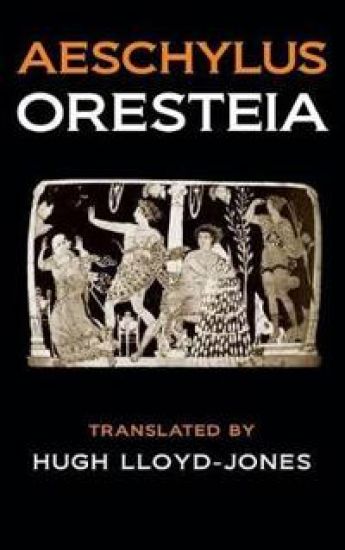
The Oresteia

The Oresteia

Aeschylus

Bristol Classical Press
1997
pokkari
The most famous series of ancient Greek plays, and the only surviving trilogy, is the "Oresteia of Aeschylus", consisting of the "Agamemnon", "Choephoroe" ('Libation Bearers') and "Eumenides" ('Kindly Ones'). These three plays recount the murder of Agamemnon by his queen Clytemnestra on his return from Troy with the captive Trojan princess Cassandra; the murder in turn of Clytemnestra by their son Orestes; and Orestes' subsequent pursuit by the Avenging Furies (Eumenides) and eventual absolution.There has been no shortage of translations and adaptations of the "Oresteia", but such are the poetic complexities of Aeschylus' language and the remoteness of the world he depicts that they mostly fall far short of either the literal meaning or the spirit of the original. This translation by an eminent scholar stays as close to the text as English idiom will allow and is perfectly adapted to the student's needs. Notes elucidate the difficulties, and introductions to each play set the trilogy against the background of Greek religion as a whole and Greek tragedy in particular, presenting a true assessment of Aeschylus' dramatic art.
Persians

Persians

Aeschylus

Oxford University Press Inc
1997
nidottu
The Persians, Aeschylus' earliest surviving tragedy, holds a fascination both for readers of Greek drama and Greek history. Not only is it the earliest existing play in the Western tradition, it is drawn directly from the playwright's own experiences at the battle of Salamis, making it the only account of the Persian Wars composed by an eyewitness. And as pure tragedy, it is a masterpiece. Aeschylus tells the story of the war from the Persian point of view, and his pride in the great victory of Greeks is tempered with a real compassion for Xerxes and his vanquished nation. Lembke and Harrington have rendered this stunning work in a modern translation that loses none of the original's dramatic juxtaposition of serenity and violence, hope and despair.
The Seven Against Thebes

The Seven Against Thebes

Aeschylus

Clarendon Press
1994
nidottu
A major edition of Aeschylus' play, the Septem Contra Thebas or Seven Against Thebes, providing a significantly new text, introduction, and full scale commentary. The book deals comprehensively with every important aspect of the play, both in detail and in overview, and offers a fresh approach to its overall interpretation. An invaluable tool for anyone studying Aeschylus or Greek tragedy more generally.
Persians

Persians

Aeschylus

Bristol Classical Press
1991
pokkari
The Persians (Persae) is Aeschylus' first surviving play. Unlike all other surviving Greek tragedies, which deal with persons and events from the remote, mythical past, it is about living persons and events that took place barely eight years before it was produced in March 472 BC. The setting of the play is Susa, the Persian capital: its hero, the Persian king who came so close to defeating the Greeks in 480: its theme, his own defeat at their hands. Anthony J. Podlecki's translation of the play is complemented by a comprehensive introduction and notes, drawing the reader's attention to conventions of idiom and imagery, legend and allusion. With detailed discussion of the play in relation to possible antecedents, levels of tragic action and metrical schema, the book is ideally suited to students of drama and literature as well as classics.
Choephoroe

Choephoroe

Aeschylus

Bristol Classical Press
1991
pokkari
Produced in 458 BC, Aeschylus' Choephori is the second play in the Oresteian trilogy. The bloodshed begun in the first play with the murder of Agamemnon by his wife Clytemnestra is here continued when Agamemnon's son Orestes avenges his father's death by killing Clytemnestra. It is not until the third and final play, Eumenides, that peace is restored to the family of the Atreidae. This edition takes into account the large amount of recent research on the play and tackles the problems presented by an unusually corrupt text. The introduction discusses the pre-Aeschylean 'Orestes' tradition in literature and art, as well as the place of Choephori within the Oresteia, its imagery and dramatic structure, the questions of staging the play, and the manuscript tradition. The Greek text and critical apparatus are those of D.L. Page (OCT). The commentary looks at problems of style, dramatic technique, and interpretation of the play, and before each scene is discussed an analysis of its contribution to the drama as a whole is supplied.
Seven Against Thebes

Seven Against Thebes

Aeschylus; Helen H. Bacon

Oxford University Press Inc
1991
nidottu
The formidable talents of Anthony Hecht, one of the most gifted of contemporary American poets, and Helen Bacon, a classical scholar, are here brought to bear on this vibrant translation of Aeschylus' much underrated tragedy The Seven Against Thebes. The third and only remaining play in a trilogy dealing with related events, The Seven Against Thebes tells the story of the Argive attempt to claim the Kingdom of Thebes, and of the deaths of the brothers Eteocles and Polyneices, each by the others hand. Long dismissed by critics as ritualistic and lacking in dramatic tension, Seven Against Thebes is revealed by Hecht and Bacon as a work of great unity and drama, one exceptionally rich in symbolism and imagery.
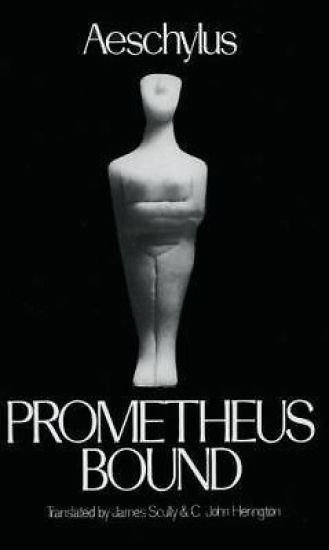
Prometheus Bound

Prometheus Bound

Aeschylus

Oxford University Press Inc
1990
nidottu
For readers accustomed to the relatively undramatic standard translations of Prometheus Bound, this version by James Scully, a poet and winner of the Lamont Poetry Prize, and C. John Herington, one of the world's foremost Aeschylean scholars, will come as a revelation. Scully and Herington accentuate the play's true power, drama, and relevance to modern times. Aeschylus originally wrote Prometheus Bound as part of a tragic trilogy, and this translation is unique in including the extant fragments of the companion plays.
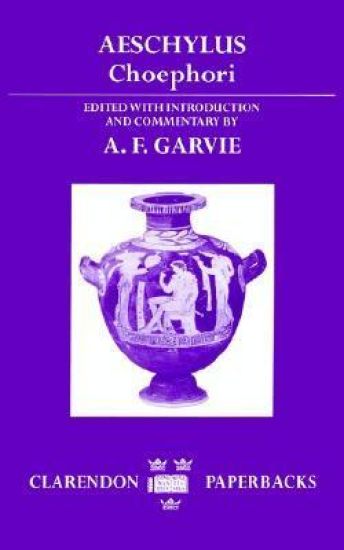
Choephori

Choephori

Aeschylus

Clarendon Press
1988
nidottu
Produced in 458 BC, Aeschylus' Choephori stands as the second play in the Oresteian trilogy. The bloodshed begun in the first play with the murder of Agamemnon by his wife Clytemnestra is here continued when Agamemnon's son Orestes avenges his father's death by killing Clytemnestra. It is not until the third and final play, Eumenides, that peace is restored to the family of the Atreiadae. This edition (first published in hardback in 1986) takes into account the large amount of recent research on the play and tackles the problems presented by an unusually corrupt text. The introduction discusses the pre-Aeschylean 'Orestes' tradition in literature (from Homer to Pindar) and art (representations on vases and reliefs), as well as the place of Choephori within the Oresteia, its imagery and dramatic structure, the questions of staging the play, and the manuscript tradition. Much of the commentary looks at problems of style, dramatic technique, and interpretation of the play, and before each scene is discussed an analysis of its contribution to the drama as a whole is supplied. The text and critical apparatus reproduced are those of D. L. Page (Oxford Classical Texts).
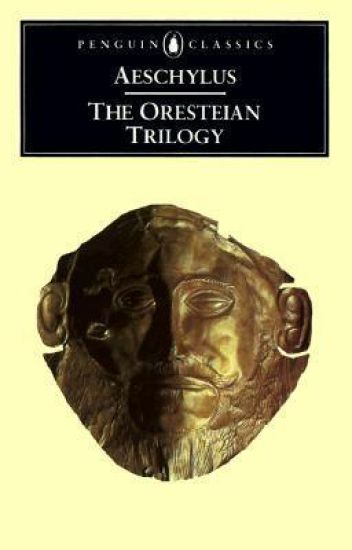
The Oresteian Trilogy

The Oresteian Trilogy

Aeschylus

Penguin Classics
1973
pokkari
Aeschylus (525-c.456 bc) set his great trilogy in the immediate aftermath of the Fall of Troy, when King Agamemnon returns to Argos, a victor in war. Agamemnon depicts the hero's discovery that his family has been destroyed by his wife's infidelity and ends with his death at her callous hand. Clytemnestra's crime is repaid in The Choephori when her outraged son Orestes kills both her and her lover. The Eumenides then follows Orestes as he is hounded to Athens by the Furies' law of vengeance and depicts Athene replacing the bloody cycle of revenge with a system of civil justice. Written in the years after the Battle of Marathon, The Oresteian Trilogy affirmed the deliverance of democratic Athens not only from Persian conquest, but also from its own barbaric past.