Kirjojen hintavertailu. Mukana 12 549 629 kirjaa ja 12 kauppaa.

Kirjailija

Agnes Horvath

Kirjat ja teokset yhdessä paikassa: 11 kirjaa, julkaisuja vuosilta 2017-2025, suosituimpien joukossa Gnostic Fools. Vertaile teosten hintoja ja tarkista saatavuus suomalaisista kirjakaupoista.

Mukana myös kirjoitusasut: Ágnes Horváth

11 kirjaa

Kirjojen julkaisuhaarukka 2017-2025.

Gnostic Fools

Gnostic Fools

Agnes Horvath

TAYLOR FRANCIS LTD
2025
sidottu
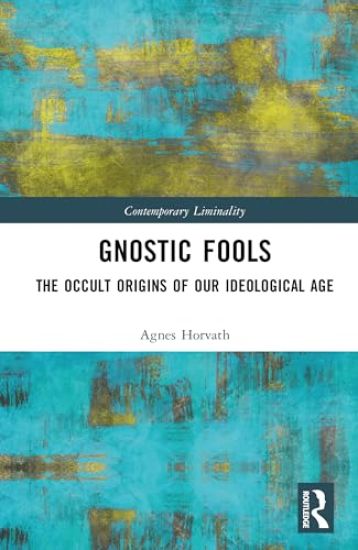
This book offers a political anthropological discussion of our contemporary situation regarding sceptical attitudes towards scientific expertise and authority, and the increasing role of power and politics. It does so using an exploration of the “fool” or “gnostic fool” as a type, drawing on ideas about the modality of the anthropological trickster figure and the mentalities that this type disseminates.Arguing that a recent dissolution of stable identities has made orderly action and connections impossible, the author shows that we are now entering into a confused understanding of ourselves, no longer linked to history or society, nor to our sexes or personality. In this period, growing interest in magical and occult traditions reflects increasing feelings of powerlessness against the whims of politics, power and authority; where rational thinking disappoints and fails, a new Gnostic universe is born. The relationship between standard uses of the “fool” and the “gnostic fool” is addressed using political and social theory, sociology and anthropology, religious studies, and the history of ideas. The book thus combines a study of familiar, traditional texts with unusual phenomena from both recent and distant history, elucidating their surprising prevalence in surrounding contemporary power structures. Addressing a crucial aspect of contemporary reality, characterising and interrogating the (self-)production of fools and the Gnostic intellectual type, it details a serious and puzzling blind spot in academic scholarship.As such, it will be of central relevance to scholars, researchers, and postgraduate students working in anthropology, ethnography, sociology, historical sociology, religious studies, and philosophy worldwide.
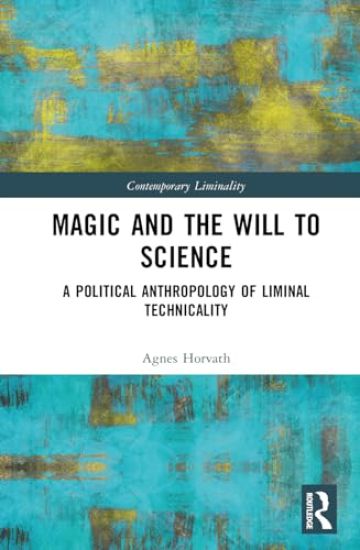
Magic and the Will to Science

Magic and the Will to Science

Agnes Horvath

TAYLOR FRANCIS LTD
2025
nidottu
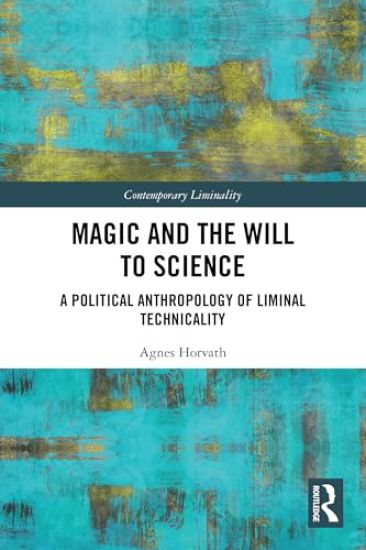
This book offers a political anthropological perspective on the problematic character of science, combining insights from historical sociology, political theory, and cultural anthropology. Its central idea, departing from the works of Frances Yates and the Gnosticism thesis of Eric Voegelin, is that far from being the radical opposite of magic, modern science effectively grew out of magic, and its varieties, like alchemy, Hermetic philosophy, the occult, Gnosticism, and Neoplatonism. Showing that the desire to use science to solve various – real or presumed – problems of human existence has created a permanent liminal crisis, it contends that the ‘will to science’ is parasitic, existing as it does in sheer relationality, outside of and in between concrete places and communities. A study of the mutual relationship between magic and science in different historical eras, ranging from the Early Neolithic to recent disease prevention ideas, Magic and the Will to Science will appeal to scholars and students of social and anthropological theory, and the philosophy and sociology of science.
Magic and the Will to Science

Magic and the Will to Science

Agnes Horvath

TAYLOR FRANCIS LTD
2024
sidottu
This book offers a political anthropological perspective on the problematic character of science, combining insights from historical sociology, political theory, and cultural anthropology. Its central idea, departing from the works of Frances Yates and the Gnosticism thesis of Eric Voegelin, is that far from being the radical opposite of magic, modern science effectively grew out of magic, and its varieties, like alchemy, Hermetic philosophy, the occult, Gnosticism, and Neoplatonism. Showing that the desire to use science to solve various – real or presumed – problems of human existence has created a permanent liminal crisis, it contends that the ‘will to science’ is parasitic, existing as it does in sheer relationality, outside of and in between concrete places and communities. A study of the mutual relationship between magic and science in different historical eras, ranging from the Early Neolithic to recent disease prevention ideas, Magic and the Will to Science will appeal to scholars and students of social and anthropological theory, and the philosophy and sociology of science.
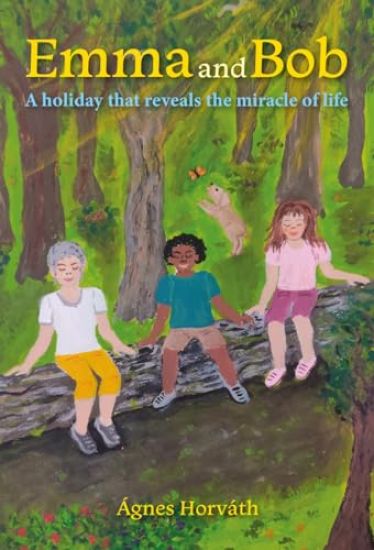
Emma and Bob

Emma and Bob

Ágnes Horváth

The Self-Publishing Partnership Ltd
2023
nidottu
You are perfect and wonderful just the way you are! And the key to your life is in your hands. Don’t know what that means? You can live a joyful and full life. You can calm your emotional storms and the thoughts swirling in your head. You can find deep peace even when you are hurt or grieving. Don’t know how? Let the story of Emma and Bob guide you. Thanks to their curiosity, Emma and Bob’s ordinary holiday becomes extraordinary. In addition to enjoying time at the beach, in the forest and at home, Gran explains to them ‘the endless cycle of life’ and the importance of ‘self-kindness’, ‘positive thinking’, ‘listening to your heart’ and ‘being present’. You can learn these too, just open your mind and heart. You’ll find that even simple things like breathing, a sandcastle, half a glass of lemonade or a little flower can teach you things about yourself and life that you may have never heard before. A book about life. Not only for children, aged 9+, but for the whole family. A book that can help children increase their self-awareness, self-esteem and confidence, as well as maintain their mental health. The book shows them how perfect and powerful they really are and how they can shape their lives to become joyful and peaceful no matter what. Although the book is about a holiday, it talks about things like self-compassion, emotions, death and the power of the mind, heart and ‘now’. However, it’s easy to read and understand, thanks to the simple language, realistic situations and detailed explanations. In addition to individual and family reading, the book can also be used in school wellbeing sessions.
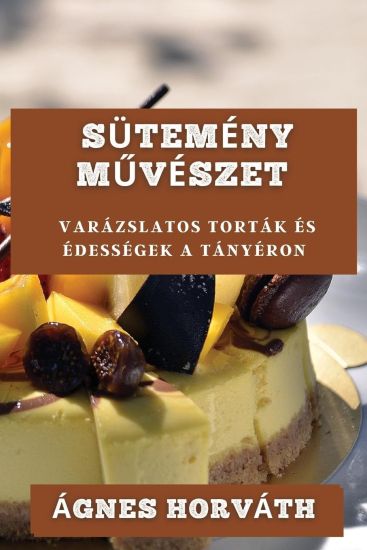
Sütemény Muvészet

Sütemény Muvészet

Ágnes Horváth

Agnes Horvath
2023
pokkari
gnes Horv th bemutatja "S tem ny Műv szet: Var zslatos Tort k s dess gek a T ny ron" c mű k nyvet - egy lenyűg ző utaz st a s t s s dess g k sz t s műv szet be. Ez a k nyv nem csak egy receptgyűjtem ny, hanem egy inspir l tmutat , amely felfedi a s tem nyek var zslatos vil g t.A "S tem ny Műv szet" oldalain megtal lod a v ltozatos s nycsikland torta- s dess g recepteket, amelyekben a kreativit s s az zek harm ni ja t rul el d. gnes megosztja veled titkait s tr kkjeit, hogy hogyan k sz thetsz l legzetel ll t tort kat s dess geket, amelyek lenyűg zik a csal dot s a bar tokat.Ez a k nyv nem csak arr l sz l, hogy s t sre s dess gekre szt n zz n, hanem arra is, hogy felfedezd a s t s műv szet nek soksz nűs g t s kreativit s t. K s rletezz az zekkel, vari ld a d sz t seket, s hozd l tre egyedi s lenyűg ző s tem nyeket, amelyek felejthetetlenek maradnak.A "S tem ny Műv szet" inspir ci t s r m t ny jt mindazoknak, akik szeretik a s t s var zslatos vil g t. Legyen sz sz let snapi tort kr l, nnepi s tem nyekről vagy egyszerű h tk znapi dess gekről, ez a k nyv seg t elhozni az zletes lm nyeket az asztalra.Engedd, hogy "S tem ny Műv szet" vezessen el a s t s kreat v vil g ba. Fedezd fel az zek s az des lvezetek var zslatos birodalm t, s k sz tsd el otthon a legcsod latosabb tort kat s dess geket.
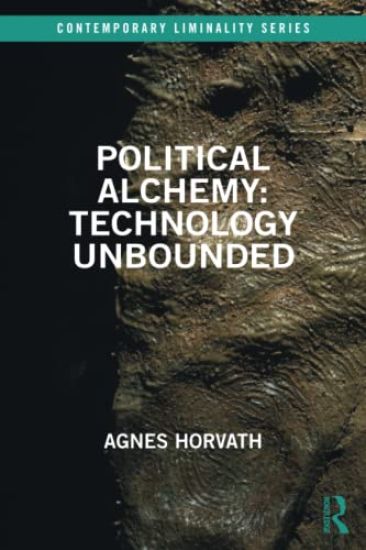
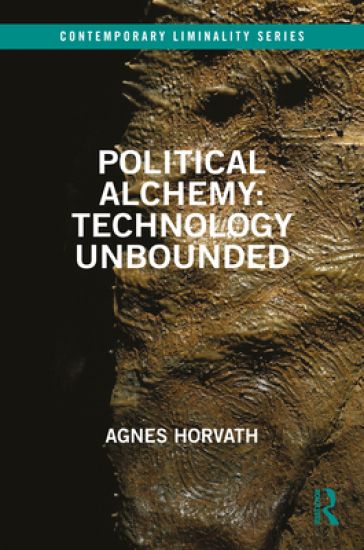
Political Alchemy: Technology Unbounded

Political Alchemy: Technology Unbounded

Agnes Horvath

TAYLOR FRANCIS LTD
2023
nidottu
This book explores politics as a form of alchemy, understood as the transformation of entities through an alteration of their identities. Identifying this process as a common denominator of many political phenomena, such as EU integration, mediatisation, communism or globalisation, the author demonstrates not only the widespread presence of alchemical techniques in politics, but also the acceleration of their deployment. A study of the steady growth of power as it reaches a continuous and permanent stage, thus avoiding the inherent difficulties connected with birth and death of political organisations and institutions, this volume reveals political alchemy to be a form of self-sustaining growth through sterile multiplication, devoid of meaning. Revealing both the integrative and disintegrative nature of a political process that, while appearing to work in the interests of all, in fact produces apathy, desperate mobilisation and despair by crushing concrete entities such as personality and tradition, Political Alchemy: Technology Unbounded will appeal to scholars of sociology and anthropology with interests in social theory and political thought.
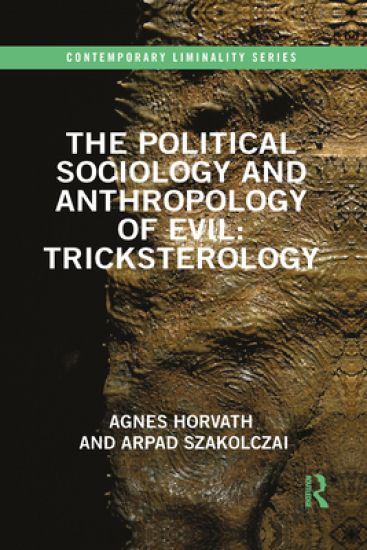
The Political Sociology and Anthropology of Evil: Tricksterology

The Political Sociology and Anthropology of Evil: Tricksterology

Agnes Horvath; Arpad Szakolczai

Taylor Francis Ltd
2021
nidottu
This book offers a new approach to the problem of evil through an examination of the anthropological figure of the ‘trickster’. A lesser known and much more recent term than evil, the authors use the trickster to facilitate a greater understanding of the return of evil in the modern era. Instead of simply opposing ‘good’ and ‘evil’, the figure of the trickster is used to pursue the trajectories of similarities and quasi-similarities through imitation.After engaging with the trickster as presented in comparative anthropology and mythology, where it appears in tales and legends as a strange, erratic outsider, the authors seek to gain an inside perspective of trickster knowledge through an examination of mythology and the classical world, including both philosophers and poets. The book then goes on to trace the trickster through prehistory, using archaeological evidence to complement the diverse narratives. In this way, and by investigating the knowledge and customs surrounding evil, the authors use the figure of the trickster to provide an unprecedented diagnosis of the contemporary world, where external, mechanical rationality has become taken for granted and even considered as foundational in politics, economics, and technologised science. The authors advance the idea that the modern world, with its global free markets, mass mediatic democracy and technologised science, represents a universalisation of trickster logic. The Political Sociology and Anthropology of the Evil will be of interest to scholars working in the fields of social theory, political anthropology and political sociology, as well as those interested in the ways in which evil can infiltrate reality.
Political Alchemy: Technology Unbounded
This book explores politics as a form of alchemy, understood as the transformation of entities through an alteration of their identities. Identifying this process as a common denominator of many political phenomena, such as EU integration, mediatisation, communism or globalisation, the author demonstrates not only the widespread presence of alchemical techniques in politics, but also the acceleration of their deployment. A study of the steady growth of power as it reaches a continuous and permanent stage, thus avoiding the inherent difficulties connected with birth and death of political organisations and institutions, this volume reveals political alchemy to be a form of self-sustaining growth through sterile multiplication, devoid of meaning. Revealing both the integrative and disintegrative nature of a political process that, while appearing to work in the interests of all, in fact produces apathy, desperate mobilisation and despair by crushing concrete entities such as personality and tradition, Political Alchemy: Technology Unbounded will appeal to scholars of sociology and anthropology with interests in social theory and political thought.
The Political Sociology and Anthropology of Evil: Tricksterology
This book offers a new approach to the problem of evil through an examination of the anthropological figure of the ‘trickster’. A lesser known and much more recent term than evil, the authors use the trickster to facilitate a greater understanding of the return of evil in the modern era. Instead of simply opposing ‘good’ and ‘evil’, the figure of the trickster is used to pursue the trajectories of similarities and quasi-similarities through imitation.After engaging with the trickster as presented in comparative anthropology and mythology, where it appears in tales and legends as a strange, erratic outsider, the authors seek to gain an inside perspective of trickster knowledge through an examination of mythology and the classical world, including both philosophers and poets. The book then goes on to trace the trickster through prehistory, using archaeological evidence to complement the diverse narratives. In this way, and by investigating the knowledge and customs surrounding evil, the authors use the figure of the trickster to provide an unprecedented diagnosis of the contemporary world, where external, mechanical rationality has become taken for granted and even considered as foundational in politics, economics, and technologised science. The authors advance the idea that the modern world, with its global free markets, mass mediatic democracy and technologised science, represents a universalisation of trickster logic. The Political Sociology and Anthropology of the Evil will be of interest to scholars working in the fields of social theory, political anthropology and political sociology, as well as those interested in the ways in which evil can infiltrate reality.
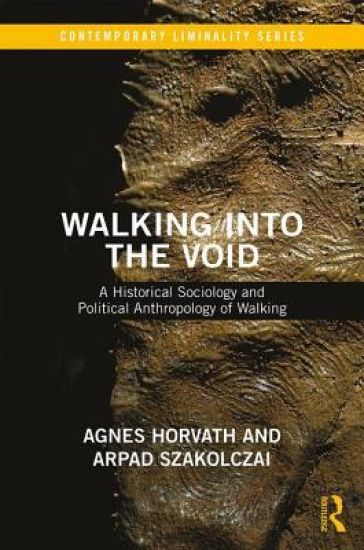
Walking into the Void

Walking into the Void

Arpad Szakolczai; Agnes Horvath

Routledge
2017
nidottu
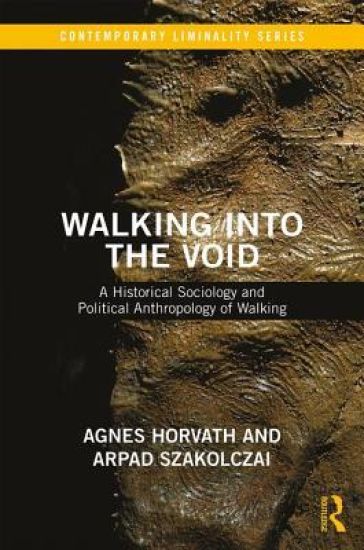
The book starts by discussing the significance of walking for the experience of being human, including a comparative study of the language and cultures of walking. It then reviews in detail, relying on archaeology, two turning points of human history: the emergence of cave art sanctuaries and a new cultural practice of long-distance ‘pilgrimages’, implying a descent into such caves, thus literally the ‘void’; and the abandonment of walking culture through settlement at the end of the Ice Age, around the time when the visiting of cave sanctuaries also stopped. The rise of philosophy and Christianity is then presented as two returns to walking. The book closes by looking at the ambivalent relationship of contemporary modernity to walking, where its radical abandonment is combined with attempts at returns.The book ventures an unprecedented genealogy of walking culture, bringing together archaeological studies distant in both time and place, and having a special focus on the significance of the rise of representative art for human history. Our genealogy helped to identify settlement not as the glorious origin of civilisation, but rather as a source of an extremely problematic development. The findings of the book should be relevant for social scientists, as well as those interested in walking and its cultural and civilisational significance, or in the direction and meaning of human history.
Walking into the Void

Walking into the Void

Arpad Szakolczai; Agnes Horvath

Routledge
2017
sidottu
The book starts by discussing the significance of walking for the experience of being human, including a comparative study of the language and cultures of walking. It then reviews in detail, relying on archaeology, two turning points of human history: the emergence of cave art sanctuaries and a new cultural practice of long-distance ‘pilgrimages’, implying a descent into such caves, thus literally the ‘void’; and the abandonment of walking culture through settlement at the end of the Ice Age, around the time when the visiting of cave sanctuaries also stopped. The rise of philosophy and Christianity is then presented as two returns to walking. The book closes by looking at the ambivalent relationship of contemporary modernity to walking, where its radical abandonment is combined with attempts at returns.The book ventures an unprecedented genealogy of walking culture, bringing together archaeological studies distant in both time and place, and having a special focus on the significance of the rise of representative art for human history. Our genealogy helped to identify settlement not as the glorious origin of civilisation, but rather as a source of an extremely problematic development. The findings of the book should be relevant for social scientists, as well as those interested in walking and its cultural and civilisational significance, or in the direction and meaning of human history.