Kirjojen hintavertailu. Mukana 12 390 323 kirjaa ja 12 kauppaa.

Kirjailija

Agustín Fuentes

Kirjat ja teokset yhdessä paikassa: 14 kirjaa, julkaisuja vuosilta 2008-2026, suosituimpien joukossa Anthropology. Vertaile teosten hintoja ja tarkista saatavuus suomalaisista kirjakaupoista.

Mukana myös kirjoitusasut: Agustin Fuentes

14 kirjaa

Kirjojen julkaisuhaarukka 2008-2026.

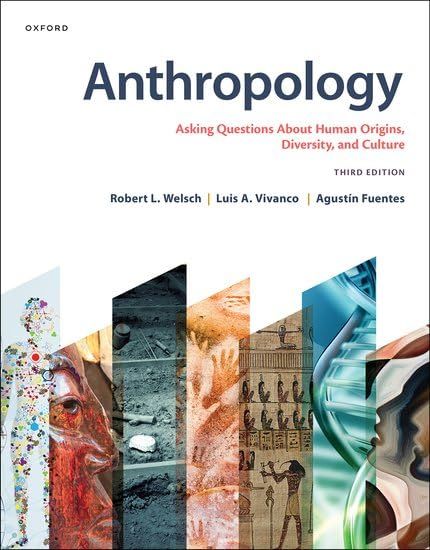
Anthropology

Anthropology

Robert L. Welsch; Luis A. Vivanco; Agustin Fuentes

OXFORD UNIVERSITY PRESS INC
2024
nidottu
This general anthropology text takes a holistic approach that emphasizes critical thinking, active learning, and applying anthropology to solve contemporary human problems. Building on the classical foundations of the discipline, Anthropology: Asking Questions About Human Origins, Diversity, and Culture, Third Edition, shows students how anthropology is connected to such current topics as food, health and medicine, and the environment. Full of relevant examples and current topics--with a focus on contemporary problems and questions--the book demonstrates the diversity and dynamism of anthropology today.
Sex Is a Spectrum

Sex Is a Spectrum

Agustín Fuentes

PRINCETON UNIVERSITY PRESS
2026
pokkari
Why human biology is far more expansive than the simple categories of female and male Being human entails an astonishingly complex interplay of biology and culture, and while there are important differences between women and men, there is a lot more variation and overlap than we may realize. Sex Is a Spectrum offers a bold new paradigm for understanding the biology of sex, drawing on the latest science to explain why the binary view of the sexes is fundamentally flawed—and why having XX or XY chromosomes isn’t as conclusive as some would have us believe. In this lively and provocative book, leading biological anthropologist Agustín Fuentes begins by tracing the origin and evolution of sex, describing the many ways in the animal kingdom of being female, male, or both. Turning to humans, he presents compelling evidence from the fossil and archaeological record that attests to the diversity of our ancestors’ sexual bonds, gender roles, and family and community structures, and shows how the same holds true in the lived experiences of people today. Fuentes tackles hot-button debates around sports and medicine, explaining why we can acknowledge that females and males are not the same while also embracing a biocultural reality where none of us fits neatly into only one of two categories. Bringing clarity and reason to a contentious issue, Sex Is a Spectrum shares a scientist’s perspective on why a binary view of sex and gender is not only misguided but harmful, and why there are multitudes of ways of being human.
Sex Is a Spectrum

Sex Is a Spectrum

Agustín Fuentes

PRINCETON UNIVERSITY PRESS
2025
sidottu
Why human biology is far more expansive than the simple categories of female and maleBeing human entails an astonishingly complex interplay of biology and culture, and while there are important differences between women and men, there is a lot more variation and overlap than we may realize. Sex Is a Spectrum offers a bold new paradigm for understanding the biology of sex, drawing on the latest science to explain why the binary view of the sexes is fundamentally flawed—and why having XX or XY chromosomes isn’t as conclusive as some would have us believe.In this lively and provocative book, leading biological anthropologist Agustín Fuentes begins by tracing the origin and evolution of sex, describing the many ways in the animal kingdom of being female, male, or both. Turning to humans, he presents compelling evidence from the fossil and archaeological record that attests to the diversity of our ancestors’ sexual bonds, gender roles, and family and community structures, and shows how the same holds true in the lived experiences of people today. Fuentes tackles hot-button debates around sports and medicine, explaining why we can acknowledge that females and males are not the same while also embracing a biocultural reality where none of us fits neatly into only one of two categories.Bringing clarity and reason to a contentious issue, Sex Is a Spectrum shares a scientist’s perspective on why a binary view of sex and gender is not only misguided but harmful, and why there are multitudes of ways of being human.
Race, Monogamy, and Other Lies They Told You, Second Edition

Race, Monogamy, and Other Lies They Told You, Second Edition

Agustín Fuentes

University of California Press
2022
pokkari
A compelling takedown of prevailing myths about human behavior, updated and expanded to meet the current moment. There are three major myths of human nature: humans are divided into biological races; humans are naturally aggressive; and men and women are wholly different in behavior, desires, and wiring. Race, Monogamy, and Other Lies They Told You counters these pervasive and pernicious myths about human behavior. Agustín Fuentes tackles misconceptions about what race, aggression, and sex really mean for humans, and incorporates an accessible understanding of culture, genetics, and evolution that requires us to dispose of notions of "nature or nurture." Presenting scientific evidence from diverse fields, including anthropology, biology, and psychology, Fuentes devises a myth-busting toolkit to dismantle persistent fallacies about the validity of biological races, the innateness of aggression and violence, and the nature of monogamy, sex, and gender. This revised and expanded edition provides up-to-date references, data, and analyses, and addresses new topics, including the popularity of home DNA testing kits and the lies behind ‘"incel" culture; the resurgence of racist, nativist thinking and the internet's influence in promoting bad science; and a broader understanding of the diversity of sex and gender.
Monkeys on the Edge

Monkeys on the Edge

Agustín Fuentes

Cambridge University Press
2020
pokkari
Long-tailed macaques (Macaca fascicularis) have a wide geographical distribution and extensively overlap with human societies across southeast Asia, regularly utilizing the edges of secondary forest and inhabiting numerous anthropogenic environments, including temple grounds, cities and farmlands. Yet despite their apparent ubiquity across the region, there are striking gaps in our understanding of long-tailed macaque population ecology. This timely volume, a key resource for primatologists, anthropologists and conservationists, underlines the urgent need for comprehensive population studies on common macaques. Providing the first detailed look at research on this underexplored species, it unveils what is currently known about the population of M. fascicularis, explores the contexts and consequences of human-macaque sympatry and discusses the innovative programs being initiated to resolve human-macaque conflict across Asia. Spread throughout the book are boxed case studies that supplement the chapters and give a valuable insight into specific field studies on wild M. fascicularis populations.
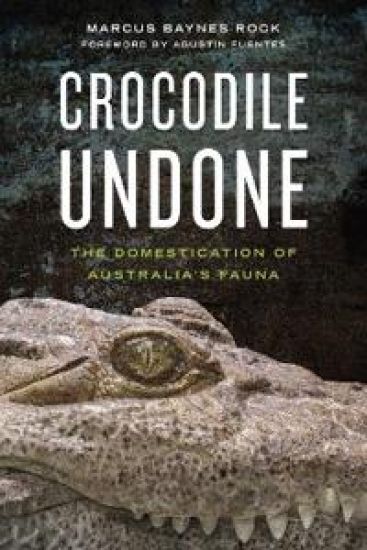
Crocodile Undone

Crocodile Undone

Marcus Baynes-Rock; Agustín Fuentes

Pennsylvania State University Press
2020
sidottu
Across the world, animals are being domesticated at an unprecedented rate and scale. But what exactly is domestication, and what does it tell us about ourselves? In this book, Marcus Baynes-Rock seeks the common thread linking stories about the domestication of Australia's native animals, arguing that domestication is part of a process by which late modernity threatens to undo the world.In a deeply personal account, the author tells of his encounters with crocodiles and emus behind fences, dingoes and kangaroos crossing boundaries, and native bees producing honey in his suburban backyard. Drawing on comparisons between Aboriginal and colonial Australians, Baynes-Rock reveals how the domestication of Australia’s fauna is a process of “unmaking.” As an extension of late modernity, the connections that tie humans and other animals to wider ecologies are being severed, threatening to isolate us and our domesticates from the rest of the world. It is here that Baynes-Rock reveals a key difference between Aboriginal and colonial Australian modes of landscape management: while one is focused on a systemic approach and sees humans as integral to ecological integrity, the other seeks to sever domesticates from ecological processes. The question that emerges is: How might we reconfigure and maintain these connections without undoing humanity?Written in the author’s characteristically frank, passionate, and humorous style, Crocodile Undone takes the reader on a journey across both physical and philosophical landscapes. This fascinating narrative will appeal to anyone interested in the vital connections between humans and animals.
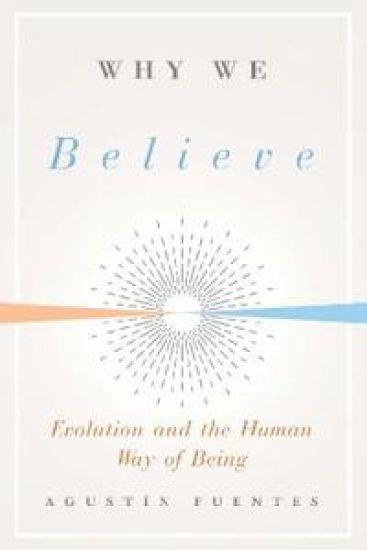
Why We Believe

Why We Believe

Agustin Fuentes

Yale University Press
2020
sidottu
A wide-ranging argument by a renowned anthropologist that the capacity to believe is what makes us human Why are so many humans religious? Why do we daydream, imagine, and hope? Philosophers, theologians, social scientists, and historians have offered explanations for centuries, but their accounts often ignore or even avoid human evolution. Evolutionary scientists answer with proposals for why ritual, religion, and faith make sense as adaptations to past challenges or as by-products of our hyper-complex cognitive capacities. But what if the focus on religion is too narrow? Renowned anthropologist Agustín Fuentes argues that the capacity to be religious is actually a small part of a larger and deeper human capacity to believe. Why believe in religion, economies, love? A fascinating intervention into some of the most common misconceptions about human nature, this book employs evolutionary, neurobiological, and anthropological evidence to argue that belief—the ability to commit passionately and wholeheartedly to an idea—is central to the human way of being in the world.
ISE Biological Anthropology:  Concepts and Connections

ISE Biological Anthropology: Concepts and Connections

Agustin Fuentes

McGraw-Hill Education
2018
nidottu
Biological Anthropology: Concepts and Connections, 3e shows the relevance of anthropological concepts to today's students and encourages critical thinking. Throughout the text and especially in its many “Connections” features, Agustin Fuentes links anthropological concepts and questions to students’ lives.One of the top scholars in the field of biological anthropology, Agustin Fuentes’ current research looks at the big questions of why humans do what they do and feel the way they feel. He is committed to an integrated, holistic anthropological approach. Fuentes wrote this text to help answer the “so what” questions and make anthropological knowledge relevant to everyday life.
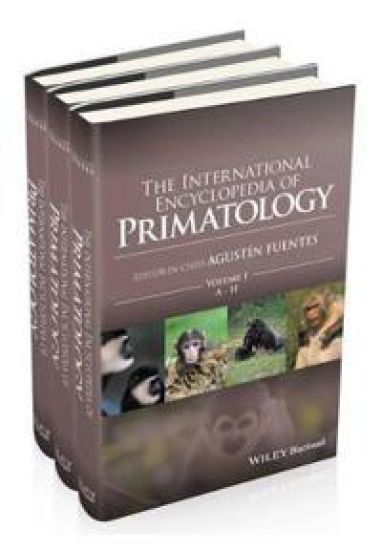
The International Encyclopedia of Primatology, 3 Volume Set
The International Encyclopedia of Primatology represents the first comprehensive encyclopedic reference focusing on the behaviour, biology, ecology, evolution, genetics, and taxonomy of human and non-human primates. Represents the first comprehensive encyclopedic reference relating to primatologyFeatures more than 450 entries covering topics ranging from the taxonomy, history, behaviour, ecology, captive management and diseases of primates to their use in research, cognition, conservation, and representations in literatureIncludes coverage of the basic scientific concepts that underlie each topic, along with the latest advances in the fieldHighly accessible to undergraduate and graduate students in primatology, anthropology, and the medical, biological and zoological sciencesEssential reference for academics, researchers and commercial and conservation organizations This work is also available as an online resource at www.encyclopediaofprimatology.com
The Creative Spark

The Creative Spark

Agustin Fuentes

E P Dutton Co Inc
2017
sidottu
A bold new synthesis of paleontology, archaeology, genetics, and anthropology that overturns misconceptions about race, war and peace, and human nature itself, answering an age-old question: What made humans so exceptional among all the species on Earth? Creativity. It is the secret of what makes humans special, hiding in plain sight. Agust n Fuentes argues that your child's finger painting comes essentially from the same place as creativity in hunting and gathering millions of years ago, and throughout history in making war and peace, in intimate relationships, in shaping the planet, in our communities, and in all of art, religion, and even science. It requires imagination and collaboration. Every poet has her muse; every engineer, an architect; every politician, a constituency. The manner of the collaborations varies widely, but successful collaboration is inseparable from imagination, and it brought us everything from knives and hot meals to iPhones and interstellar spacecraft. Weaving fascinating stories of our ancient ancestors' creativity, Fuentes finds the patterns that match modern behavior in humans and animals. This key quality has propelled the evolutionary development of our bodies, minds, and cultures, both for good and for bad. It's not the drive to reproduce; nor competition for mates, or resources, or power; nor our propensity for caring for one another that have separated us out from all other creatures. As Fuentes concludes, to make something lasting and useful today you need to understand the nature of your collaboration with others, what imagination can and can't accomplish, and, finally, just how completely our creativity is responsible for the world we live in. Agust n Fuentes's resounding multimillion-year perspective will inspire readers--and spark all kinds of creativity.
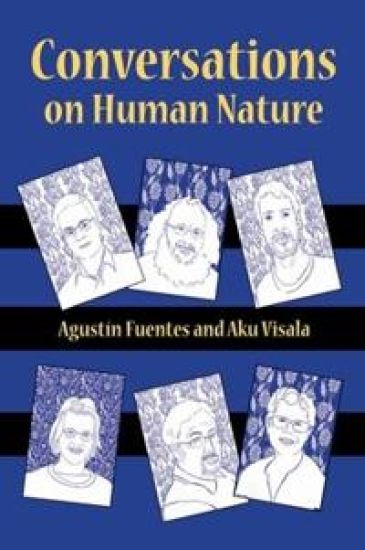
Conversations on Human Nature

Conversations on Human Nature

Agustín Fuentes; Aku Visala

Left Coast Press Inc
2015
sidottu
Recent empirical and philosophical research into the evolutionary history of Homo sapiens, the origins of the mind/brain, and the development of human culture has sparked heated debates about what it means to be human and how knowledge about humans from the sciences and humanities should be understood. Conversations on Human Nature, featuring 20 interviews with leading scholars in biology, psychology, anthropology, philosophy, and theology, brings these debates to life for teachers, students, and general readers. The book-outlines the basic scientific, philosophical and theological issues involved in understanding human nature;-organizes material from the various disciplines under four broad headings: (1) evolution, brains and human nature; (2) biocultural human nature; (3) persons, minds and human nature, (4) religion, theology and human nature; -concludes with Fuentes and Visala's discussion of what researchers into human nature agree on, what they disagree on, and what we need to learn to resolve those differences.
Conversations on Human Nature

Conversations on Human Nature

Agustín Fuentes; Aku Visala

Left Coast Press Inc
2015
nidottu
Recent empirical and philosophical research into the evolutionary history of Homo sapiens, the origins of the mind/brain, and the development of human culture has sparked heated debates about what it means to be human and how knowledge about humans from the sciences and humanities should be understood. Conversations on Human Nature, featuring 20 interviews with leading scholars in biology, psychology, anthropology, philosophy, and theology, brings these debates to life for teachers, students, and general readers. The book-outlines the basic scientific, philosophical and theological issues involved in understanding human nature;-organizes material from the various disciplines under four broad headings: (1) evolution, brains and human nature; (2) biocultural human nature; (3) persons, minds and human nature, (4) religion, theology and human nature; -concludes with Fuentes and Visala's discussion of what researchers into human nature agree on, what they disagree on, and what we need to learn to resolve those differences.
Monkeys on the Edge

Monkeys on the Edge

Agustín Fuentes

Cambridge University Press
2011
sidottu
Long-tailed macaques (Macaca fascicularis) have a wide geographical distribution and extensively overlap with human societies across southeast Asia, regularly utilizing the edges of secondary forest and inhabiting numerous anthropogenic environments, including temple grounds, cities and farmlands. Yet despite their apparent ubiquity across the region, there are striking gaps in our understanding of long-tailed macaque population ecology. This timely volume, a key resource for primatologists, anthropologists and conservationists, underlines the urgent need for comprehensive population studies on common macaques. Providing the first detailed look at research on this underexplored species, it unveils what is currently known about the population of M. fascicularis, explores the contexts and consequences of human-macaque sympatry and discusses the innovative programs being initiated to resolve human-macaque conflict across Asia. Spread throughout the book are boxed case studies that supplement the chapters and give a valuable insight into specific field studies on wild M. fascicularis populations.
Evolution of Human Behavior

Evolution of Human Behavior

Agustin Fuentes

Oxford University Press Inc
2008
nidottu
Evolution of Human Behavior is the first text to synthesize and compare the major proposals for human behavioral evolution from an anthropological perspective. Ideal for courses in the evolution of human behavior, human evolutionary ecology, evolutionary psychology, and biological anthropology, this unique volume reviews a wide array of approaches--including human behavioral ecology, evolutionary psychology, memetics, and gene-culture co-evolution--on how and why humans evolved behaviorally. Its overview of current and emerging theoretical practices and perspectives offers a novel resource for both students and practitioners. Author Agustin Fuentes incorporates recent innovations in evolutionary theory with emerging perspectives from genomic approaches, the current fossil record, and ethnographic studies. He examines basic assumptions about why humans behave as they do, the facts of human evolution, patterns of evolutionary change in a global environmental-temporal context, and the interconnected roles of cooperation and conflict in human history. The net result is a text that moves toward a more holistic understanding of the patterns of human evolution and a more integrated perspective on the evolution of human behavior. Features *Accessible, student-friendly writing style offers a concise survey of human behavioral evolution for anthropology and psychology undergraduates *Pedagogical aids--including summary charts and tables, suggested readings, and a glossary of key terms--enhance the text *Provides extensive tabular charts comparing the components of the major perspectives and proposals in human behavioral evolution to aid students' understanding of the material *Illustrative and contemporary examples of research in the area of human behavior engage students