Kirjojen hintavertailu. Mukana 12 390 323 kirjaa ja 12 kauppaa.

Kirjailija

Ahmed S. Hashim

Kirjat ja teokset yhdessä paikassa: 9 kirjaa, julkaisuja vuosilta 1997-2025, suosituimpien joukossa Iraq’s Sunni Insurgency. Vertaile teosten hintoja ja tarkista saatavuus suomalaisista kirjakaupoista.

9 kirjaa

Kirjojen julkaisuhaarukka 1997-2025.

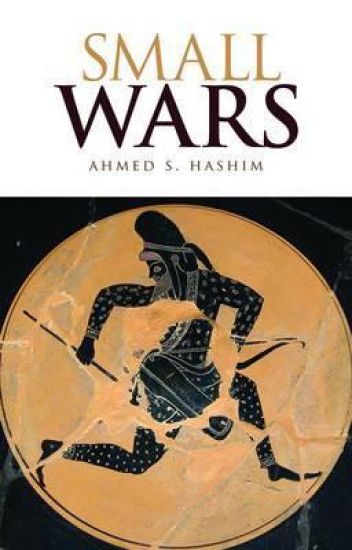
Small Wars

Small Wars

Ahmed S. Hashim

C Hurst Co Publishers Ltd
2025
sidottu
The end of the Cold War and the (then) receding threat of global nuclear conflagration were meant to usher in a 'peace dividend': concomitantly warfare would decline as states devoted themselves to making money and providing for their respective societies. This intensely optimistic liberal attitude - which has its parallel in scholarly reluctance to study warfare and its wider impact - has proven sadly wrong. Large-scale conventional war between regular armies has disappeared, but Small Wars, which have existed since ancient times, have not. Such 'Small Wars' are 'nasty, brutish, and not necessarily shortA".' But what are Small Wars, how can they be defined, and what are their salient characteristics? These are the key themes addressed in Ahmed Hashim's provocative, timely and judicious analysis of how the phenomenon has changed throughout history, from the Jewish Revolt against Roman rule to today's asymmetrical conflicts in Afghanistan and the Middle East. His book follows two parallel tracks. The first is methodological and conceptual, dedicated to definition; the second is an interpretive analysis of the causes, meanings and characteristics of such wars across epochs, environments and cultures -- in other words an intellectual and socio-political history of Small Wars. His account ranges from the Ancient World, through to the Napoleonic era, the history of anti-colonial resistance in Asia, Africa and the Middle East, via discussion of the leading theorists of insurgency and counterinsurgency in the twentieth century, and concludes with the often neglected Islamist doctrine of irregular warfare, drawing upon its leading military thinkers and practitioners.
Iraq

Iraq

Anthony H Cordesman; Ahmed S. Hashim

Routledge
2019
sidottu
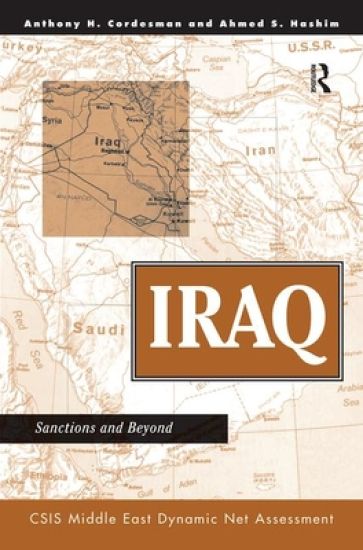
This volume provides analysis of the state of Iraq's security and of current Western policy toward the country in the wake of the Gulf War. It also examines the political, economic, and security impact of sanctions, Iraq's future role as an oil exporter, the U.S. policy of ?dual containment? in relation to Iraq, and options for dealing with Iraq in
The Caliphate at War

The Caliphate at War

Ahmed S. Hashim

C Hurst Co Publishers Ltd
2018
sidottu
The military victories of ISIS have overturned the geopolitical map of the Middle East. Media attention has focused on ISIS' savage treatment of its enemies and its ability to attract foreign fighters. However, in order to explain its success, a dispassionate account of its innovations in insurgency, ideology and governance is needed. The first effort to build an 'Islamic state' in Iraq was defeated by US and Iraqi forces in 2011. That the second attempt, dating from 2014, has been more successful calls for explanation. Hashim argues that by focusing their ideology first and foremost on extreme anti-Shia sectarianism -- rather than on Western 'infidels' -- ISIS' founders were able to present themselves as the saviours of what they saw as the embattled Sunni 'nation' in Iraq. This enabled them to win the support of Sunni communities. Moreover, ISIS' stunning ability to take major cities is a result of its innovative tactics. It sows terror in advance of its attacks by using targeted assassinations to kill key city leaders, and its decentralised regional command structure facilitates an unusual degree of coordination between small assault units. Meanwhile, it is making a serious effort to engage in state-building and population control.
The Caliphate at War: Operational Realities and Innovations of the Islamic State
The military victories of the Islamic State have completely overturned the geopolitical map of the Middle East. Media attention has focused almost exclusively on Islamic State's savage treatment of its enemies and its ability to attract foreign fighters. In 2011, the first effort to build an Islamic State in Iraq was defeated by US and Iraqi forces. The second attempt to establish themselves, beginning in 2014, has been considerably more successful and that success calls for deeper investigation. In order to explain the successes of Islamic State, The Caliphate at War brings together a dispassionate and objective account of the significant innovations in insurgency, ideology, and governance. By focusing their ideology first and foremost on extreme anti-Shia sectarianism - rather than on Western "infidels" - the Islamic State's founders are able to present themselves as the saviors of what they see as the embattled Sunni "nation" in Iraq. Its success in taking and holding major cities, including Mosul, demonstrates its innovative tactics and skill at exploiting tribal and sectarian rivalries. By going beyond the often starkly unpleasant current affairs of the Islamic State, The Caliphate at War undertakes an essential investigation into the successes of the group, to better understand how the movement is surviving, thriving, and reshaping the Middle East.
Iraq’s Sunni Insurgency

Iraq’s Sunni Insurgency

Ahmed S. Hashim

Routledge
2017
sidottu
From 2003 to 2008, the Sunni Arab insurgency in Iraq posed a key challenge to political stability in the country and to Coalition objectives there. This paper explains the onset, composition and evolution of this insurgency. It begins by addressing both its immediate and deeper sociopolitical origins, and goes on to examine the multiple ideological strands within the insurgency and their often conflicting methods and goals. Despite organisational incoherence due to the existence of a large number of competing groups, the insurgency in Iraq sustained a particularly high tempo of operations between 2004 and 2006, causing considerable military and civilian casualties. Some insurgent groups focused on attempting to foment civil war between two of Iraq?s major communities, the Sunni and Shia Arabs and, by late 2006, they had come close to unravelling Iraq and presenting the Coalition with a major defeat. The adoption of a new approach by the US in 2007 helped reduce the level of violence in Iraq. In addition, deep fissures within the insurgency itself, between those fighting for more practical, immediate goals and the transnational Islamists and their local allies fighting for wider-reaching goals ? including the promotion of sectarian strife ? contributed to the insurgency?s diminution. It remains to be seen whether there will be a widespread recognition among Sunni Iraqis of the need to work with the Coalition to facilitate their community?s reintegration into the new Iraqi body politic.
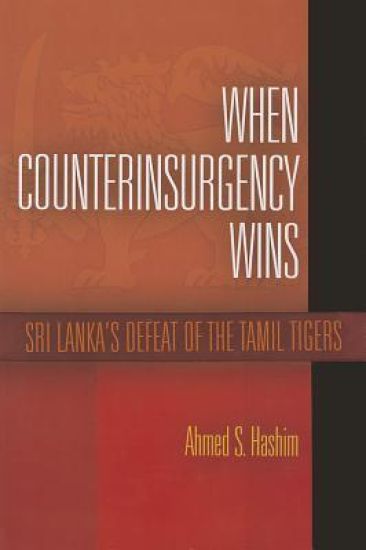
When Counterinsurgency Wins

When Counterinsurgency Wins

Ahmed S. Hashim

University of Pennsylvania Press
2013
sidottu
For twenty-six years, civil war tore Sri Lanka apart. Despite numerous peace talks, cease-fires, and external military and diplomatic pressure, war raged on between the separatist Liberation Tigers of Tamil Eelam and the Sinhala-dominated Sri Lankan government. Then, in 2009, the Sri Lankan military defeated the insurgents. The win was unequivocal, but the terms of victory were not. The first successful counterinsurgency campaign of the twenty-first century left the world with many questions. How did Sri Lanka ultimately win this seemingly intractable war? Will other nations facing insurgencies be able to adopt Sri Lanka's methods without encountering accusations of human rights violations? Ahmed S. Hashim-who teaches national security strategy and helped craft the U.S. counterinsurgency campaign in Iraq-investigates those questions in the first book to analyze the final stage of the Sri Lankan civil war. When Counterinsurgency Wins traces the development of the counterinsurgency campaign in Sri Lanka from the early stages of the war to the later adaptations of the Sri Lankan government, leading up to the final campaign. The campaign itself is analyzed in terms of military strategy but is also given political and historical context-critical to comprehending the conditions that give rise to insurgent violence. The tactics of the Tamil Tigers have been emulated by militant groups in Palestine, Iraq, Afghanistan, and Somalia. Whether or not the Sri Lankan counterinsurgency campaign can or should be emulated in kind, the comprehensive, insightful coverage of When Counterinsurgency Wins holds vital lessons for strategists and students of security and defense.
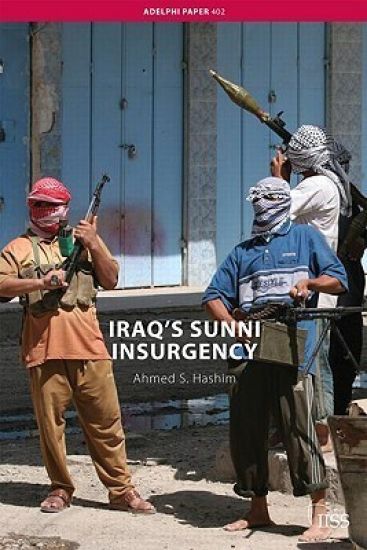
Iraq’s Sunni Insurgency

Iraq’s Sunni Insurgency

Ahmed S. Hashim

Routledge
2009
nidottu
From 2003 to 2008, the Sunni Arab insurgency in Iraq posed a key challenge to political stability in the country and to Coalition objectives there. This paper explains the onset, composition and evolution of this insurgency. It begins by addressing both its immediate and deeper sociopolitical origins, and goes on to examine the multiple ideological strands within the insurgency and their often conflicting methods and goals. Despite organisational incoherence due to the existence of a large number of competing groups, the insurgency in Iraq sustained a particularly high tempo of operations between 2004 and 2006, causing considerable military and civilian casualties. Some insurgent groups focused on attempting to foment civil war between two of Iraq’s major communities, the Sunni and Shia Arabs and, by late 2006, they had come close to unravelling Iraq and presenting the Coalition with a major defeat. The adoption of a new approach by the US in 2007 helped reduce the level of violence in Iraq. In addition, deep fissures within the insurgency itself, between those fighting for more practical, immediate goals and the transnational Islamists and their local allies fighting for wider-reaching goals – including the promotion of sectarian strife – contributed to the insurgency’s diminution. It remains to be seen whether there will be a widespread recognition among Sunni Iraqis of the need to work with the Coalition to facilitate their community’s reintegration into the new Iraqi body politic.
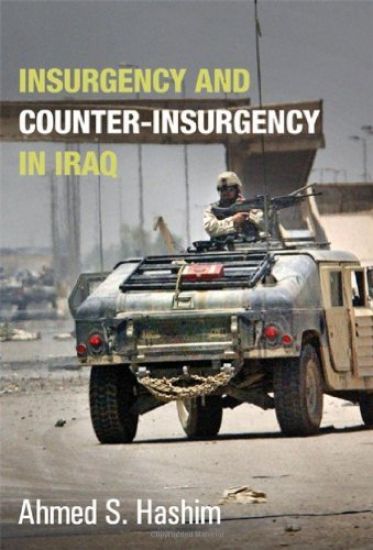
Insurgency and Counter-Insurgency in Iraq

Insurgency and Counter-Insurgency in Iraq

Ahmed S. Hashim

Cornell University Press
2006
sidottu
Years after the U.S. invasion of Iraq, a loosely organized insurgency continues to target American and Coalition soldiers, as well as Iraqi security forces and civilians, with devastating results. In this sobering account of the ongoing violence, Ahmed Hashim, a specialist on Middle Eastern strategic issues and on irregular warfare, reveals the insurgents behind the widespread revolt, their motives, and their tactics. The insurgency, he shows, is not a united movement directed by a leadership with a single ideological vision. Instead, it involves former regime loyalists, Iraqis resentful of foreign occupation, foreign and domestic Islamist extremists, and elements of organized crime. These groups have cooperated with one another in the past and coordinated their attacks; but the alliance between nationalist Iraqi insurgents on the one hand and religious extremists has frayed considerably. The U.S.-led offensive to retake Fallujah in November 2004 and the success of the elections for the Iraqi National Assembly in January 2005 have led more "mainstream" insurgent groups to begin thinking of reinforcing the political arm of their opposition movement and to seek political guarantees for the Sunni Arab community in the new Iraq.Hashim begins by placing the Iraqi revolt in its historical context. He next profiles the various insurgent groups, detailing their origins, aims, and operational and tactical modi operandi. He concludes with an unusually candid assessment of the successes and failures of the Coalition's counter-insurgency campaign. Looking ahead, Hashim warns that ethnic and sectarian groups may soon be pitted against one another in what will be a fiercely contested fight over who gets what in the new Iraq. Evidence that such a conflict is already developing does not augur well for Iraq's future stability. Both Iraq and the United States must work hard to ensure that slow but steady success over the insurgency is not overshadowed by growing ethno-sectarian animosities as various groups fight one another for the biggest slice of the political and economic pie. In place of sensational headlines, official triumphalism, and hand-wringing, Insurgency and Counter-Insurgency in Iraq offers a clear-eyed analysis of the increasingly complex violence that threatens the very future of Iraq.
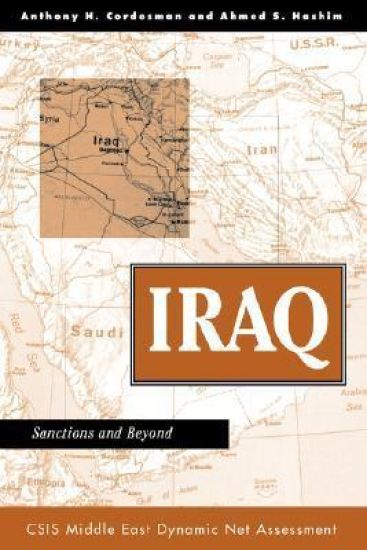
Iraq

Iraq

Anthony H Cordesman; Ahmed S. Hashim

Westview Press Inc
1997
nidottu
This volume provides analysis of the state of Iraq's security and of current Western policy toward the country in the wake of the Gulf War. It also examines the political, economic, and security impact of sanctions, Iraq's future role as an oil exporter, the U.S. policy of ?dual containment? in relation to Iraq, and options for dealing with Iraq in the future.