Kirjojen hintavertailu. Mukana 12 641 282 kirjaa ja 12 kauppaa.

Kirjailija

Ajay Pratap

Kirjat ja teokset yhdessä paikassa: 5 kirjaa, julkaisuja vuosilta 2009-2026, suosituimpien joukossa Multi-Attribute Decision-Making: Bridging Theory and Practice. Vertaile teosten hintoja ja tarkista saatavuus suomalaisista kirjakaupoista.

5 kirjaa

Kirjojen julkaisuhaarukka 2009-2026.

AI-Driven Smart Healthcare

AI-Driven Smart Healthcare

Ajay Pratap; Ram Narayan Yadav; Yashwant Singh Patel; Ali Ahmadian; Ashok Kumar Yadav

JOHN WILEY SONS INC
2026
sidottu
Reimagine the future of healthcare with a deep dive into hyperscale computing and distributed networks In AI-Driven Smart Healthcare: Powered by Hyperscale Computing and Next Generation Networks, a team of distinguished researchers delivers an insightful and practical discussion of the healthcare applications of artificial intelligence and fog-enabled next-generation networks. The book provides practical insights and methodologies for the design, development, and deployment of these technologies throughout the healthcare industry. Readers will explore key areas of recent advancement, including the Internet of Things, fog computing, artificial intelligence, machine learning, serverless computing, and blockchain in a way that allows them to assess the feasibility and scalability of a variety of technological healthcare solutions. The book also includes: A thorough introduction to the integration of AI and fog computing into smart healthcare systemsComprehensive explorations of how these technologies enhance healthcare delivery, with examples like remote patient monitoring and advanced diagnostic modelsPractical discussions of the advantages, challenges, and potential solutions associated with AI and fog computingAn interdisciplinary focus for professionals working at the intersection of AI, machine learning, fog computing, and healthcare Perfect for researchers, practitioners, and other healthcare stakeholders, AI-Driven Smart Healthcare will also benefit technologists, educators, hospital administrators, and other professionals with an interest in the application of the latest technologies to recurrent and significant issues in the field of healthcare.
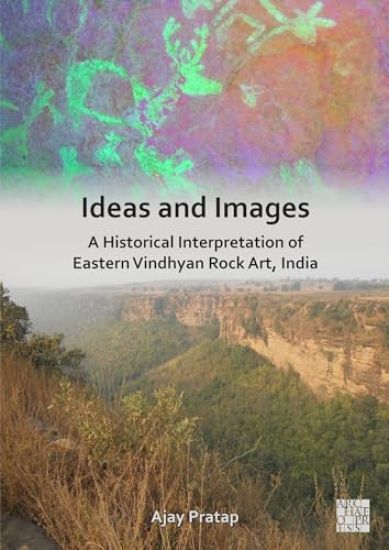
Ideas and Images

Ideas and Images

Ajay Pratap

Archaeopress
2024
pokkari
Ideas and Images argues that the development of symbols and signs informing scripts, mainly the idea of coding thoughts through symbols and images, has always been uniquely ‘historical.’ Rock art abuts and occupies long periods of time, from the Mesolithic, Neolithic-Chalcolithic, and Iron Age, to the medieval and colonial, in which the translation of indigenous thoughts was perfected through numerous mnemonic practices, some of them evidently to record in a surprisingly sophisticated historical oeuvre. These are ordered and direct representations of the ontological, philosophical, thought-object world of prehistoric or pre- or non-scripted communities. Such representations are better understood as so many graphic archives, and their temporality is broadly sequential, authentic, unique and historically contextualized since they record exceptional and everyday events, but also sometimes emotionally or humorously charged stories. The genre called ‘rock art’ is a successful and reliable record of interpretations accorded to society and the natural worlds of the past. The development of symbols informing scripts, or the idea of coding thoughts through symbols, was already in the domain of rock art thousands of years ago. This work builds on the strength of recent historical and archaeological work arguing for the presence of a ‘historical sense’ in prehistory as the basis for including all prehistoric material as potentially of historical value. The rise of scripts in early parts of the historical era was therefore anticipated in earlier techniques of memorialization. Much of Vindhyan rock art came into existence during a period identified distinctly as historical, and it offers alternate perspectives and views of the ‘historical’. The book presents verifiable imagery and events in rock art. It is also postulated that it might be worth considering whether rock art influenced later symbolic forms in terracotta, pottery, sculpture, and coinage. Human, animal, design, decorative forms and imagery feature in all these chronologically later media, although such comparisons and relationships posited with rock art on a one-to-one basis would be misleading.
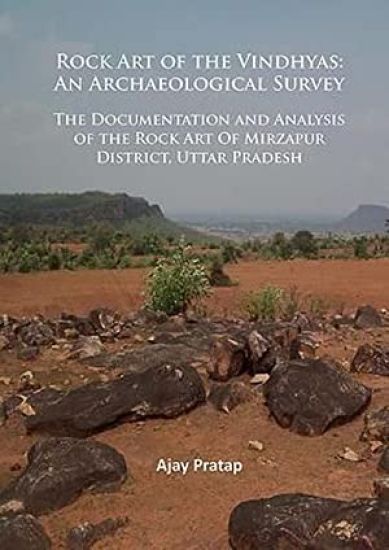
Rock Art of the Vindhyas: An Archaeological Survey
Rock paintings and petroglyphs are a record of human memories. No doubt, this function defines in essence all archaeological objects. Yet some objects such as tools, beyond their symbolic value, are clearly fashioned for their utility. How does rock art as an object fashioned by human hands then differ from tools? What utility does it have beyond its symbolic value? The Vindhyan corpus of rock paintings has provided us with a very valuable opportunity to be answering such questions.
Indigenous Archaeology in India: Prospects of an Archaeology for the Subaltern
In this book the author presents his findings connected with the archaeology of the Rajmahal Hills (Jharkhand State, north-eastern India), and discusses the wider relevance of his surface archaeology approach to the archaeology of the rest of the tribal areas of India. He also approaches the issue of a gendered study of rock-art and landscape archaeology both of which again fall within the domain of tribal archaeology proper. Further sections engage in theoretical debates regarding the relationship between history and archaeology. The study concludes that it may be possible to delineate a separate domain for the archaeology of the tribal areas called subaltern archaeology.