Kirjojen hintavertailu. Mukana 12 476 568 kirjaa ja 12 kauppaa.

Kirjailija

Ajit K. Dasgupta

Kirjat ja teokset yhdessä paikassa: 7 kirjaa, julkaisuja vuosilta 1971-2021, suosituimpien joukossa A History of Indian Economic Thought. Vertaile teosten hintoja ja tarkista saatavuus suomalaisista kirjakaupoista.

7 kirjaa

Kirjojen julkaisuhaarukka 1971-2021.

Gandhi's Economic Thought

Gandhi's Economic Thought

Ajit K. Dasgupta

Routledge
1996
sidottu
Gandhi's economic theories were a part of his vision of self-government, which meant not just freedom from colonial rule but the achievement of self-reliance and self-respect by the villagers of India. Areas examined include: * consumption behaviour * industrialization, technology and the scale of production * trusteeship and industrial relations * work and leisure * education as human capital
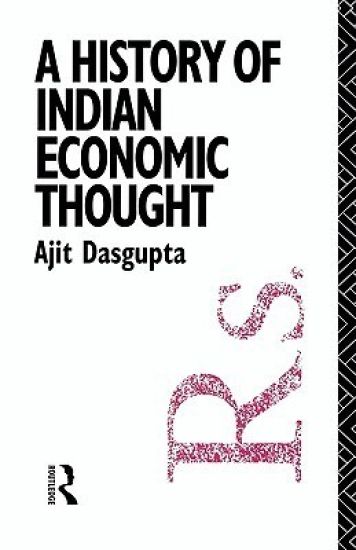
A History of Indian Economic Thought

A History of Indian Economic Thought

Ajit K. Dasgupta

Routledge
1993
sidottu
The history of Indian economic thought provides rich insights into both economic issues and the workings of the Indian mind. A History of Indian Economic Thought provides the first overview of economic thought in the sub-continent. Arguing that it would be inappropriate to rely on formal economic analyses it draws on a wide range of sources; epics, religious and moral texts for the early period and public speeches, addresses, and newspaper articles for controversies from the nineteenth century onwards. What emerges is a rich mosaic reflecting India's different cultures and civilizations. Hinduism, Buddhism and Islam all address economic issues and British colonial rule had a deep impact, both in propagating Western economic ideas and in provoking Indian theories of colonialism and underdevelopment. The author concludes with chapters on Ghandian economics and on Indian economic thought since Independence.
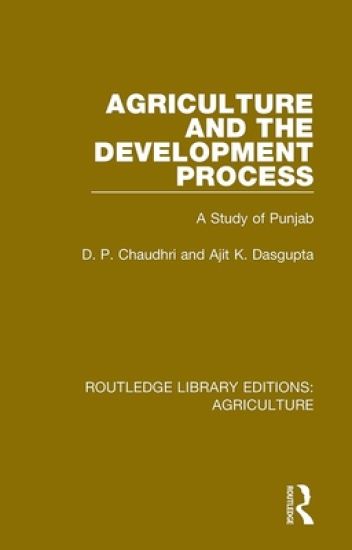
Agriculture and the Development Process

Agriculture and the Development Process

D. P. Chaudhri; Ajit K. Dasgupta

Routledge
2021
nidottu
First published in 1985. The need to increase agricultural output and to use increased output to generate sustained general economic development is a problem facing many Third World countries. This book explores in particular the agricultural growth of the Punjab in Northern India, a country which has long been a leader in the formulation of new development strategies. It shows how agricultural output is affected by, and affects, demographic changes, income distribution, state involvement and structural changes both in society and the economy. Agricultural growth in the Punjab is seen in an historical perspective. In addition, the different aspects of economic development are viewed in an integrated way so that much is learned about the contribution of agricultural growth to the development process. The conclusions drawn can be related to problems and trends worldwide.
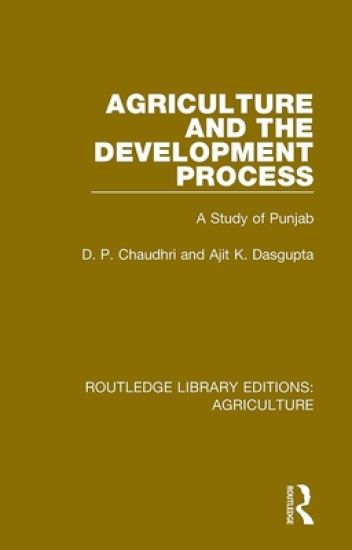
Agriculture and the Development Process

Agriculture and the Development Process

D. P. Chaudhri; Ajit K. Dasgupta

Routledge
2019
sidottu
First published in 1985. The need to increase agricultural output and to use increased output to generate sustained general economic development is a problem facing many Third World countries. This book explores in particular the agricultural growth of the Punjab in Northern India, a country which has long been a leader in the formulation of new development strategies. It shows how agricultural output is affected by, and affects, demographic changes, income distribution, state involvement and structural changes both in society and the economy. Agricultural growth in the Punjab is seen in an historical perspective. In addition, the different aspects of economic development are viewed in an integrated way so that much is learned about the contribution of agricultural growth to the development process. The conclusions drawn can be related to problems and trends worldwide.
A History of Indian Economic Thought

A History of Indian Economic Thought

Ajit K. Dasgupta

Routledge
2015
nidottu
The history of Indian economic thought provides rich insights into both economic issues and the workings of the Indian mind. A History of Indian Economic Thought provides the first overview of economic thought in the sub-continent. Arguing that it would be inappropriate to rely on formal economic analyses it draws on a wide range of sources; epics, religious and moral texts for the early period and public speeches, addresses, and newspaper articles for controversies from the nineteenth century onwards. What emerges is a rich mosaic reflecting India's different cultures and civilizations. Hinduism, Buddhism and Islam all address economic issues and British colonial rule had a deep impact, both in propagating Western economic ideas and in provoking Indian theories of colonialism and underdevelopment. The author concludes with chapters on Ghandian economics and on Indian economic thought since Independence.
Gandhi's Economic Thought

Gandhi's Economic Thought

Ajit K. Dasgupta

Routledge
2015
nidottu
Gandhi's economic theories were a part of his vision of self-government, which meant not just freedom from colonial rule but the achievement of self-reliance and self-respect by the villagers of India. Areas examined include: * consumption behaviour * industrialization, technology and the scale of production * trusteeship and industrial relations * work and leisure * education as human capital